
In brief: You can identify edible wild mushrooms by specific characteristics such as their shape, colour and smell, as well as the presence of gills, pores or ridges. As a beginner, focus on easy-to-identify species such as porcini and chanterelles. Carefully compare every find with a mushroom guide and, when in doubt, always leave unknown mushrooms where they are to avoid poisoning.
In autumn, the forest smells of damp earth and fallen leaves. After a few days of rain, they emerge from the ground: wild mushrooms. For many people, mushroom foraging is a fascinating experience in nature, rewarded with a delicious meal. But enjoying your harvest requires knowledge. This guide shows you how to identify the most common edible mushrooms safely and what you need for a successful search.
Foraging in nature connects us with the seasons. Just as you look forward to harvesting fruit from your own trees in the garden, the forest offers its own special treasures. If you enjoy looking forward to a safe harvest, you can bring a piece of nature's bounty into your own garden with an edible chestnut such as the
or of your own.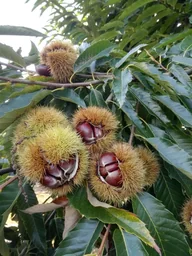
Why is correct mushroom identification vital for your survival?
The most important rule when foraging for mushrooms is: only eat what you have identified with 100 per cent certainty. Many tasty edible mushrooms have poisonous or even deadly lookalikes. A mix-up can have serious health consequences, ranging from gastrointestinal problems to liver failure.
The best-known and most dangerous lookalike is the death cap (Amanita phalloides). It is often mistaken for edible field mushrooms and causes the most fatal mushroom poisonings in Europe. Even a small mushroom can kill an adult. Do not take any risks. If in doubt, always leave the mushroom where it is.
Important note
Never rely solely on a mushroom identification app. The technology is fallible and can misinterpret characteristics. Use apps as a supplement, but check every find against a current mushroom guide and, if possible, with a certified mushroom expert.
What basic equipment do you need for mushroom foraging?
You only need a few important items for successful and sustainable mushroom foraging. Good preparation makes your trip to the forest more enjoyable and safer.
- A well-ventilated basket: A plastic bag is unsuitable. Mushrooms sweat inside it, become mushy and can spoil more quickly. A wicker basket is ideal because it allows the mushrooms to breathe while letting their spores fall through the weave, helping them spread.
- A mushroom knife: A good mushroom knife has a curved blade for clean cutting and a small brush on the end of the handle. Use the brush to remove coarse dirt and pine needles right in the forest.
- Sturdy footwear: The forest floor is often uneven, wet and slippery. Stable, waterproof hiking shoes give you a firm footing and protect your feet.
- A current mushroom guide: A detailed identification guide with good photos or illustrations is essential. Take it with you into the forest so you can compare mushrooms on the spot.
Find the right equipment for your outings in our Garden + Outdoor category.
A well-ventilated basket keeps mushrooms from spoiling and allows them to spread their spores. This helps preserve mushroom populations for the future.
Top 5 edible wild mushrooms for beginners
As a beginner, you should focus on a few mushroom species that are easy to recognise. These five edible mushrooms pose a low risk of confusion when you pay attention to their key characteristics.
Porcini (Boletus edulis)
The king of wild mushrooms. You can identify it by its thick, bulbous stem with a fine, pale net pattern and its light to dark brown, firm cap. Under the cap, it has pores rather than gills. The sponge-like pore layer is white in young specimens, later becoming yellowish to olive-green. It often grows near spruce, oak and beech trees.
Bay bolete (Imleria badia)
The bay bolete, also known as the bay boletus, has a chestnut-brown cap that becomes slimy when wet. Its pores are pale yellow to greenish-yellow. Its most important identifying feature is that the pores and cut flesh quickly and intensely turn blue-green when pressed or cut. This discolouration is harmless and disappears during cooking. You will mainly find bay boletes in coniferous forests.
Chanterelle (Cantharellus cibarius)
A bright golden-yellow mushroom that often grows in groups. Its cap is funnel-shaped and merges seamlessly into the stem. On the underside of the cap, it has no true, thin gills, but rather thick, forked ridges that run a long way down the stem. True chanterelles have an aromatic, slightly peppery apricot scent.
Pro tip
Cut the mushroom stem just above the ground. This protects the underground fungal network (mycelium) and allows new growth. Remove coarse dirt on the spot with the brush on your mushroom knife. This saves you a lot of work later in the kitchen.
Cauliflower mushroom (Sparassis crispa)
This mushroom is almost impossible to mistake. It looks like a large, beige bath sponge or cauliflower and can weigh several kilograms. The cauliflower mushroom grows at the base of pine trees. Its curly, leaf-like branches are brittle and have a pleasantly savoury smell.
Parasol mushroom (Macrolepiota procera)
The parasol mushroom, or shaggy parasol, is an impressive mushroom. Its fully opened cap can reach a diameter of up to 30 cm and is covered with brownish, wipeable scales. Key characteristics are the snakeskin-patterned stem and the double, movable ring on the stem. Only when the ring can be moved easily up and down is it a true parasol mushroom.
How can you identify poisonous lookalikes?
Knowing the poisonous lookalikes is crucial for your safety. Focus on the subtle but clear differences.
Porcini mushroom vs. bitter bolete (Tylopilus felleus): The inedible bitter bolete will ruin any dish with its intensely bitter taste. It has a coarse, dark reticulated pattern on the stem (porcini: fine, light-coloured reticulation), and its pores quickly develop a pink tinge. A tiny piece on the tip of your tongue (spit it out immediately!) will identify it beyond doubt.
Chanterelle vs. false chanterelle (Hygrophoropsis aurantiaca): The false chanterelle is not highly poisonous, but it is of inferior quality and can cause stomach problems. It is more orange to reddish-orange in colour. The key difference: it has true, soft gills that can be easily separated from the cap flesh, unlike the firmly attached ridges of the true chanterelle.
Field mushroom vs. death cap (Amanita phalloides): This is the most important and most dangerous misidentification. The key differences are:
- Gills: Young field mushrooms have pink gills, while older ones have chocolate-brown gills. The death cap ALWAYS has pure white gills.
- Stem base: The death cap grows from a distinct, bulbous sheath (volva), which is often hidden in the soil. Field mushrooms never have one. Always dig the mushroom out completely to inspect the base.
- Smell: Field mushrooms smell pleasantly of anise or mushrooms. When mature, the death cap has an unpleasantly sweet, radish-like smell.
Most severe mushroom poisonings are caused by the death cap, often because it is mistaken for an edible field mushroom. Checking the gill colour and stem base can save your life.
How to collect, transport and store mushrooms correctly
Once you have safely identified an edible mushroom, it is important to handle your find correctly. Careful treatment from the forest to the kitchen helps preserve the quality of your harvest.
Cut the mushroom just above the ground with a sharp garden tool such as a mushroom knife. Only twist it out carefully if you need to examine features at the stem base for identification. Clean off the coarsest dirt on site. This will save you a lot of mess at home.
Place the mushrooms loosely in your basket without crushing them. At home, it is best to spread them out on a cloth or newspaper. Process fresh mushrooms as quickly as possible, ideally within 24 hours. They will keep for one to two days in the vegetable drawer of your refrigerator.
For longer storage, you can dry, freeze or pickle mushrooms. Boletes such as porcini and bay boletes develop an especially intense flavour when dried. You can later use dried mushrooms in sauces and soups. Smoking is another way to preserve them; you can find suitable equipment in our BBQ + Smoking category.
Additional advice
Observe the “handful rule”. It states that you may only collect mushrooms in small quantities for personal use. The exact amount can vary by federal state, but is usually one to two kilograms per person per day. Collecting is generally prohibited in nature reserves.
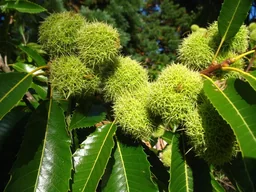
Mushroom foraging is a wonderful hobby that combines mindfulness, a connection with nature and culinary enjoyment. With due respect for nature and the right knowledge, your next walk in the woods can become a successful treasure hunt. Anyone who wants to harvest not only in the woods but also in their own garden will find a robust and productive alternative in the sweet chestnut
a robust and productive alternative.
Frequently asked questions
- Which app is best for identifying mushrooms?
- Mushroom identification apps can offer initial guidance, but they do not replace expert knowledge. Use apps only as a support tool and verify every find several times with a good mushroom guide or an expert. Never rely blindly on an app, as automatic image recognition can be error-prone.
- Can you collect mushrooms anywhere in the woods?
- In Germany, you may collect mushrooms for personal use in most forests. In nature reserves and national parks, however, collecting is often prohibited or heavily restricted. Always check the local regulations. The "handful rule" limits the amount to around one to two kilograms per person.
- How do I tell a field mushroom from a poisonous death cap?
- The most important difference is the gills: true field mushrooms have pink to brown gills, while the deadly poisonous death cap always has white gills. The death cap also has a bulbous sheath (volva) at the stem base, which the field mushroom lacks. Always dig the mushroom out completely.
- What should I do if I suspect mushroom poisoning?
- Call poison control or the emergency number 112 immediately. Do not try to induce vomiting yourself. Keep any leftovers from the mushroom meal and any vomit for analysis by the doctors. Act quickly, because every minute counts in cases of mushroom poisoning.
- What time of day is best for mushroom foraging?
- The time of day does not affect mushroom growth. It is best to go in the morning, when the light is good and you can spot the mushrooms more easily. You will also often be in the forest before other foragers and have a larger selection. Dry weather after several days of rain is important.
You might also be interested in
- How to identify edible gilled mushrooms: How to forage safely
- Mushroom season: Top tips for safe foraging and identification
- Foraging for mushrooms: What is allowed and what to look out for
- Wood blewit: How to safely identify this edible wild mushroom
- Mushrooms in the garden: How to safely identify different species
- Finding porcini mushrooms: Features, habitats and foraging tips