
In brief: Laying laminate flooring is a classic DIY project. You need the right tools, a dry and level subfloor, and a vapor barrier. Care is easy: wipe it dry, use specialist cleaners and prevent scratches. This keeps your new flooring looking great for many years.
How to Lay and Care for Laminate Flooring: Ultimate Guide
New laminate flooring can transform a room. Laying it is a project for ambitious DIYers. With the right preparation and technique, you can achieve great results. This guide takes you through every step.
What do you need to consider before laying laminate flooring?
Planning is key to success. Measure your room carefully. Add around 5% for waste. Consider the laying direction. Laying the boards parallel to the light makes the room feel calmer.
The subfloor must be dry, clean and level. Level out any uneven areas greater than 3 mm per meter. Use self-leveling compound for this. Check old wooden floors to make sure they are firmly secured.
Important note
Allow the laminate flooring to acclimatize. Leave the unopened packs in the room for at least 48 hours. This allows the material to adjust to the room temperature and humidity, preventing later tension.
Get the right tools. A jigsaw or miter saw is essential. A pull bar, tapping block and rubber mallet are part of the basic equipment. Do not forget spacers to maintain the gap from the wall.
Choosing the right material
The use class indicates how much wear the flooring can withstand. For living spaces, choose at least class 23. Class 33 is recommended for hallways or kitchens. The thickness of the wear layer affects the flooring's lifespan.
The appearance is a matter of taste. Large formats look modern. Long planks imitate wood. Look for realistic surface textures. They give the flooring an authentic appearance.
How do you prepare the subfloor correctly?
Remove all old floor coverings down to the load-bearing screed or concrete slab. Vacuum and mop thoroughly. Fill cracks with suitable filler. The subfloor must be free of dust.
Check the residual moisture. This is essential in new buildings. A professional measures it with a CM device. On old tiles, you can lay a thin underlayment directly.
Pro tip
Lay PE film as a vapor barrier. This is mandatory on all mineral subfloors, such as screed. Overlap the sheets by at least 20 cm. Seal the overlaps with wide adhesive tape.
Lay the underlayment on top. It evens out minor imperfections and improves walking comfort. Roll it out smoothly. Butt the sheets against each other without overlapping. Secure them with adhesive tape.
Tools for preparing the subfloor
You can find suitable tools for this work in our power tools category. A spirit level shows you any uneven areas. For larger leveling jobs, you need a mixing paddle and a bucket.
A level subfloor is the key to a professional result. Do not save time here. Every mistake will become visible and audible later.
How do you lay laminate flooring step by step?
Start in the left-hand corner of the room along the longest wall. Lay the first plank with the groove facing the wall. Place spacers of about 8 mm against all walls. This expansion gap is essential.
Join the next plank along the long side. To do this, tilt it into position at an angle and then press it down. A light tap with the rubber mallet and tapping block ensures a secure fit.
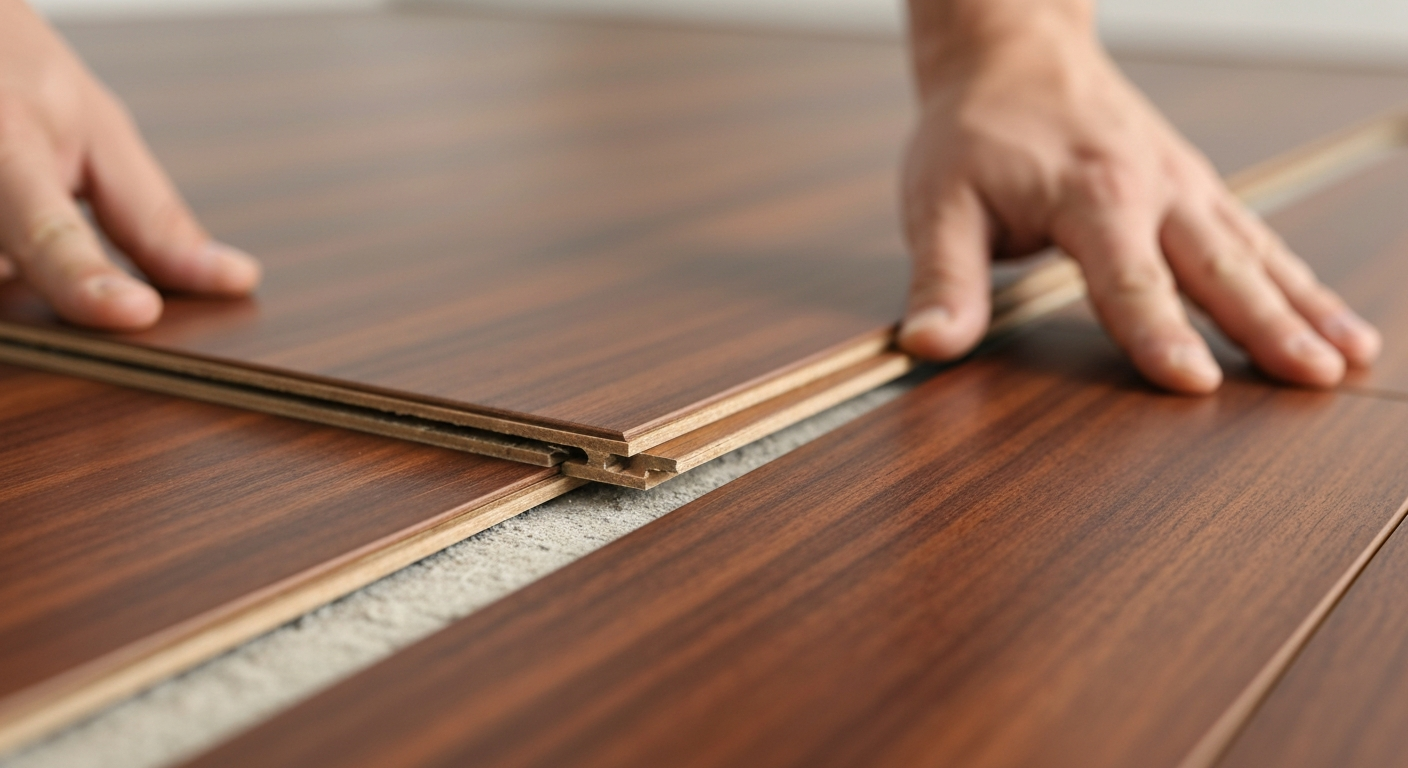
Cut the last plank in each row to size. Measure the distance to the wall, subtract the wall gap and transfer the length. Cut it with the saw. Start the next row with the offcut, provided it is at least 40 cm long.
Additional advice
Use the pull bar for the last row. This lets you pull the planks tightly against the previous row without applying leverage. Work carefully so you do not damage the tongue-and-groove connection.
Challenges around door frames and radiators
Cut the laminate to fit under door frames. Place a plank with underlayment on the floor you have already laid. Put a saw on top and cut the frame to match the plank's profile.
Radiators often require small pieces to be fitted. First connect them to each other outside the row. Then guide the entire segment under the radiator. Lift it carefully and click it into the row.
Sharp tools are essential for all cutting and precision work. Visit our garden tools category for robust knives and saws.
How do you care for your new laminate flooring properly?
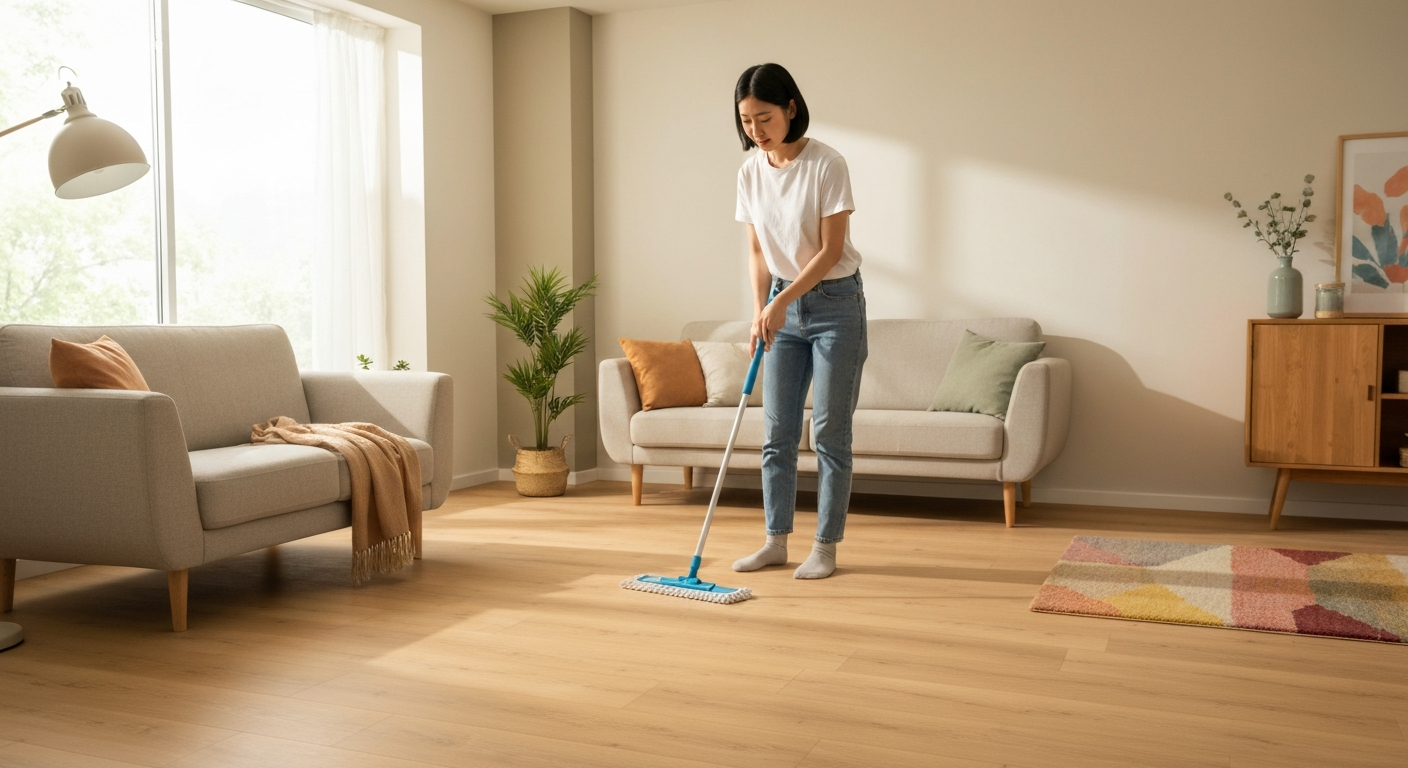
Daily care is simple. Vacuum or dry mop with a soft-bristled broom. This removes sand and dust, which can act like sandpaper. Avoid coarse straw brooms.
For damp cleaning, use a well-wrung mop. Only use specialist laminate cleaners. They dry without leaving residue. Household remedies such as vinegar or all-purpose cleaner can damage the surface.
A good care set makes the job easier. The
contains everything you need for gentle cleaning. It helps prevent streaks and greasy residue.
Moisture is laminate's biggest enemy. Any drop that seeps into the joints can cause the flooring to swell. The rule is simple: only damp mop and dry the floor immediately afterward.
Protecting against scratches and wear
Place felt pads under all furniture legs. Never move heavy furniture directly across the floor. Lift it instead. Put clean doormats by entrance doors. They catch most of the dirt.
If you have pets, trim their claws regularly. Wheelchairs and office chairs need special soft casters. You can also find surface care products in business supplies.
Which products can help you install and care for laminate flooring?
The right equipment makes all the difference. In addition to the laminate flooring itself, you will need accessories. High-quality underlay with sound insulation greatly improves walking comfort. It reduces impact noise and helps even out the floor.
For a clean finish, install skirting boards. They conceal the necessary expansion gap. Choose a colour that matches the flooring or the wall. Glue them in place instead of nailing them.
Our range includes laminate flooring to suit your style. The in the Alpine Oak design brings an airy alpine feel to your home. For a modern, urban look, choose the Bali Driftwood.
Fans of classic wood effects can choose the Baronial Oak. All these floors are easy to install and durable. You can find more inspiration in the garden equipment category, for example for the transition to your patio.
Repair and long-term care
Even with the best care, minor damage can occur. Repair pencils are ideal for scratches. They fill the groove with a matching colour. Fill deeper damage with a specialised repair compound.
If a plank is badly damaged, replace it. This requires patience. Remove the rows up to the damaged plank. Reinstall them after replacing it. It is therefore a good idea to always keep a few spare planks.
For all your home and garden projects, indoors or outdoors, it is worth taking a look at our shop. There you will find tools, materials and inspiration for your next project.
Installing laminate flooring yourself is highly rewarding. You save money and gain a sense of satisfaction. With the right care, you can enjoy your flooring for many years. Start planning today.
Frequently asked questions
- Can I install laminate flooring over old tiles?
- Yes, this is possible if the tiles are firmly installed and completely level. You must lay a thin underlay with sound insulation as a levelling layer. Be sure to check the floor is level with a spirit level. Otherwise, uneven areas will show through in the laminate flooring.
- How long does laminate flooring need to acclimatise before installation?
- Leave the unopened packs in the room where they will be installed for at least 48 hours. The room temperature and humidity should match the conditions the flooring will experience once in use. This helps prevent later tension and distortion in the flooring.
- What tools do I need to install laminate flooring?
- Essential tools include a jigsaw or mitre saw, a pull bar, a tapping block, a metal try square and a rubber mallet. A pack of spacing wedges ensures the correct distance from the wall. For preparation, you will need a spirit level and possibly levelling compound.
- Can I clean laminate flooring with a wet mop?
- No. Use only a well-wrung, slightly damp mop or microfibre cloth. Standing water can damage the joints and cause swelling. Use a dedicated laminate floor cleaner that dries without leaving residue or a greasy film.
- What should I do about deep scratches in laminate flooring?
- Polish minor scratches with special repair pencils. For deeper damage, use repair filler in a matching colour. If the damage covers a large area, replace the individual plank. To do this, remove the neighbouring rows up to the damaged area.
You might also be interested in
- Installing laminate flooring: The complete DIY guide
- Repairing laminate flooring: Easily fix scratches and dents yourself
- Installing laminate flooring correctly: Which direction is best?
- Installing engineered wood flooring: Install your own wooden floor
- Installing vinyl flooring: Step by step to a new look
- Gluing laminate flooring: When it makes sense and how to do it correctly