
In brief: Proper care of your angle grinder stand helps you make precise cuts and work safely. Remove metal dust and swarf from the stand after every use. Regularly check all screws, joints and the clamping mechanism for tightness and wear. Lubricate moving parts as needed to keep everything working smoothly.
An angle grinder stand turns your angle grinder into a stationary cutting machine. It enables precise, straight cuts in metal, stone or plastic that would be almost impossible to make freehand. Like any precision tool, however, your angle grinder stand needs regular care. Neglecting maintenance can affect the quality of your cuts and put your safety at risk. Dust, swarf and inadequate lubrication cause wear and inaccurate results and, in the worst case, can lead to accidents.
Regular maintenance takes little effort, but it keeps your stand working properly and can extend its service life for many years. Spend a few minutes on upkeep and you can count on precise cuts and a safer place to work. This guide explains what to do.
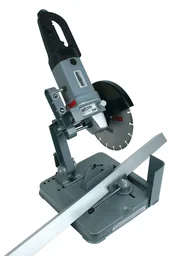
For most DIY projects using handheld angle grinders with discs up to 125 mm in diameter, the Angle grinder stand for handheld angle grinders is an ideal choice. Its sturdy construction provides a solid foundation for clean cuts. You can apply all the care tips in this guide to this model.

Why is it important to care for your angle grinder stand?
An angle grinder stand is more than just a holder. It is a precision tool that must withstand high forces and guide the grinder accurately. Proper care helps maintain precision and keep your workplace safe. Metal dust and swarf act like sandpaper in the joints. Without regular cleaning, moving parts wear down and the guide arm can develop play. A wobbly arm can make cuts inaccurate or cause the cutting disc to jam.
Safety is even more important. A loose screw, a worn clamping mechanism or a crack in the frame can have serious consequences. If the angle grinder comes loose from its holder during operation, you could lose control of a tool spinning at extremely high speed. Regular checks help you spot weak points before they become hazards.
A well-maintained tool is a safe tool. The time you spend looking after it is an investment in your safety and the quality of your work.
Your tool's service life is another important consideration. A well-maintained angle grinder stand made of robust cast iron or steel can last a lifetime. If neglected and left to corrode, it can quickly become unusable. Regular care is also a practical and sustainable choice: it helps preserve the value of your equipment and avoid replacing it too soon.
How do you clean your angle grinder stand properly?
Cleaning is the first and most important step in maintenance. Make it part of your routine after every heavy use. Metal residue is particularly damaging and can collect in every crevice.
Step 1: Prepare and work safely
Unplug the angle grinder and remove it from the stand. Wear gloves and safety glasses while cleaning to protect yourself from sharp swarf and dust. A well-lit work surface makes it easier to inspect the stand thoroughly.
Step 2: Remove loose dirt
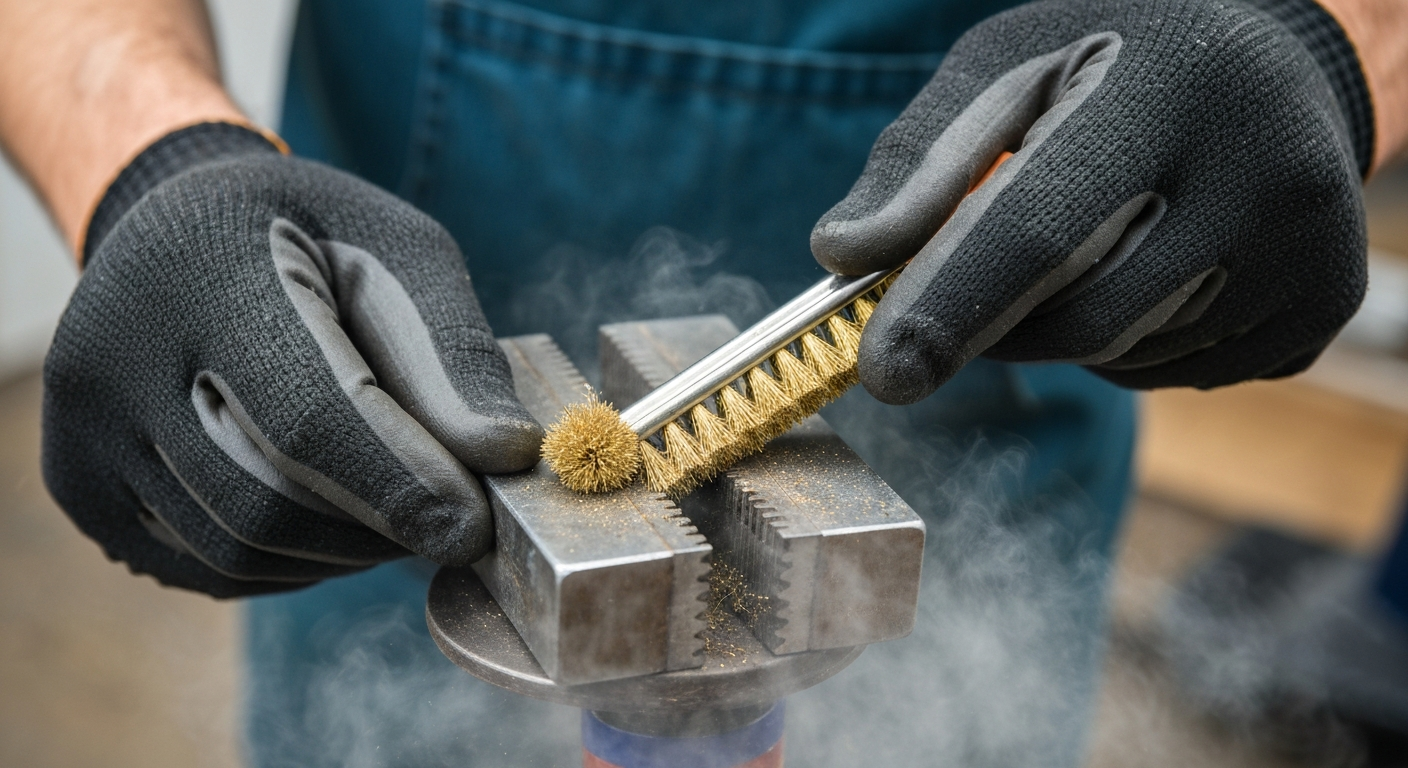
Start by cleaning the stand while it is dry. Use a hand brush or a stiff-bristled brush to remove loose swarf and dust from the base plate, vise and pivot arm. Compressed air can also help clear dirt from hard-to-reach corners and joints. Never point the air jet at your skin or eyes.
Pro tip
Use a brass brush to remove stubborn deposits and light surface rust. Brass is softer than steel and cast iron, so it can remove dirt effectively without scratching your angle grinder stand.
Step 3: Clean the details
After the initial cleaning, check the details. The vise's threaded spindle is especially likely to collect dirt, so clean the thread thoroughly with a brush. Check the clamping jaws for metal fragments that could damage your next workpiece. Then wipe all surfaces with a lightly oiled cloth. This removes fine dust and leaves a thin protective layer against moisture and surface rust.
How can you tell if your angle grinder stand is worn or needs maintenance?
Regular visual and functional checks help you spot problems early. Take a moment to inspect the stand after cleaning, looking for signs of reduced safety or precision.
Visual inspection: what to check
Check every component of your cut-off stand systematically. A checklist can help you make sure nothing is missed.
- Base plate and frame: Look for hairline cracks, especially around the mounting points for the pivot arm and vise. A crack in the cast material is a serious safety risk.
- Screw connections: Make sure all screws and nuts are tight. Vibrations during operation can loosen them over time.
- Clamping device (vise): Inspect the jaws. Are they still parallel, and are their surfaces undamaged? Check that the threaded spindle moves smoothly.
- Angle grinder mount: The holder that secures the machine is a key component. Check its screws and clamping surfaces for wear.
Important note
If the pivot arm has excessive play that you cannot fix by tightening the screws, the bearing bushings may be worn. A wobbly arm is dangerous and can cause uncontrolled cuts. Stop using the stand if this happens.
Function test: check the moving parts
After the visual inspection, test the mechanism. Move the pivot arm through its full range of motion. It should move smoothly, without catching or requiring excessive force. A grinding noise may indicate dirt in the joint. Operate the vise and make sure it clamps the workpiece firmly. The workpiece should not move under pressure. For larger power tools such as 230-mm angle grinders, there are specially sized models such as the Angle grinder stand for 180/ 230 mm. Its sturdier mechanism also needs regular checks.

Which parts of the angle grinder stand need lubricating?
Lubrication reduces friction, prevents wear and ensures smooth operation. However, it is important to use the right product in the right place and in the right amount. Too much grease or oil attracts dirt like a magnet and can do more harm than good.
The main lubrication points are:
- The pivot arm's main joint: This is where most of the movement occurs. One drop of resin-free machine oil or penetrating oil (e.g. WD-40) on the pivot points is sufficient. Move the arm up and down several times afterwards to distribute the oil.
- The vise's threaded spindle: A clean, lightly lubricated spindle makes clamping effortless. A thin film of machine oil or a spray of dry lubricant (e.g. PTFE-based) is ideal here, as it attracts less dust than grease.
- Sliding surfaces and guides: Some models have adjustable guides or stops. These also benefit from a light application of lubricant to keep them easy to adjust.
Additional advice
Always wipe off excess oil with a clean cloth after lubricating. A visible, thick layer of oil collects metal chips and dust, forming an abrasive paste that accelerates wear. The lubricant should work in the joint, not on the surface.
Maintaining your angle grinder stand is a small but essential part of taking comprehensive care of your tools. It reflects respect for your work and the priority you place on workplace health and safety. Maintenance is not a tiresome chore but a professional habit.
How should you store the angle grinder stand?
Proper storage between uses makes a significant contribution to its longevity. The greatest danger to cast iron and steel tools is moisture, which causes corrosion. Always store your angle grinder stand in a dry place, ideally in a workshop or dry basement. Avoid storing it outdoors or in damp sheds.
Cover the stand with a cloth or tarp if it will not be used for an extended period. This protects it not only from moisture but also from dust that could get into the mechanism. Make sure the stand is stable and cannot tip over. A secure position on a shelf or in the corner of your workbench is ideal. This not only protects the tool but also prevents trip hazards and accidents.
The way you store your tools says a great deal about your craftsmanship. A clean, dry and organized place for every tool is the foundation for efficient and safe work.
Investing in good tool accessories such as an angle grinder stand pays off through better results and increased safety. With the care described here, you can ensure that this investment continues to pay off for many years and that your angle grinder stand remains a reliable partner for countless projects.
Frequently Asked Questions
- How often should I clean my angle grinder stand?
- Ideally, clean your angle grinder stand after every intensive use to remove metal dust and chips. Carry out a thorough inspection and lubrication every few months, or at least every six months, depending on how often you use it.
- Which lubricant is best for the joints?
- A resin-free, acid-free machine oil or a light multipurpose oil is suitable for the joints and moving parts. Avoid thick grease, as it can trap dust and chips and block the joints. With lubrication, less is often more.
- How can I tell if my angle grinder stand has become unsafe?
- Look for cracks in the cast material, bent parts, a clamping device that no longer grips firmly or excessive play in the pivot arm. If the stand wobbles or the angle grinder can no longer be securely fixed in place, it is no longer safe to use.
- Can rust form on an angle grinder stand, and what can I do about it?
- Yes, especially in damp workshops, surface rust can form. Remove it with a wire brush or fine abrasive fleece. To prevent rust, store the stand in a dry place and occasionally wipe the metal parts with a lightly oiled cloth.
- Is an angle grinder stand really more precise than freehand cuts?
- Yes, significantly so. An angle grinder stand guides the tool at an exact angle and prevents it from slipping. This allows you to make straight, repeatable cuts that are difficult to achieve freehand, while also improving workplace safety.
You might also be interested in
- Buying an Angle Grinder Stand: The Ultimate Workshop Guide
- Angle Grinder Stand: Step-by-Step Guide
- Maintain Hinges Like a Pro: Stop Rust & Squeaking
- Maintain Garden Tools: How to Make Your Tools Last Longer
- How to Maintain a Chainsaw Guide Bar: Tips for Long-Lasting Performance
- How to Maintain Rubber & Plastic Properly: How to Extend Their Service Life