
In brief: An organized pantry saves time and money while helping you waste less food. Start by taking inventory and removing expired items. Use clear, labeled containers and create dedicated zones. Follow the FIFO principle: Put new purchases at the back so you use older supplies first.
Table of contents
- Why is an organized pantry so important?
- How to organize your pantry step by step: Take inventory
- How can I organize my pantry efficiently?
- How should I store food, and where?
- How to keep your pantry organized: Set up routines
A well-stocked pantry feels reassuring. You know you have what you need to make a meal. But a full cupboard can quickly turn into an overwhelming mess: open packages, duplicate cans and food forgotten at the back until it passes its best-by date. Sound familiar? With a thoughtful system, you can keep your pantry organized, save money and throw away less food.
Why is an organized pantry so important?
A tidy pantry does more than look good. It is an important part of an efficient, sustainable household. You gain space, save time and make everyday life easier. A clear system helps you stay organized and reduce stress.
The biggest benefit is the money you save. When you know exactly what you have, you avoid buying duplicates. You can make more accurate shopping lists and take better advantage of sales. You also reduce food waste because nothing gets forgotten and spoils. That is good for your wallet and the environment.
The time savings matter, too. Searching for a particular ingredient becomes a thing of the past. You can find everything you need for cooking or baking in just a few moments, making meal prep faster and more enjoyable. A clean, well-organized pantry also promotes better hygiene. It helps prevent pests and makes surfaces easier to clean.
How to organize your pantry step by step: Take inventory
Getting your pantry in order starts with a thorough but necessary step: emptying it completely. This gives you a clean slate for a system that works.
Take everything out: The first big step
Set aside enough time to remove every item from the shelves. Put everything on the floor, kitchen table or another large surface. It may feel overwhelming at first, but this step is essential. It gives you a clear picture of how much food you actually have and turns up forgotten items and expired products.
Take advantage of the empty shelves to clean them thoroughly. Wipe away dust and crumbs, and disinfect the surfaces if needed. A fresh start is motivating and gives your food a clean, hygienic place to go.
Your home is where you live your life. Make it a place that supports you, not one that stresses you out.
Take inventory and sort: What stays, and what goes?
Now it is time to take inventory. Check each item and decide whether to keep it. Look at the best-by date on every product. Toss anything that has expired or gone bad.
Be honest with yourself: Which foods will you actually use? Products you bought long ago for a special recipe but never used again might find a grateful recipient through a food-sharing group or local food bank. Donate anything that is still good but that you no longer need.
As you sort, group the food you are keeping. Put all the pasta together, all the canned goods together, all the baking ingredients together, and so on. This first round of sorting makes it much easier to set up your new system.
How can I organize my pantry efficiently?
Once you have decluttered and cleaned, it is time for the creative part: setting up a smart storage system. The goal is to make the most of your available space and create a layout that is easy to use.
Choose the right shelves and containers
Every good storage system starts with sturdy, easy-to-reach shelving. Open shelves are ideal because you can see everything at a glance. If your shelves are deep, use pull-out baskets or bins so you can easily reach items at the back.
For dry foods such as flour, sugar, rice, pasta and cereal, invest in clear, airtight containers that are ideally stackable. They protect food from moisture and pests, keep shelves looking tidy and make it easy to see when you are running low. Label each container clearly with its contents and, if useful, the best-by date.
Pro tip
Make use of vertical space! Hanging baskets under shelves or spice racks mounted on the door add storage for small items. Narrow gaps are useful, too. A practical rolling cart such as the
can bring order to even the smallest space.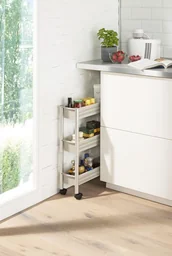
Create a system with zones and categories
Think like a grocery store and create dedicated zones. Set aside an area for baking ingredients, a shelf for canned goods and jars, an area for breakfast foods such as cereal and honey, and a zone for oils, vinegars and spices. This logical layout makes it easy to find what you need.
Put heavy, bulky packages such as bags of flour or sugar on lower shelves. Keep items you use every day or very often at eye level and within easy reach. Store items you rarely use or buy in bulk on the top shelves.
The FIFO principle: Put older items in front and new ones at the back
Follow the “First In, First Out” principle. It is one of the simplest and most effective ways to prevent food waste. When you get home from the grocery store, put new items behind the ones already in the pantry. That way, you will reach for older food first and use it before it goes bad. It is a small habit with a big impact.
How to Store Food Properly: What Goes Where?
Not every food belongs in every spot. Proper storage is essential for shelf life, flavor and nutritional value. A well-organized business supplies store takes the individual needs of your pantry staples into account.
Dry Goods: Cool, Dark and Dry
Most dry goods, such as pasta, rice, beans, flour and sugar, do best in a cool, dark and dry place. Direct sunlight and moisture are their biggest enemies. Airtight containers are the best way to keep them fresh and protect them from pests. Canned food should also be stored in a cool, dry place. Check cans regularly for dents or bulges, which may be signs of spoilage.
Important Note
Never store potatoes and onions right next to each other. Onions release gases that cause potatoes to sprout and spoil more quickly. Both need a cool, dark and well-ventilated place, with enough space between them. A basket or open crate is ideal.
Fruit and Vegetables: Not Everything Belongs in the Refrigerator
Many types of fruit and vegetables from your own Garden + Outdoor area keep longer outside the refrigerator. Tomatoes, avocados and most tropical fruits develop their full flavor at room temperature. Store apples separately because they release ethylene, a ripening gas that causes nearby fruit and vegetables to ripen more quickly. Root vegetables such as carrots and beets do best in a cool cellar or in the refrigerator's crisper drawer.
Proper food storage is not a luxury but a necessity. It preserves nutritional value and flavor while helping protect our health from spoilage and contamination.
Oils, Vinegars and Spices
High-quality cooking oils are sensitive to light and heat. Store them in a cool, dark place, but not in the refrigerator, where some oils may turn cloudy or solidify. A pantry or closed cabinet is ideal. Spices quickly lose their flavor when exposed to light and heat. Keep them in tightly sealed containers in a dark, dry place to preserve their flavor and potency.
Keep Your Pantry Organized with Simple Routines
The biggest challenge is not organizing your pantry once, but keeping it tidy over time. With a few simple routines, you can make your new system part of everyday life.
Make it a habit to take a quick look inside your pantry before your weekly grocery trip. This shows you what you're running low on, so you can plan your shopping list accordingly. It helps prevent impulse buys and keeps your pantry stocked at a sensible level.
Put groceries away in the right place as soon as you get home, following the FIFO principle. Those five minutes after shopping can save you from lengthy searches and clutter later. Wipe up spilled crumbs or liquids right away to keep pests from settling in.
Additional Tip
Keep a small inventory, either on a board on the pantry door or in an app. Make a note whenever you use up the last of an item. This gives you an up-to-date overview, and your next shopping list will practically write itself.
Set aside time for a quick refresh every few months. Spend 30 minutes reviewing your zones, refilling containers and moving products that are nearing their expiration date to the front. This keeps your system working well and your pantry a useful, enjoyable part of your home.
Frequently Asked Questions
- How often should I clean out my pantry?
- Plan a thorough cleanout about every three to six months. A quick weekly check before you shop will help you stay organized, plan your grocery list and keep everything in order. It also helps you avoid unnecessary purchases and food waste.
- What containers are best for pantry storage?
- Airtight, transparent and stackable containers made of glass or BPA-free plastic are ideal. They protect pantry staples from pests and moisture. Because they're transparent, you can see what's inside and how much you have at a glance, making it much easier to plan your shopping.
- What does FIFO mean for food storage?
- FIFO stands for “First In, First Out.” This means putting newly purchased food behind the items you already have. That way, you use older products first, before they reach their expiration date. This system helps minimize food waste.
- How should I store potatoes and onions?
- Always store potatoes and onions separately. Both need a cool, dark and dry place with good air circulation, such as a cellar or pantry. If stored together, the bulbs and tubers can cause each other to spoil more quickly because they release gases.
- Does transferring food to containers really help prevent pantry moths?
- Yes. Pantry moths or their larvae often get into your kitchen in original paper or thin plastic packaging. Transferring food right away into tightly sealed, airtight containers breaks this cycle and protects your other pantry staples from infestation.
You May Also Be Interested In
- Effective Kitchen Organization: Practical Tips to Create More Space
- Smart Tool Storage: Practical Tips for a Tidier Workshop
- Organize Your Home: Finally Get Everything in Order
- Organize Your Toolbox: Top Tips for a Perfectly Organized DIY Space
- Create a Utility Room: Add Storage Space in a Small Apartment
- Make the Most of Your Closet: Create More Space with Smart Organization