
In brief: Use a construction dehumidifier in enclosed rooms at 15-25 °C. Position the unit centrally for optimal air circulation, and use fans to help move the air. Empty the water tank regularly or connect a drain hose. This removes moisture from building materials, speeds up drying after water damage and helps prevent mold in the basement.
A musty smell in the basement, fogged-up windows in the morning or dark patches on the walls—the signs of excess moisture in your home are hard to miss. Don’t ignore them. Persistent damp can damage your home, raise your heating costs and create ideal conditions for mold. A construction dehumidifier is a powerful tool for tackling damp at its source by removing excess moisture from walls, floors and the air.
Why is too much moisture in your home a problem?
Water is essential to life, but it has no place in your home’s walls. Relative humidity above 60 % over a prolonged period can create serious problems, from musty odors to damage throughout your home.
A risk to your health and your home
The greatest danger is mold. Its spores spread invisibly through the air and can cause allergies, respiratory problems and headaches. Your home can also suffer: plaster crumbles, wallpaper peels away, wooden beams can rot and walls lose some of their insulating ability. Your heating system has to work harder to warm damp walls, which can drive up energy costs.
Mold can cause allergic reactions and irritation. One of the most important ways to prevent it is to keep moisture out and address the causes of water damage promptly.
Excess moisture can have many causes, from everyday activities such as showering and cooking and poor ventilation to serious building defects or sudden water damage from a burst pipe. Basements are especially vulnerable to moisture because they are in contact with the ground.
When should you use a construction dehumidifier?
A construction dehumidifier is more powerful than a typical home dehumidifier. It is designed for demanding drying jobs and can be useful—or even essential—in several situations.
Drying out a new build
Fresh screed, plaster and concrete can introduce thousands of liters of water into a new home. To prevent building damage and mold growth, this construction moisture needs to dry out in a controlled way. A construction dehumidifier such as the can speed up the process by weeks and help create a healthy indoor environment from the very beginning.
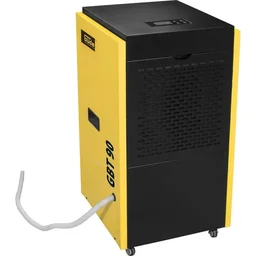
Restoring a home after water damage
After a burst pipe, flood or firefighting effort, quick action is essential. The longer water remains in floors, walls and insulation, the worse the damage can be. Construction dehumidifiers are central to the restoration process. They draw moisture deep out of building materials, helping prevent lasting structural damage and mold growth. For emergencies like these, a robust unit such as the is a good choice.
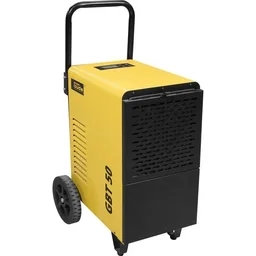
Reducing damp in the basement
Basements are one of the most common problem areas for moisture. Whether it is caused by summer condensation or poor waterproofing, a damp basement is hard to use and can put the whole house at risk. A construction dehumidifier can run continuously or seasonally to bring humidity down to a safer level, making the basement more suitable as a storage or hobby room.
Important note
Construction dehumidifiers work best at room temperatures between 15 °C and 25 °C. In unheated basements below 10 °C, performance drops sharply. If needed, use a fan heater to maintain a moderate temperature and help the space dry more effectively.
How do you set up and use a construction dehumidifier?
Even the best equipment won’t help much if you use it incorrectly. Follow a few simple steps to get the most from your construction dehumidifier and dry the space quickly and effectively.
Step 1: Prepare the room
Close all windows and exterior doors in the room you’re drying. The construction dehumidifier should dry the air inside, not the outdoors. Temporarily seal larger gaps, such as those under doors. If possible, remove wet carpets and furniture, or raise them on blocks so air can circulate underneath.
Step 2: Choose the right location
Place the construction dehumidifier as close to the center of the room as possible. Don’t put it right against a wall or in a corner. The unit needs space around it to draw in damp air and blow out dry air. Set it on a firm, level surface.
Step 3: Improve air circulation
Damp air moves slowly and can collect in corners and alcoves. Use one or more fans to help speed up drying. Position them to move air from the corners of the room toward the construction dehumidifier. This simple step can cut drying time by up to 50 %.
Pro tip
If the room temperature is below 15 °C, use a fan heater along with your construction dehumidifier. Warmer air can hold more moisture, which can improve the unit’s dehumidifying performance. Don’t point the heater directly at the construction dehumidifier.
Step 4: Keep it running
A construction dehumidifier can collect a lot of water—often 20, 50 or more liters per day. Empty the water tank regularly; the unit will shut off automatically when the tank is full. For continuous operation without supervision, such as when drying a new build, we recommend a model with a drain hose connection, such as the . This lets condensate drain directly into a drain.
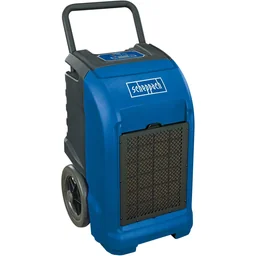
Rent or Buy a Construction Dehumidifier: Which Is Better?
The right choice depends on your specific needs. Both options have clear advantages and disadvantages, so weighing them carefully can save you time and money.
When to Rent a Construction Dehumidifier
Renting a construction dehumidifier is ideal for one-time or urgent situations. After water damage or when drying out a new construction, you may need a powerful professional machine for a limited time. Renting is more cost-effective in these cases, and you don't have to worry about maintenance or storage.
When Buying Is Worth It
Do you have a chronically damp basement? Do you use a drying room for your laundry? If you need to dry spaces repeatedly or for extended periods, buying your own machine is more economical. You can recoup the purchase cost quickly, and the machine is always ready to use. In the industrial supplies section, you'll find suitable models for every need.
Additional Advice
A construction dehumidifier's capacity is specified in liters per 24 hours (l/24h). As a general rule, a machine with a capacity of 20 l/24h is often sufficient for small basements (up to 50 m²). For large rooms or after water damage, consider models with a capacity of 50 l/24h or more.
What Mistakes Should I Avoid When Using a Construction Dehumidifier?
To get the best results and prevent damage, be aware of common mistakes. Improper use can slow the drying process or even create new problems.
Mistake 1: Ignoring the Cause
A construction dehumidifier treats the symptom (moisture), but it doesn't always address the cause. In the case of one-time water damage, the source is usually clear. But if your basement stays damp, you need to find out why. Is the exterior wall leaking? Is there a leak in a pipe? A faulty home drainage pipe system can cause a constant, unnoticed supply of moisture. Find and address the cause before starting long-term drying.
Mistake 2: Drying Too Quickly
Patience is especially important when drying a new construction. Drying too aggressively with excessive heat or machine output can cause cracks in fresh plaster or concrete. Materials such as wood or clay plaster are particularly sensitive. Proceed gradually and give materials time to release moisture slowly.
Drying a building too quickly and without proper control, often referred to as “shock drying,” can cause stress cracks in building materials such as concrete and plaster. Patience and careful, step-by-step adjustments to the machine settings are crucial for a successful renovation.
Mistake 3: Ventilating at the Wrong Time
Keep the windows closed while the construction dehumidifier is running. However, moisture in objects and walls also needs to escape into the room air. Ventilate at intervals: Turn off the dehumidifier and open all the windows for 10-15 minutes to create a strong draft (cross-ventilation). Then close the windows and restart the machine. This also helps draw out moisture trapped deeper inside.
A construction dehumidifier is an essential tool for preventing moisture damage. Used correctly, it protects your property's value, safeguards your health, and improves your quality of life. Whether you're dealing with an emergency involving plumbing + irrigation or maintaining your basement, the right know-how helps you get the most out of this powerful machine.
Frequently Asked Questions
- How long should a construction dehumidifier run?
- Runtime depends on the room size, moisture level, and machine capacity. Drying a new construction can take several weeks, while drying after water damage often takes one to two weeks. Regular moisture readings help you track progress.
- How much electricity does a construction dehumidifier use?
- Power consumption varies by model and capacity, typically ranging from 300 to 1000 watts. A powerful machine that runs for a shorter time is often more efficient than a less powerful model running continuously. Check the machine's energy efficiency.
- Can a construction dehumidifier remove mold?
- No. A construction dehumidifier removes the moisture mold needs to grow, helping prevent new growth. Existing mold must be removed separately by a professional after the source of moisture has been eliminated.
- What is the ideal temperature for a construction dehumidifier?
- Most condensation dehumidifiers work most efficiently at temperatures between 15 °C and 25 °C. Their performance drops significantly in cold conditions because cold air holds less moisture. If needed, gently heat cold rooms.
- Should windows be open or closed when using a construction dehumidifier?
- Keep windows and doors closed. The machine is designed to reduce humidity in the room, not to dry an unlimited amount of outdoor air. Open windows make the process inefficient and unnecessarily increase electricity costs.
You May Also Be Interested In
- Dehumidifiers: How to Fight Moisture in Your Home
- Construction Dehumidifier Review & Comparison 2026
- Water Damage in Your Home: Causes, Detection and Drying
- How to Remove Mold from Your Home: Causes and Long-Term Solutions
- Damp Fall, Cold Winter: How to Stop Mold Effectively
- How to Use Moisture Absorber Granules Correctly: Say Goodbye to Damp!