
In brief: For a secure hold, choose a bungee cord that reaches about 50-75% of its maximum stretch when tensioned. Always attach the hooks to stable anchor points with no sharp edges, and keep your face out of the cord's line of tension. Check the cords for damage before each use.
Bungee cords are unsung heroes in the workshop, yard, and trunk. They hold tarps in place during storms, secure bags to a bike rack, and bundle unruly cables. But their simple appearance can be deceptive. Used incorrectly, they may fail to hold securely or become a safety hazard. The right technique is essential for a reliable hold and your safety.
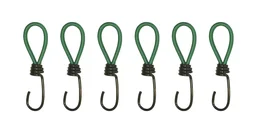
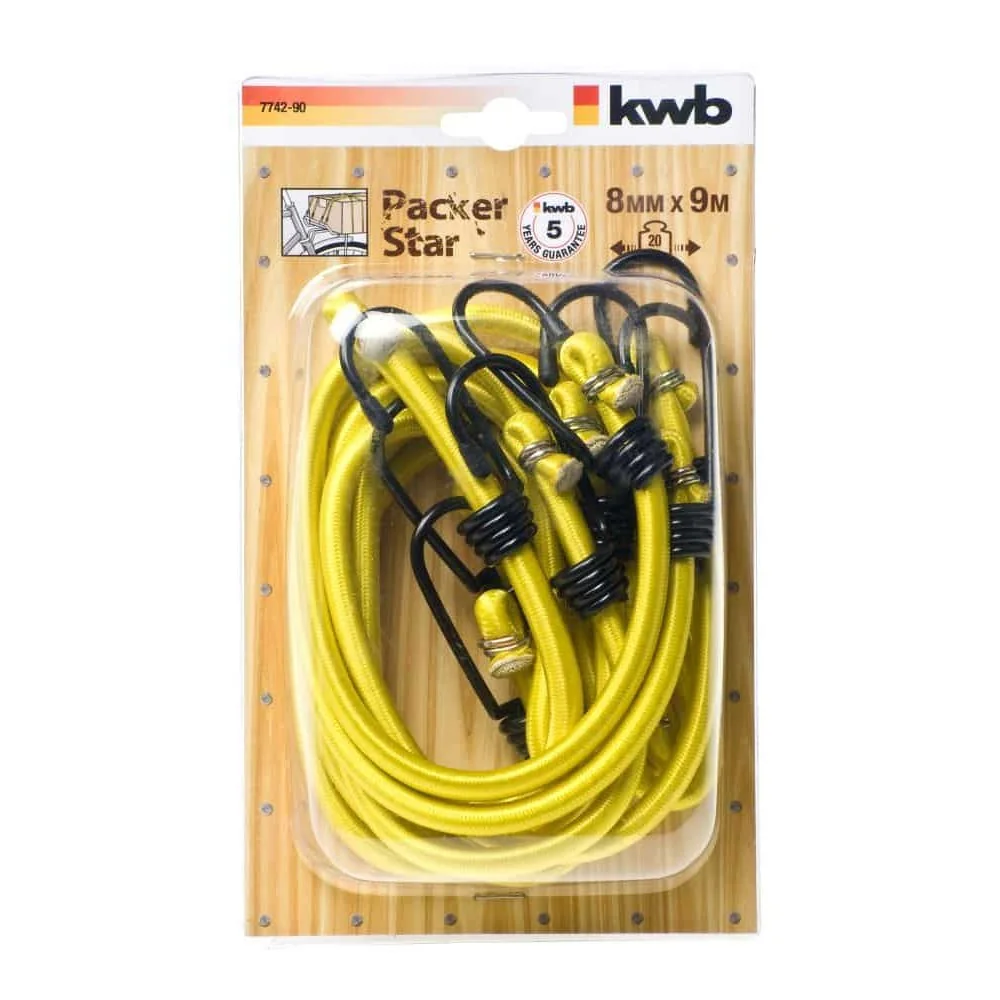
This guide shows you how to use bungee cords safely and effectively. From choosing the right cord to using the proper technique, you’ll learn what you need for reliable tie-downs. A versatile set like these Bungee cords for cargo nets and tarps, 6-pack is a great starting point for any basic kit. With these essentials, you can secure your cargo confidently and get the job done right.
Why is the right technique so important when using bungee cords?
A bungee cord stores a considerable amount of energy when stretched. If a hook comes loose unexpectedly or the cord snaps, that energy is released suddenly. The hook or end of the cord can become a dangerous projectile. Using the right technique minimizes this risk and helps protect you from injury, especially to your eyes.
Proper technique also helps you get the job done safely. A poorly secured tarp on a trailer can catch the wind at highway speeds and affect driving stability. Luggage that shifts in the trunk can be damaged or fly forward when you brake. Proper cargo securement is about more than keeping things organized; it is also required by law and essential for road safety.
Finally, proper handling extends the life of your equipment. If you constantly overstretch bungee cords or run them over sharp edges, the material wears out, the outer cover can tear, and the tension decreases. Use your cords correctly to help them hold securely, even after many uses.
A good bungee cord is a tool, not a toy. Treat it with respect, and it will serve you well for years to come.
How do you choose the right bungee cord for your project?
Not every bungee cord is right for every task. Choosing the right one depends on its length, the tension you need, the hooks, and the material. The wrong choice can undermine even the best technique.
Length and tension
The most important rule: Choose a length that keeps the bungee cord under tension without stretching it to its maximum. As a rule of thumb, a bungee cord should ideally be stretched to 50% to 75% of its maximum length. A 50 cm bungee cord should therefore bridge a distance of approximately 75 cm to 90 cm. If the bungee cord is too long, it will not be under tension and will not secure anything. If it is too short, you will overstretch it, weakening the material and increasing the risk of breakage.
Hooks and end fittings
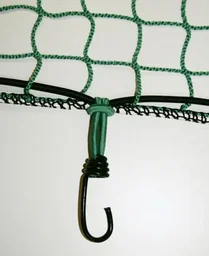
The hooks are the critical connection between the cord and the anchor point. Look for sturdy metal hooks that are firmly attached to the cord. Plastic hooks are only suitable for very light-duty use. Rubber-coated or plastic-coated hooks are a good choice if you want to protect delicate surfaces, such as painted bike frames or car parts. Make sure the hooks are sturdy and will not open under tension. Different sets suit different needs, such as this bungee cord set, which gives you flexibility.
Material and weather resistance
The core of a bungee cord is made up of many individual rubber strands. It is surrounded by a protective sheath, usually made of polypropylene (PP) or polyester (PES). The sheath protects the rubber core from abrasion, cuts, and especially UV radiation. UV-resistant models are essential for long-term outdoor use, since sunlight can make rubber brittle and prone to cracking. A high-quality sheath is tightly woven, with no gaps that expose the core.
Pro tip
Keep a selection of different lengths and thicknesses on hand. You may not know which combination works best until you get to the job site. A well-stocked set in your vehicle or workshop saves time and helps you avoid making do with the wrong cord.
How to Attach Bungee Cords: A Step-by-Step Guide
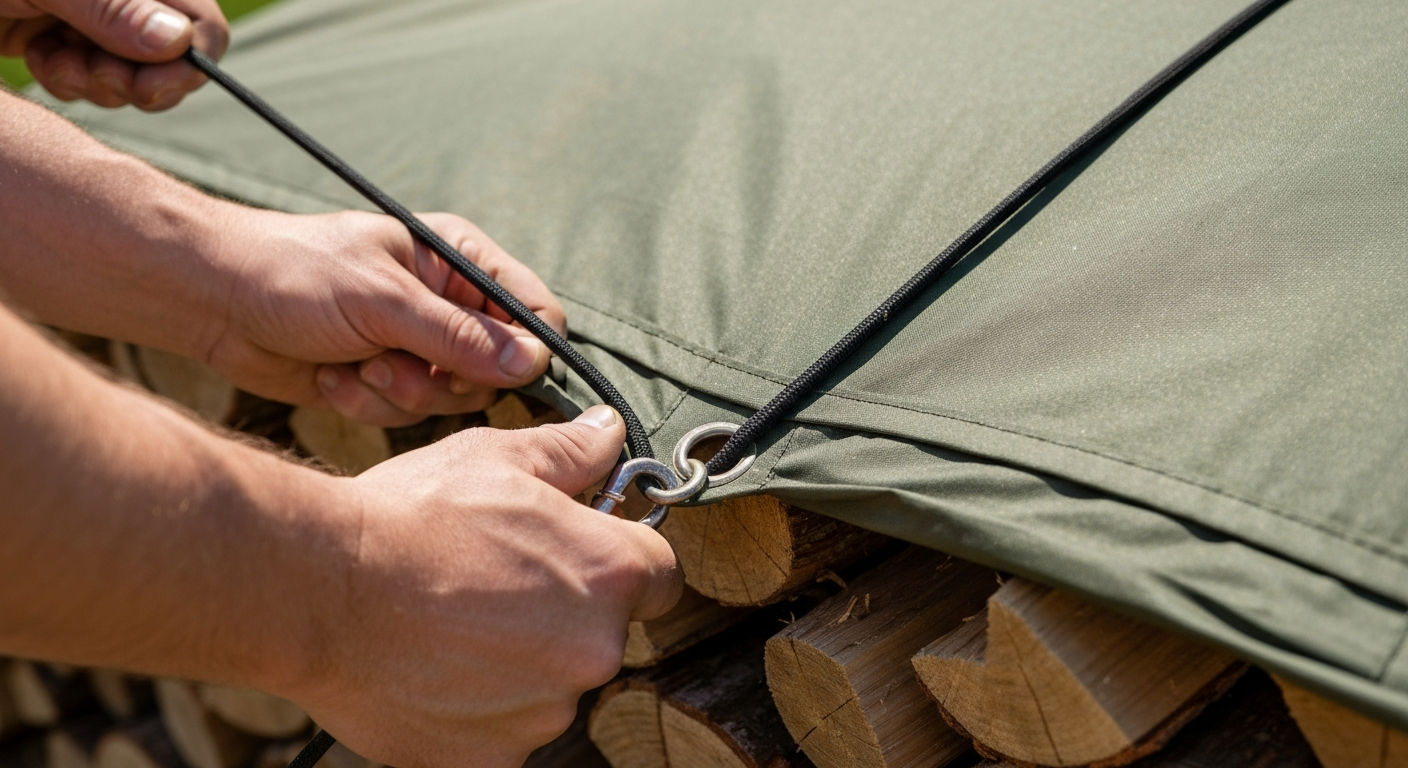
The right technique for attaching bungee cords is easy to learn and makes a big difference in safety and effectiveness.
Step 1: Check the anchor point
Look for stable, fixed attachment points. Suitable options include built-in hooks on trailers, sturdy bars on a luggage rack, or solid parts of a frame. Avoid sharp edges, which can wear through the cord's outer cover. In the garage or workshop, you can create fixed, secure anchor points with sturdy wall mounts and accessories.
Step 2: Attach the first hook securely
Position the first hook so it is fully engaged and cannot slip off. Ideally, the hook opening should face away from the direction of tension. That way, tension pulls the hook into the anchor point instead of pushing it away.
Step 3: Handle the bungee cord under controlled tension
Hold the cord with one hand and the hook with the other. Slowly and carefully pull the cord toward the second anchor point. Keep your body, especially your face, to the side of the cord's line of tension. If the hook slips off or the cord snaps, you will be out of its direct path.
Step 4: Attach the second hook
Secure the second hook as well, then check the tension. The cord should be taut and vibrate slightly when plucked, but it should not be stretched completely tight. A little elasticity is important so the bungee cord can absorb shocks and movement from the load.
Important note
Always wear safety glasses when working with highly tensioned bungee cords. A hook that snaps back can cause serious eye injuries. Safety should always be your top priority.
What are the most common mistakes when using bungee cords, and how can you avoid them?
Repeated use of bungee cords can lead to problems if you make a few common mistakes. Knowing what to watch for can help you avoid them.
- Overstretching: This is the most common mistake. A bungee cord that is repeatedly stretched to its limit quickly loses tension and can snap. Choose a shorter cord or another way to secure the load instead.
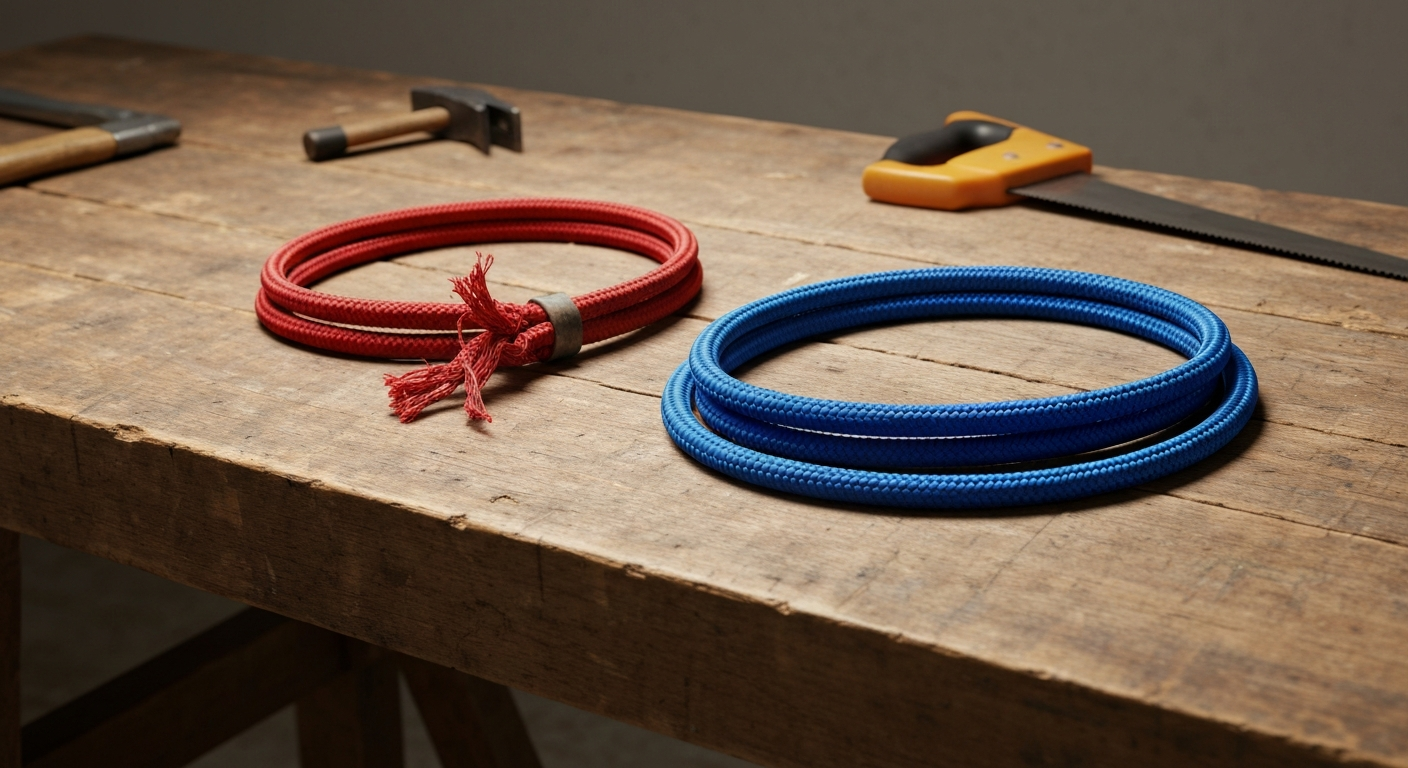
- Tying knots: Knots create points of extreme pressure and friction that can damage the outer sheath and weaken the rubber core. Always use the full length of the bungee cord.
- Using damaged cords: Check each cord before use. Is the outer sheath torn, does the cord feel slack, or is a hook bent? If so, dispose of the cord.
- Connecting several cords: Never connect several short bungee cords to cover a longer distance. The connection points are unreliable weak spots and create a significant safety risk.
- Using the wrong angles: Always secure loads downward or diagonally. Horizontal tension alone offers little protection against a load shifting upward if it gets jolted.
For large or oddly shaped items, a single bungee cord often isn't the best solution. In this case, a cargo net is a better choice. It distributes pressure across several points and holds the load securely over a wider area.
Creative and practical ways to use bungee cords every day
Bungee cords are more than just a way to secure loads. Their flexibility makes them handy in many everyday situations.
In the garden and around the home
Use tarps to cover firewood or patio furniture. The set PE tarp with bungee cords is perfect for the job. You can also bundle unruly garden hoses and hang them on the wall to keep them from becoming a trip hazard. Special hose holders are a more professional option, but bungee cords work well for quick organization.
In the workshop and garage
Bundle extension cords, ropes, or wires and hang them up to save space. Use bungee cords to secure lightweight, long items such as skis, fishing rods, or wood strips under the garage ceiling. This frees up valuable floor space.
Extra tip
Use bungee cords to organize your car trunk. Stretch a cord across the trunk to keep grocery bags and loose items from rolling around when you turn.
When camping and enjoying outdoor activities
Turn a bungee cord into a makeshift clothesline between two trees. Use it to attach extra gear, such as sleeping pads or jackets, to the outside of your backpack. In strong winds, you can also use it to add tension and stability to your tent rainfly.
How do I know when a bungee cord needs to be replaced?
Even the best bungee cord has a limited lifespan. Regular inspections are essential for your safety. Replace a bungee cord immediately if you notice any of these signs:
- Visible damage to the outer sheath: Look for cracks, abrasions, or frayed areas. If the white or black rubber core is visible through the colored outer covering, the cord is no longer protected.
- Loss of tension: If the cord feels noticeably longer than it used to, even when unstretched, or doesn't return to its original length after stretching, the rubber is worn out.
- Deformed or rusty hooks: A hook bent open can fail completely under load. Rust weakens the metal and can create sharp edges that damage the cord.
- Brittle or discolored outer covering: This is a clear sign of UV damage. A bungee cord in this condition has lost its flexibility and may break without warning.
The weakest bungee cord in your setup determines the safety of the entire load. Replace damaged cords right away. The low cost of a new bungee cord is negligible compared with the potential damage.
Bungee cords are simple but highly effective tools when used carefully. Choose the right product for the job, use a safe technique, and check your equipment regularly to help keep your load secure and yourself safe. A reliable set of bungee cords belongs in every home, workshop, and vehicle. Explore Westfalia's range of cargo securing and organization products.
Frequently Asked Questions
- How do I tension a bungee cord correctly?
- Hook one end onto a secure point. Pull the cord in a controlled manner toward the second anchor point, never stretching it to its limit. Keep your body out of the direct recoil path. The cord should be taut but still retain some elasticity to absorb shocks.
- Can bungee cords be left outside in the rain?
- Yes, most bungee cords have a weather-resistant covering made of polypropylene or polyester. However, prolonged exposure to UV rays and moisture can cause the material to deteriorate. Store them in a dry place away from direct sunlight when not in use to extend their service life.
- How long should a bungee cord be?
- Ideally, a bungee cord should be about half the length of the distance it needs to span. This provides optimal tension without overstretching the cord. A cord that is too long will not provide a secure hold, while one that is too short can snap and pose a safety risk.
- What is the difference between bungee cords and a cargo net?
- Bungee cords are individual elastic cords with hooks at both ends, ideal for securing items in a straight line. A cargo net consists of several arms extending from a central point. It is perfect for securing bulky or irregularly shaped items such as helmets or sleeping bags over a larger area.
- How can I tell if a bungee cord is damaged?
- Replace a bungee cord immediately if the outer covering has cracks or worn areas, the rubber core is visible, or the cord has noticeably lost its tension. Bent or rusty hooks are also a clear warning sign that it needs to be replaced.
You may also be interested in
- How to care for rubber and plastic properly: How to extend their service life
- How to attach a hoist correctly: Here's how
- How to use Allesdichter spray correctly: The professional guide
- How to install a scaffold sheet correctly: The step-by-step guide to reliable protection
- How to set wall plugs correctly: The complete guide
- Staple gun: How to use it correctly