
In brief: Lawn diseases such as snow mould or dollar spot can be identified by typical symptoms: round, brown patches, discoloured grass or cotton-like fungal growth. Treat them immediately by adapting your lawn care. Remove affected areas, aerate the soil and fertilise selectively. Prevention is the best protection – with proper watering, mowing height and suitable fertiliser.
Identify and Treat Lawn Diseases Effectively
Brown patches, cotton-like growth or yellow rings – lawn diseases can ruin a well-maintained lawn. You can identify the cause from the symptoms. Treat them with targeted measures. This guide shows you how to identify, treat and prevent lawn fungus and other diseases in the future.
How can I identify the most common lawn diseases?
A close look at patches and discolouration reveals the disease. Typical patterns and accompanying symptoms point to the diagnosis. Act early before the damage spreads.
Snow mould: Grey-brown patches after winter
Snow mould appears in spring as irregular, grey-brown patches. They are often 10 to 30 centimetres across. A pink or white, cotton-like fungal growth covers the grass blades in damp conditions. The cause is the fungus Microdochium nivale. Damp, cold weather and a snow-covered, compacted lawn encourage it.
Expert tip
Rake leaves off thoroughly in autumn. A layer of leaves retains moisture and provides the perfect breeding ground for snow mould. Mow the lawn to about 4 cm before winter, not shorter.
Rake affected areas thoroughly. This removes dead blades and fungal mycelium. Improve air circulation by scarifying. Overseeding with robust grass seed fills in gaps.
Dollar spot: Silver-dollar-sized, sunken patches
Dollar spot patches are small but persistent. They form silver-dollar-sized, straw-coloured and sunken patches. The grass dies back from the tips. In morning dew, you may sometimes see white mycelial threads. The fungus responsible is Sclerotinia homoeocarpa. It appears in warm, humid weather, especially when nitrogen is lacking.
„Dollar spot is a classic sign of nutrient deficiency. A regular, balanced fertilising programme is the best prevention. Don’t forget potassium for resilience.“
Treat dollar spot with nitrogen-containing lawn fertiliser for sports and play lawns. Water deeply, but less often. This allows the surface to dry out between waterings. Mow regularly, but not too short.
Red thread disease: Pink threads on the grass blades
You can identify red thread disease on the grass blades. Pink to red, gummy threads wrap around the leaves. The tips turn straw-coloured and yellow. The fungus Laetisaria fuciformis thrives in damp, cool periods in summer and autumn. Nitrogen deficiency and compacted soil encourage infection.
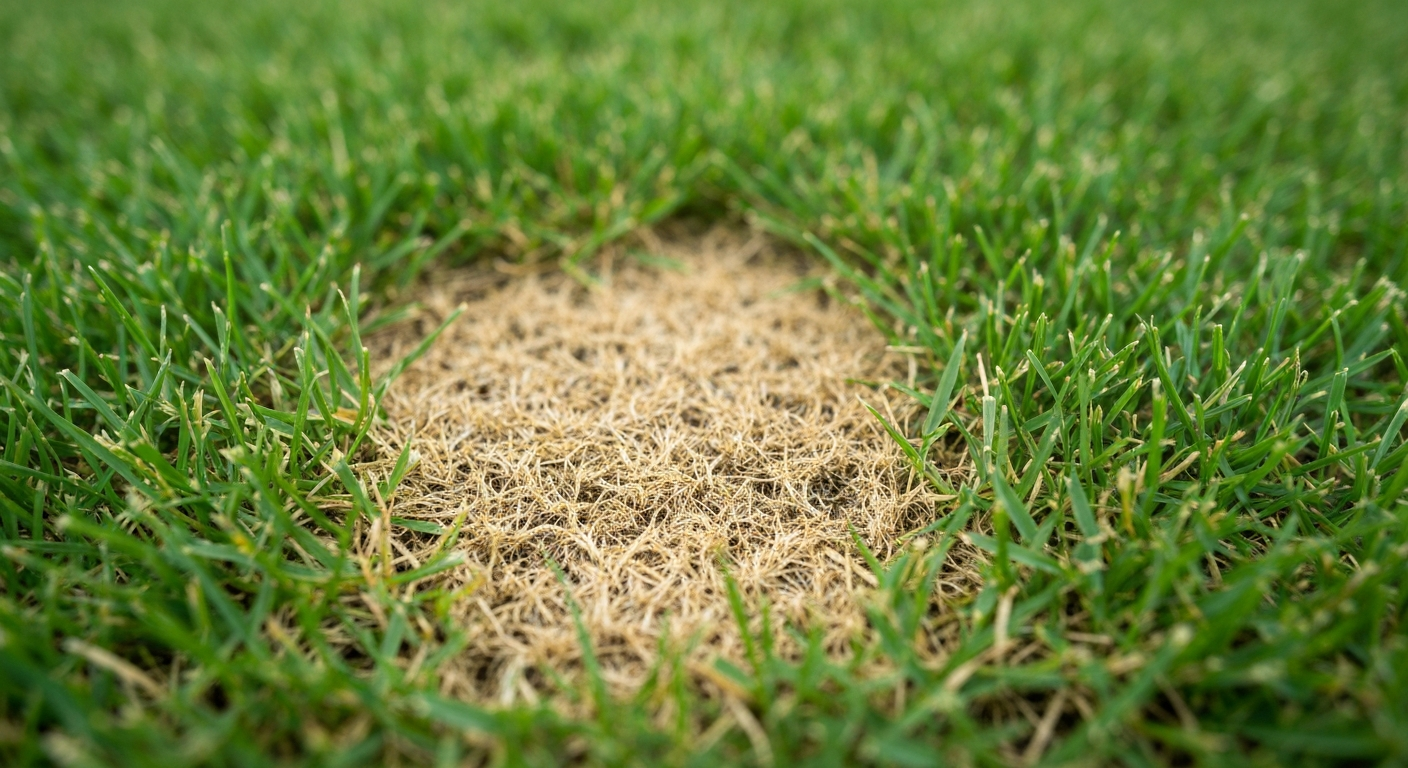
The treatment is straightforward. Fertilise with a fast-acting, nitrogen-rich lawn fertiliser. This strengthens growth and masks the infection. Scarify to reduce thatch. Ensure good soil aeration.
Why do brown patches appear in the lawn?
Brown patches have many causes. Not every brown patch is caused by fungus. You need to distinguish between them carefully to choose the right remedy.
Cause 1: Drought stress and heat
Grass withers when it lacks water. The patches are irregular, often in sunny areas or under trees. The grass feels dry and brittle. Water these areas deeply and directly. An organic lawn fertiliser can increase stress tolerance.
Important note
Never water in the evening. Wet leaves overnight invite fungal disease. Water in the early morning. The grass can then dry out during the day.
Cause 2: Crown rot (Fusarium)
This fungal disease causes irregular, light-brown patches. When wet, you may see a white or pink fungal growth. The roots and crown rot. High nitrogen fertilisation in summer and compacted soil encourage Fusarium.
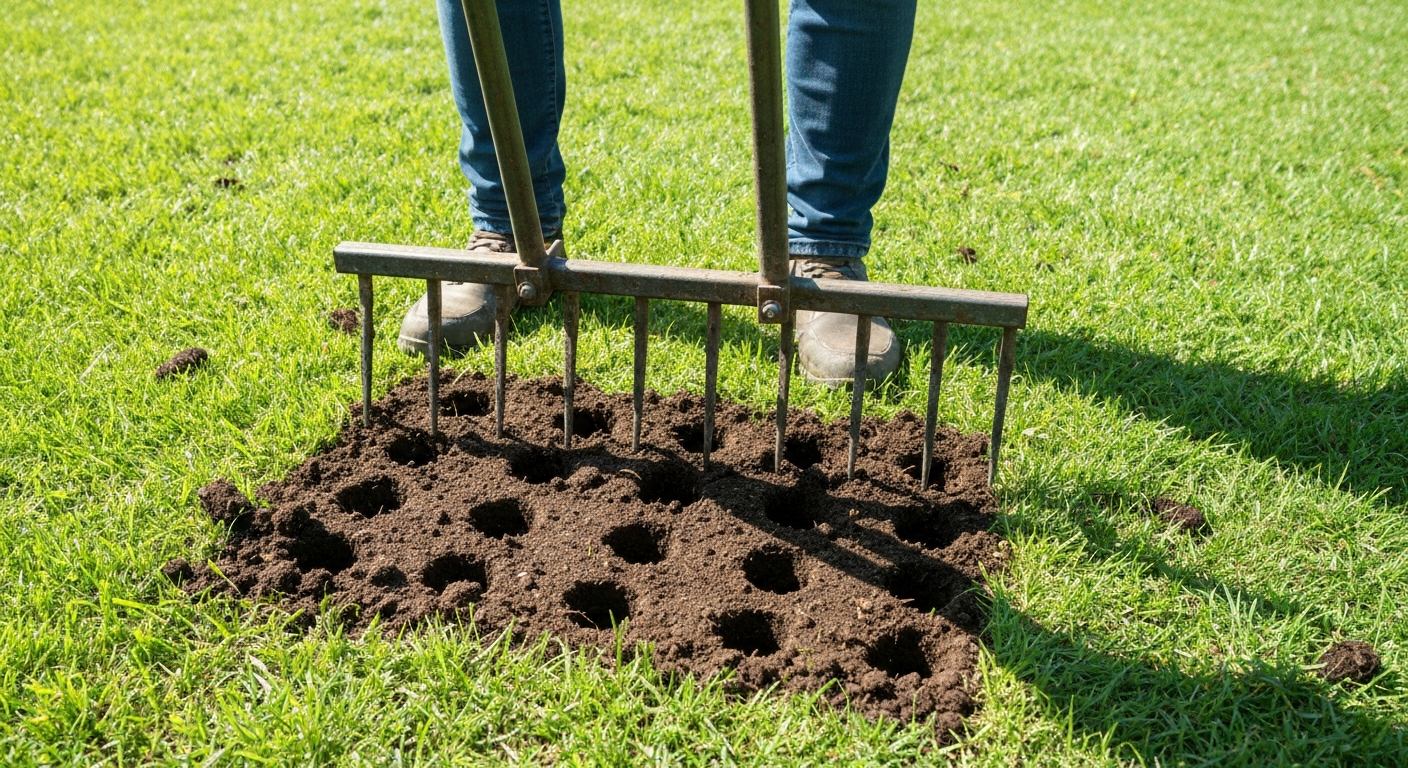
Stop nitrogen fertilisation immediately. Instead, apply a potassium-rich autumn lawn fertiliser. Aerate heavily compacted areas with a garden fork. Spread lawn sand into the holes to improve drainage.
Cause 3: Pet urine
Dog urine causes small, circular patches with a light-green ring around a dead centre. The high nitrogen content burns the grass. Rinse the areas immediately with plenty of water. Reseed if necessary. Special lawn care products can support recovery.
„Compaction is the lawn’s silent enemy. Without air at the roots, grass suffocates and becomes vulnerable. Aerating is not a one-off cosmetic treatment, but essential medicine for the soil.“
How can I treat lawn fungus effectively?
Treatment follows a clear three-step approach: remove infected material, make conditions less favourable for fungi and strengthen the lawn. Chemical fungicides are often the last resort.
Step 1: Mechanical removal
Rake the affected areas thoroughly. Dispose of the clippings and thatch in general waste, not on the compost heap. This prevents the spores from spreading. For widespread infection, scarify the entire lawn. Work the area lengthwise and crosswise.
Step 2: Optimise soil and care
Fungi thrive on moisture, compaction and nutrient imbalance. Change these conditions. Aerate the soil with an aerator or garden fork. Fill the holes with quartz sand. This improves drainage.
Additional advice
Test your soil pH. Many lawn fungi thrive in acidic conditions. If the pH is below 5.5, spread lawn lime. This makes the soil less attractive to fungi and improves nutrient availability for the grass.
Adjust your fertilising programme. In spring and summer, use nitrogen-rich spring lawn fertiliser. In autumn, switch to potassium-rich autumn lawn fertiliser. Potassium strengthens cell walls.
Step 3: Targeted overseeding and repair
Bare patches provide entry points for weeds and new fungal infections. Reseed them immediately. Loosen the soil slightly. Use a starter lawn fertiliser for repair areas. It contains phosphorus for rapid root development. Keep the reseeded areas evenly moist until germination.
How can I prevent lawn diseases in the long term?
Prevention takes less effort than treatment. A healthy, resilient lawn rarely becomes diseased. The right basic care is your best protection.
The right mowing height and frequency
Never remove more than one third of the blade length at a time. The ideal mowing height is 4 to 5 centimetres. Cutting too short weakens the grass and exposes the soil. Sharpen the mower blades regularly. Frayed grass blades are more susceptible to fungal infection.
Watering: Deep and infrequent
Water thoroughly, but not every day. Apply around 10 to 15 litres per square metre per week, divided into one or two applications. This encourages the roots to grow deeper. A deep-rooted lawn withstands dry periods better and is healthier. Avoid waterlogging.
Targeted fertilisation and soil care
Fertilise your lawn three to four times a year with a product suited to the season. A lack of potassium makes the grass soft and vulnerable. Too much nitrogen in autumn encourages fungal growth. Scarify once a year in spring to remove thatch. In areas with heavy traffic, use lawn grids to prevent compaction.
When do I need to use chemical fungicides?
Chemical treatments are the last resort. Use them for severe, rapidly spreading infestations that mechanical measures cannot stop. Products containing the active ingredients azoxystrobin or propiconazole are commonly used.
Apply fungicides exactly according to the package instructions. Never exceed the recommended dosage. Wear protective clothing. Treat in dry, calm weather. Observe the waiting periods before using the lawn again. Remember: fungicides only combat the current fungus. They do not address the causes. Always combine treatment with the care measures described above.
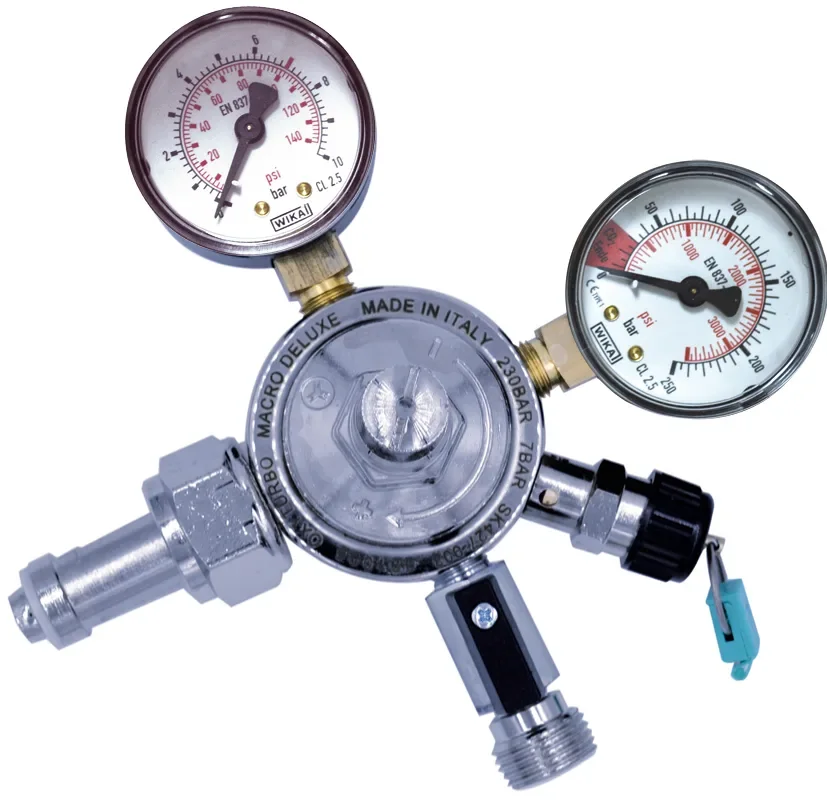
For the correct use of gas pressure regulators with certain devices, you will find the right accessories from us, such as the
, the matching and a reliable
A healthy lawn needs attention, but not constant work. Check your lawn regularly. Respond promptly to the first signs of trouble. With the right care, appropriate fertilisation and good aeration, you can significantly reduce the risk of lawn diseases. Your reward is a permanently lush green, resilient lawn.
Frequently Asked Questions
- What are the most common lawn diseases in gardens?
- The most common lawn diseases are snow mould, dollar spot, red thread and take-all root rot. Snow mould appears in spring as grey-brown patches with a pink edge. Dollar spot produces small, silver-dollar-sized brown spots. Red thread can be identified by pink to red threads on the grass blades. The causes are often damp weather, nutrient deficiency or mowing too short.
- How can I tell lawn diseases apart from drought damage?
- Drought damage causes grass to turn uniformly brown and straw-like, often recovering after watering. Lawn diseases show characteristic patterns: round patches, coloured fungal spores or cotton-like mycelium. Touch the grass. With a fungal infection, the blades are often mushy or stuck together. Dry grass crumbles. Diseases often spread in circular patterns, while drought damage follows sun exposure or watering patterns.
- Can I treat lawn fungus with home remedies?
- For mild infestations, baking soda or diluted vinegar may help. Sprinkle baking soda lightly over damp patches. It raises the pH level and inhibits fungi. Vinegar works similarly, but can damage grass – test it on a small area first. These remedies only treat the symptoms. Address the cause by aerating, top-dressing with sand and fertilising correctly. Severe infestations require specialist fungicides from a retailer.
- Which lawn fertiliser helps prevent diseases?
- An autumn lawn fertiliser rich in potassium strengthens cell walls and makes grass more resistant to frost and fungi. In spring, use a nitrogen-rich lawn fertiliser to encourage strong growth. Avoid overfertilising with nitrogen in autumn, as this promotes fungi. Organic lawn fertiliser works slowly and gently. A balanced nutrient ratio (NPK) is essential. Apply lime if the soil is too acidic to create less favourable conditions for fungi.
- How can I prevent new lawn diseases?
- Never mow too short. Maintain a mowing height of 4-5 cm. Water thoroughly but infrequently, ideally in the morning. This allows the grass to dry quickly. Scarify regularly to remove thatch. Fertilise according to requirements, for example with starter lawn fertiliser for overseeding. Aerate compacted soil with a garden fork or aerator. Sow robust lawn seed mixtures suited to your location. Healthy, vigorous grass can fend off diseases naturally.
You might also be interested in
- Lawn care: How to make your lawn green, thick and healthy
- Identifying and effectively treating rose diseases
- Find the right lawn fertiliser
- Creeping weeds in the lawn: Effective control methods
- Lawn fertiliser with weed killer: An effective combination for a flawless lawn
- Lawn seed: Sown too much? Tips for the perfect lawn