
In brief: Ivy (Hedera helix) is suitable as an evergreen ground cover for shady to partially shaded beds. Plant rooted shoots in loose, humus-rich soil, keep them moist at first and regularly control their growth. This allows ivy to fill gaps, protect the soil and stay green even in winter.
Ivy (Hedera helix) is suitable as an evergreen ground cover for shady to partially shaded beds. Plant rooted shoots in loose, humus-rich soil, keep them moist at first and regularly control their growth. This allows ivy to fill gaps, protect the soil and stay green even in winter.
Why is ivy suitable as ground cover?
Ivy is one of the few plants that reliably forms a green carpet in the shade. As ground cover, it uses its long, flexible shoots, which lie along the ground and form roots where they touch the soil. This allows it to cover bare soil beneath woody plants, on the north-facing sides of buildings and in garden areas that are difficult to plant.
The leaves usually remain on the plant over winter. Ivy therefore replaces bare soil with lasting structure and remains effective even when perennials have died back or deciduous trees and shrubs have lost their leaves. Individual leaves may be damaged by severe frost or on very exposed sites, but the plant usually grows back in spring.
Key characteristics in the bed
- Year-round greenery: In many regions, ivy provides a continuous, calm-looking bed area even in winter.
- Spreading growth: The trailing shoots cover gaps and reach places where lawns or flowering perennials receive too little light.
- Shade tolerance: Ivy grows reliably beneath trees and shrubs as long as the soil does not remain permanently dry.
- Soil protection: The dense foliage shades the soil, slows evaporation and protects the ground from the impact of rain.
- Habitat: Established ivy provides hiding places for small animals. Its late flowers provide insects with food in autumn.
Its vigorous growth is also its limitation. Ivy remains a clearly defined ground-cover plant only if you regularly prune shoots that grow beyond the intended area. Without control, it climbs fences, trees, walls and garden sheds.
“Hedera helix is an evergreen, self-clinging climbing plant that can grow both along the ground and on supports.”
What is the difference between an ivy hedge and a bed of ground cover?
For an ivy hedge, guide the shoots deliberately along a sturdy fence, trellis or chain-link mesh. The plant clings to rough surfaces on its own, but a taut support helps create even coverage and keeps the growth in the desired plane.
A hedge needs more formative pruning than ground cover. Decide on the desired height and width early, cut back shoots growing beyond the sides and do not allow any shoots to grow into roof areas or neighbouring trees and shrubs. In a bed, ivy can spread flat across the area as long as the edges remain clear.
Which location and soil suit ivy?
The best location for ivy is in shade or partial shade. North- and east-facing sides, areas beneath light tree canopies and beds next to walls offer suitable light conditions. Varieties with variegated leaves generally need more light than dark-green common ivy.
Shade, partial shade or sun?
Morning sun and filtered light suit ivy well. In a sunny location, it needs more soil moisture, especially while it is becoming established. In intense midday sun, the leaves may dry out or become discoloured in winter due to frost and sunlight.
Avoid hot, completely paved locations and narrow strips beside a sun-heated south-facing wall. The soil dries out quickly there, while the clinging shoots also grow up the facade. A sheltered spot beneath larger trees and shrubs is better for ivy.
How to prepare the soil
Ivy grows in humus-rich, loose and well-drained soil. Waterlogging leads to weak roots, yellow leaves and sparse growth. Improve very sandy soil with mature compost, and loosen heavy soils with compost and mineral structural material.
Loosen the area to a depth of about 20 to 30 centimetres before planting. Remove perennial weeds completely, as they are difficult to control once the ivy cover becomes dense. Do not mix fertiliser directly into every planting hole; instead, improve the entire area evenly.
Location check before planting
- Light: The spot is shaded or receives no more than a few hours of gentle sunlight.
- Moisture: The soil remains moist after watering without becoming waterlogged.
- Spacing: Walls, paths, lawns and sensitive perennials can be kept clear of the plant's future growth.
- Ground: The soil can be loosened deeply and contains no compacted layers of building rubble or roots.
For soil preparation, you can find suitable garden and plant care supplies. Plan the area so that you can reach every plant later without stepping on the shoots.
How do you plant ivy as ground cover?
When planting ground cover, preparation has more impact on success than starting with a particularly dense planting. Buy strong, well-rooted plants with healthy foliage and plant them in frost-free soil. Container-grown plants can also be planted outside the main planting season if you provide enough water, but avoid hot summer days.
Planting time and spacing
Spring and early fall are especially suitable. In spring, the plants have the whole season to develop their roots; in fall, the soil is often still warm and evaporation is low. The roots should have several weeks to establish before the first hard frost.
Spacing plants about 30 to 40 centimeters apart gives you approximately 6 to 10 plants per square meter. For a quickly covered area, plant them closer together; for a smaller budget, space them further apart. Larger plants fill gaps more quickly, but cost more per square meter.
How to plant ivy step by step
- Mark out the area: Mark the flower bed and decide where the ivy should stop. Take future trimming access into account.
- Remove weeds: Carefully dig out couch grass, ground elder and other root weeds. Small pieces of root may sprout again later.
- Loosen the soil: Work the soil deeply and mix in mature compost if necessary. Break up compacted layers completely.
- Prepare the root ball: Water dry container-grown plants until no more air bubbles rise to the surface. Carefully loosen any outer roots that are tightly circling.
- Plant the ivy: Dig a hole about one and a half times as wide as the root ball. Plant the ivy at the same depth as it was in the pot.
- Water and mulch: Firm the soil down lightly, water thoroughly and spread a 3 to 5 centimeter-thick layer of mulch. Keep the base of the stems clear.
For a neat flower bed edge: The flexible brown lawn edging separates ivy from lawns and paths. The 10 centimeter-high flower bed edging can be laid along straight and gently curved boundaries.

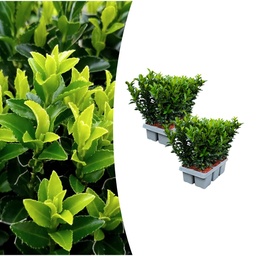
As an alternative evergreen planting: The creeping spindle ‘Green Spire’ is suitable for gardeners who want to add a lower, hardy ground cover alongside ivy. Check the space requirements before combining both plants, as ivy can grow over slower-growing neighbors.
Pro tip
Plant ivy in staggered rows. This creates fewer straight gaps between the root balls. Mark the desired outer edge with string or lawn edging immediately after planting and trim back runners early.
How do you care for and prune ivy in a flower bed?
Ivy needs regular monitoring after planting, but requires comparatively little care later on. The main tasks are watering, moderate feeding and trimming it back at the edges. A dense planting can tolerate short dry periods, but not persistently compacted or waterlogged soil.
Watering and mulching correctly
Water newly planted ivy thoroughly during the first few weeks. Check the soil several centimeters deep with your finger and only water once the surface has dried out. During prolonged dry spells, water in the morning or early evening, directing the water onto the soil.
Under trees, ivy competes with the tree’s roots for water. Check these areas even after rainfall and water slowly if necessary. A loose mulch layer made from leaf compost retains moisture, but should not lie directly against the shoots.
For tools to ensure an even water supply, visit the garden irrigation category. Soaker hoses or watering rings deliver water directly to the roots and keep the foliage dry.
How much fertilizer does ivy need?
On good garden soil, a thin layer of mature compost in spring is usually enough. If growth is visibly weak, use an organic fertilizer or one suitable for evergreen plants according to the manufacturer’s instructions. Too much nitrogen produces soft, long shoots and increases the amount of trimming required.
Do not spread fertilizer over dry soil, and water afterward. Stop applying nitrogen-rich fertilizer from late summer onward so that the shoots can mature before winter. You can find more products under plant and flower fertilizer.
How to prune ivy correctly
Trim the edges as soon as shoots start growing onto lawns, paths or other flower beds. Sharp garden shears produce clean cuts; for larger areas, hedge trimmers or cordless trimmers make the job easier. Clean your tools after pruning, especially if the plant appears diseased.
In spring, remove dead or damaged shoots and shape the planting. A second corrective trim in late summer keeps an ivy hedge or fast-growing flower bed edge compact. Do not cut blindly into dense growth; check the plant for nests and wildlife first.
If necessary, you can rejuvenate an old, woody ivy planting. Spread the pruning over several years if the planting is large, and water the remaining shoots during dry spells. Do not dispose of fresh, rooted cuttings in the flower bed, as they may take root and grow there again.
How to identify pests and leaf problems
Ivy is robust, but waterlogging, drought stress and dense shade can encourage leaf spots or shoot dieback. Yellow leaves often indicate soil that is too wet, while limp leaves despite moist soil may point to root damage. Remove diseased plant parts and improve the growing conditions first.
In the event of a confirmed infestation, regularly check the leaves and shoots for spider mites, scale insects or fungal spots. Information on suitable measures is available in the plant protection section. Apply treatments selectively and according to the instructions.
Important note
Ivy leaves and especially the berries are poisonous to people and pets. Wear gloves when pruning and remove clippings from play areas and areas used by pets. Also check walls, fences, roofs and trees regularly before the climbing roots conceal any damage.
What are the benefits and limitations of ivy in garden design?
Ivy adds structure to areas that are difficult to cover with flowering plants. Under mature trees, on shady slopes and alongside garden walls, it forms a green carpet that keeps the bed looking full even outside the flowering season. In a naturalistic garden design, it connects shrubs and trees, paths and different levels.
Why evergreen ground covers are so popular
- Less bare soil: A planted area dries out more slowly and offers weed seeds fewer open places to germinate.
- A calm winter look: The foliage remains visible when perennials have been cut back and deciduous trees have lost their leaves.
- Versatile use: Ivy is suitable for areas, bed edges, slopes and greening sturdy climbing supports.
- Low maintenance: Once established, it usually only needs an occasional trim at the edges rather than daily care.
- Ecological value: Its late flowers and dense growth provide food and shelter for various animals.
“With its late flowers, ivy provides food for insects when many other garden plants have already finished flowering.”
What limitations should you plan for?
Ivy is not a maintenance-free filler plant. Its shoots can grow over the edge of a bed, spread into neighboring perennials and climb up any support they can reach. For this reason, do not plant it where you want to keep a small plant permanently in a confined space without pruning.
Delicate, low-growing perennials often receive too little light beneath ivy. Combine plants carefully and leave enough space between individual groups. A bed planted solely with ivy looks more uncluttered and is easier to control than a densely mixed bed with slow-growing species.
Keep ivy away from damaged masonry, open joints, roof edges and gutters. On small or weakened trees, the weight of old shoots can become a problem. Cut climbing shoots back early and remove them carefully if they are growing outside the intended area.
How to use ivy in a controlled way
Before planting, define three boundaries: the lawn, neighboring plants and all structures. A sturdy bed edging makes maintenance easier, while a clear strip along walls and paths improves control. The garden tools category offers suitable equipment for tools and cutting devices.
Under trees and shrubs, you can use ivy as a calm ground cover and add individual splashes of color with spring bulbs or shade-tolerant perennials. Leave these plants enough space and monitor the area during the first year. As soon as ivy starts crowding a neighboring plant, cut the affected shoots back to the desired boundary.
Additional advice
Mark out the future bed edge with a garden hose before planting and view it from several angles. A gently curved line looks more natural, while a straight line suits formal beds. Take a photo of the area after planting so you can reliably assess its annual growth.
Annual ivy care plan
- Spring: Remove damaged shoots, loosen the areas around the edges and add compost if necessary. Check whether ivy has spread into the lawn or neighboring beds.
- Early summer: Check the soil moisture and water beneath trees during prolonged dry spells. Remove weeds while their roots are still easy to reach.
- Late summer: Correct the bed edge and trim an ivy hedge into shape. Leave flowering areas in place for as long as possible if they provide food for insects.
- Autumn and winter: Remove loose pruning debris, check climbing shoots near structures and water young plants before longer periods of frost if the soil is dry.
Conclusion: Ivy is suitable as ground cover if you want to green a shady, humus-rich location and consistently keep its vigorous growth within bounds. With suitable spacing, good watering during the first year and regular trimming along the edges, the area will remain dense, green and easy to maintain over the long term.
Frequently Asked Questions
- Is ivy suitable as ground cover for every garden bed?
- Ivy is best suited to shady and partially shaded beds with humus-rich, well-drained soil. It can become problematic in full sun, on dry south-facing slopes or next to delicate perennials. Also check walls, trees and paths to ensure the shoots do not spread into unwanted areas.
- How quickly does ivy cover an area?
- This depends on the variety, plant size, location and spacing. With vigorous young plants spaced around 30 to 40 centimetres apart, a closed cover can develop under good conditions after several years. Keep the soil moist while the plants are establishing and remove competing weeds so the ivy gets off to a fast start.
- When should you prune ivy in a garden bed?
- Trim overhanging shoots in spring or late summer as soon as they reach paths, lawns or neighboring plants. Before any heavier pruning, check the plant for nests and other animals. An ivy hedge usually needs one or two shaping cuts per year, while a ground-cover area can often be managed with occasional edge trimming.
- Is ivy hardy and evergreen?
- Common ivy is hardy in many regions of the UK and retains its foliage during the cold season. Young plants are more sensitive to hard frost and winter sun. A layer of mulch, sufficient soil moisture before frost and a sheltered location help plants establish during their first year.
- Can ivy damage house walls or trees?
- On intact masonry, ivy usually clings to the surface, but its shoots can reach cracks, joints, roofs and gutters. On small or weakened trees, dense growth increases the load and makes control more difficult. Keep ivy away from damaged walls and consistently cut it back at boundaries.
You might also be interested in
- Ivy in the garden: A magnet for beneficial insects
- Ground covers to prevent weeds: Effective plants for your garden
- Ivy developing yellow leaves: Causes and solutions
- Yew trees in the garden: What to know about planting and care
- Caring for evergreen plants: How to keep them looking beautiful all year round
- Planting hedges: Planning, planting and choosing the right hedge for your garden