
In brief: Our 2026 label review and comparison shows that the right choice depends largely on how you plan to use your labels. For everyday use at home, practical dispensers with a medium-sized supply are ideal. For offices and shipping, bulk packs of simple address labels are a good choice. Specific needs, such as water-soluble or security labels, call for a more targeted selection. We compare the most important types.
Good organisation makes all the difference, and labels are indispensable helpers. Whether you're keeping your home tidy, running an efficient office or organising a workshop, the right labels bring order to every space. But there are so many self-adhesive labels to choose from. Which type is right for each job? Which features should you look for? Our 2026 label review and comparison covers the main product groups and offers a clear buying guide.
Contents
What types of labels are available?
Before choosing a product, it helps to know the main types. The material and adhesive determine how you can use a label.
Materials and finishes
Paper is the most common material. It's inexpensive and works well for most indoor uses. Glossy film and polypropylene offer a more durable surface that resists moisture, dirt and light abrasion. High-quality polyester labels are especially tough and long-lasting.
Comparing adhesive types
The adhesive makes all the difference. Permanent adhesive sticks firmly and is difficult to remove, making it ideal for long-term labelling. Removable adhesive comes off without leaving residue, so it's suitable for rental items or temporary notices. Special adhesives, such as high-temperature or freezer-grade adhesives, are made for extreme conditions.
Tip: Test the adhesive on an inconspicuous area of the surface before applying labels more widely. This helps prevent unwanted residue or damage.
Top Labels Compared
Here are the key product groups in our range, along with their strengths and ideal uses.
Labels in a dispenser for maximum efficiency
Labels in a dispenser are a great choice for quick, everyday use. The built-in dispenser makes it easy to peel off labels cleanly. This saves time and hassle. A typical product in this category is
: self-adhesive labels in a dispenser with 500 pieces. This pack is ideal for a home or small office where containers, folders, or food need to be labeled regularly.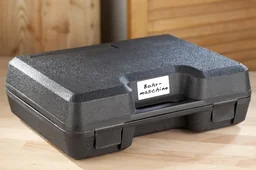
Address labels for the office and shipping
Address labels are essential for mailing letters and packages, and are often sold in large quantities. One example is
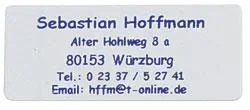
: self-adhesive address labels with a yellow background, in a pack of 1000. The colored background makes them easier to spot. For a more understated, professional look, labels with blue lettering and no border are a good choice. The right option depends on your company’s branding or personal preference.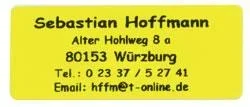
Specialty labels for specific needs
Standard labels aren’t right for every job. That’s where specialty products come in.
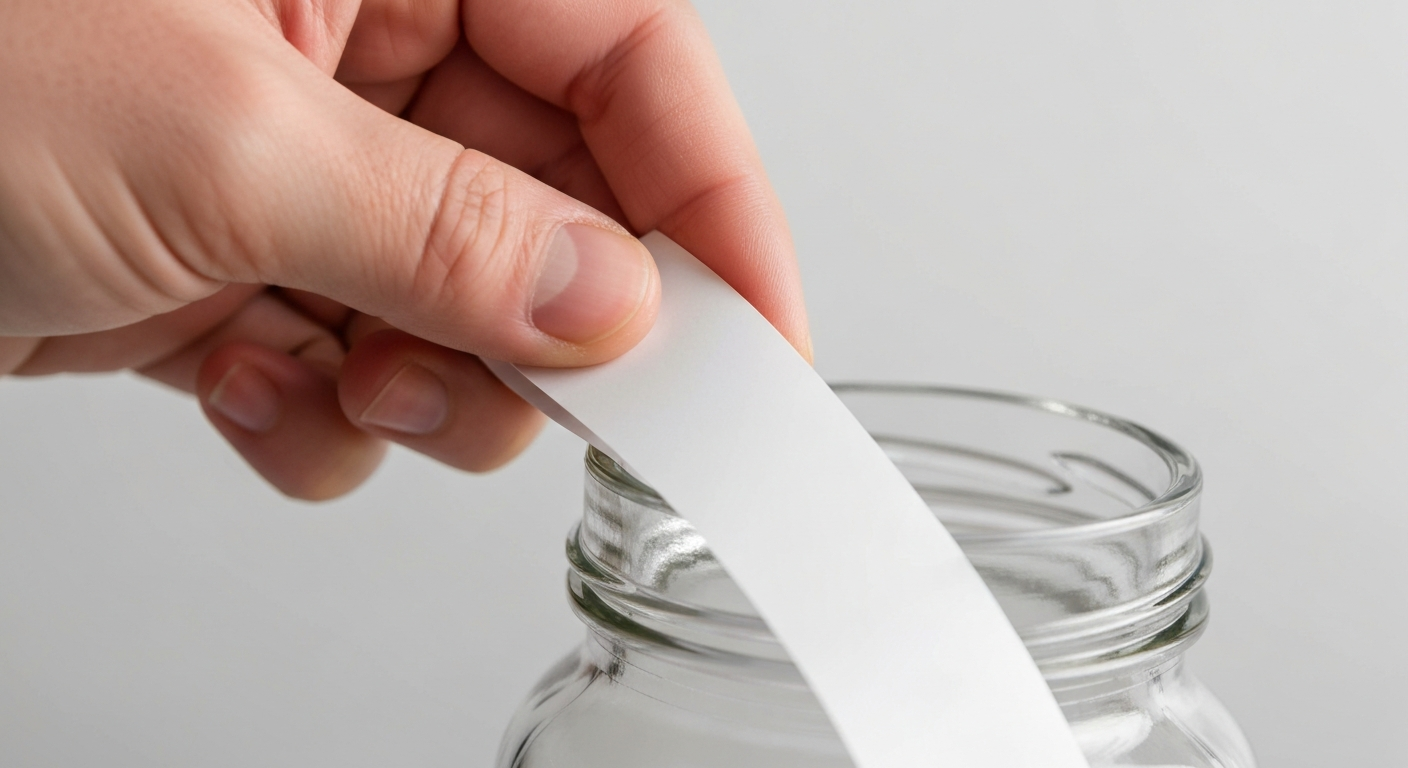
are adhesive labels that dissolve in water. They dissolve completely when washed or rinsed under running water, leaving no residue. They’re ideal for labeling borrowed glasses, rented dishes, or temporary samples.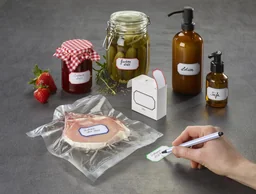
Themed and safety labels
Labels can be used for more than identification: they can also add decoration or improve safety.
are Christmas labels that come with a dispenser. They add a personal touch to gifts or bring a festive feel to the kitchen. Floor and wall stickers are also useful for safety and organization. ("Keep your distance / Figure") and ("Keep your distance / Feet") provide visual guidance to improve safety and navigation in public spaces and workplaces.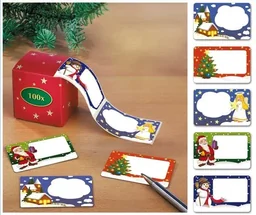

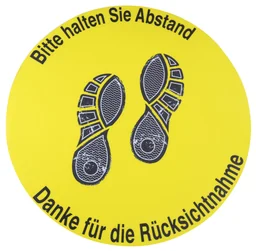
Warning: Use safety stickers such as floor markings only with the adhesives intended for them, and apply them to suitable, clean surfaces. Incorrect application can create a tripping hazard or make the warning less effective.
Buying guide: What should you look for?
These tips will help you choose the right labels.
Consider how you’ll use them
Ask yourself: Where will the label go, and how long does it need to stay in place? Will it be in a dry cupboard, on a dishwasher that gets cleaned often, or in the freezer? Is the label permanent or temporary? Your answers will help determine the right material and adhesive.
Choose the right quantity
Don’t buy more than you need if you’ll only use the labels occasionally. The adhesive may lose strength over time. For regular use at home or in the office, a larger pack is a good value, such as the 500-piece pack from . Browse our labels category to find the right size for your needs.
Size and design
Check the dimensions. Will the label fit where you plan to use it? Do you want to print on it? If so, is the material compatible with your printer (laser or inkjet)? Plain white labels are the most versatile for printing. Preprinted labels such as "Address" or "Contents" can save time.
Note: Printer compatibility is essential. Thermal transfer labels need a special ribbon, while direct thermal labels react to heat. Check your printer type before buying.
Label Uses at a Glance
Labels are versatile all-rounders. Here’s a quick guide to choosing the right type for each use.
Home and Food Storage
Labels keep cupboards, freezer compartments and craft boxes organised. Label jars, tins and storage containers with their contents and date. Handy labels in a dispenser are ideal for this. Find more useful helpers for an organised home.
Office and Organisation
In the office, labels make it quick and easy to identify folders, files, cables and equipment. Colour-coded systems help prioritise tasks or sort items by department. Bulk address labels make shipping easier.
Commercial and Industrial Use
These settings often call for labels that can withstand oils, chemicals, extreme temperatures or harsh weather. Barcodes, logos and safety information are printed directly on the labels. Choosing the right labels is especially important for these applications.
Design and Print Your Own Labels?
Many people use blank labels and print them at home or at work for maximum flexibility.
Benefits of Printing Your Own Labels
You can choose any design, font and layout. Custom logos, barcodes and matching company labels are easy to create. You can print exactly the number you need.
Disadvantages and Limitations
Buying a suitable label printer or using a standard printer adds to the cost. Basic paper labels may not hold up well in damp conditions. For large print runs or specialist materials, professional printing is often more cost-effective.
Caring for and Storing Labels
Follow these tips to keep labels and their adhesive in good condition for longer.
Optimal Storage Conditions
Store labels in a cool, dry place out of direct sunlight. Excessive heat can activate the adhesive too soon, while moisture can cause paper labels to wrinkle. Keep labels in their original packaging until you need them.
Cleaning Labelled Surfaces
Take care when removing a label that is firmly stuck in place. Warm it gently with a hair dryer to loosen the adhesive. Use a specialist adhesive remover or isopropanol to remove residue, testing it on the surface first. Find suitable tools in our household products section.
Label Trends and Innovations
Labels are constantly evolving.
Sustainability in Focus
More manufacturers are using recycled materials, compostable films and adhesives made from renewable resources. Demand for more environmentally friendly options continues to grow.
Smart Labels
NFC and RFID chips in labels let them communicate wirelessly with smartphones. They can help track product information, inventory and supply chains in real time. This technology is especially popular in logistics.
Our Label Reviews & Buying Guide 2026 shows that there is no single best label for every job. The right choice depends on the material, adhesive, quantity and intended use. Whether you need a handy kitchen label dispenser, bulk address labels for the office or water-soluble labels, our buying guide can help you find the right product.
Our top-rated labels, compared:
| Model | Customer rating | Availability |
|---|---|---|
| Labels in a dispenser, 200 pieces 🏆 Test winner | ★ 5,0 (1) | Currently unavailable |
| Address labels with yellow background, self-adhesive, 1000 pieces | – | Currently unavailable |
| Address labels with blue lettering, borderless, self-adhesive, 300 pcs. | – | Currently unavailable |
| Adhesive labels in a dispenser, 500 pieces | – | Currently unavailable |
| Self-adhesive labels, water-soluble, 200 pieces | – | Currently unavailable |
Frequently Asked Questions
- Which labels last the longest?
- Durability depends on the label material and adhesive. High-quality polyester or polypropylene labels with permanent adhesive can last for years, even when exposed to moisture or UV light. Paper labels with standard adhesive are suitable for short- to medium-term indoor use.
- Can I use any printer ink for labels?
- No. Choose labels that are compatible with your printer. Direct thermal labels do not need ink or toner, while thermal transfer printers require special ribbons. Laser and inkjet printers often need different label materials. Check the manufacturer's specifications.
- Are all labels self-adhesive?
- No. Alongside the more common self-adhesive labels, there are iron-on and sew-on labels, as well as water-soluble labels for temporary use. Choose the right type for the surface and how long you need the label to last.
- What are the advantages of labels in a dispenser?
- A dispenser makes labelling quick and easy. Pull off one label at a time without a struggle. This saves time and helps prevent creases and adhesive residue on your fingers. Dispensers are ideal for frequent use.
- What are water-soluble labels used for?
- Water-soluble labels are ideal for temporary labelling when you need to remove them without leaving residue. Common uses include labelling rental tableware, borrowed items, glasses at events and laboratory samples.