
In brief: The right choice between a ladder and scaffolding depends on the job. For quick, simple tasks at moderate heights, a ladder—especially a versatile multipurpose model—is a great choice. For complex, extended jobs or uneven ground, scaffolding provides a safe, stable work platform. Our 2026 comparison highlights the features to look for.
Planning a project at height and deciding between a ladder and scaffolding? The right choice matters for efficiency and, above all, your safety. Our 2026 ladder and scaffolding comparison covers top models for a range of jobs, from home projects to professional construction sites. Here’s what to consider when buying.
What types of ladders and scaffolding are available?
There’s a wide range to choose from. The main choice is between a portable ladder and the larger, stationary work platform provided by scaffolding.
Step ladders and extension ladders
Step ladders stand on their own and are ideal for indoor jobs. They don’t need a wall or other surface to lean against. Extension ladders lean against a wall and can often reach greater heights. Find both types in our ladders and scaffolding range.
Multipurpose ladders
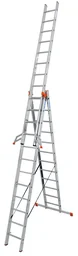
These are the all-around workhorses. Their folding design lets you use them as a step ladder, extension ladder, or even a work platform. Three-section models such as the
and the offer maximum flexibility.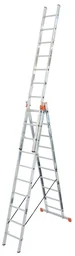
Folding scaffolds and folding trestles
Folding scaffolds such as the ROLLTEC model offer a quick, compact solution for working at moderate heights. They’re easy to assemble and take up little storage space. Folding trestles, such as the
, provide a basic support structure. Add sturdy planks to create a custom work platform.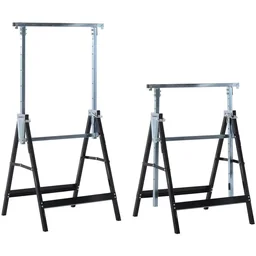
Tip: For occasional DIY projects, a quality multipurpose ladder is often the most practical choice. It handles most jobs around the home and garden and is easy to transport.
How do I choose the right model for my needs?
Before you buy, ask yourself these three key questions. Your answers will help you find the right model.
Question 1: What maximum height do I need to reach?
The working height you need is the most important factor. Keep in mind that the working height is about 6.5 ft above the height of the ladder rung you’re standing on. Reaching the gutters on a detached home often calls for an extension ladder with 12 or more rungs. A compact step ladder is usually enough for indoor jobs.
Question 2: How stable and level is the ground?
A ladder is only as safe as the ground beneath it. On soft, uneven, or slippery ground, scaffolding with adjustable supports or trestles is much safer. It distributes the weight and provides a level base.
Question 3: How long will I be using it?
A ladder is fine for quickly reaching a high shelf. But if you’ll be cutting, processing, or installing materials for several hours, the comfortable, stable platform of scaffolding is hard to beat. It helps reduce fatigue and the risk of accidents.
Warning: Never combine ladders or place a ladder on other objects to gain extra height. These setups can easily tip over and cause serious falls. Use suitable scaffolding instead.
Which safety features are essential?
Safety comes first. Ignoring these rules can put you at risk of serious injury.
Set it up correctly
Set up extension ladders at the correct angle: 1 metre from the wall for every 4 metres of ladder height. Secure the feet to prevent slipping. For step ladders, fully extend and lock all spreaders in place.
Check the maximum load
Every ladder and scaffold has a maximum load capacity. This includes your weight, tools, and materials. Never exceed the limit. Professional models are considerably more robust.
Inspect it regularly
Before each use, check the load-bearing rungs, joints, and feet for damage such as cracks, deformation, or corrosion. Don’t use damaged equipment.
How do the top products compare in 2026?
Our comparison helps you see what the leading models do best and which jobs they’re suited to.
Here’s a side-by-side look at the top-rated ladders and scaffolding in our range:
| Model | Customer rating | Availability |
|---|---|---|
| "ROLLTEC" FOLDING SCAFFOLD, AH 2,90M | – | Currently unavailable |
| "SEPURO PLUSLINE" STEP LADDER 2 STEPS | – | Currently unavailable |
| "TRIBILO" MULTIPURPOSE RUNG LADDER, THREE-SECTION 3x10 RUNGS | – | Currently unavailable |
| "TRIBILO" MULTIPURPOSE RUNG LADDER, THREE-SECTION 3x12 RUNGS | – | Currently unavailable |
| "TRIBILO" MULTIPURPOSE RUNG LADDER, THREE-SECTION 3x9 RUNGS | – | Currently unavailable |
The table shows that three-section multipurpose ladders like the stand out for their versatility. They’re a great choice if you need one piece of equipment for a range of jobs. For larger areas and longer projects, scaffold trestles such as the provide the basis for a safe setup.
Note: Availability may vary. Our tools range is regularly updated, so you’ll always find a wide selection of safe, tested ladders and scaffolding.
What are the most common ladder and scaffolding buying mistakes?
Avoid these common buying mistakes to prevent disappointment and uncertainty.
Underestimating the required height
Most people buy a ladder that’s too short. Work out the height you need and add a safety margin. It’s better to have one extra rung than to work on tiptoe.
Ignoring weight and portability
A sturdy steel step ladder is very stable, but also extremely heavy. Consider whether you’ll need to move the equipment by yourself. Aluminum models are often the better choice.
Choosing the wrong material
Wooden ladders are inexpensive, but they can splinter and are heavy. Aluminum is lightweight and durable, but conducts electricity. For electrical work, insulated or fiberglass-reinforced plastic (FRP) ladders are essential.
How can I prepare properly for working at height?
Good preparation is half the battle when it comes to working safely and successfully at height.
Pre-use checklist
- Check the equipment: Inspect it for damage and make sure all joints work properly.
- Check the surface: Is it firm, level, and dry? Use a support or mat if necessary.
- Check the weather: Do not use ladders or scaffolding in strong winds, rain, or snow.
- Secure your tools: Use a tool belt or tool tray. Never balance tools on the ladder.
- Wear suitable clothing: Wear sturdy footwear with slip-resistant soles and avoid loose clothing that could get caught.
Safe behavior on a ladder
Always keep one hand on the ladder. Never break “three-point contact” (two feet and one hand). Never lean to the side. Climb down and reposition the ladder instead. Do not carry heavy loads up the ladder.
Conclusion: How to choose the right option
Choosing between a ladder and scaffolding depends on your specific needs. For flexible, mobile jobs at moderate heights, high-quality multipurpose ladders are hard to beat. They combine several functions in one piece of equipment. For extensive, long-term projects where stability and a large work platform are important, scaffolding is the safest choice.
Invest in quality and safety. Safe equipment is not an expense; it’s insurance. Follow the manufacturer's instructions, check your equipment regularly, and always work carefully. This will help you tackle any challenge at height safely and efficiently.
Browse our extensive selection of ladders and scaffolding to find the right model for your next project.
Frequently asked questions
- When is a ladder the better choice, and when should I use scaffolding?
- A ladder is the better choice for short jobs that require moving between locations, such as painting or reaching shelves. Scaffolding is better when you need to work for longer periods on a stable, spacious platform or move heavy materials, such as during exterior wall work.
- What does a ladder’s maximum working height mean?
- The maximum working height indicates how high you can work safely with your arms outstretched. It is considerably greater than the ladder height. If you are standing on the next-to-last rung, you should not exceed this height. Always follow the manufacturer's instructions for your safety.
- Which safety standards are important for ladders and scaffolding?
- In Europe, the DIN EN 131 standard is the key standard for ladders. It regulates their construction, stability, and testing procedures. DIN EN 12810 and 12811 apply to scaffolding. When buying, look for the CE marking. It indicates that the product meets European safety requirements.
- Can I use a multipurpose ladder instead of scaffolding?
- Yes, many three-section multipurpose ladders can be set up as a closed platform, similar to a small scaffold. This provides more standing space and stability than a leaning ladder. However, traditional scaffolding is essential for larger areas or very high work.
- What should I keep in mind when assembling scaffolding?
- The surface must be level, load-bearing, and compacted. Always use support blocks on uneven surfaces. Secure the scaffolding against tipping, especially when using facade scaffolding. Always install all guardrails and toe boards. Check its stability before use.