
In brief: A good leaf rake combines strong sweeping performance, durability and ergonomic handling. In our review, models with adjustable working widths and reinforced tines perform particularly well on hard surfaces such as driveways and patios. Closer tine spacing is beneficial for finer surfaces such as garages or workshops. Choose a model from the leaf rake range that suits the size of your area and the type of debris.
A leaf rake is an essential tool for anyone who wants to clean driveways, patios or walkways efficiently. Unlike traditional hand brooms, it offers a wide working width and reliably removes even coarse debris with its sturdy tines. But which model is right for your needs? Our Leaf Rake Review & Comparison 2026 examines the best models and helps you make the right choice.
Table of contents
What types of leaf rakes are available?
Not all leaf rakes are the same. Models differ mainly in design, materials and functionality. The right choice depends heavily on how you plan to use the rake.
Classic leaf rakes with a fixed width
These rakes have a fixed working width. They are often very durable and well suited to regular use on areas of the same size. One example is the Combisystem leaf rake with a width of 50 cm. You can find these models in our garden tools range.
Adjustable leaf rakes
These models let you adjust the width of the tine row, making them extremely versatile. Set the rake narrower for tight corners and wider for large areas. The
is a typical example of this category. It offers an adjustment range of 30 to 50 cm.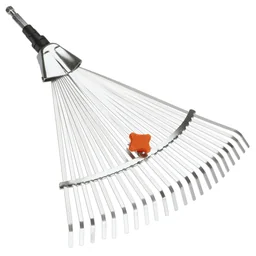
Tip: An adjustable leaf rake is worthwhile if you need to clear areas of different sizes. It often saves you from having to buy a second rake.
Leaf rakes with special bristles
In addition to classic steel tines, there are also versions with natural bristles, such as rice straw. The
is one such rice straw broom. It is particularly gentle on delicate surfaces, but it is less effective for coarse debris.
Important buying criteria for leaf rakes
Before buying a leaf rake, you should consider a few points. These features determine comfort, performance and durability.
Working width and adjustability
The width determines how much ground you can cover in one sweep. Widths between 40 and 50 cm are a good standard for home and garden use. Adjustable models offer the greatest flexibility.
Tine material and quality
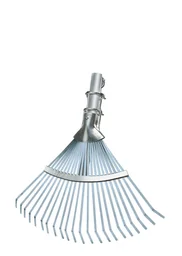
The tines should be made of galvanized steel to help prevent rust. Look for a sturdy construction. The
Rake handle connection
Almost all leaf rakes require a separate handle. Check the diameter of the handle socket. Many models are part of a Combisystem, which allows one handle to be combined with different attachments.
Warning: Not every handle fits every rake head. Measure the diameter of an existing handle or ideally buy the handle and rake head together, such as the set consisting of and
.
Leaf rakes compared side by side
The following table gives you a quick overview of the tested models and their key features. This lets you see at a glance which rake suits your requirements.
The most-reviewed leaf rakes in our range compared side by side:
| Model | Customer rating | Availability |
|---|---|---|
| Combisystem Adjustable Rake, Working Width 30 - 50 cm | – | Currently unavailable |
| Combisystem Leaf Rake, Working Width 50 cm | – | Currently unavailable |
| Combisystem Garden Rake, 43 cm Wide | – | Currently unavailable |
| Fritz Göbel Bahia Broom with Handle Socket 40 cm - Efficient Sweeping | – | Currently unavailable |
| Fritz Göbel Aspen Broom Handle 1300 x 24 mm - Sturdy Grip, 1,27 Ohm/m | – | Currently unavailable |
How to use your leaf rake effectively
The right technique extends the life of your leaf rake and makes sweeping more effective. Always work with your knees slightly bent and hold the handle firmly without gripping it too tightly.
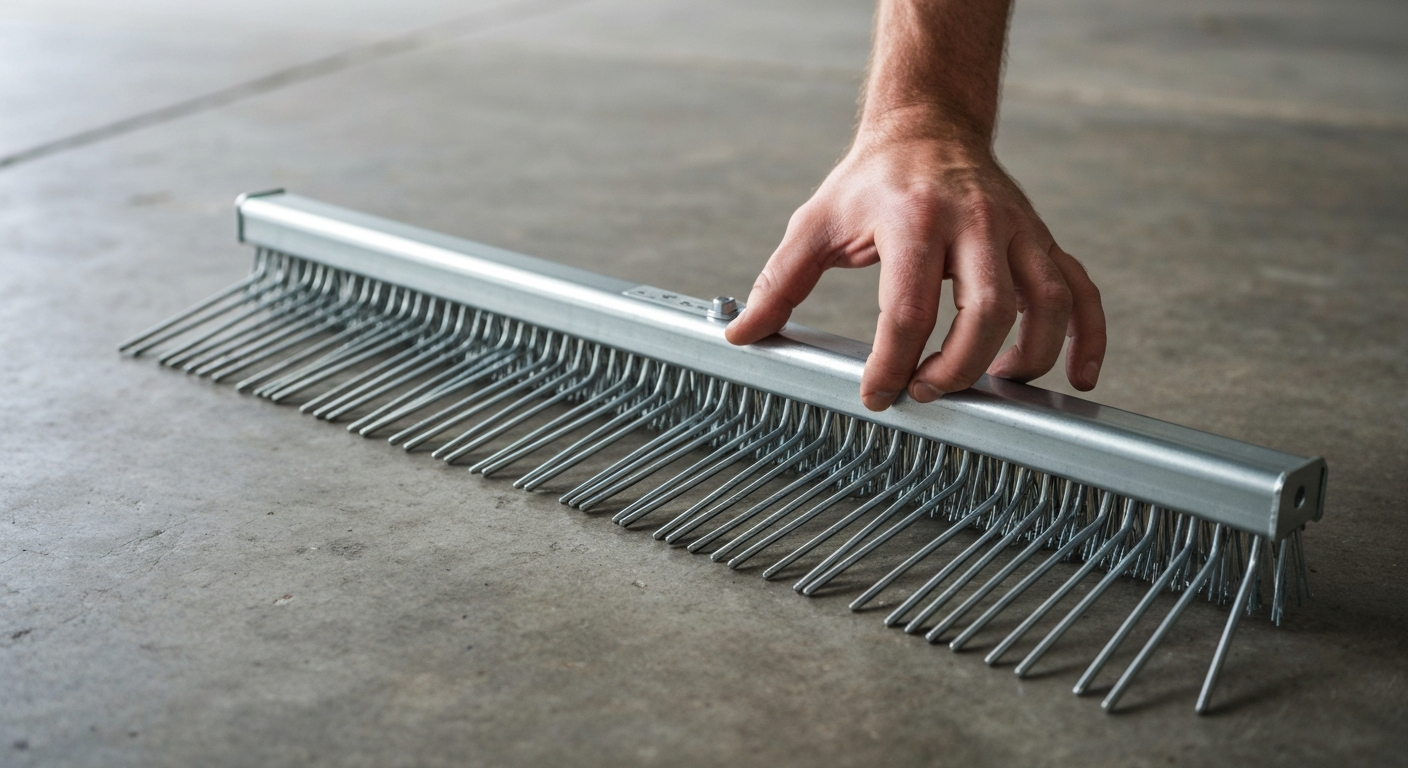
Use even, overlapping movements and always sweep in the direction of the tines. For larger amounts of leaves or coarse dirt, you can use the rake like a shovel to push the material in front of you.
Note: A leaf rake is not a garden rake. Special leaf rakes or the
are better suited for raking heavy leaves or long grass clippings from the lawn.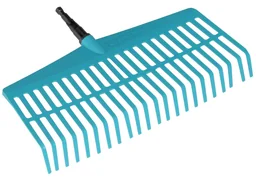
Which rake is suitable for which surface?
- Concrete, paving, asphalt: Robust steel-tine rakes such as the are ideal here. They do not wear down easily and also remove compacted sand.
- Patio (wood, concrete slabs): A rake with a narrower tine spacing or a rice straw broom such as also picks up finer dirt.
- Garage, workshop: Adjustable rakes are perfect for adapting to open areas between cars or machines.
Care and proper storage
A little care will ensure that your leaf rake lasts for many years. Shake it out thoroughly after every use to remove dirt trapped between the tines.
For heavy soiling, you can carefully rinse the tines with water. Always allow the rake head to dry thoroughly afterwards to prevent rust. Store the rake in a dry place, ideally in a protected area of your garden shed or in a tool cabinet. Hang it up or store it with the head facing upwards.
Choosing the right rake handle
The handle is the connection between you and the rake's performance. A good handle should be sturdy and suited to your height. A handle that is too short forces you to work in a bent posture.
The is an example of a high-quality aspen wood rake handle with an ergonomically shaped grip. Look for a non-slip surface. The length of 130 cm is suitable for most people. Combine the right handle with one of the tested rake heads for a well-rounded gardening tool.
Conclusion: The best leaf rake for your needs
Choosing the best leaf rake depends heavily on your individual requirements. For maximum flexibility across areas of different sizes, adjustable models such as the or the high-quality are the first choice. They offer a wide range of uses, from driveways to patios.
For traditional work and gentle sweeping, the is an excellent option. Always remember to choose a suitable, sturdy handle such as the , which makes the work much more comfortable. Whichever model you choose, a high-quality leaf rake is a worthwhile investment for a clean home.
Frequently asked questions
- What is the advantage of an adjustable leaf rake?
- An adjustable leaf rake such as PRODUCT_85879 or PRODUCT_103257 can flexibly adjust its working width to suit the area being swept. You can efficiently clear narrow paths with a narrow setting and quickly sweep large areas such as patios at maximum width. This saves time and effort.
- Which surfaces are leaf rakes best suited for?
- Leaf rakes are ideal for larger, level surfaces with coarse dirt. These include driveways, patios, pavements, garage floors and workshops. They are less suitable for fine dust or delicate surfaces such as parquet flooring.
- What should I look for in the tines?
- Look for sturdy, galvanised steel tines. Reinforced outer tines, as found on PRODUCT_103257, help prevent bending. The spacing between the tines determines the size of the material collected: wide spacing for coarse dirt and narrow spacing for finer material.
- Do I need a special rake handle?
- Yes, for a secure grip you need a sturdy handle with the right diameter for the handle socket in the rake head. An ergonomic grip like the one on PRODUCT_143981 reduces strain on your wrists and back while working.
- How should I clean and store a leaf rake?
- Shake out the rake after use and remove any coarse dirt. Store it in a dry place, ideally hanging on the wall or in a tool cabinet. This keeps the tines in shape and helps the material last longer.