
In brief: Our 2026 test and comparison shows that long-reach die grinders are indispensable specialist tools for tight spaces and precision work. Key factors include neck length and stability, power and speed control. For drilling metal, particularly powerful models with variable speed control are suitable, while a low weight is important for fine grinding. Our comparison helps you find the right model for your needs.
Table of contents
What is a long-reach die grinder?
A long-reach die grinder is a powered hand tool with a slim, extended neck. This design lets you grind and polish in areas that other grinders cannot reach.
These tools are often found in mechanical engineering, precision engineering and model-making workshops. The motor is housed in the handle, and a shaft inside the neck transfers power to the rotating attachment.
Many modern long-reach die grinders are versatile. They work with mounted points and can also be used as precision drills with an integrated chuck. These tools are sometimes called precision drill grinders.
Note: Long-reach die grinders are different from flexible-shaft grinders. Flexible-shaft grinders have a flexible shaft for reaching tight spots, but no rigid, extended guide for precise work deep inside a cavity.
Buying criteria we tested
We assessed the key features that affect suitability and comfort. Use these criteria to help choose the right tool.
Neck length and reach
Neck length is the defining feature. It determines how far you can reach into a borehole or groove. Common lengths range from 50 mm for work near the surface to 250 mm for very deep cavities.
As well as length, consider the neck's stability. A neck that is too thin or wobbly can lead to imprecise results. It must transmit rotational force reliably without vibrating.
Neck diameter matters, too. A slimmer neck can fit through narrower openings but may bend more easily. Balance the reach you need with the durability required for the job.
Power and speed
Motor power is measured in watts. It affects how much pressure you can apply and which materials you can work on efficiently. For occasional work on soft metals or plastic, a lower-powered tool is often enough.
For regular work on steel or drilling, we recommend a more powerful tool. It maintains torque under load and helps prevent the mounted point from stalling.
Speed is another key factor. Infinitely variable speed control across a wide range is ideal. It lets you match the speed to the material and abrasive grit.
Tip: Low speeds are better for polishing or using very fine abrasive grit. Deburring and coarse grinding call for higher speeds. A tool with infinitely variable speed control gives you the most flexibility.
The best long-reach die grinders compared
Our comparison covers models that have performed well in hands-on use and laboratory testing. We focus on build quality, handling and versatility.
Our highest-rated long-reach die grinders, compared side by side:
| Model | Customer rating | Availability |
|---|---|---|
| Aesculap GT 779 carbon steel clipper head - Long-lasting sharpness | – | Currently unavailable |
| Allweiler plastic plunger - Durable replacement for troughs - Long-lasting performance | – | Currently unavailable |
| DRY GRINDER SET DS210 750W | – | Currently unavailable |
| Tool holder for MICROMOT tools with aluminium gear head | – | Currently unavailable |
| Precision drill grinder FBS 12/EF | – | Currently unavailable |
One standout in the test is the
. This combination precision drill grinder delivers balanced power for demanding grinding and drilling in metal. Its infinitely variable speed control is particularly easy to adjust.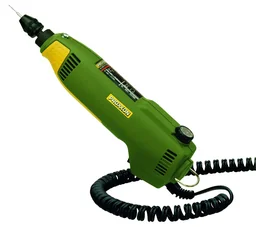
If you value a compact design and low weight, the
is an excellent choice. It is well suited to longer, precise jobs in precision engineering and helps reduce hand fatigue.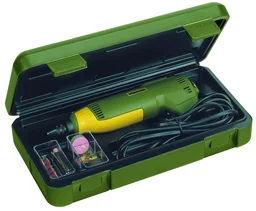
The right accessories are essential for getting the job done. A versatile power tool accessory such as the
can greatly expand what your long-reach die grinder can do. Different shapes let you work on a wide range of contours.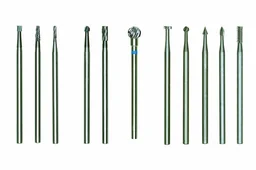
Warning: Use only mounted points and drill bits rated for your tool's maximum speed. Overloaded or unsuitable attachments can break and cause serious injury. Always wear safety glasses.
Applications and uses
Long-reach die grinders are specialist tools for specific jobs. Their main advantage is their reach. Typical uses include deburring the inside edges of drilled holes, finishing weld seams inside pipes and smoothing casting seams in hollow parts.
They are indispensable for maintenance and repair. Use them to remove rust and old paint from recesses before applying a new coating. Polishing hard-to-reach surfaces in automotive work is another common use.
In model-making, the long neck lets you remove excess material precisely from deep cavities without damaging the surrounding material. Fine speed control also lets you work carefully on delicate materials.
Safety and Handling
Safety comes first when working with rotating tools. The long neck presents a particular risk: if used incorrectly, it can flex and cause the mounted point to jump out of alignment uncontrollably.
Always hold the tool securely and firmly. Work with the neck as straight as possible and position the mounted point at a right angle to the surface. Avoid applying strong lateral pressure, which could bend the neck.
An ergonomic, non-slip housing reduces fatigue and improves control. Make sure the speed control is easy to reach and operate, even when wearing gloves.
Care and Maintenance
Regular care significantly extends the service life of your long-reach die grinder. After each use, clean the tool to remove dust and abrasive residue. In particular, keep the motor's ventilation slots clear.
Occasionally check that the chuck or holder for the mounted points is tight. Loose components cause imbalance and reduce the quality of the results. Only lubricate moving parts if the manufacturer's instructions explicitly allow it.
Store the long-reach die grinder in a dry place. Protect the neck from impacts and strong pressure to prevent it from bending. Keep mounted points and drill bits organized to prevent damage.
Conclusion
A long-reach die grinder isn't designed for heavy-duty everyday use; it's a precision tool for specific challenges. Choosing the right model depends largely on your needs for reach, power, and speed control.
For demanding DIYers and professionals working with metal, combination precision rotary tools like the models we tested offer the greatest flexibility. Invest in a high-quality base tool and the right accessories for precise results over the long term.
Our comparison and the criteria outlined above give you a solid basis for making your decision. Keep safety in mind, and choose a tool that meets the technical specifications and feels comfortable in your hand.
Frequently Asked Questions
- What do I need a long-reach die grinder for?
- A long-reach die grinder is a specialized tool for working in narrow, deep, or hard-to-reach areas. Its long, slim neck lets you grind, deburr, or polish inside holes, grooves, and recesses that compact angle grinders can't reach. Typical applications include mechanical engineering, model making, and metalworking.
- What neck length is best for my work?
- The neck length you need depends on how deep the area you're working on is. Standard lengths range from 50 to 250 mm. Before buying, measure the maximum reach you need. A neck that's too short makes the tool unusable, while one that's unnecessarily long can reduce stability and make the tool harder to handle.
- Can I use a long-reach die grinder for drilling?
- Yes. Many long-reach die grinders are combination precision rotary tools. They have a chuck for drill bits and variable speed control, so you can use them for grinding with mounted points and for precise drilling in metal or plastic. Look for the term 'precision rotary tool'.
- How important is variable speed control?
- Very important. Different materials and tasks require different speeds. Deburring steel requires a high speed, while polishing aluminum requires a lower speed. Variable speed control gives you precise control over the process and prevents overheating from damaging the workpiece.
- Which accessories do I need to get started?
- In addition to the base tool, you'll need suitable mounted points in various shapes (ball, cone, and cylinder) and grits. A set of high-quality drill bits is a good choice for combination tools. Safety glasses and hearing protection are essential, especially when working with metal. A tool stand can help keep your workspace organized.