
In brief: The right model railroad depends on your available space, budget, and preferred level of detail. H0 scale offers a great balance of detail and footprint. Digital starter sets are ideal for beginners, while experienced hobbyists may prefer modular, expandable systems with advanced track technology. Our comparison highlights key differences in track quality, compatibility, and realism.
Model Railroad Test & Comparison 2026: Find Your Perfect System
Getting started with model railroading is exciting, but first you need to choose a scale, control system, and track system. Our 2026 comparison makes it easier to sort through the options. We look at the most important products and technologies to help you make an informed choice. Whether you’re a detail-focused expert or a curious beginner, you’ll find practical buying advice here.
Track quality is the foundation of every layout. It affects how smoothly trains run, how reliable your setup is, and how realistic it looks. That’s why we pay special attention to track technology in this comparison. Find out which systems work well for flexible layouts and which are best for precise curves.
Table of Contents
Scale Comparison: Which Size Is Right for You?
Choosing a scale is the first and most important decision. It determines how much space your layout needs and how much detail your models can include. The most common scales in Germany are H0 (1:87), TT (1:120), and N (1:160).
H0 scale is the classic choice. It offers the widest selection of rolling stock, buildings, and accessories. The models are highly detailed and need a moderate amount of space. A simple H0 layout fits on a 1,20m x 0,80m board, making it an ideal starting point for most hobbyists.
TT scale falls between H0 and N. TT models are smaller than H0 models but still have fine details. They need around 25% less space for the same track length. The selection is good, though not as extensive as H0. TT is a great choice if you want to save space without sacrificing too much realism.
For the longest routes in the least amount of space, choose N scale. These tiny trains let you build complex layouts even in tight spaces. However, the small models need careful handling. The selection is extensive, but not every locomotive comes with a sound decoder.
Tip: Choose a scale with a good selection of accessories available in your area. Visit a local hobby shop or browse the model railroad category in our store. That way, you can easily expand your layout later.
Track Systems Compared: Flexible Track vs. Fixed Curves
The track you choose defines the character of your layout. In general, you can choose between flexible track and pre-formed curves. Both types have their own advantages and disadvantages.
Flexible Track for Custom Routes
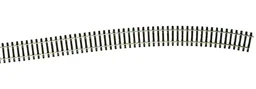
Flexible track consists of rails mounted on sleepers attached to a bendable strip. You can bend it into almost any curve, creating natural, flowing routes like those found on real railways.
A high-quality flexible track option is the with concrete sleepers. They give the track a modern, industrial look, making it ideal for main lines and station tracks built after 1970. At 920 mm per piece, this track gives you plenty of flexibility when planning your layout.
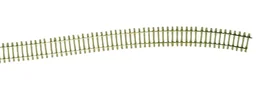
For nostalgic routes or branch lines, choose flexible track with wooden sleepers, such as the . The rustic look suits the steam locomotive era and rural routes. When laying flexible track, secure it as you bend it so it holds its shape.
Fixed Curves for Precise Radii
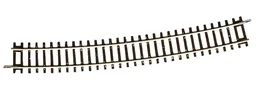
Curved track comes in fixed radii and curve angles. Its precisely made sections fit together to form ovals or return loops, making it much easier to plan your layout.
Small-radius track is ideal for tight spaces and compact layouts. The has a radius of 358 mm and a 30° curve angle, so you can create compact bends. Keep in mind that many larger locomotives cannot handle tight curves. Check the minimum radius specified for your models.
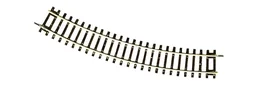
For spacious main lines and realistic running scenes, you need large-radius curves. The has a radius of 1962 mm and a gentle 5° curve angle to simulate a high-speed main line. It takes up plenty of space, but gives your layout a more realistic appearance.
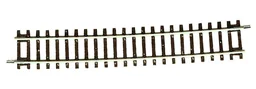
A medium radius offers a good balance between space and realism. The has a radius of 888 mm and a 15° curve angle, making it a versatile all-rounder. It lets you build attractive curves without taking up the entire room.
Important: Do not mix track systems with different rail profiles or connectors on the same layout. This can cause poor electrical contact and running problems. Plan to use one consistent system from the outset. Find out more in the model-making section.
Top Products Compared
Our comparison shows that the quality of the track connectors and the thickness of the sleepers are crucial for long-term durability. Cheap track corrodes more quickly and can cause poor electrical contact. It is better to invest in a solid system from the start.
Here are the most-reviewed model railroad products in our range, compared side by side:
| Model | Customer rating | Availability |
|---|---|---|
| 1-Fan Cooling Pad (15.6")/ black | – | Currently unavailable |
| 12 Curved Track R10 Pieces, Radius 888 mm, Curve Angle 15° | – | Currently unavailable |
| 12 Flexible Track F4 Pieces with Concrete Sleepers, Length 920 mm | – | Currently unavailable |
| 12 Flexible Track F4 Pieces with Wooden Sleepers, Length 920 mm | – | Currently unavailable |
| 12 Curved Track R2 Pieces, Radius 358 mm, Curve Angle 30° | – | Currently unavailable |

The table compares the key technical specifications. Along with the radius and curve angle, consider the sleeper material. Plastic sleepers are lighter and easier to work with. Cast resin sleepers offer finer detail but are more prone to breakage.
Note: The products listed are part of a modular system and can be combined to build complex routes. Plan your layout with track-planning software or mark out the route on the board beforehand using string. This helps you avoid costly purchasing mistakes.
Digital vs. Analogue: Why the Control System Matters
Control technology has developed rapidly in recent years. Traditional analogue control regulates the voltage across the entire track, so all locomotives respond at the same time. This is simple and cost-effective, but limited.
Digital control systems based on the DCC standard send coded commands through the track. You can address each locomotive fitted with a decoder individually and control its speed, direction, lighting and sound separately. This allows several trains to run independently on the same section of track.
You can switch from analogue to digital control later, but you will need to retrofit every locomotive with a decoder. For a new layout, we recommend starting with digital control. The added cost is offset by the wider range of possibilities.
Building and Planning Your First Model Railroad
Don't rush into building without a plan. Good planning saves time, money, and frustration. Start with a simple oval or figure-eight layout. This gives you a chance to test your locomotives and get comfortable laying track.
Choose a stable base. A wooden board on a sturdy frame is ideal. Lay the track first and test everything thoroughly. Then you can start creating the scenery. Use polystyrene, plaster, and textured materials to build hills and valleys.
Don't forget the wiring. Plan enough connection points for the power supply. A stable power network is especially important for digital layouts. Power distribution units and boosters help maintain consistent power across all sections of track.
Care and Maintenance for Years of Enjoyment
A model railroad needs regular care. Dust and grease on the rails can interrupt the flow of electricity. Clean the track every few weeks with a specialized track-cleaning block or a cloth dampened with isopropyl alcohol.
Locomotives and cars stay in the best condition when stored in enclosed display cases. Lubricate the locomotive gears according to the manufacturer's instructions. Use only specialty model railroad oil, and apply it sparingly. Too much oil attracts dust and can gum up the mechanism.
Buying Guide: How to Make the Right Choice
To sum up, here are three key points to help you choose:
- Available space determines the scale: Measure your available space carefully. Allow at least 30 cm around the planned track bed for scenery and access.
- Plan your budget for the future: Start with a starter set and budget for expansions. Most costs come later as you expand your layout over the years.
- Choose a theme and era: Pick a specific era (e.g. the steam era, the 1970s, or the modern day) and region. This gives your collection a consistent theme and makes it easier to choose rolling stock and buildings.
The world of technology in miniature fascinates generations. With the right essentials and careful planning, you can build a rewarding hobby that lasts for years. Our test and comparison is designed to make it easier to get started and help you avoid common mistakes.
Keep this basic principle in mind: quality over quantity. A few high-quality tracks and a well-maintained locomotive are more enjoyable than a large but unreliable layout. Start small, get to know the technology, and let your layout grow as your skills develop.
Frequently Asked Questions
- Which scale is best for beginners?
- H0 scale (1:87) is an ideal place to start. It offers a wide selection of accessories, takes up a moderate amount of space, and is attractively priced. Track systems are standardized and easy to set up. If you have even less space, consider TT (1:120).
- What's the difference between analog and digital control?
- With analog control, you adjust the voltage on the track, so all locomotives run at the same time. Digital control (e.g. DCC) sends commands to individual locomotives. You can run several trains independently on one track, each with its own speed, lighting, and sound.
- Can I combine track from different manufacturers?
- Yes, with a few limitations. The NEM 310 standard defines dimensions for wheelsets and track gauges. Track from different manufacturers in the same scale (e.g. H0) is usually mechanically compatible. For reliable electrical contact, make sure the connectors and rail profiles match.
- What's the best way to care for my model railroad?
- Clean the track regularly with a specialized track cleaner or isopropyl alcohol. Remove dust from the layout with a soft brush or blower. Store locomotives and cars in enclosed display cases to protect them from dust and moisture.
- Do I need a large layout to get started?
- No. Start with a small oval or a simple track plan to get familiar with the technology. Plan for expansion from the beginning. A modular system can grow along with your ideas and skills. The quality of your first track is crucial.