
In brief: The right motion sensor depends on how you plan to use it. For outdoor lighting, range, detection angle and IP rating are key. Indoors, design and features matter most. Our 2026 comparison helps you find the best devices for security, convenience and energy efficiency. We evaluate technology, build quality and real-world performance.
Motion Sensor Reviews & Comparison 2026: Safety and Comfort for Your Home
A good motion sensor is more than just a light switch. It can improve security, save energy and make life more convenient. With so many options available, choosing one can be tricky. Our 2026 review and comparison looks at the most important models and technologies. We explain what to look for when buying, so you can find the right device for your needs—whether it's for outdoor lighting, a hallway or a garage.
Contents
- How does a motion sensor work? A guide to the technology
- Buying guide: Key features to compare
- Which type is right for me? Indoor, outdoor and battery-powered options
Compare the highest-rated motion sensors in our range:
Model Customer rating Availability 3 LED PIR Motion Sensors - 360°C - 350m² - Waterproof IP54 - White – Currently unavailable 6W LED Light Sensor – Currently unavailable BOKS Outdoor Light with Motion Sensor, Black, IP44, E27 Socket – Currently unavailable Battery LED Light/Light Bar Sensor & Motion Sensor 1 W, Silver – Currently unavailable Battery LED Under-Cabinet Light Sensor & Motion Sensor 1 W, White – Currently unavailable - Installation and setup: How to install your sensor correctly
- Trends and the future: What’s in store for 2026?
- Conclusion: How to find the best motion sensor
How does a motion sensor work? A guide to the technology
Most motion sensors for home use rely on PIR (passive infrared) technology. These sensors detect infrared radiation, or heat, emitted by people and animals. When something moves within the detection area, the heat pattern changes and the sensor switches on the circuit.
PIR, radar and camera sensors: What’s the difference?
PIR isn’t the only technology available. High-frequency or radar sensors (HF) emit microwaves and analyze their reflections. They can detect movement through thin walls or glass, but they tend to cost more and can be more prone to false alarms. Camera-based systems detect movement by analyzing changes in the image and are often part of smart security systems.
Note: PIR sensors often can’t reliably detect movement through glass because glass filters infrared radiation. An HF radar sensor is a better choice for these situations.
Buying guide: Key features to compare
Not every motion sensor is right for every project. Keep these points in mind when comparing your options.
Range and detection angle
Range tells you how far away the sensor can detect movement. For a long driveway, look for a range of 12 metres or more. The detection angle determines how wide an area the sensor monitors. 180 degrees is standard, while 360 degrees, as with the
is ideal for centrally located sensors.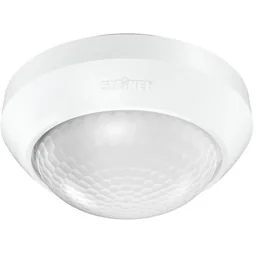
IP rating: Essential for the installation location
The IP code indicates how well a device is protected against solid objects and water. IP20 is sufficient for indoor use. For outdoor use, choose at least IP44. IP54 or IP65 offer better protection against dust and water spray. Check the manufacturer's specifications carefully.
Switching capacity and bulb type
Make sure the total wattage does not exceed the sensor's maximum switching capacity. Modern LED lights use little power, while halogen and incandescent bulbs use more. Check which bulbs, and how many, you plan to connect. A high-capacity sensor such as the
can control several powerful floodlights.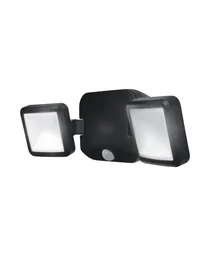
Important: Never exceed the motion sensor's specified maximum switching capacity. Doing so can cause overheating, damage the electronics and, in the worst case, start a fire.
Which type is right for me? Indoor, outdoor or battery-powered
The design is crucial for both function and appearance.
Outdoor motion sensors
Outdoor models such as the
or are built to be durable and weatherproof. They often feature powerful built-in lights and are designed for wall or ceiling mounting. A good example is the battery-powered LED double floodlight, which requires no wiring.
Discreet solutions for indoor spaces
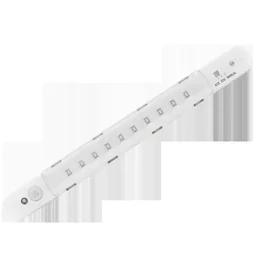
Design plays a bigger role inside the home. Ceiling or under-cabinet lights with a built-in sensor, such as the
or are unobtrusive and provide gentle lighting for hallways, stairs, or storage rooms.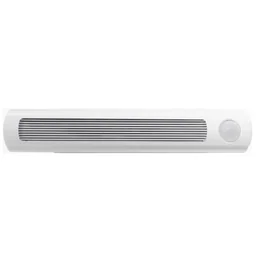
Standalone sensors without a light
These devices, such as the powerful , only switch a separate circuit. They are ideal for adding automation to existing lighting or controlling alarm systems. They are the most flexible option for custom projects.
Tip: Battery-powered models are ideal for rental homes or temporary setups. They don't require an electrician and leave no marks. The products and are good examples.
The best motion sensors compared
This table summarizes the key specifications and features of our selected models, making them easy to compare.
{{COMPARISON_TABLE}}Installation and setup: How to install your motion sensor correctly
Even the best technology won't help if the sensor is positioned or adjusted incorrectly.
Choosing the right location
Position outdoor sensors to cover the desired area without triggering them with passing cars, trees, or animals. A mounting height of 2 to 2.5 metres is ideal. Avoid placing the housing in direct sunlight.

Fine-tuning for the best results
The three most important settings are time (how long the light stays on), lux (the brightness threshold), and sensitivity. Set the time as short as needed—for example, 1 minute for a walkway. The lux setting ensures the light only turns on at dusk or in the dark. Adjust the sensitivity to reduce false triggers.
Trends and the future: What does 2026 have in store?
Technology is constantly evolving. Smart motion sensors that integrate with home networks are becoming increasingly popular. They can send notifications to your smartphone and control lighting scenes, such as turning on several lights at once.
Energy efficiency and solar technology
Interest in low standby power consumption is growing. Solar-powered models with built-in batteries are also becoming more common. They're completely self-sufficient and ideal for remote areas of the garden without a power supply.
Conclusion: How to find the best motion sensor
The ideal motion sensor works reliably without setting off false alarms. For outdoor use, durability, range, and IP rating are the top criteria. Indoors, design and quiet operation matter more. Battery-powered models offer maximum flexibility.
Our comparison shows that the is an excellent choice for illuminating large areas of the garden. The classic outdoor light stands out for its simple design and E27 socket, which lets you choose your own bulb. If you need a powerful standalone sensor for a custom project, the is a great choice. And for discreet indoor lighting without wires, the is an ideal solution.
Before you buy, think carefully about where and how you want to use the sensor. With insights from our 2026 review and comparison, you can choose the right model to improve safety, convenience, and energy efficiency in your home.
Frequently asked questions
- What is the difference between PIR and radar motion sensors?
- PIR sensors respond to infrared radiation, or body heat. They’re affordable and reliable for standard applications. Radar sensors (HF) detect movement using high-frequency waves and can even detect movement through thin materials, but they’re more susceptible to interference.
- What IP rating do I need for outdoor use?
- For a sheltered outdoor area under a canopy, IP44 is sufficient. If the sensor is exposed to direct rain and dust, choose a model rated at least IP54. For areas exposed to heavy driving rain or in contact with the ground, IP65 or higher is recommended.
- Can I use a motion sensor without a light?
- Yes, many sensors have a dedicated alarm or switching output. They can switch a circuit for an alarm system, camera or separate light. When buying, look for the terms "switching relay" or "alarm output".
- How do I set the activation time and brightness correctly?
- Start with a medium activation time of 1-2 minutes. Set the brightness threshold (lux) so the light only switches on when it’s dark. Test the settings over several days and adjust them as needed to prevent false triggers or unnecessary power consumption.
- Are battery-powered motion sensors reliable?
- Modern battery-powered models are very reliable and offer long battery life, especially when used with LED lighting. They’re ideal for locations without a mains connection. Look for low standby power consumption and a battery replacement indicator. For consistently high loads, mains-powered operation is more robust.