
In brief: The best NiMH rechargeable batteries in 2026 offer high capacity, low self-discharge, and a long service life. Models with Ready-to-Use technology are especially convenient because they’re ready to use right out of the package. Choose the right battery size (AA or AAA) and a compatible charger. Our tests show clear performance differences between standard and premium rechargeable batteries.
In 2026, NiMH rechargeable batteries are a reliable power source for a wide range of devices. From remote controls to professional equipment, they offer good value and environmental benefits. Our test shows which models live up to their promises.
Modern NiMH rechargeable batteries have come a long way. Low self-discharge, high capacity, and a long service life are now common features. We compare the leading models and share practical buying advice.
Table of contents
What are the advantages of NiMH rechargeable batteries in 2026?
Today’s NiMH rechargeable batteries are much better than earlier generations. The technology has improved in several key areas.
Low self-discharge is a major advantage. Modern rechargeable batteries lose only a small percentage of their charge each month, so they’re ready to use even after being stored for a while.
Environmental benefits are another reason to choose NiMH rechargeable batteries. Hundreds of charging cycles mean less electronic waste, conserve resources, and save money over time.
High capacity is now available, with AA batteries reaching up to 2500 mAh. That means longer runtimes for your devices, especially power-hungry ones.
Tip: NiMH rechargeable batteries are a great choice for devices with high power demands. Digital cameras, toys, and LED lights can benefit from their high capacity.
What should you look for when buying?
NiMH rechargeable batteries vary in performance. These criteria can help you choose the right ones.
Capacity, measured in mAh, indicates how much energy a battery can store. Higher capacity usually means longer runtimes. Keep in mind that the rated capacity and real-world performance may differ.
The battery size must match your devices. AA and AAA are the most common sizes. Check which one you need before you buy.
Ready-to-Use technology is convenient. These rechargeable batteries come precharged and are ready to use right out of the package. They’re a good choice as replacements or for devices you use only occasionally.
The number of charging cycles gives you an idea of a battery’s lifespan. Quality rechargeable batteries can handle 1000-1500 charging cycles. Less expensive models often fall short of that.
Special features of modern rechargeable batteries
Some rechargeable batteries have features for specific uses. Solar rechargeable batteries, for example, are designed for outdoor applications. Industrial models have reinforced contacts for professional use.
Recycled rechargeable batteries help conserve resources twice over: they’re made with recycled materials and can be recycled again. They’re a good choice for environmentally conscious users.

What do our test results show?
We tested a range of NiMH rechargeable batteries under realistic conditions. In some cases, the differences were considerable.
Capacity tests show how batteries perform in practice. Some deliver close to their rated capacity, while others fall short, especially after several charging cycles.
Self-discharge rates vary considerably. Ready-to-Use models retain their charge for months, while standard rechargeable batteries can run down after just a few weeks.
Service life is measured over many charging cycles. High-quality rechargeable batteries maintain their performance over hundreds of cycles. Less expensive models tend to wear out sooner.
Warning: Use only chargers designed for NiMH rechargeable batteries. The wrong charger can damage batteries or create a safety hazard. Check that your charger is compatible.
Which products do we recommend?
Based on our tests, we have recommendations for several needs. These models perform well in their respective categories.
For high capacity, choose the
. With 2500 mAh, it delivers long runtimes. It’s ideal for power-hungry devices such as digital cameras and high-output LED lights.
For a practical multipack, we recommend
. The eight AAA rechargeable batteries are optimized for solar applications and suit many household needs. Ready-to-Use technology means they’re ready to use right away.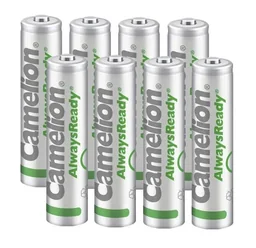
Environmentally conscious users can choose
. These recycled AAA batteries pair solid performance with sustainability. Their 800 mAh capacity is enough for most uses.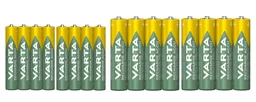
Browse all our recommended options in the NiMH rechargeable batteries category. You’ll also find models for more specialized needs.
Don’t forget a compatible charger
The right charger is just as important as the rechargeable batteries. Modern chargers detect battery charge levels and prevent overcharging, helping extend battery life.
Find compatible options in our rechargeable batteries category. Check that a charger works with your batteries and offers the charging times you need.
How do you charge NiMH batteries properly?
Proper charging helps extend the life of your rechargeable batteries. Here are the techniques you need to know.
Complete charging cycles are no longer necessary. Modern NiMH batteries have no memory effect, so you can recharge them at any time without losing capacity.
Pay attention to the charging temperature. Charge batteries at room temperature. Extreme heat or cold can affect their performance.
Charging times vary depending on the charger. Fast chargers need only a few hours, while slow charging is gentler on the batteries.
Note: Don't fully discharge NiMH batteries before recharging them. Deep discharging can cause damage, so it's better to recharge them in good time.
How to identify faulty rechargeable batteries
Older rechargeable batteries show typical signs of wear. They may not hold a charge for long or may get very hot while charging. Replace batteries that show these signs.
A specialty retailer can test rechargeable batteries professionally. If you're unsure, have their performance checked. This is especially useful if you're using several batteries in parallel.
What are NiMH batteries used for?
NiMH batteries are versatile. Here are some typical uses.
Household appliances are a particularly good fit. Remote controls, clocks, flashlights and scales work reliably with NiMH batteries. Their high capacity means you don't have to replace them as often.
Toys often need a lot of power. RC models, remote-controlled cars and electronic toys run longer with high-quality rechargeable batteries. Make sure you use the correct voltage.
Professional applications rely on industrial rechargeable batteries. Measuring equipment, emergency lighting and medical devices need a reliable power supply. Quality rechargeable batteries are especially worthwhile for these uses.
Consider special applications
Some devices have special requirements. Solar systems need batteries with low self-discharge. Safety-critical devices such as smoke alarms need absolute reliability.
For these applications, choose batteries specifically labeled for that purpose. Read the device manual and follow the manufacturer's recommendations.
How should you care for and store rechargeable batteries?
Proper care can significantly extend their service life. These steps are easy to follow.
Regular use helps keep rechargeable batteries in good condition. Don't leave them unused for years. Even batteries with low self-discharge lose performance over time.
Clean contacts are essential. Clean the terminals occasionally with a dry cloth to ensure optimal current flow.
Proper storage protects rechargeable batteries. Keep them in storage cases or their original packaging to prevent short circuits and damage.
Transport and disposal
Protect the terminals during transport. Use a battery case or cover them with adhesive tape to prevent short circuits in your bag.
Dispose of old rechargeable batteries properly. Take them to a battery recycling drop-off location or retailer so valuable raw materials can be recycled.
Our highest-rated NiMH rechargeable batteries, compared:
| Model | Customer rating | Availability |
|---|---|---|
| 2/3 AA NiMH rechargeable battery 750mAh | – | Currently unavailable |
| 2/3 AAA NiMH rechargeable battery 400 mAh Industrial Flat Top | – | Currently unavailable |
| Always Ready Mignon AA 2500 mAh, 2-pack | – | Currently unavailable |
| AlwaysReady Solar NiMH rechargeable battery Micro (AAA) with 600mAh - 8 pieces | – | Currently unavailable |
| AlwaysReady Solar NiMH rechargeable battery Micro (AAA) with 600mAh - 4 pieces | – | Currently unavailable |
NiMH batteries remain the first choice for many uses in 2026. Choose the right models and follow a few care tips to get the most out of them. Our recommendations can help you find the right rechargeable batteries for your needs.
Frequently asked questions
- What does Ready-to-Use mean for NiMH batteries?
- Ready-to-Use rechargeable batteries come pre-charged and are ready to use right away. They have particularly low self-discharge and hold their charge for months. This makes them ideal for devices you use infrequently or as spare batteries.
- How many times can I recharge a NiMH battery?
- High-quality NiMH batteries can be recharged up to 1,500 times. Their actual service life depends on how you use and charge them. Avoid deep discharges and use a compatible charger.
- Are NiMH rechargeable batteries more environmentally friendly than disposable batteries?
- Yes, significantly. Because they can be reused, they reduce waste and resource consumption. After around 50 charging cycles, their environmental impact is equivalent to that of disposable batteries. Every cycle after that helps save resources.
- Can I use NiMH batteries in all devices?
- In most devices designed for rechargeable batteries, yes. Check the voltage: NiMH batteries provide 1.2V instead of 1.5V. This may matter for some sensitive devices, such as smoke alarms.
- How should I store NiMH batteries?
- Store rechargeable batteries in a cool, dry place with around 40-60% charge. Keep them away from heat and direct sunlight. Set damaged batteries aside immediately and dispose of them properly.