
In brief: Brown leaves on peonies usually indicate fungal diseases such as gray mold (Botrytis) or leaf spot disease. Underwatering, waterlogging or nutrient problems can also be the cause. Remove affected plant parts immediately, ensure good air circulation and adjust watering to the location and weather to help save your plants.
Peonies transform any garden into a sea of flowers. Their lush, fragrant blooms are the highlight of late spring. But the joy can quickly fade when brown spots spread across the leaves or entire shoots wilt. There is no need to panic. In most cases, the underlying causes can be treated. This guide will help you identify the problem, take the right action and restore your peonies to their full beauty.
Why do my peonies have brown leaves? The main suspects
When leaves turn brown, the plant is signaling stress. The most common cause in peonies is fungal disease, which occurs especially in wet weather. However, watering mistakes and unsuitable growing conditions can also be triggers. An accurate diagnosis is the first step toward recovery.
Fungal diseases: gray mold (Botrytis paeoniae)
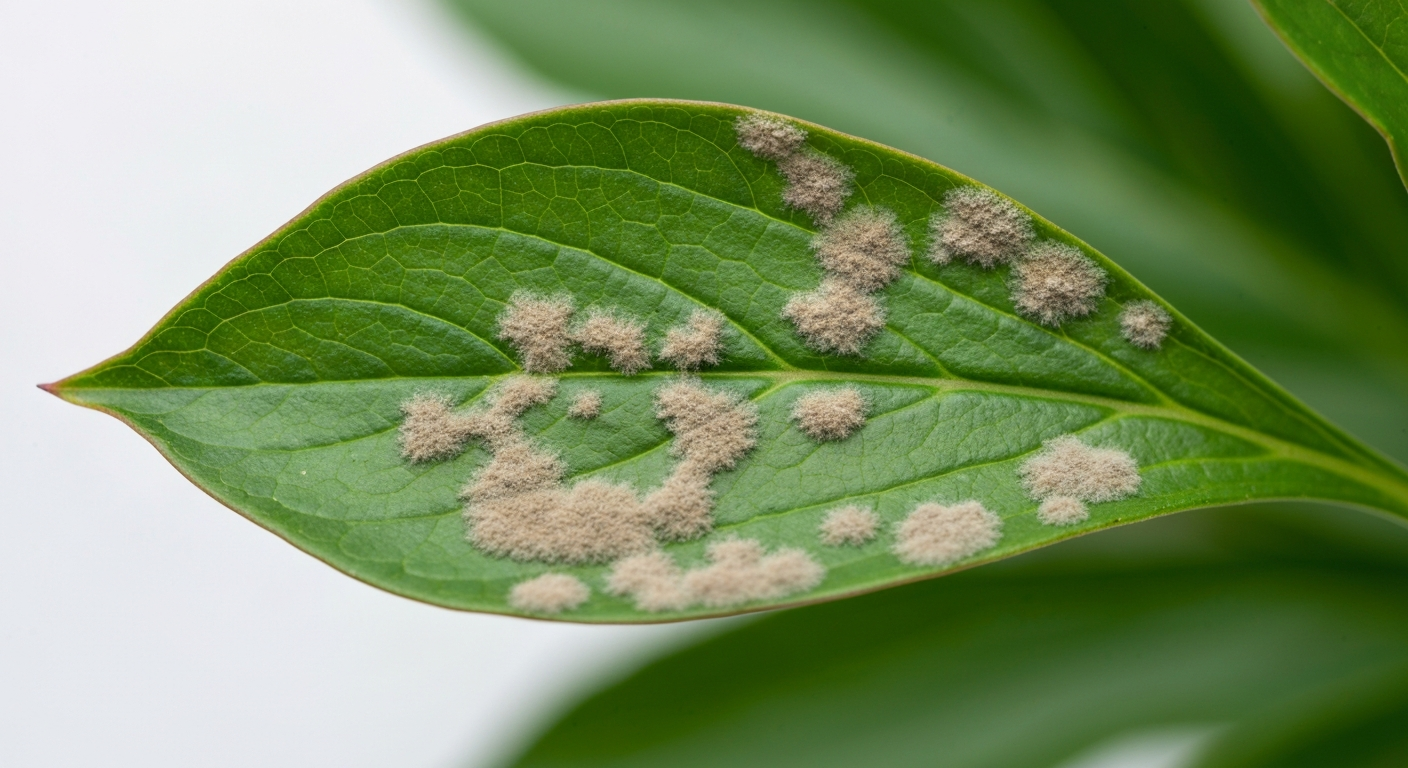
Gray mold is the peony's worst enemy. It appears through a range of symptoms. Young shoots suddenly wilt and fall over as if they had been snapped. You may see brown rot at the base. Large, irregular brown spots develop on the leaves and spread quickly. In wet weather, a gray mold coating covers the affected areas.
Bud infection is particularly common. The buds turn brown, dry out and no longer open. This fungus thrives in cool, wet spring weather. Crowded plants and poor air circulation greatly encourage its spread.
Botrytis paeoniae is a weak-parasite fungus that is particularly active in wet spring weather. The most important measure is to maximize air circulation around the plant and remove affected parts immediately to reduce infection pressure.
Leaf spot disease (Cladosporium paeoniae)
Another common fungal disease is leaf spot. Unlike gray mold, it often appears after flowering in summer. You can identify it by small, round spots on the leaves. At first, they are violet or reddish-brown and sharply defined.
Later, the centers of the spots turn grayish-brown while the edges remain dark. The spots can merge and destroy large sections of the leaves. Severely affected leaves turn yellow and drop prematurely. The disease usually does not kill the plant, but it weakens it for the following year.
Additional advice
To distinguish gray mold from leaf spot disease, look at the damage pattern. Gray mold affects the entire plant—stems, leaves and buds—and produces a visible mold coating. Leaf spot disease is limited to clearly defined spots on the leaves.
How does water affect the health of my peonies?
Proper watering is essential for Garden + Outdoor peony care. Both too much and too little water can cause brown leaves, although the symptoms only look similar at first glance.
Waterlogging and root rot
Peonies do not tolerate wet feet. If the plant is growing in soil that is too wet, for example because of overwatering or compacted, clay-heavy soil, the roots will rot. The plant can no longer absorb water or nutrients. It wilts even though the soil is wet. The lower leaves turn yellow first, then soft and brown. This is a clear warning sign.
Check the soil moisture before reaching for the watering can. Loosen heavy soil with sand or compost before planting to improve drainage. Good garden irrigation should be adapted to the plant's needs.
Dry stress caused by underwatering
The opposite can also cause damage. Peonies can suffer from a lack of water, especially during hot, dry summers or in exposed, windy locations. The plant tries to reduce water loss. The leaf edges become dry, curl inward and turn brown and crispy. Flowers remain small or buds drop off. During prolonged dry periods, provide thorough, deep watering.
Expert tip
Always water peonies directly at the roots and avoid wetting the leaves. Wet leaves invite fungal diseases. The best time to water is in the morning, allowing the plant to dry during the day.
Could nutrient problems or the location be to blame?
Sometimes brown leaves are not caused by disease or watering, but by the plant's basic growing conditions. Location and nutrient supply are the foundation of healthy peonies.
Nutrient deficiency or excess
A balanced diet is important. A lack of potassium, for example, can cause brown leaf edges. However, overfertilization, especially with nitrogen, is often more problematic. Too much nitrogen promotes fast, soft and lush growth. This tissue is extremely susceptible to fungal diseases such as Botrytis. In spring, use a balanced fertilizer specially formulated for flowering perennials.
The wrong location
Peonies are sun lovers. They need at least six hours of direct sunlight per day to grow strongly and produce abundant blooms. In shade, they struggle, develop weak shoots and become more susceptible to disease. Good air circulation is equally important. Do not plant your peonies too close to other perennials or walls. Air moving through the leaves dries them quickly after rain and deprives fungi of the conditions they need to thrive.
Important note
Make sure you plant at the correct depth. The “eyes” (bud eyes) on the rootstock should be only three to five centimeters below the soil surface. Planting too deeply weakens the peony over time, prevents it from flowering well and makes it more susceptible to disease.
What can I do immediately about brown leaves on peonies?
If you have discovered brown leaves, act quickly to stop the problem from spreading and save the plant. The following measures will help immediately.
The right pruning: immediate measure no. 1
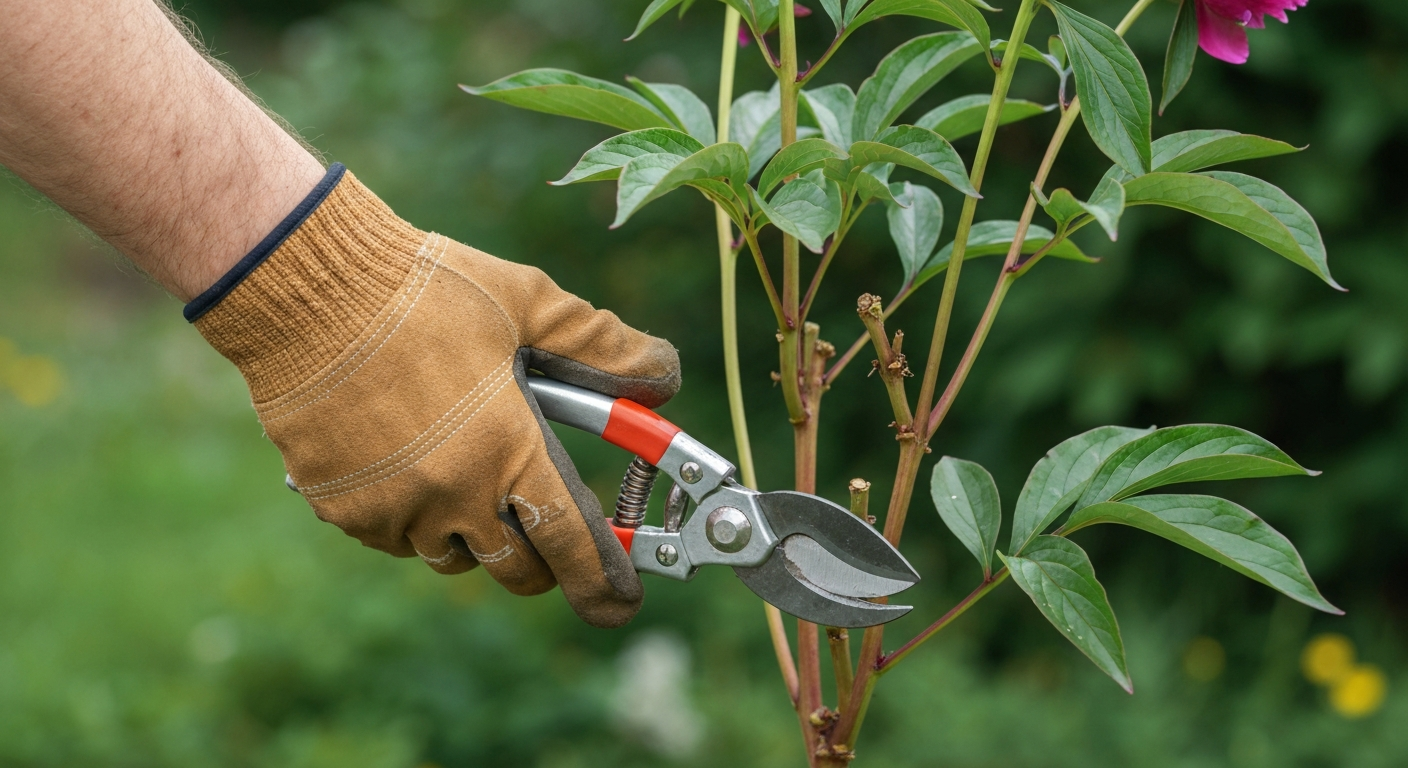
The most important and effective measure is to prune away all affected parts of the plant immediately. Do not hesitate. Cut leaves, stems and buds with brown spots back generously into healthy, green tissue. Use clean, sharp garden tools for this. A handy tool such as the
cordless garden care set is ideal for precise pruning of perennials. Larger sets such as the 4-in-1 garden care set or the garden care set GPS 1001 4-in-1 provide the right tools.


Be sure to dispose of the cut material in household waste, not on the compost heap. The fungal spores can survive there and continue to spread. Disinfect your shears with alcohol after use to prevent transmission to other plants.
Optimising the location and care
Check the conditions after pruning. Is the peony growing too close to other plants? Cut back neighbouring plants slightly to improve air circulation. Adjust your watering: water less if you suspect waterlogging and more during dry conditions. Carefully loosen the soil around the plant with a small rake to improve aeration.
When are plant protection products useful?
If the fungal infestation is very severe and keeps returning, you can consider using a fungicide. Choose a product approved specifically for Botrytis or leaf spot diseases on ornamental plants. Treat the plant exactly according to the instructions on the packaging. However, chemicals should always be the last resort. Preventive measures are far more effective and gentler on the garden.
Prevention is the most effective form of plant protection. Healthy soil, the right location and the choice of robust varieties create resilient plants that are less likely to require plant protection products.
How can I prevent another infestation next year?
Once you have solved the immediate problem, it is time to plan for the future. Proper autumn care lays the foundation for healthy peonies in the next season.
Autumn care is crucial
Most fungal spores overwinter on old plant material. That is why clearing up in autumn is so important. After the first frost, cut all the stems of your herbaceous peonies back close to the ground. Carefully remove all foliage and fallen leaves from the bed. This eliminates the fungus's opportunity to overwinter and drastically reduces the risk of infection the following spring.
Strengthening plants from the outset
A healthy, vigorous plant is better able to defend itself against disease. It all starts with planting in the right place: a sunny, airy location and the correct depth. Adding compost in spring supplies the peony with important nutrients and improves the soil structure. Avoid nitrogen-rich fertilisers. With these basic care measures, you create the best conditions for healthy peonies with magnificent flowers year after year.
Frequently asked questions
- Why are my peony buds turning brown and not opening?
- This is a classic symptom of Botrytis fungus (grey mould). The fungus infects the buds in damp weather, causing them to turn brown, dry out and die. Remove the affected buds and stems immediately to prevent further spread and protect the plant.
- Can I still save peonies with brown leaves?
- Yes, in most cases you can save the plant. Cut all affected leaves and stems back to healthy tissue. Ensure better air circulation and avoid waterlogging. In cases of severe fungal infestation, an approved fungicide may be necessary.
- How can I prevent brown leaves on peonies?
- Choose a sunny, airy location. Leave enough space between plants. Water only the root area, not the leaves. In autumn, remove all foliage to eliminate fungal spores that could overwinter in the soil. Balanced fertilisation strengthens the plant.
- Are brown leaves caused by too much or too little water?
- Both are possible. Waterlogging causes root rot, which makes the leaves wilt and turn brown. Prolonged drought causes water stress, with the leaf edges turning brown and crispy first. Check the soil moisture with your finger before watering again.
- Should affected parts of peonies be cut off?
- Yes, absolutely. Cut off all leaves, stems and buds with brown spots or wilted areas generously. Disinfect your shears afterwards to avoid transferring pathogens to other plants. Dispose of the clippings in household waste, not on the compost heap.
You might also be interested in
- Tomato blight: How to identify, prevent and treat it
- Saving hydrangeas: When leaves and flowers are drooping
- Calathea leaves turning yellow: Causes and solutions
- Hail damage to plants: How to save your plants
- Ficus has yellow leaves: Causes and first aid
- Leaf spot disease: How to identify, treat and prevent it