
In brief: A philodendron grows best in a bright location without direct midday sun. Water only when the top two to three centimeters of soil are dry, and allow excess water to drain away. Loose, well-drained soil, warm temperatures and higher humidity prevent the most common care mistakes.
Houseplant care
Philodendrons are among the most robust tropical houseplants. The genus includes climbing species with long stems as well as compact-growing plants with large, deeply lobed leaves. Despite their adaptability, they are sensitive to waterlogging, cold drafts and a location that is consistently too dark.
If you understand the plant's needs, it will produce strong growth and glossy foliage. This guide explains how to choose the right location, check its water requirements, mix suitable soil and avoid common care mistakes.
What is the ideal location for a philodendron?
In their natural habitat, philodendrons usually grow beneath the canopy of tropical forests. There they receive plenty of light, but rarely harsh, unobstructed midday sun. In the home, a bright spot with indirect light best recreates these conditions.
Bright light, but no direct midday sun
An east- or west-facing window often provides good conditions. At a south-facing window, a sheer curtain protects the leaves from the most intense sunlight. Do not place the plant directly behind an unshaded pane, as the glass intensifies the heat and can cause brown, dry patches.
Too little light is evident from long gaps between the leaves, small new leaves and generally sparse growth. Variegated varieties often lose their patterns in low light. Turn the pot slightly every one to two weeks so that the plant grows evenly.
- Bright, filtered light encourages large, sturdy leaves.
- A distance of about one meter from a south-facing window protects against sunburn.
- In very dark rooms, a suitable grow light placed at an adequate distance can help.
What temperature can a philodendron tolerate?
During the growing season, philodendrons feel comfortable at 18 to 28 degrees Celsius. Temperatures below 15 degrees Celsius slow growth and increase the risk of root damage. In winter, the plant can be kept slightly cooler as long as the soil does not remain permanently wet.
Do not place the pot directly next to a radiator, air conditioner or frequently opened balcony door. Dry heated air causes the leaf tips to turn brown more quickly. Cold drafts can cause an abrupt temperature change after watering.
Pro tip
Watch the new leaves, not just the old ones. Small leaves and long, bare stems usually indicate too little light. If the leaves fade or develop dry patches, move the plant slightly farther away from the window.
How often should you water a philodendron?
A fixed watering day rarely suits every home. Light, pot size, season, room temperature and growing medium determine how quickly the soil dries out. Therefore, check the moisture before every watering with your finger.
How to recognize the right amount
Insert a finger two to three centimeters deep into the soil. If the top layer feels dry, the plant needs water. If the substrate underneath is still moist, wait a few days and check again. In large pots, the surface dries out faster than the root ball inside, so it is worth checking in several places.
- Water slowly and evenly over the entire surface.
- Wait until water runs out of the drainage holes.
- Allow the pot to drain completely.
- Empty saucers and outer pots after a few minutes.
The root ball should dry out slightly between waterings, but it should not become completely dry for weeks. Permanently wet soil displaces oxygen from the air pockets. The roots can no longer breathe and begin to rot.
How does water consumption change in winter?
In fall and winter, philodendrons grow more slowly because there is less light. The plant then uses less water. Increase the intervals between waterings and check the soil more thoroughly before reaching for the watering can.
Soft, room-temperature water is best. With very hard tap water, salts can build up in the substrate and cause brown leaf tips. Let the water stand for a few hours or use filtered water if your plant repeatedly reacts to tap water.
“Philodendron species thrive in bright, indirect light and well-drained soil.”
Which soil, pot and humidity are right?
Philodendrons need a potting mix that retains water while allowing excess moisture to drain away quickly. Pure potting soil often becomes too compact in many pots. The roots then receive too little air, even if you water carefully.
How to mix a loose potting mix
A practical mix consists of two parts high-quality houseplant soil, one part pine bark or orchid substrate and one part perlite, pumice or coarse sand. The bark pieces create air pockets, while perlite improves drainage. Only use clean, structurally stable materials.
The pot needs a large drainage hole. A drainage layer made solely of expanded clay does not replace this hole, as water can still collect in the lower section. Place the nursery pot inside a cachepot and remove excess water after watering.
When repotting, choose a container that is only a few centimetres larger. An oversized pot contains a lot of wet soil that the Philodendron cannot root through quickly enough. This increases the risk of root rot.
For pots, saucers and other garden + plant accessories, you will find suitable equipment. Make sure every container is stable and allows water to drain freely.
How much humidity does a Philodendron need?
Relative humidity of around 50 to 70 percent supports healthy leaves. Many robust species also cope with normal room air when light, temperature and watering are right. Very dry air from central heating can, however, encourage curled leaf edges and brown tips.
Group several plants together, set up a humidifier with a hygrometer or choose a spot in winter with some distance from the radiator. Misting only increases humidity temporarily. If the leaves remain wet for a long time, the risk of leaf spots rises when air circulation is poor.
Which Philodendron varieties are suitable for the home?
The growth habit determines the best location. Compact-growing tree philodendrons make striking specimen plants, while climbing varieties can grow up a support or trail down from a shelf.
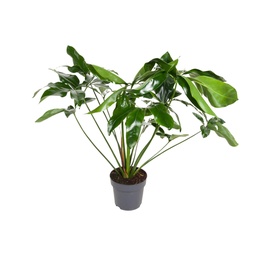
- Tree Philodendron, Philodendron selloum, pot Ø 12 cm and height approx. 25 cm. Its upright growth habit is ideal for bright corners with sufficient floor space.
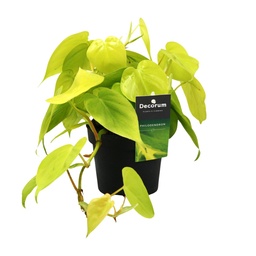
- Heartleaf Philodendron, Philodendron hederaceum, pot Ø 24 cm and height approx. 100 cm. This larger plant quickly adds plenty of leafy volume to a room.
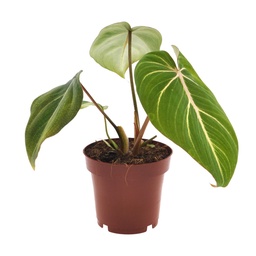
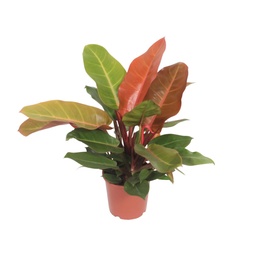
- Philodendron, Philodendron prancei, pot Ø 17 cm and height approx. 45 cm. Its medium size fits on a plant stand or a wide windowsill.
- Heartleaf Philodendron, Philodendron scandens, pot Ø 12 cm and height approx. 20 cm. Its compact starting size makes it easy to train as a hanging or climbing plant.
Important note
Do not place a Philodendron in a cachepot where water is allowed to remain permanently. Check the bottom of the container after every watering. The plant contains calcium oxalate, so keep it in a place where children and pets cannot reach the leaves or stems.
How do you fertilise, prune and repot a Philodendron?
When and how should you fertilise?
Philodendrons grow mainly from March to September. During this time, apply a liquid houseplant fertiliser at half strength about every four weeks. Lightly moisten the soil beforehand so the nutrient salts do not irritate the roots.
When light levels are low, temperatures are cool or growth has visibly stopped, the plant does not need additional fertiliser. In winter, a long break is usually sufficient. If you continue fertilising, extend the intervals considerably and follow the dosage on the label.
Too much fertiliser does not result in faster, healthier growth. White crusts on the soil, dry leaf edges and limp roots indicate salt build-up. In this case, flush the potting mix with plenty of low-lime water and allow the pot to drain completely.
You will find suitable nutrients in the fertiliser category. A balanced liquid fertiliser for green plants is sufficient for Philodendrons. Special products with a very high nitrogen content are not necessary.
How do you prune a Philodendron correctly?
Cut long or bare stems with clean, sharp scissors just above a leaf node. A new side shoot can grow from this node. Remove yellow leaves completely as soon as they become soft or come away easily.
Healthy cuttings do not have to end up in the bin. A stem with at least one leaf node is suitable for propagation. If you have sensitive skin, wear gloves, as the plant sap can cause irritation.
When does a Philodendron need repotting?
Repot your Philodendron in spring when roots are growing out of the drainage hole, water runs straight through or the soil has settled significantly. Carefully loosen the old root ball and remove only mushy or dead roots. Healthy roots are firm and light to brown, but not soft.
After repotting, place the plant somewhere bright but out of direct sunlight for a few days. Water it thoroughly once, then wait until the top layer of soil has dried out again. Do not apply additional fertiliser during the first three to four weeks.
What common mistakes happen when caring for Philodendrons?
1. You water by the calendar
A weekly watering day may work in summer but already provide too much water in winter. Always check the potting mix. Large pots and darker locations dry out more slowly than small containers placed near a bright window.
2. You place the plant too far from the light
Philodendrons often survive in a dark spot for a long time, but they grow weakly there. The stems become thin, the leaves smaller and the spaces between them longer. Move the plant gradually closer to the window so it can adjust to the higher light levels.
3. You confuse humidity with wet soil
Higher humidity does not mean you need to water more often. A plant can have dry indoor air and a wet root ball at the same time. Improve humidity through the plant's location, a humidifier or a group of plants—not through daily watering.
4. You fertilize weakened plants
A plant with root rot, pest infestation or severe lack of light cannot make good use of fertilizer. Address the cause first. Only start fertilizing again when new, healthy leaves appear.
5. You ignore dust and pests
A layer of dust blocks light and makes it harder to inspect the undersides of the leaves. Carefully wipe large leaves with a damp, soft cloth. Do not use leaf-shine products, as they can make the surface sticky.
Spider mites leave fine webs and pale speckles. Thrips cause silvery patches and black droppings, while mealybugs look like small cottony deposits. Isolate infested plants, gently rinse the foliage and repeat a suitable treatment as directed.
6. You overlook safety
Philodendrons should be kept out of reach of children and pets. Cats and dogs in particular may develop significant mouth irritation if they chew on leaves or stems. Remove fallen leaves immediately and wear gloves when pruning if necessary.
„Leaves and stems contain insoluble calcium oxalate crystals that can cause irritation when chewed.“
How do you identify and treat yellow leaves, root rot and pests?
How to interpret yellow leaves correctly
A single older leaf may turn yellow. The plant regularly replaces its foliage. If several leaves turn yellow at the same time, first check the soil, drainage and location.
- Yellow and soft: often too much water or the beginning of root rot.
- Yellow and dry: often too little water, dry air or intense sunlight.
- Pale green and small: usually too little light or a nutrient deficiency.
- Yellow patches with silvery areas: a possible sign of thrips or other pests.
For root rot, remove the plant from its pot and carefully rinse off the soil. Cut away soft, dark brown roots with disinfected scissors. Repot the Philodendron in fresh, airy potting mix and water sparingly at first.
How do you propagate Philodendrons from cuttings?
Choose a strong stem with one leaf and at least one visible node. Cut just below this node. Remove any leaves that would later sit in water or potting mix.
To root the cutting in water, place it somewhere bright and warm. Change the water regularly. In moist propagation soil, the cutting should also remain in a bright spot but protected from direct sunlight. Keep the potting mix slightly moist, not wet.
Roots will form after a few weeks. Transplant the cutting once several strong roots have developed. Gradually acclimatize it to a normal watering routine and wait to fertilize until you can see new growth.
A simple care plan for every season
- Spring: repot, monitor growth and begin cautious fertilizing.
- Summer: check for dry soil more often, protect the plant from midday sun and inspect for pests.
- Autumn: adjust the amount of fertilizer and watering frequency to the lower light levels.
- Winter: keep the plant away from heating, water less often and prevent waterlogging.
If you regularly check the location, soil moisture and drainage, Philodendrons are easy to care for. The plant does not need special attention every day. Consistent conditions are more beneficial than frequent interventions.
Additional advice
Check your Philodendron from all sides once a month. Inspect the undersides of the leaves, stem nodes, rim of the pot and drainage hole. This helps you spot spider mites, root pressure and salt deposits before the plant shows visible signs of stress.
Frequently Asked Questions
- How often should I water a Philodendron?
- Check the top two to three centimeters of soil with your finger. If it is dry, water slowly until a little water runs out of the drainage holes. Empty the cachepot after a few minutes. In winter, the plant usually needs longer intervals between waterings than during the growing season.
- What location is suitable for a Philodendron?
- Place the Philodendron in a bright spot protected from direct midday sun. A location near an east- or west-facing window is usually a good choice. Dark corners slow growth, while hot light from a south-facing window can bleach or scorch the leaves. Also keep the plant away from cold drafts and radiators.
- Why does my Philodendron have yellow leaves?
- Yellow leaves are often caused by overly wet soil, standing water or a location that is too dark. First check the roots and the moisture level in the pot. Remove rotting roots, repot the plant in fresh, well-draining soil and only water again once the surface has started to dry.
- Can I keep a Philodendron in the bedroom?
- Yes, a Philodendron can be kept in the bedroom as long as the room remains bright and frost-free. Keep it away from the radiator and avoid permanently wet soil. The plant does not reliably improve indoor air quality in measurable terms, but its foliage can create a pleasant atmosphere.
- How do I propagate a Philodendron?
- Cut a healthy stem just below a leaf node. Remove the lower leaves and place the cutting in water or insert it into moist propagation soil. Once several roots have formed, plant it in a loose potting mix and keep it slightly moist.
You may also be interested in
- Philodendron Care: A Variety of Species for Your Home
- How to Care for Houseplants: Avoid 7 Common Mistakes
- How to Water Plants Correctly: Avoid Common Watering Mistakes
- Peace Lily Care: How to Keep Your Spathiphyllum Blooming Beautifully at Home
- Fiddle Leaf Fig Care: Location, Watering and Special Features
- Exotic Houseplants: Care, Location and Popular Varieties