
In brief: The most reliable way to keep pigeons away is to combine eliminating attractants with mechanical bird deterrents: remove food and water, secure nesting sites, close off access with nets and make perching surfaces unusable with stainless steel spikes. Check the installation regularly and use only non-injurious methods, especially during the breeding season.
The most reliable way to keep pigeons away is to combine eliminating attractants with mechanical bird deterrents: remove food and water, secure nesting sites, close off access with nets and make perching surfaces unusable with stainless steel spikes. Check the installation regularly and use only non-injurious methods, especially during the breeding season.
Pigeons on your property are more than just a visual nuisance. Droppings dirty façades, windowsills and garden furniture, while nesting material can block gutters or ventilation openings. With the right combination of hygiene, access barriers and mechanical deterrents, you can solve the problem for good.
Why do pigeons keep returning to your home and balcony?
Pigeons do not choose spots at random. They prefer elevated, sheltered edges with a clear view and a short distance to food or water. A balcony, roof overhang, windowsill or garden shed is enough if the birds can land there undisturbed.
Pigeons also use established flight paths. Once a perching surface is considered safe, the birds often return every day. Individual decoys or reflective strips quickly lose their effect because the birds do not perceive a real threat.
What signs indicate a pigeon problem?
Fresh droppings on a particular edge usually indicate the preferred perching spot. Feathers, nesting material and regular cooing point to a resting or nesting site. Also look out for dirty gutters, broken branches and small openings beneath roof overhangs.
- Perching spots: windowsills, railings, wall tops, roof edges and solar panels.
- Nesting sites: sheltered corners behind cladding, beneath roofs or in open sheds.
- Attractants: pet food, open compost bins, water bowls and fallen fruit.
- Access points: gaps in nets, open roof windows, damaged grilles and unsealed outbuildings.
Observe the area at two different times of day. Mark every landing surface and note the direction from which the pigeons approach. This assessment shows whether you only need to secure one edge or the entire balcony or roof area.
Expert tip
Photograph the affected areas before installation. Mark perching spots, nests and flight paths on the images. This will help you see later whether the deterrent leaves a gap or whether the birds have simply moved to a neighbouring surface.
How should you prepare properly for pigeon deterrence?
Effective pigeon deterrence starts with the cause, not the deterrent product. Remove anything that makes the location attractive and close off easily accessible places of shelter. Only then install the mechanical barrier.
Which attractants should you remove first?
Store pet food in sealed containers and remove leftover grains from the ground. Cover open rubbish and compost bins, clear away fallen fruit and do not place water bowls directly next to the house wall or balcony. Bird feed can also attract pigeons if the feeding station is not positioned carefully.
For balconies, patios and gardens, you can find complementary equipment in the Garden equipment category and in the Garden + Outdoor section. If you feed wild birds, position a bird feeder away from the building and avoid leaving freely accessible pigeon feed near your home.
How should you check nests and access points?
Before every installation, check whether a nest is present. Do not simply remove eggs or young birds or seal them inside a barrier. Secure the area only after the situation has been assessed by a qualified professional and no animals will be trapped.
An open roof space or damaged ventilation grille often provides pigeons with more shelter than a visible balcony. Therefore, also check behind cladding, beneath roof overhangs and the access to sheds. Seal small openings with sturdy grilles or a suitable net without blocking ventilation.
“Feral pigeons are domesticated pigeons gone wild.”
This classification explains why pigeons are so well adapted to buildings. They do not seek remote natural areas, but structures that resemble rocky ledges. Smooth, enclosed or inaccessible surfaces deprive them of their usual resting place.
What methods help deter pigeons?
For long-term pigeon control, passive barriers are usually the most effective solution. These methods alter the surface so that birds can no longer land or nest there safely. Visual and acoustic deterrents are best used only as supplementary measures.
Mechanical barriers for edges and ledges
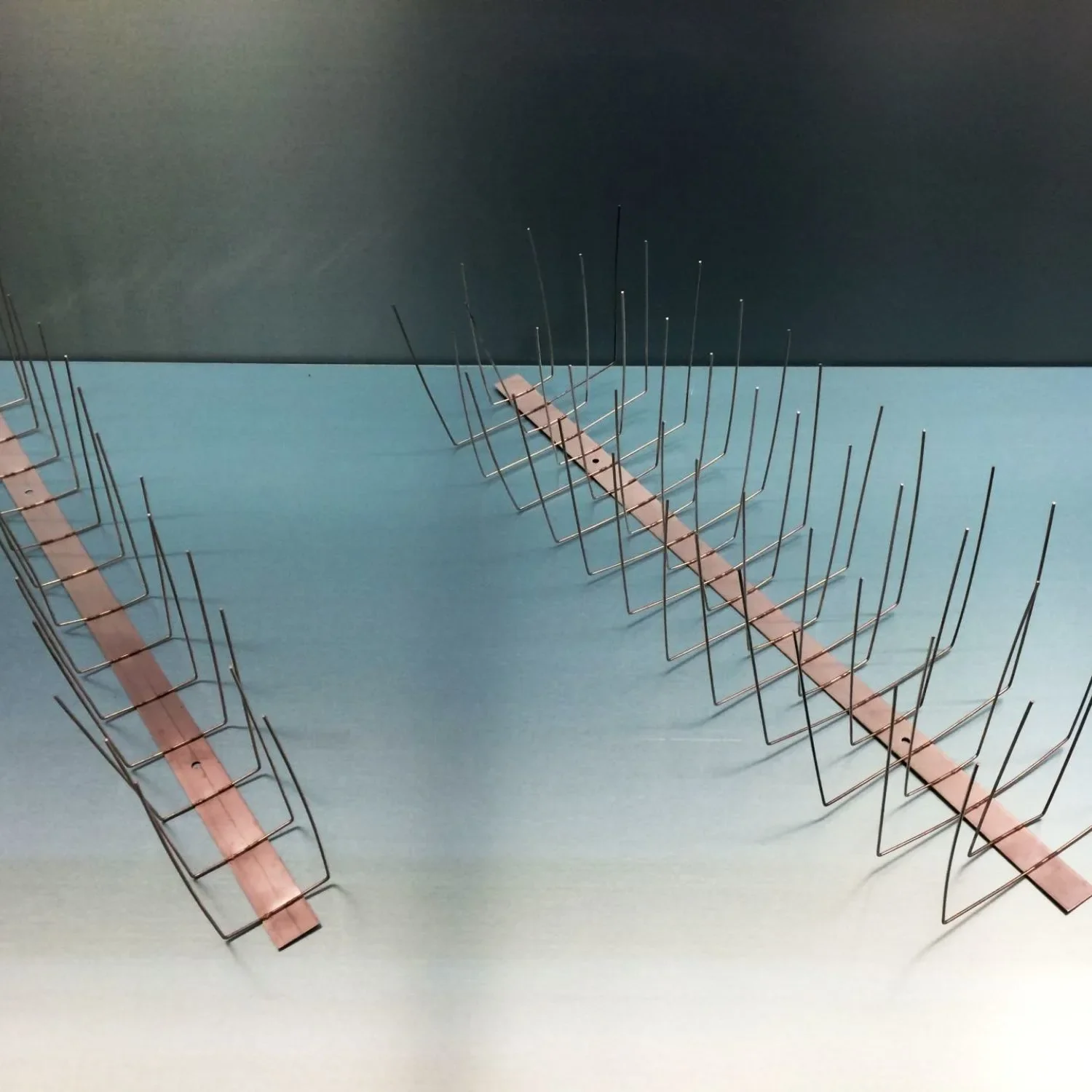
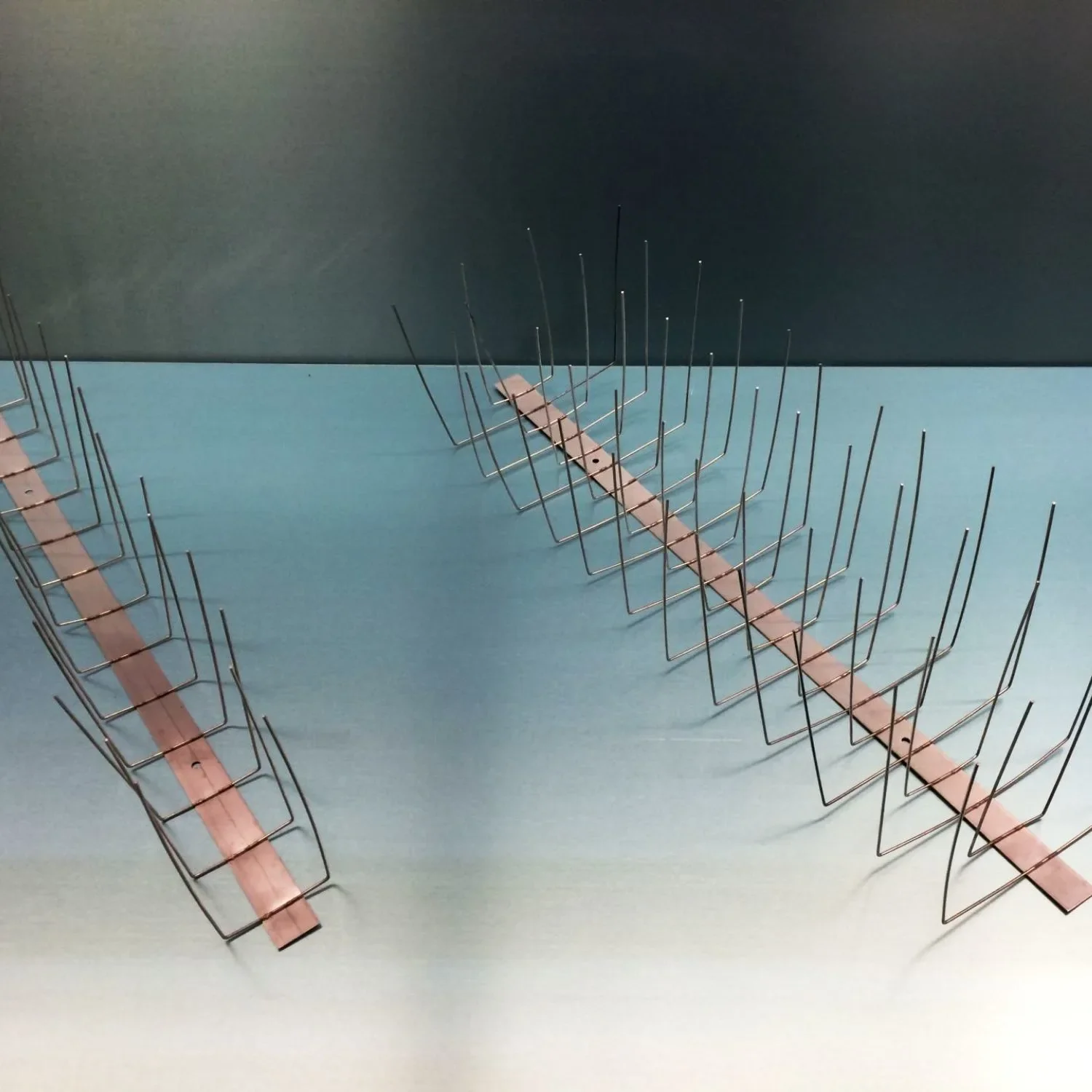
Stainless steel spikes make wide or narrow perching surfaces unusable. They work without electricity, noise or chemicals and are suitable for windowsills, wall edges, roof overhangs and other solid surfaces. The substrate must be clean, dry and stable so that the deterrent remains securely in place.
is a 4-row pigeon deterrent made from V2A stainless steel. The wider design is suitable for surfaces where several pigeons land side by side. Install the elements without gaps and position them so that the side edges are also covered.
is a 2-row stainless steel deterrent for narrower edges or areas with less landing pressure. Measure the surface before buying and plan the elements so that no open perching space remains between the individual segments.
Protective nets and tensioned wires
A protective net is suitable for a completely open balcony, loggia or larger recess. It must be taut, secured on all sides and free of loops. Even a small gap is enough if pigeons can use it as an entry point.
Tensioned wires protect narrow railings, wall tops and roof edges. They interrupt a stable landing position without covering the entire surface. Check the tension regularly, as wind, snow and loose fixings can reduce their effectiveness.
- Windowsill and narrow edge: stainless steel spikes or a tensioned wire.
- Wide roof overhang: multi-row spikes or a professionally planned barrier.
- Open balcony: a suitable protective net with sturdy fixing points.
- Opening to the loft: a sturdy grille or net that does not obstruct ventilation.
How effective are visual and acoustic deterrents?
Reflective tape, moving wind spinners and birds of prey decoys can briefly unsettle pigeons. However, the birds become accustomed to consistent stimuli over time. Use these deterrents only as a supplement and do not rely on them as your sole form of pigeon control.
Ultrasonic devices are also not a reliable solution for every location. Buildings, wind and ambient noise affect their performance. In areas with persistent pigeon pressure, a mechanical barrier is usually the better foundation.
Important note
Do not use poisoned bait, glue traps or loosely mounted wires. These methods can injure birds, pets and other wildlife. A poorly secured net can also become dangerous if animals become caught in it. Install every barrier so that it provides safe protection without trapping any animals.
How does bird control work on a balcony?
An effective balcony bird control solution depends on the layout of the area. A narrow ledge needs different protection from an open loggia with several approach routes. Measure the width, depth and height, and mark doors, rainwater drains and moving parts.
How do you plan a balcony bird net?
Run the net from the upper fixing point down to the floor or balcony parapet. Do not leave open triangles at the sides, and take the balcony door into account. The net must not rub against plants, furniture or lights.
- Measure the area: Determine all sides and allow for the fixing points.
- Check approach routes: Pay particular attention to the upper edge and the side transitions.
- Create tension: Secure the net tightly without overstretching the material.
- Inspect it: After wind and rain, check for gaps, loose hooks or loops.
Balcony bird control: Which solution suits the area?
Spikes or wires are sufficient if pigeons only land on the railing or a single windowsill. On a large, open balcony, a net prevents access much more reliably. Do not combine systems at random; secure the most important approach edge first.
Furniture and planters can also create new perching places. Do not place tall objects directly against the house wall, and cover unused furniture. After installation, check whether the pigeons have moved to a neighbouring edge.
How can you monitor problem approach routes?
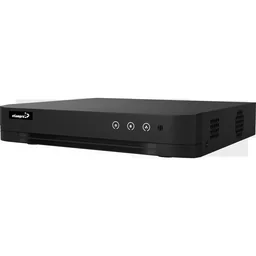
If the birds appear elsewhere despite the deterrent, temporary monitoring can help. , a 4-channel DVR, can be used with compatible cameras to document approach routes and timing patterns. The recorder does not deter pigeons itself, but it helps identify an unprotected area.
Additional advice
Check new deterrents after at least three days, after strong winds and then at regular intervals. Pigeons quickly test open spaces. Close every gap you find before the birds adopt the alternative spot as their new regular perch.
How can you protect your garden, roof and windows in the long term?
Pigeon problems in the garden are often caused by several small attractants. An open feeding station, a full compost bin and a sheltered garden shed can make the location attractive. So do not just remove the visible droppings—remove the cause as well.
What helps in the garden?
Regularly clear away fallen fruit and keep food and waste containers closed. Place bird baths for wild birds away from the house and clean them frequently. Keep sheds, greenhouse sides and covered seating areas free of nesting material.
- Store grain and pet food in sealed containers.
- Remove twigs, straw and loose materials from sheltered corners.
- Cover garden furniture and raised surfaces that are rarely used.
- Close off open sides of sheds, carports and garden buildings with suitable mesh.
How can you protect your roof, gutters and windows?
Check gutters, downpipes and openings beneath roof tiles for nesting material. A cover must not obstruct water drainage. Beneath solar panels, around dormer windows and at ventilation openings, use only systems suitable for these areas.
Work at height should be carried out by a specialist contractor. A stable ladder and dry conditions are not enough when working at the roof edge or on a difficult-to-reach façade. Have the structure inspected if drilling affects the building envelope or waterproofing.
How do you clean contaminated surfaces?
Moisten dry pigeon droppings first. Wear gloves and a suitable respiratory mask, do not sweep up the residue dry, and dispose of the material in a sealed container. Then clean and disinfect the surface according to the instructions for the product used.
For extensive contamination, recurring infestations or hard-to-reach areas, hire a specialist contractor. Keep children and pets away during cleaning. Only a clean surface will reliably show whether the pigeon deterrent is preventing new traces.
“It is prohibited to deliberately disturb wild animals or, without good reason, to capture, injure or kill them.”
This principle applies to every deterrent measure. Plan the installation so that animals are not injured, trapped or cut off from an active nest. If you are unsure, contact the competent veterinary office, nature conservation authority or a qualified specialist contractor.
Which solution is right for your pigeon problem?
The right pigeon problem solution depends on the area, cause and severity of the infestation. A single stainless steel spike on a wide roof overhang will not be enough, while a large net may be unnecessary for a single windowsill.
Which deterrent is suitable for each application?
- A single windowsill: Use a suitable row of stainless steel spikes and close any gaps at the sides.
- Wide wall ledge or roof overhang: Choose a multi-row deterrent such as and secure the entire landing area.
- Narrow railing: A narrower solution such as or a tensioned wire may be sufficient.
- Open balcony: Install a taut, fully enclosed protective net.
- Unclear flight path: Observe the area first and, if necessary, use with compatible cameras for documentation.
How can you implement pigeon deterrence permanently?
- Identify perches, nests, food sources and flight paths.
- Remove food, water and accessible nesting material.
- Check nests for eggs or young birds before closing access points.
- Choose spikes, wires, nets or mesh to suit the area.
- Install the deterrent without gaps and without creating a risk of injury.
- Clean the area and inspect the structure regularly.
You cannot deter pigeons with a single stimulus; you need a consistently protected environment. Remove the cause, block preferred perching areas and respond immediately to new gaps. This keeps the balcony clean, the roof free of nesting material and the garden usable for people and animals.
Frequently asked questions
- Which pigeon deterrent works best on a balcony?
- On balconies, correctly installed stainless steel spikes, tensioned wires or a suitable protective net can be effective. Also remove food scraps, water and nesting material. Choose the method according to the perching area: spikes for narrow ledges, wires for railings and nets for fully open balcony areas. Check the deterrent regularly.
- How can I deter pigeons without harming them?
- Use mechanical, passive barriers such as stainless steel spikes, tensioned wires and professionally installed nets. Avoid adhesive gels, poison and loose plastic parts. Before installation, check whether a nest containing eggs or young birds is present, and have active nesting sites assessed by a professional.
- Why do pigeons keep coming back despite the deterrent?
- Pigeons return when a perching area remains accessible or when food, water and nesting material are available. Poorly tensioned nets and incorrectly positioned spikes can also leave gaps. Find the flight path, remove the attractant and check the entire deterrent again after a few days.
- Can I simply remove a pigeon nest?
- Do not remove a nest yourself if it contains eggs or young birds. Wild animals must not be deliberately disturbed, injured or killed without good reason; local rules may also apply. First address the cause and seek advice from the veterinary office or a specialist contractor if the nest is occupied.
- How do I clean pigeon droppings safely?
- Moisten dry residue first and wear gloves and a suitable respiratory mask. Do not sweep up the droppings dry; loosen them while wet, collect them and dispose of them in a sealed container. Then clean and disinfect the surface according to the manufacturer's instructions.
You may also be interested in
- How to deter birds effectively: 7 chemical-free tips for gardens and crops
- Wasp control: Effective methods for your home and garden
- How to get rid of rats in the garden: Effective methods
- How to deter mosquitoes: Natural methods for your home and garden
- How to control slugs in the garden: Effective methods and tips
- How to deter moles: Effective garden tricks