
Quick explanation: In our 2026 review and comparison, pipe wrenches with specialised designs and robust jaws come out on top. The key choice is between a versatile, long pipe wrench for flexible applications and specialised models such as the corner pipe wrench or basin wrench for precise work in tight spaces. We show you the differences.
Pipe wrenches are powerful all-rounders in every plumbing and DIY workshop. In 2026, models that do more than simply grip are gaining ground, impressing with intelligent designs and high-quality materials. Our review and comparison shows you which pipe wrenches are currently the best and what you need to look for when buying. We help you make the right choice for your projects.
Contents
The most important buying criteria at a glance
Before buying a pipe wrench, you should check four key points. These features determine comfort, durability and suitability for different tasks.
Jaw design and material
The jaws are the heart of the tool. They must grip pipes securely without damaging them excessively. Look for sharply toothed, hardened steel jaws. Some models have toothed and smooth sections for different tasks. The material must withstand high pressure.
Jaw opening and maximum force
The maximum opening determines which pipe diameters you can work on. Measure the largest pipes in your working environment. The leverage and length of the handle affect the force generated. Longer handles provide more torque with less effort.
Adjustment mechanism and comfort
How quickly and easily can you adjust the jaws to a new pipe size? A smoothly finished pivot joint and stepless adjustment save time. Ergonomic, insulated or padded handles protect your hands and improve comfort during extended use.
Robustness and durability
A good pipe wrench will serve you for years. High-quality steel, precisely manufactured joints and a corrosion-resistant coating are essential. Avoid play in the pivot joint, as it reduces power transmission.
Tip: Try the pipe wrench in your hand before buying. Does it feel well balanced? Can you operate the adjustment ring easily while wearing gloves? This subjective feeling is an important indicator of how enjoyable it will be to use later.
Comparison table of the best pipe wrenches
Our comparison shows the strengths and ideal applications of the best models currently available at a glance. Use this overview to make your initial selection.
The most highly rated pipe wrenches in our range compared directly:
| Model | Customer rating | Availability |
|---|---|---|
| 90° fitting wrench, 1", 35 mm | – | Currently unavailable |
| 45° S-shaped corner pipe wrench, 1 1/2" 60 mm | – | Currently unavailable |
| Pipe bender, up to 180° | – | Currently unavailable |
| Extra-long pipe wrench | – | Currently unavailable |
| Basin wrench 10", 18 - 64 mm | – | Currently unavailable |
Specialist for tight spaces: the corner pipe wrench
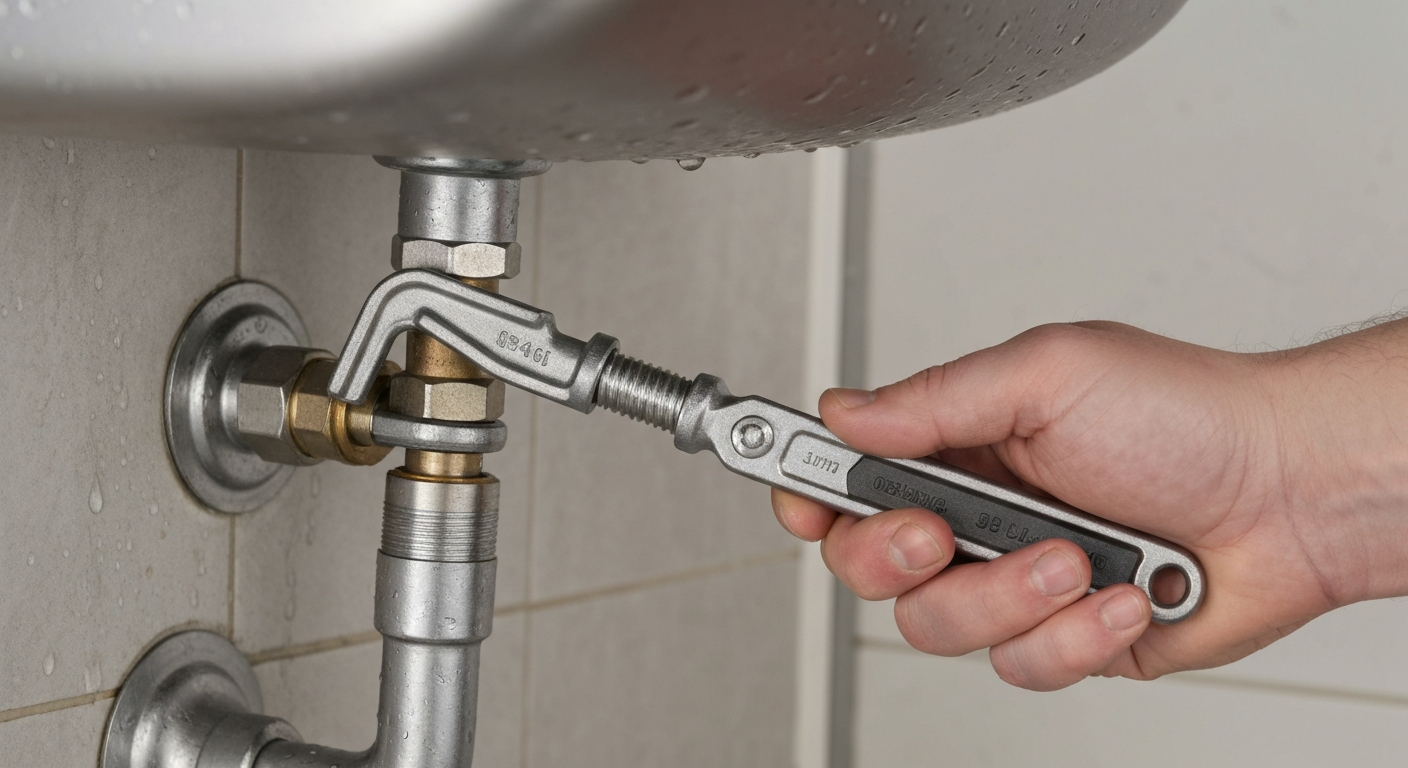
When you are working under sinks, behind toilets or in awkward heating shafts, straight wrenches quickly reach their limits. This is where the corner pipe wrench comes into its own.
The S-shape makes the difference
Its angled head, often in a distinctive S-shape, keeps your hand out of the direct line of attack. This lets you apply force where the wall would otherwise get in the way. A model such as the with a 45° angle and a capacity of up to 60 mm is ideal for many plumbing installations.
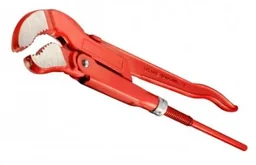
You can loosen or tighten angle valves without scraping your knuckles. The ergonomic working position not only protects your joints but also gives you a better view of the area you are working on.
Warning: Leverage can work differently with angled wrenches. Apply pressure carefully at first to prevent round pipes from slipping unexpectedly. The angle changes the direction of the force.
Typical everyday applications
This wrench is your best helper for:
- Installing or replacing hand tools such as angle valves on washing machines and sinks.
- Working on radiator connections in room corners.
- Loosening tight connections in confined installation recesses.
Reach and force: the extra-long pipe wrench
Sometimes you simply need more reach or greater leverage. The extra-long pipe wrench is designed for these tasks. With handles often over 400 mm long, it generates enormous torque.
Where length becomes an advantage
The extra length helps in two situations: first, when you need to reach deep into an installation to access difficult-to-reach areas. Second, when you need to loosen an extremely tight, rusty or limescale-covered connection. The long lever makes this possible. The is an example of this powerful tool class.
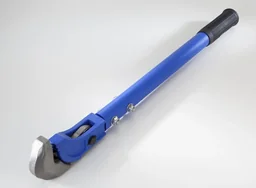
You do not use this wrench for fine adjustments, but for the "heavy-duty" jobs where muscle power alone is not enough. However, it should not be too heavy, otherwise using it will become tiring.
Balance is crucial
A long, heavy wrench can become unwieldy. A good model is designed so that its centre of gravity is close to your hand. This helps you maintain control. Look for grippy, non-slip surfaces on the long handles.
Note: Consider how much space you need. In very tight shafts or boxes, the length of the wrench can become a disadvantage. In these situations, the compact corner pipe wrench is the better choice.
Specialised for plumbing: the siphon wrench
Siphons under sinks are notorious for awkward installation work. A traditional pipe wrench often cannot reach the usually large but difficult-to-access union nuts effectively. A siphon wrench is the specialised solution.
Slender design for limited space
Siphon wrenches such as the feature particularly slim, long jaws. You can often position them directly through the openings in the siphon or from the side onto the nut. Their jaws are typically designed for common sizes from 18 mm to over 60 mm.
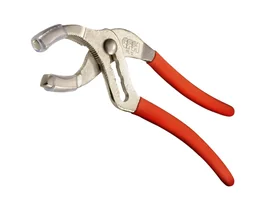
This saves you time and frustration when cleaning or replacing a blocked siphon. You can work more precisely and reduce the risk of damaging adjacent parts.
Material for wet conditions
As this wrench is often used in damp environments, a corrosion-resistant finish is important. Some models feature a galvanised or hardened chrome vanadium surface. Browse our pliers category to discover more specialised models.
Practical tips for using all models
The best tool is of little use if you do not use it correctly. These techniques help you work more effectively while protecting both the pipe wrench and the connection.
Correct positioning and applying force
Position the jaws as close as possible to a right angle to the pipe. This distributes the pressure evenly and reduces the risk of the jaws slipping. Apply force slowly and steadily, not with sudden jerks. For very tight connections, you can use a short, controlled tap on the end of the handle to help loosen them.
Protecting the surface
If you do not want to damage the surface of a chrome-plated or painted pipe, place a piece of thick leather or a special protective material between the jaw and the pipe. Take care with sensitive plastic pipes, as even light pressure can leave marks.
Maintenance for a long service life
Clean your pipe wrench after every use, especially after working on old, rusty connections. A drop of light oil in the pivot joint and on the adjustment mechanism keeps it moving freely. Store it in a dry place to prevent rust. Occasionally check that all screws are tight.
Our final buying advice
So which pipe wrench is right for you? The answer depends largely on the tasks you typically carry out.
For the versatile DIYer
If you are looking for an all-round wrench for various household projects, start with a high-quality, medium-length standard pipe wrench with a capacity of at least 1 1/2 inches. It covers most jobs. You can expand your tool collection with specialised models later.
For plumbing and heating engineers
Professionals or highly committed DIYers should consider a set of at least two wrenches. Combine a robust, long pipe wrench for demanding jobs with a compact angled pipe wrench for confined spaces. A siphon wrench rounds off the set perfectly for efficient plumbing work.
Quality over quantity
Invest in a branded tool made from good-quality steel. The higher purchase price pays off through a significantly longer service life, better performance and greater safety. A poor-quality wrench that slips can cause injuries or damage installations.
Make your choice based on your specific needs. With the right pipe wrench in your toolbox, you can handle any connection safely and efficiently. For your final selection, see all the details in our pipe wrenches category.
Frequently asked questions
- What is the difference between a pipe wrench and water pump pliers?
- A pipe wrench usually has serrated, parallel jaws for maximum grip on round surfaces such as pipes. Water pump pliers often have smoother jaws and a quicker adjustment mechanism, but provide less force. For tight plumbing connections, a pipe wrench is typically the better choice.
- What jobs require a specialised angled pipe wrench?
- An angled pipe wrench is essential when you need to work in tight corners or directly against walls. Its angled head allows you to position the jaws at a 45° or 90° angle where a straight wrench will not fit. It is ideal for installing angle valves or radiator connections.
- What does the size in inches (e.g. 1\") mean on a pipe wrench?
- The size in inches indicates the maximum pipe size the wrench can grip. 1\" corresponds to an outside pipe diameter of approximately 33.7 mm. Make sure your wrench can accommodate the largest pipe diameter in your work area. For domestic plumbing, sizes up to 1 1/2\" (approx. 48 mm) are often sufficient.
- Can I use a pipe wrench to loosen hexagonal nuts?
- Yes, it is possible, but it is not ideal. The serrated jaws of a pipe wrench can damage softer nuts. For nuts, it is better to use an open-ended spanner or ring spanner. A pipe wrench is primarily designed for round objects, where it offers the best force transmission and grip.
- What should I bear in mind when maintaining a pipe wrench?
- Remove dirt and moisture from the wrench after use. Lightly oiling the pivot and adjustment joints prevents rust and keeps the mechanism moving smoothly. Store the tool in a dry place. Regularly check that the jaws remain sharp and that there is no play in the joint.