
In brief: Hedges provide privacy, wind protection and habitat for wildlife. Start by considering the site, soil and desired height. Choose shrubs such as hornbeam, privet or thuja to suit the sunlight and available space. Fall is the best time to plant. Give shrubs enough room, water them thoroughly and trim them regularly. Artificial hedges offer instant privacy without ongoing maintenance.
How to Plant a Hedge: Planning, Planting and Choosing Shrubs
A hedge gives your yard structure. It provides privacy, blocks wind and gives birds a place to shelter. Careful planning and planting affect how well it grows and how much upkeep it needs. Here’s how to get started.
Expert tip
Draw your yard to scale. Mark existing trees, paths and sunny areas. This will help you see where a hedge will work and how much room you have.
Why are hedges important for your yard?
Hedges do more than create a green screen. They are living features that can improve your yard’s microclimate. They filter dust, reduce noise and provide shade.
Unlike fences or walls, hedges look natural. They blend into the yard and change with the seasons. Birds nest in their dense branches, and insects find food among the leaves and flowers.
Privacy with ecological benefits
A dense hedge gives you privacy. Choose evergreen shrubs such as yew or cherry laurel for screening all year. Deciduous hedges such as hornbeam offer less privacy in winter, but their delicate branch structure still looks attractive.
Native shrubs such as hawthorn and American beech can support wildlife in your yard. In comparison, nonnative plants such as thuja provide little food for insects.
A hedge is the backbone of a garden. It divides the space, creates a sense of security and connects us with the seasons.
How do you plan a hedge?
Good planning helps prevent problems later. First, decide what you want the hedge to do. Do you need privacy, a property boundary or a decorative border? Your answer will determine its height, density and the plants to choose.
Check the site. How many hours of sun does the area get each day? Is the soil sandy, loamy or rich in organic matter? A soil test can help you find out. Shop for the garden supplies you need to prepare the site.
Setbacks from property lines and paths
Check your local rules before planting. Many cities and counties have requirements for how far hedges must be set back from property lines. Keep at least 50 centimetres from the property line, and allow more space for tall hedges.
Leave enough room for the hedge to reach its mature size. A hornbeam hedge can easily grow two metres wide. You’ll need access to both sides for trimming, so leave room to work.
Important note
Avoid invasive nonnative species such as butterfly bush and Canadian goldenrod, which can crowd out native plants. Check your state or local invasive species guidance before planting.
Which shrubs are right for each type of hedge?
There are plenty of options. Choose between deciduous and evergreen plants, and consider whether you want fast or slow growth. Also think about how much maintenance you can manage.
For formal, neatly trimmed hedges, consider boxwood, yew or hornbeam. They tolerate heavy pruning. For informal flowering hedges, try forsythia, butterfly bush or weigela.
Classic hedge plants
- Hornbeam: Hardy, tolerant of pruning and deciduous; old leaves often stay on the branches until new growth appears.
- American beech: Similar to hornbeam, with reddish fall foliage that turns brown and often stays on the branches through winter.
- Privet: Fast-growing, semi-evergreen and easy to care for; a good choice for tall privacy hedges.
- Yew (Taxus): Evergreen, very tolerant of pruning and slow-growing; all parts of the plant are poisonous.
- Cherry laurel: Evergreen and very fast-growing; needs plenty of space and is not native to North America.
For nutrient-poor or acidic soils, consider conifers such as arborvitae (thuja) or false cypress. However, they can be prone to disease if planted in the wrong location.
Choose mixed hedges made up of different species. This increases resistance to pests and looks more natural than a monotonous row.
When and how do you plant a hedge?
Fall is the traditional time to plant a hedge. The soil is warm, and plants can focus on growing roots. You can also plant container-grown shrubs in spring once the ground has thawed. Avoid planting on hot summer days.
How to plant a hedge, step by step
- Prepare the soil: Loosen the soil to the depth of a spade. Remove rocks and weed roots. Mix sand into heavy soil.
- Dig a planting trench: Make the trench twice as wide as the root ball. Dig it to about the same depth as the root ball.
- Prepare the roots: Set potted plants in a bucket of water until the bubbles stop rising. Leave balled plants in their burlap wrapping.
- Set and align the plants: Place the shrubs in the trench. Use a string line to make a straight row. The top of each root ball should be level with the ground.
- Water and backfill: Fill the trench halfway with soil and water thoroughly. Fill it the rest of the way, gently firm the soil and shape a watering basin.
Water thoroughly after planting. A layer of bark mulch helps the soil retain moisture. Check soil moisture regularly during the first few weeks.
Additional advice
For a denser hedge from the start, plant shrubs in a "zigzag pattern" in two staggered rows. This helps the shoots fill in more quickly.
How do you care for a hedge after planting?
Good care keeps a hedge healthy and in shape. Water regularly during the first year. After that, apply an organic fertilizer in spring.
Pruning is the most important maintenance task. Lightly trim a new hedge in its first year to encourage branching. Trim established hedges once or twice a year. Late June is a good time, with another trim in February if needed.
Spot pests and diseases early
Keep an eye on your hedge. Yellow needles on thuja can indicate a fungal disease or not enough water. Webbing on boxwood can be a sign of box tree moth. If you spot an infestation, act quickly with a suitable plant protection product.
Help plants thrive from the start. Healthy shrubs planted in a suitable location are more resilient. Avoid waterlogged soil and planting too close together.
What are the alternatives to living hedges?
Not every location is suitable for growing shrubs. Alternatives can be useful for very shady spots, balconies or when you need instant privacy.
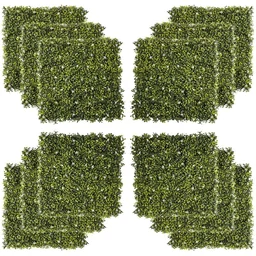
Artificial hedge panels made from UV-resistant plastic offer a practical solution. They’re weather-resistant, maintenance-free and stay green year-round. High-quality products such as
Benefits of artificial hedge panels
- Instant privacy: Enjoy complete privacy from day one.
- Maintenance-free: No watering, trimming, fertilising or leaf clearing.
- Versatile: Mount the panels on fences, walls or balcony railings.
- Durable: Quality products are frost- and UV-resistant.
Products such as
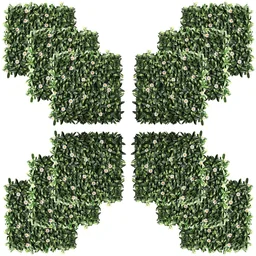
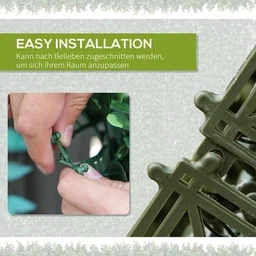
Whether you choose a living or artificial hedge, a well-planned screen can enhance your garden. With the right preparation and plant selection, you can create a lasting green feature.
Frequently Asked Questions
- When is the best time to plant a hedge?
- For most hedge plants, fall—from September to November—is the best time to plant. The soil is still warm, giving plants time to establish before winter and get off to a strong start in spring. Container-grown plants can generally be planted year-round, but avoid planting during frost or extreme heat. Hedges planted in spring need regular watering.
- How far apart should I plant hedge plants?
- Spacing depends on the type of shrub. For a dense hedge, plant slow-growing varieties such as boxwood closer together, about 20-30 cm apart. For fast-growing varieties such as privet or hornbeam, 40-50 cm is ideal. Allow for the shrubs’ mature width. Planting too close together leads to competition for light, water and nutrients.
- Which hedge plants grow the fastest?
- Privet, hornbeam and field maple are among the fastest-growing hedge plants, putting on up to 50 cm of growth per year. Evergreen options such as Leyland cypress grow very quickly but need frequent trimming. Keep in mind that fast growth often means more maintenance.
- How do I care for a hedge in its first year?
- Consistent watering is the priority in the first year, especially during dry spells. Apply a specialist plant fertiliser sparingly. Avoid heavy pruning in the year you plant the hedge; trim lightly to encourage branching. Protect shallow-rooted shrubs from drying out in winter.
- Are artificial hedges a good alternative?
- Yes. They’re a good choice for shady areas, balconies or instant privacy. High-quality artificial plants such as PRODUCT_92083 are UV- and weather-resistant. They don’t need watering, trimming or fertilising. Choose a natural-looking design and secure the panels firmly. Browse our artificial plants category to find them.
You may also be interested in
- Garden design with trees and shrubs: make your garden your own
- How to choose and plant hedge plants: the complete guide
- How to shape and care for ornamental shrubs
- How do I plan and design my dream garden, step by step?
- Privacy screen mesh or hedge: compare the options for your garden
- Garden fences and privacy screens: design, materials and installation