
In brief: Choosing the right playset primarily depends on the children's ages, their number, and the available space in your yard. For toddlers aged 18 months and up, compact 3-in-1 models with a slide and low platform are ideal. Older children will enjoy towers with a swing, climbing wall, and basketball hoop for an added challenge. Look for a sturdy construction, high-quality materials such as HDPE, and safe, age-appropriate play features.
A playset is the centerpiece of a child-friendly yard. It encourages physical activity and creativity and invites children to play outdoors for hours. However, there is a wide range to choose from. Our 2026 review and comparison will help you find the right model for your children and your yard. We present different types, compare important features, and provide clear buying advice.
Table of contents
What types of playsets are there?
Playsets vary considerably in size, features, and target audience. The right choice depends on your children's ages and the space available in your yard.
Compact starter models
These towers are ideal for toddlers and small yards. They often consist of a low platform with an integrated slide and possibly a sandbox or small swing underneath. The material is often easy-care plastic. They provide a safe introduction to climbing and sliding.
Classic wooden playsets with a swing
The classic model consists of a more or less tall wooden tower with one or more platforms. A swing beam and slide are attached to it. These models are very popular, durable, and often expandable with modular accessories. However, they require more space and maintenance.
Combination playsets with a wide range of features
These models are all about maximum variety. In addition to a tower, slide, and swing, features such as a basketball hoop, climbing wall, sandbox, telescope, or climbing rope can be included. These playsets are designed for multiple children and years of use.
Comparing the buying criteria
Before choosing a model, you should compare these points systematically.
Recommended age and long-term value: Don't buy a model that is too small. A tower that your child outgrows in two years was not a good investment. Look for an age range that accommodates your child's growth. Models suitable for ages 2 to 10 offer the best value.
Material and stability: The material forms the foundation of the playset. High-quality pressure-treated wood, such as pine, is sturdy and durable. Plastic components such as HDPE slides are weather-resistant, splinter-free, and remain comfortably cool in the sun. Check the wall thicknesses and the quality of the connections.
Play features and expandability: Think about which features will excite your children. Is it swinging, playing hide-and-seek in the playhouse, or climbing? Some manufacturers offer modular systems. This allows you to add a swing or climbing ladder later, keeping the playset interesting for longer.
Tip: Involve your children in the selection process. Show them pictures or videos of the different playsets. Their enthusiasm for certain features is a good indicator of long-lasting enjoyment.
The best play towers tested
Our comparison presents three versatile models that meet different needs.
For families with toddlers aged around 18 months and up, the
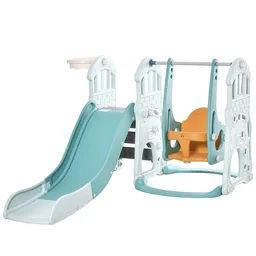
If you are looking for more space and more play options, take a look at the
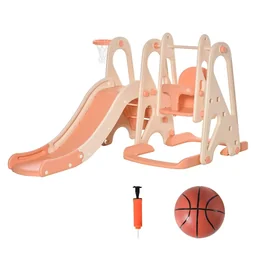
A very similar alternative, although potentially different in some details, is the
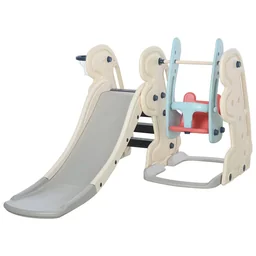
Important: The stated age recommendation is a guideline. Always supervise young children while they play, especially during the first few weeks of use. Check regularly that your child has the motor skills required for all the elements.
For a comprehensive overview of different models and their features, use our comparison table. Here you can see the key details of the tested play towers at a glance.
The highest-rated play towers in our range compared directly:
| Model | Customer rating | Availability |
|---|---|---|
| 2 in 1 football basketball basketball hoop children's toy ball green L61 x W53 x H99 cm | – | Currently unavailable |
| 2 in 1 tricycle pushchair 100 cm x 48 cm x 106 cm | – | Currently unavailable |
| 2-stage baby bath | – | Currently unavailable |
| 3 in 1 children's slide children's swing set play tower for children 18 to 48 months children's playground with basketball hoop HDPE | – | Currently unavailable |
| 3 in 1 play tower with children's slide basketball hoop swing ladder garden slide baby slide for 18 months-5 yea | – | Currently unavailable |
Safety and assembly
Your children's safety is the top priority. A play tower must not only stand securely but also be safe to play on.
Choosing the right location and ground surface
Choose a level, clearly visible spot in your garden. The ground must be stable enough to support the tower. Ideally, install safety surfacing beneath and around the tower. Suitable options include special impact-absorbing mats, bark mulch or fine gravel in a sufficiently thick layer (at least 20-30 cm). Hard surfaces such as concrete or paving slabs are unsuitable.
Secure stability through correct anchoring
Every play tower must be anchored to the ground. With wooden models, this is usually done by setting the posts in concrete or using special ground anchors. Plastic towers are often secured with long ground screws. Follow the assembly instructions precisely. Insecure anchoring is the greatest safety risk.
Safe construction features
Look for rounded corners and edges. Platforms should be secured with a high railing or parapets. The gaps between the railing bars must be narrow enough to prevent a child's head from becoming trapped. Check all screws and connections regularly to ensure they are tight, as they can loosen under stress.
Note: Allow enough time and have helpers available for assembly. Assembling a large play tower can be complex. Sort and lay out all parts before starting, then work systematically according to the instructions.
Care and maintenance
Regular care is essential to ensure that the play tower lasts a long time and remains safe.
Wood care: A wooden tower should be treated with a special stain or wood oil approximately every one to two years. This protects it from weather, moisture and UV radiation. Also check the wood regularly for cracks or splinters.
Plastic care: Simply clean slides and plastic parts with water and mild washing-up liquid. Avoid harsh cleaners or abrasive products, which can scratch the surface. Check for cracks or brittle areas.
Seasonal check: Carry out a thorough safety check at the start of the season in spring. Tighten all screws and nuts. Check ropes, chains and all moving parts for wear. Remove moss or algae from platforms to prevent slipping.
Alternatives to a large play tower
Not every garden has room for a large combination play tower. Fortunately, there are attractive alternatives that provide just as much fun.
Focus on individual elements: Instead of a tower, you can distribute individual, high-quality play equipment around the garden. A separate children's swing, climbing frame or sandbox with a cover also offers excellent play opportunities and can be placed flexibly.
Small playhouses and platforms: A low playhouse or a simple platform with a slide is often perfectly adequate for toddlers. They take up less space, are quicker to assemble and cost less. They meet the same basic needs for hiding, climbing and sliding.
Mobile play equipment: For maximum flexibility, choose mobile items such as an inflatable paddling pool, a spring rocker or a small table with chairs for outdoor drawing days. These can be put away when needed, giving you back control over how your garden is arranged.
Conclusion
Choosing the perfect playset means balancing the available space, your budget, your children's needs and the desired lifespan. Compact 3-in-1 plastic models are the ideal solution for toddlers and small gardens. Larger wooden playsets with swing extensions provide years of fun for siblings and can often be expanded.
Our tip: Invest in quality and safety. A well-maintained playset made from sturdy materials will accompany your children throughout their preschool and primary school years. It creates unforgettable memories of hours filled with adventure in your own garden. Use our comparison to find the model that suits your family.
Frequently Asked Questions
- What age is a playset suitable for?
- Compact models with low platforms and slides are suitable for children from around 18 months. Larger playsets with swings and climbing features are designed for children aged 3 to 10. Always follow the manufacturer's age recommendation and choose equipment suited to your child's development.
- What is the best material for a garden playset?
- High-quality pressure-treated timber or sturdy plastic components such as HDPE are ideal. Wood requires regular maintenance, but is highly durable and resilient. Plastic elements such as slides are weather-resistant and easy to care for. Avoid low-quality untreated wood or thin-walled plastic.
- How much space do I need for a playset in the garden?
- In addition to the playset's dimensions, allow for a safety zone of at least 1.5 to 2 metres on all sides. For a compact 3-in-1 model, you should allow for approximately 4x4 metres. Larger combinations with swing extensions require correspondingly more space. Measure your garden carefully before buying.
- Can I expand a playset later?
- This is possible with many modular systems. When buying, check whether the manufacturer offers extension kits such as additional swings, climbing walls or sandpits. The basic structure and posts should be designed to accommodate future additions. Not all playsets can be expanded modularly.
- How do I secure a playset properly?
- Anchor the playset firmly to the ground, either with ground screws in the lawn or by setting the posts in concrete. The ground should be level and stable. A shock-absorbing surface such as bark mulch or impact-absorbing safety tiles is recommended beneath slides and swings. Regularly check that all connections are secure.