
In brief: Plywood sheets are wood-based materials made from veneer layers bonded together at right angles. This construction gives them high stability, dimensional stability and resistance to warping. They are the ideal sheet material for load-bearing DIY woodworking projects, furniture and garden structures, as they can withstand a great deal while remaining comparatively lightweight.
What are plywood sheets?
Plywood sheets are one of the classic wood-based materials. Their construction is remarkably simple: thin layers of wood, known as veneers, are stacked crosswise and bonded together under heat and pressure.
This cross-layering counteracts wood's natural tendency to warp. The result is an extremely stable, dimensionally stable sheet. It hardly warps, is less likely to crack and offers high load-bearing capacity in all directions.
In the garden and outdoor area, this property makes it the ideal sheet material for sturdy structures that need to withstand wind and weather.
The ingenious idea behind plywood is the elimination of wood anisotropy. By bonding the veneers crosswise, the different shrinkage and swelling rates of wood in different directions are balanced out. The result is a material with almost isotropic, meaning direction-independent, properties.
What types of plywood are available?
Not all plywood sheets are the same. The differences lie in the wood, the adhesive and the manufacturing process. These determine the price, appearance and, above all, the ideal application.
Standard plywood (BU/BB)
This is the most common DIY-store variety. The face layers are often made from birch (BU = birch on the underside, BB = birch on both sides), while the core is made from less expensive softwoods. It is versatile, but not suitable for permanent moisture. It is perfect for indoor furniture or lightweight garden projects that are well protected.
Multiplex plywood (often birch multiplex)
The premium class. Multiplex plywood is made entirely from thin, high-quality veneers, usually birch. The layers are uniform, and the sheet is particularly heavy, strong and has a fine, almost flawless surface. It is the first choice for visible, high-quality work in garden furniture construction.
Pro tip
Check the bonding class stated on the label. It indicates the moisture resistance of the adhesive. Class 1 (INDOOR) is for dry rooms. Class 2 (INDOOR with increased humidity) is for kitchens or bathrooms. Class 3 (OUTDOOR) or 100 (highly moisture-resistant) are essential for gardens and unheated sheds.
Weatherproof or marine-grade plywood
This uses a special, highly moisture-resistant adhesive, such as phenolic resin. The sheets are often bonded in dark brown and are considerably more expensive. They are made for extreme conditions and form the basis for long-lasting garden storage boxes, raised beds or garden playhouses.
Screen-printing plywood
A special type. Here, the veneers are bonded so perfectly and seamlessly that the surface looks like solid wood. It is ideal for painting and is often used for high-quality furniture fronts. It is less common in the garden, except for designer pieces.
How can I use plywood in the garden and around the home?
Plywood's strengths really come into their own in DIY woodworking. Its stability combined with comparatively low weight opens up many possibilities.
Build sturdy garden furniture yourself
Whether a bench, table or stool – plywood is an excellent choice. For the frame, use weatherproof plywood at least 19 mm thick. You can use thinner sheets for the seat. Make sure there is sufficient ventilation so that water can dry underneath. A suitable garden furniture cover will extend its life over winter.
Practical storage: raised beds and garden boxes
Moisture resistance is crucial for a raised bed. Use weatherproof-bonded plywood at least 19 mm thick. Line the inside walls with dimpled membrane as a separating layer from the soil. This protects the wood from direct moisture and decay. For garden boxes used to store garden tools or garden waste bags, thicker standard plywood is also sufficient if the box is kept under a roof.
Important note
The edges are the weak point of every plywood sheet. This is where the sensitive core wood is exposed. If water and moisture penetrate, the sheet swells and the adhesive loses its effectiveness. Always seal all edges several times with varnish, special edge sealant or at least wood oil before installing the sheet outdoors.
Strong backs for shelves and sheds
Plywood sheets immediately give any shelf in a garden shed added stability. They act as a bracing panel and prevent it from tipping. At the same time, they provide a closed, clean back. They are also ideal for fitting out the inside of tool sheds or as a base for workbenches.
Creative decorative and planting projects
Thinner plywood can be used to make attractive planters, name signs for flower beds or trellises. With a fretsaw or a sharp
(Wonder Scissors), you can cut out delicate shapes with precision. Paint these projects particularly carefully, as they are often exposed directly to the soil.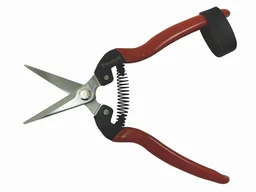
Plywood is now indispensable in modern timber construction. It is the preferred material for diaphragm-like, load-bearing components such as wall and floor elements. Its predictable structural properties and high tensile strength across the grain make it a safe and efficient building material, even for private home construction.
How do I work with plywood correctly?
Proper handling determines the appearance and durability of your project. Plywood is easy to work with, but it does require some know-how.
Sawing & Cutting Without Tear-Out
Use sharp tools with many fine teeth. A jigsaw with a fine-cutting blade for wood is a good choice. Cover the cutting line with masking tape – this minimises tear-out on the surface. Saw from the visible side, as the saw tears out the underside. For straight cuts, a circular saw with a guide rail is unbeatable.
Screwing & Fastening
Pre-drilling is essential, especially near the edges. Otherwise, the top layer may splinter or the screw may tear through the wood fibres. Use special wood screws with a fine thread. For load-bearing connections, rely on brackets and dowels, not just the screw's shear strength in the plywood.
Additional advice
Always sand plywood in the direction of the grain of the top layer, never across it. Start with a medium grit (e.g. 120) and then move on to finer paper (180-240). Never wipe sanding dust off with a damp cloth, as this raises the wood fibres. Instead, use a vacuum cleaner or a dry brush.
Gluing & Sealing
Glue alone will not hold permanently on smooth veneer surfaces. Always combine glue with mechanical connections such as screws or dowels. For outdoor sealing, use special wood stains or opaque paints for exterior wood. Always paint the edges first, followed by the surfaces. Several thin coats are better than one thick coat.
What are the alternatives to plywood?
Plywood is not the only solution. Other sheet materials have their own strengths.
OSB Sheets (Oriented Strand Boards)
More affordable and also very strong, but with a coarse, rustic appearance. They consist of aligned wood strands. OSB is extremely durable and often found in structural construction. For visible garden furniture, the appearance is usually too rough, but it is ideal for substructures, shed walls or floor panels.
MDF & HDF Sheets
Very homogeneous sheets made from wood fibres. They are heavy, can be milled superbly and have a smooth, closed surface. However, they are **not moisture-resistant**. Even a little moisture makes them swell like a sponge. They are therefore unsuitable for the garden, except for fully protected, painted decorative elements.
Solid Wood Panels
The natural alternative. They look beautiful, but are expensive and have a higher risk of warping. They are a great choice for small, well-designed garden projects. However, they also require excellent weather protection and regular maintenance.
Practical tips for your next plywood purchase
With these tips, you can make the right choice at the DIY store and avoid problems.
Determine how the material will be used. Indoors or outdoors? Visible or concealed? Load-bearing or decorative? The answer determines the required bonding class and type of wood.
Inspect the sheet visually before buying. Are the edges cleanly cut and free from fraying? Are there bubbles or gaps in the glue line? Is the sheet flat, or does it already have a slight warp?
Plan your cutting layout. Plywood sheets are standardised (often 1250 x 2500 mm). Draw your cutting plan to scale to minimise waste. Many DIY stores offer a cutting service – use it for large, straight cuts.
Think about transport. A 19 mm thick standard-size multiplex sheet weighs over 40 kg. Do you have a suitable vehicle and someone to help? For smaller projects or repairs, a smaller format or cutting the sheet on site may be worthwhile.
Equip yourself with the right accessories. In addition to a saw and drill, you will need sandpaper, high-quality wood screws and a suitable work surface. A
(under-counter pipe) has no direct application here, but it is indispensable for all garden irrigation projects related to your new woodworking project. And if you are working not with wood, but with
With this knowledge, you are well equipped to make the most of the many possibilities offered by plywood sheets in your next DIY woodworking project. From a sturdy garden bench to a practical storage box, this sheet material makes your ideas robust and durable.
Frequently asked questions
- What is the difference between plywood and multiplex?
- Multiplex is a high-quality type of plywood. While standard plywood often consists of softwood veneers, multiplex uses consistently high-quality, thin veneers made from birch or similar woods. This makes multiplex more homogeneous, stronger, heavier and gives it a significantly finer, more even surface, making it ideal for visible surfaces.
- Can plywood sheets be used outdoors?
- Yes, but only with the right quality. Use only **weatherproof bonded** plywood, marked with bonding class 3 (for damp rooms) or 100 (for outdoor use). Even then, the sheet needs a comprehensive protective coating on all edges and surfaces. Unprotected standard plywood quickly swells outdoors and delaminates layer by layer.
- How do I cut plywood cleanly without tear-out?
- Use a fine-toothed saw, ideally a jigsaw with a special wood or fine-cutting blade. Tape the cut line with painter's tape to minimise tear-out on the top layer. Always saw from the front side, as the saw tears out from underneath. For precise, fast cuts on thinner sheets, a sharp handsaw or so-called miracle shears can often be effective.
- What thickness do I need for a garden shelving unit?
- For a freestanding garden shelving unit with a medium load, 15-19 mm weatherproof-bonded multiplex sheets offer a good compromise between stability and weight. The exact thickness depends on the span of the boards: the longer the unsupported section, the thicker the sheet needs to be. For heavy loads such as pots filled with soil or tools, it is better to plan for 19 mm or more.
- How do I seal plywood for indoor use?
- First, sand the surface smooth. Then apply a wood primer to seal the absorbent surface and achieve an even finish. You can then varnish, stain or oil it. For visible edges, it is advisable to seal them with special edge sealer or several coats of primer, as they are particularly absorbent. This prevents unsightly swelling.
You may also be interested in
- MDF boards: Everything about the versatile wood-based material
- Polyurethane at home: Versatile helper for insulation & construction
- Building & maintaining a wooden deck: The ultimate guide
- Build your own wooden table: Bespoke furniture for your home
- Plasterboard: The ultimate drywall guide
- Synthetic resin in DIY: Properties and applications