
In brief: The best pond filter depends on your pond size and fish stock. For large ponds up to 16,000 liters, multi-chamber complete sets with UVC, such as the FPU16000-00, are suitable. Medium-sized ponds benefit from powerful external filters such as the WDF 20000. For smaller ponds or additional filtration, the WDF 10000 and special filter inserts are a good choice. Correctly sizing the pump flow rate is crucial.
A clear, healthy garden pond is every owner's pride. The unseen foundation is a powerful, precisely matched pond filter. In our 2026 review and comparison, we show you which filter types are available and which models are the best choice for different pond situations. We help you make sense of this complex topic.
Table of contents
Filter types at a glance
Not every filter is suitable for every pond. The basic choice is between three systems.
Internal filters vs. external filters
Internal filters sit directly in the pond. They save space and are easy to install, but are generally suitable only for small to medium-sized ponds or as additional filtration. External filters, also known as pond filtration systems, are installed outside the pond. They provide more space for filter media and offer higher performance, but require more room. You can find a wide selection of pond filters for both options in our range.
Mechanical, biological and chemical filtration
A good filter works in several stages. The mechanical stage removes coarse suspended solids such as leaves or fish waste using filter mats or sponges. In the biological stage, beneficial bacteria on special media such as lava gravel or ceramic tubes break down harmful substances such as ammonium and nitrite. Chemical filtration, for example with activated carbon, removes yellowing compounds or medication residues and is often optional.
Tip: Always combine mechanical and biological filtration. Mechanical cleaning protects the valuable bacterial cultures in the biofilter from clogging.
The most important buying criteria
Before buying a filter, you need to clarify two key points.
Pond volume and fish stock
Pond size in liters is the most important guideline. Manufacturers specify a maximum pond size. Follow this limit or choose a larger filter. A heavily planted swimming pond has different requirements from a fish pond with many koi. The more fish you have, the higher the pollutant load and the more powerful the filter needs to be. If you keep fish, choose a filter rated for at least 1.5 times the stated capacity.
Pump flow rate and power consumption
The pump's flow rate in liters per hour (l/h) must match the filter. A pump that is too weak will not circulate water through the filter properly, while one that is too powerful can flush out the filter media or overload the UVC clarifier. The rule of thumb: The entire pond water volume should circulate every 1-2 hours. Also pay attention to the pump's wattage. An energy-efficient pump saves real money over the season. For a complete setup, take a look at the pond construction category.
Important: An undersized filter is the most common cause of cloudy water and algae problems. It is better to invest in a slightly oversized model. This saves trouble and costs in the long run.
Pond Filter Review 2026: Top Models Compared
In our practical test, various models proved suitable for different requirements. The following table gives you a quick overview of the most important features.
The most highly rated pond filters from our range compared directly:
| Model | Customer rating | Availability |
|---|---|---|
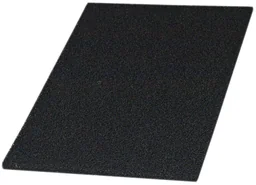
| Activated Carbon Filter Mat PAK 45/32 Black, Filter Sponge, 45 x 31,5 x 1,9 cm | – | Currently unavailable |
| Avalon Replacement Activated Carbon Filter 4-Pack | – | Currently unavailable |
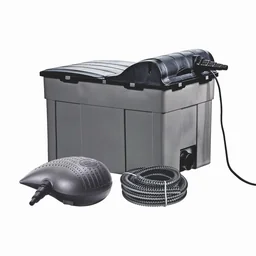
| Complete Pond Filter Set "FPU16000-00" with 3 Chambers, 18 Watt UVC Pond Clarifier & Filter Pump, for Ponds up to 16.000 Litres | – | Currently unavailable |
| Replacement 360 Pet F Activated Carbon Filter 3-Pack | – | Currently unavailable |
| Plastic External Pond Filter "WDF 10000" UV 11, Flow Rate up to 2.600 l/h | – | Currently unavailable |
Complete Sets for Large Ponds
Complete systems are the first choice for demanding, large ponds. The
Powerful External Filters
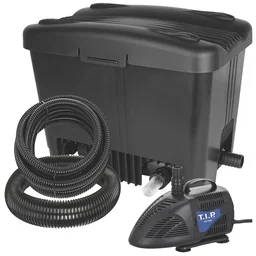
Separate external filters are more flexible for retrofitting or creating an individual configuration. The
(external pond filter "WDF 10000" UV 11) covers small to medium-sized ponds with a flow rate of up to 2.600 l/h. Its larger counterpart, the ("WDF 20000" UV 18 with up to 4.000 l/h), offers more capacity for heavily polluted ponds. Both models feature an integrated UVC clarifier for clear water.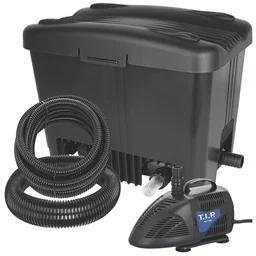

Special Solutions and Replacement Parts
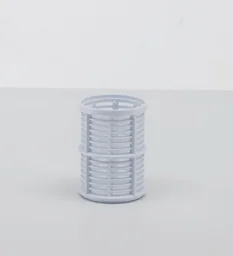
You do not always need a completely new filter. Often, optimising the existing system is enough. The
Note: UVC clarifiers have a limited service life of around one season (8.000-10.000 operating hours). Plan to replace the UVC lamp annually to maintain its clarifying effect.
Filter Media and Accessories
You can optimise your filter's performance with the right media. Arrange the chambers thoughtfully.
Layering Filter Media
The water should flow through the filter media in a specific order. Coarse filter mats or brushes for mechanical pre-filtration go in the first chamber. Finer sponges follow. The final chamber is reserved for biological media such as ceramic substrate, lava granules or special bio balls. Optionally, you can add activated carbon in a separate chamber or filter bag.
Maintaining Filter Media
Clean mechanical media such as filter mats regularly by rinsing them in a bucket of pond water. Never use tap water or cleaning products, as chlorine kills the bacterial cultures. Biological media should only be cleaned very gently and infrequently so as not to disrupt the bacterial balance. Replace filter mats when they can no longer be cleaned or begin to disintegrate.
Installation and Maintenance
Proper installation and regular maintenance are the key to long-term success.
Choosing the Right Location
Plan the location of the external filter so that it is easily accessible. You will need to open it every few weeks for cleaning. The filter should be positioned as close to the pond as possible to avoid long hose runs and the resulting pressure losses. With gravity-fed filters, the height is crucial: the water outlet must be above the pond water level so that the water can flow back by gravity.
A Regular Maintenance Schedule
Set up a regular schedule. During the main season, check the pre-filter or skimmer every 1-2 weeks. Every 2-4 weeks, check the pressure at the filter (with pressure filters) or rinse the mechanical media. Rising pressure indicates a blockage. Take the filter out of service before winter, clean it thoroughly and store the pump and UV clarifier in a frost-free place. This will help you start the new season without problems.
Frequently Asked Questions
- How often do I need to clean my pond filter?
- How often you need to clean it depends on the type of filter and the level of contamination. Clean pressure filters and chamber filters every 2-4 weeks during the season by washing out the mechanical filter mats. Rinse biological media such as ceramic rings only gently in pond water to preserve the beneficial bacteria.
- Does every pond need a filter with a UV clarifier?
- A UV clarifier is particularly useful in cases of heavy algae growth or green water. It kills suspended algae and pathogens. For clear, biologically stable ponds with plenty of plants and few fish, a biological filter alone may be sufficient. The UV lamp has a limited service life and must be replaced regularly.
- Can I run a pond filter in winter?
- Yes, but it is not always necessary. If there are fish in the pond, water circulation should be maintained. However, position the pump at a shallow depth so that it does not circulate all the cold water. Frost-resistant filters can remain outdoors. If there is a risk of frost, always remove the UV clarifier and store it in a frost-free place.
- What is the difference between a pressure filter and a gravity-fed filter?
- A pressure filter operates under pressure and can be partially buried, which improves its appearance. A gravity-fed filter or chamber filter works by gravity and must be positioned above the water level. It usually provides more space for filter media and is easier to maintain, but requires more room.
- Are replacement filters and filter mats universally compatible?
- No. Filter mats and replacement filters such as PRODUCT_87757 or PRODUCT_143349 are generally specific to the manufacturer. Check the exact dimensions and compatibility with your filter model. Use only suitable media to ensure optimal filter performance and prevent bypass.