
In brief: An olive tree can survive frost if you protect its location, roots and canopy. Move potted trees to a bright, frost-free spot; wrap in-ground trees in fleece when temperatures drop below zero and insulate the soil. Water sparingly in winter, prevent waterlogging and gradually acclimate the tree to sunlight in spring.
Olive trees can handle brief cold spells, but prolonged frost can damage them without protection. The variety, age and location all matter, as does whether the tree is growing in a pot or in the ground. Insulating the roots, using breathable fleece and adjusting your watering can help protect your olive tree from winter damage.
Timing is crucial when overwintering an olive tree. Start preparing before the first extended stretch of freezing weather. Check the forecast regularly, too: a mild December does not rule out a sudden cold snap in January.
How cold-hardy is an olive tree?
There is no single temperature that determines whether an olive tree is winter-hardy. An older, well-rooted tree beside a sheltered house wall can tolerate much colder weather than a young tree in a small pot. The variety matters, too. Some cold-hardy olive trees can withstand brief periods of severe frost, while others may show damage after just a few degrees below zero.
The roots are more sensitive to cold than the trunk. In the ground, the surrounding soil offers some protection. In a pot, however, the root ball can freeze from several sides. That is why a potted olive tree needs frost protection sooner than a tree of the same size planted in a garden bed.
Wet conditions make the problem worse. Soil that stays waterlogged deprives roots of oxygen, and freezing water can split fine roots. Well-drained soil and a pot with clear drainage holes are essential for protecting your olive tree through winter.
Which temperatures are critical?
These temperatures are a guide for healthy plants during brief cold spells. The variety and location of your tree still matter:
- Down to around minus 3 °C: An established olive tree can often handle short, cold nights without visible damage.
- Between minus 3 and minus 5 °C: Young shoots and leaves may be damaged. Potted trees need a sheltered spot.
- Below minus 5 °C: Protect the canopy, trunk and roots. Prolonged frost can quickly put young trees at risk.
- Below minus 8 to minus 10 °C: The risk of bark, shoot and root damage rises significantly for many varieties.
Wind makes it feel colder around the plant and dries out evergreen leaves. A sunny, sheltered spot against a south- or west-facing wall is better than an exposed lawn. Avoid placing the pot in a cold, drafty corner of your home.
If you are planting a new tree, choose a robust variety suited to your location. Our range includes the following olive trees described as winter-hardy
and . Before buying, check the variety, delivery size and recommended location carefully. A young tree needs more protection during its first few winters.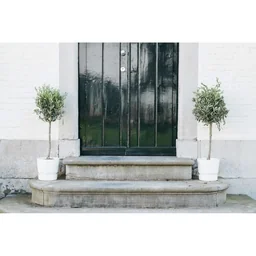
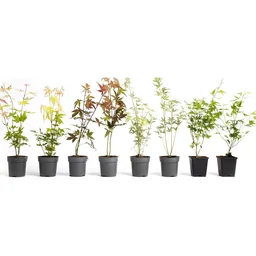
“Olives are evergreen trees and prefer a sunny, sheltered location.”
How do you prepare an olive tree for frost?
Set up winter protection before the first frosty night. Do not wait until the soil has frozen or ice crystals have formed on the leaves. Dry, well-prepared protection works better than a plastic sheet hastily thrown over the canopy.
Check and prepare the location
Move potted trees beside a house wall, under a canopy or into a bright, unheated sunroom. The spot should be frost-free or only slightly heated. Dark, warm rooms are unsuitable because low light can cause the olive tree to grow weak, elongated shoots.
Remove saucers where rainwater could collect. Set the pot on wood, a thick coconut mat or another insulating base. This helps keep cold from passing directly from the ground into the root ball.
For trees planted in the ground, clear dense grass from around the trunk and gently loosen the top layer of soil. Avoid digging near the roots. A loose mulch of bark humus, leaves or straw insulates the soil, but should not touch the trunk.
Find suitable garden and plant accessories, including fleece, jute and coconut mats. Choose breathable materials that let moisture escape and can be draped around the plant without pressing on it.
Protect the roots and canopy in good time
Good frost protection for Mediterranean plants starts at the roots. For a potted tree, wrap the outside of the pot in jute, fleece or a special insulating mat. Keep the drainage holes clear. A layer of dry leaves on the soil surface gives the root ball extra protection from above.
Use lightweight winter fleece to cover the canopy. Drape it loosely over the branches and secure it to the pot or a sturdy stake. The leaves need air. If the covering is too tight, it can rub against the plant in the wind and trap condensation.
- Check the leaves, shoots and trunk for damage or signs of pests.
- Remove wilted leaves and dead plant material from inside the canopy.
- Make sure water can drain freely from the pot.
- Set up the pot insulation and mulch before the frost arrives.
- Keep fleece and ties handy for especially cold nights.
Expert tip
If the soil is dry, water the olive tree moderately a few days before a forecast frost. A slightly moist root ball cools more slowly than completely dry soil. Never water frozen soil, and let all excess water drain away.
Avoid high-nitrogen fertilizer from late summer onward. Nitrogen encourages soft new growth that may not harden off before winter. Use plant protection as needed, and check for spider mites, scale insects and fungal spots before bringing the plant indoors.
How do you protect an olive tree in a pot?
An olive tree in a pot needs the most consistent winter protection. The pot holds little soil, so cold reaches the root ball from all sides. Even one cold night can cause problems if the pot is wet and frost lasts for several hours.
Insulate and position the pot correctly
Place the pot as close as possible to a sheltered wall of the house. A sunny wall stores heat during the day and releases it slowly at night. Make sure the tree still gets enough light, though: olive trees stay evergreen in winter and continue photosynthesizing on bright days.
Wrap the pot in several loose layers of jute, fleece or coconut fiber. Bubble wrap can be used as an extra outer layer of insulation, but it must not touch the soil or leaves. Keep the drainage holes clear so rainwater and watering can drain away.
Place the pot on an insulating base, not in a hollow where cold moisture can collect. Very small pots often need more insulation than wrapping alone can provide. Move these plants to a bright, cool, frost-free location.
Water as needed over winter. Check the top layer of soil and water only on frost-free days. In a cold location, an olive tree needs much less water than in summer, but letting the root ball dry out completely can also cause harm.
Important note
Do not place an airtight plastic cover directly over the crown. Moisture builds up underneath as soon as the sun warms the cover, encouraging fungal growth and rot. Use breathable fleece instead, and open it on dry, frost-free days.
Protecting the trunk and crown
Young trunks benefit from a loose wrap of jute or a breathable tree-trunk guard. Do not wrap it so tightly that the bark stays damp. For a branched crown, drape fleece over the plant and secure it below the rim of the pot.
Do not remove the protection completely during every brief warm spell. Open it for ventilation in mild weather, then close it again before the next frosty night. This helps prevent sudden temperature changes and keeps the leaves dry.
An olive tree in a pot does not need to be brought into a warm living space. A bright cellar with a window, an unheated stairwell, a conservatory or a frost-free greenhouse are all more suitable. Low temperatures, plenty of light and minimal watering are ideal.
If you want decorative olive tree greenery for a very cold location without the work of overwintering, an artificial plant can be a frost-free alternative.
It makes a Mediterranean accent for interiors and sheltered areas, but of course it cannot replace a living tree in the garden.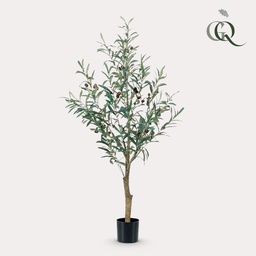
How do you overwinter olive trees planted in the ground?
Olive trees planted in the ground benefit from the larger volume of soil. Their roots are better insulated against short periods of frost than those of potted plants. Even so, young trees need full winter protection for their first few years, especially if they were planted in autumn.
Protect young trees with particular care
Cover the area around the tree with a 10 to 15 centimetre layer of loose mulch. Use dry leaves, straw, bark compost or compost. Leave a gap of several centimetres around the trunk so the bark stays dry and does not rot.
Wrap the trunk in jute or a breathable tree-trunk guard. For young trees, you can also place several stakes around the plant and drape fleece over them. This keeps the material off the branches and creates an insulating air cushion.
For older trees in a mild location, protecting the trunk and root area may be enough. If prolonged frost is forecast, protect the crown too. Secure the fleece so the wind cannot rub it against the branches.
What should you do during prolonged frost, snow and winter sunshine?
Snow can weigh down branches, especially if the fleece underneath gets wet. Carefully shake off heavy snow once the branches are no longer frozen and brittle. Do not pull on icy branches.
Winter sun dries out the evergreen crown. When the soil is frozen, the roots cannot supply extra water, while the leaves continue to lose moisture. Light-colored fleece reduces this water loss and also protects against sudden temperature changes.
During longer periods of frost, check the protection after strong winds. Is the fleece still loose? Is the mulch still in place? Is the soil wet or frozen? These checks are part of pest and plant protection, as weakened plants are more susceptible to pests in spring.
“Potted plants should overwinter in a bright, cool but frost-free place.”
Do not prune olive trees planted in the ground heavily in autumn. Every large cut creates an entry point for moisture and weakens the plant before winter. Remove dead or damaged branches only in dry, frost-free weather.
What should you do after frost and in spring?
After a frosty night, give the olive tree time to recover. Do not remove the protection as soon as daytime temperatures rise. Check the forecast for the coming nights and leave the fleece and trunk protection in place at first.
Remove winter protection gradually
On overcast, frost-free days, start with the crown. Open the fleece for a few hours at first, then close it again at night. After several mild nights, you can leave the cover off for longer. Keep the trunk protected while the weather remains changeable.
Gradual acclimatization prevents sunburn on the leaves and bark. After spending winter in a dark location, the leaves are especially sensitive to direct midday sun. Initially, place potted plants in partial shade, then move them to their final location over several days.
Identify and treat frost damage
Frost-damaged leaves turn dull, brown or black. Shoots may become soft and later dry out. Wait until the olive tree starts producing new growth before pruning. Then you can see which branches have actually died.
Prune on a dry day. Cut damaged shoots back to healthy, light-green wood and disinfect the shears after each diseased branch. Do not cover large cuts with an airtight sealant. Let them dry cleanly.
Wait until new shoots are visibly growing before you start fertilizing. Fertilizing too early puts stress on the roots and encourages soft growth. Check the soil too, and carefully loosen any compacted surface without damaging the roots.
Water needs gradually increase in spring. Water more often once the tree starts putting out new growth, but continue to avoid waterlogging. A steady supply of water is better than a large amount after a long dry spell. If needed, you can find suitable accessories for garden irrigation.
Additional advice
Do not mark damaged shoots for pruning as soon as spring arrives. Carefully scratch a small area of bark on a branch. Green tissue means the wood is still alive. Even so, wait for new growth before removing larger branches.
An olive tree can stay healthy in a German garden all year round if you consider frost protection, location and watering together. Protect the roots first, keep the crown dry and respond to changes in the weather. This will help the tree survive winter and get off to a strong start in spring.
Frequently asked questions
- How much frost can an olive tree tolerate?
- An established olive tree planted outdoors tolerates short periods of frost better than a young tree in a pot. As a general guide, it can withstand around minus 5 °C without protection; sheltered varieties can briefly tolerate lower temperatures. Prolonged frost, wind, moisture and frozen roots significantly increase the risk of damage.
- How do you overwinter an olive tree in a pot?
- Place the pot in a bright, sheltered, frost-free location, ideally at a few degrees above zero. Insulate the outside of the pot and place it on an insulating base. Water only when the top layer of soil is dry, and prevent waterlogging.
- Should you water an olive tree in winter?
- Yes, but rarely and sparingly. Evergreen olive trees continue to use water on bright winter days, while cold, wet soil damages the roots. Check the top layer of soil with your finger. Water moderately on frost-free days and empty saucers immediately.
- How do you protect an olive tree planted outdoors from frost?
- Cover the root area with a loose layer of mulch and wrap the trunk and canopy with breathable fleece. Leave space between the material and the branches. Remove or open the protection on mild days to prevent warm, humid air from building up and encouraging fungal growth.
- When can you remove winter protection from an olive tree?
- Remove the winter protection gradually once the nights remain consistently frost-free. Start with the canopy on overcast days and keep the trunk protected at first. Cut back frost-damaged shoots only after new growth appears, as this makes it easier to identify living wood.
You may also be interested in
- Caring for olive trees: Location, pruning and overwintering
- How can I make my plants more cold-hardy? Winter tips
- Overwintering potted plants: How to get them safely through the frost
- Overwintering roses: How to protect your roses from frost
- Caring for hardy lavender: Tips for a blooming garden
- Frost-proofing pipes: How to protect your home from frost damage