
In brief: Proper care during the first few weeks after sowing is crucial for a new lawn. Keep the seedbed consistently moist, but not waterlogged. Stay off the area until the grass is 8-10 cm tall. Then mow for the first time, removing no more than one third of each blade.
You’ve prepared the soil, spread the seed and rolled the area. The hard work seems done, but the most important phase is just beginning. The first four to six weeks determine whether your careful sowing grows into a lush, resilient green lawn or a thin, patchy one. Caring for a newly seeded lawn is straightforward, but it takes consistency and the right know-how.
High-quality seed is the foundation of a successful lawn. A premium seed mix gives you the best chance of growing a dense, hard-wearing turf. The lawn seed "Wunder Rasen", 2,5 kg () is ideal for this. It combines fast-germinating, resilient grass varieties for quick results that last. This mix can handle minor care mistakes and grows reliably in a wide range of soils.
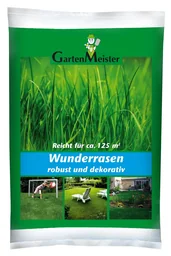
The foundation is in place: What happens right after sowing?
Once you’ve spread the lawn seed evenly and lightly worked it into the top layer of soil, germination begins. Each seed contains a tiny embryo and a supply of nutrients. To get started, the seeds need warmth and consistent moisture. Lightly rolling the area ensures good contact with the soil, which helps keep the seeds from drying out or being eaten by birds.
Depending on the grass variety, soil temperature and weather, the first green shoots will appear in about 7 to 21 days. A lot is happening beneath the soil during this time. The seeds absorb water and swell, their outer shells split, and the first delicate root, called the radicle, grows into the soil. Only then does the seedling grow toward the light. At this stage, patience is key.
A gardener knows that patience is the most important ingredient for growth. Nature follows its own schedule, and our job is to create the best conditions for it.
How do I water new grass? The critical early weeks
Watering is the most important factor in getting a new lawn off to a good start. A single day of dry soil can undo all your work. Young seedlings don’t have deep roots yet, so they rely on moisture near the soil surface.
The first 1-2 weeks: Keep the soil consistently moist
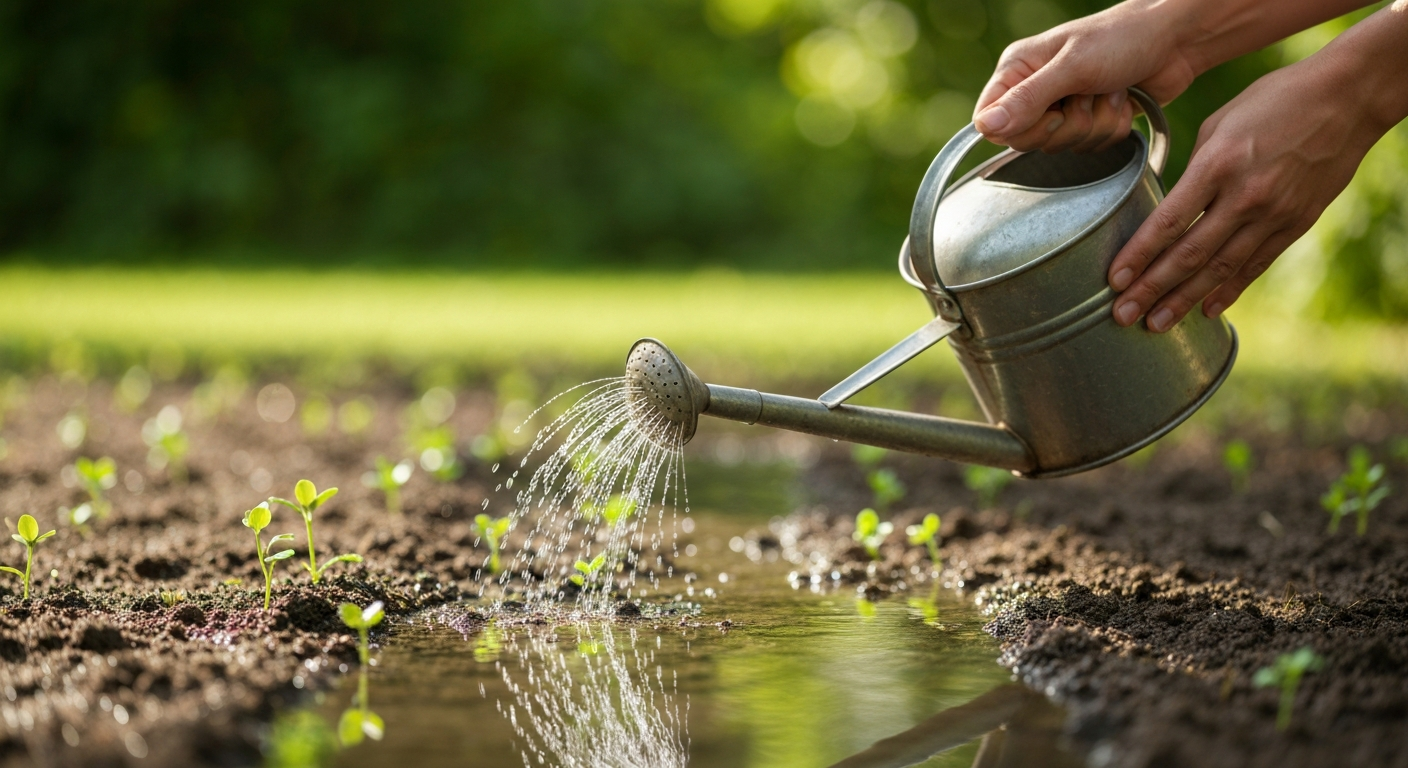
During the first stage after sowing, the top layer of soil must never dry out completely. That doesn’t mean flooding the area. Waterlogged soil can be just as damaging as dry soil: it may wash away the seeds or cause them to rot.
Instead, water several times a day—for example, in the morning, at midday and in the late afternoon—for 10 to 15 minutes each time. Use a sprinkler with a fine spray. A strong stream of water can disturb and wash away the seeds. Aim to keep the top 1-2 centimeters of soil as moist as a wrung-out sponge.
Important note
Dry soil is the biggest threat to young lawn seedlings. Once a seedling dries out, it dies and won’t recover. Check soil moisture several times a day, especially when it’s sunny or windy.
After germination (weeks 2-4): Water less often, but more deeply
Once you can see a delicate green haze and the grass is a few centimeters tall, adjust your watering routine. Now the goal is to encourage young roots to grow deeper into the soil. A deep root system will help the lawn handle dry spells and stay resilient as it matures.
Cut back to watering once a day or even every other day, and water for longer each time. The soil should now be moist to a depth of 10-15 cm. Check with a spade or long screwdriver: it should slide easily into the soil.
When can I walk on a newly seeded lawn for the first time?
It’s tempting to get a closer look at your progress, but try to resist. Young grass blades and their shallow roots are extremely delicate. Each step compacts the soil, damages the roots and can kill seedlings. This can leave bare patches or footprints that are difficult to fix.
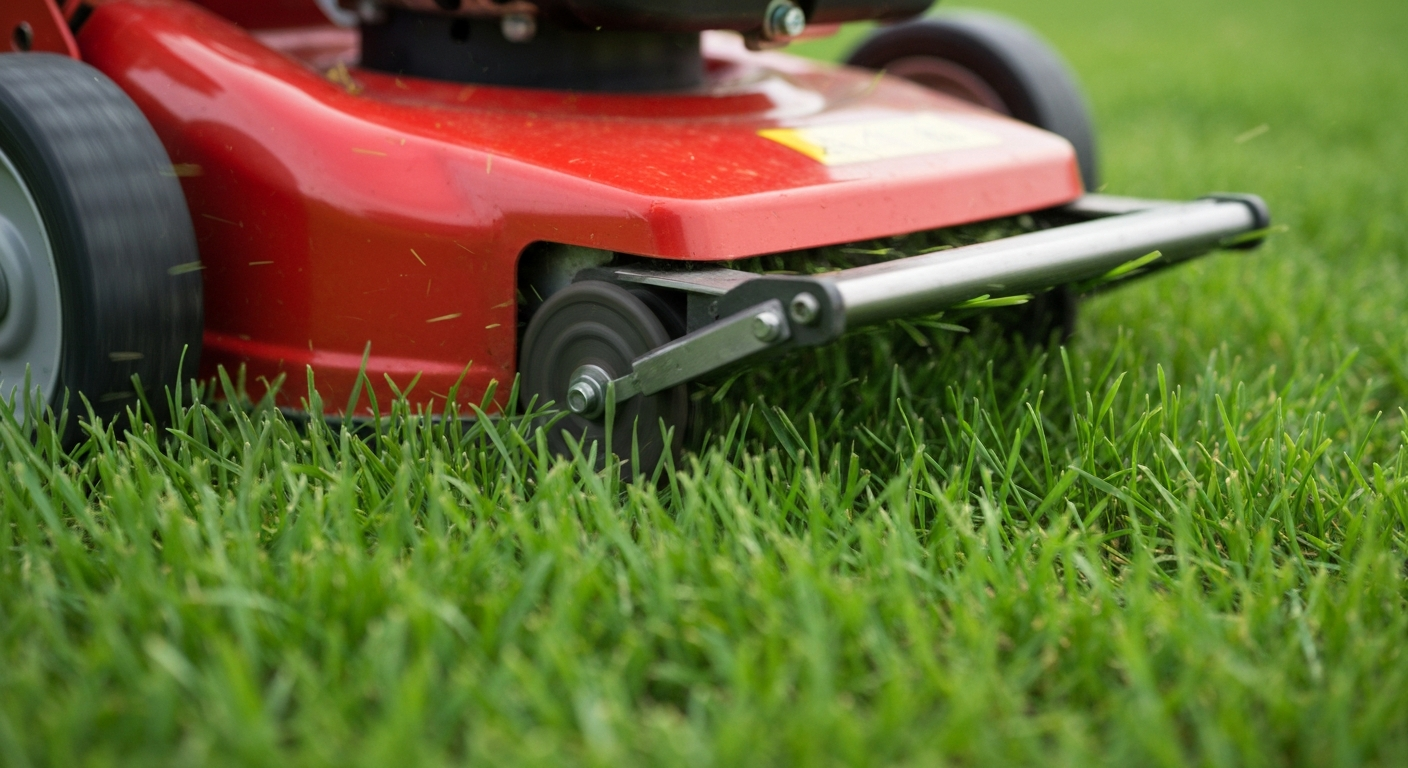
As a rule of thumb, stay off the lawn until it’s at least 8-10 cm tall and has been mowed once. By then, the grass should be strong enough to handle light foot traffic. Avoid more intensive use, such as playing soccer or setting out patio furniture, for the first few months.
Pro tip
If you need to walk on the lawn for an important reason, such as pulling weeds, lay a wide wooden board over the area. It spreads your weight over a larger surface and reduces pressure on individual grass plants.
First lawn mowing: What should I keep in mind?
The first mow is a milestone for a new lawn. It encourages the grass to spread and grow thicker. This process, known as tillering, is key to creating dense turf. Timing and technique both matter.
When to mow
Wait until most of the grass is 8 to 10 cm tall. Don’t mow too soon. Young plants need their leaves for photosynthesis so they can build energy and develop strong roots. Mowing too early can significantly weaken them.
How to mow
Your first mow calls for a little extra care. Sharpen the lawn mower blades before you start. Dull blades tear the grass instead of cutting it cleanly, damaging young plants and their still-weak roots. A clean cut helps the grass recover quickly.
Set the mower to its highest cutting height, usually 5-6 cm. Follow the one-third rule: never cut more than one third of a blade at a time. Cutting too much at once stresses and weakens the plants. Mow when the grass is dry, and collect the clippings. Left on the lawn, they can smother the grass below and block the light.
How do I deal with weeds in a new lawn?
It’s perfectly normal for some weeds to sprout alongside the grass. Countless seeds lie dormant in the soil and find ideal conditions after soil preparation and regular watering. Don’t panic. Most annual weeds disappear on their own after the first few mowing sessions because they can’t tolerate regular cutting.
Never use chemical weed killers on a newly seeded lawn. The young grass is still too sensitive and could be severely damaged or even killed by herbicides. Wait at least six months, or preferably a full year, before using chemical treatments.
The best approach is careful hand weeding. Remove particularly large, dominant weeds such as dandelions or thistles before they can produce seeds. Gently loosen the soil around each weed with a small tool so you can remove the entire root without disturbing the neighboring grass. Over time, the best defense against weeds is a dense, healthy lawn that leaves unwanted plants no room or light to grow.
Additional advice
If larger bare patches appear in your lawn after a few months, you can overseed them. Special overseeding mixes such as Robot Lawn Mower Overseeding Grass Seed, 1 kg () germinate especially quickly and fill in bare spots.

When and how should I fertilize my new lawn for the first time?
The nutrients stored in the seed are quickly used up. For strong growth and a robust root system, new grass needs additional nutrients. The first application of fertilizer is an important step in helping your lawn grow into a resilient carpet of grass.
The ideal time for the first application of fertilizer is about four to six weeks after germination, often around the second or third mowing. Be sure to choose a special starter lawn fertilizer. It has a special nutrient blend and is rich in phosphorus, which is essential for developing a strong, deep root system. Standard lawn fertilizer with a high nitrogen content would encourage leaf growth but neglect root development.
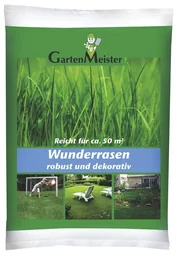
Apply the fertilizer evenly, preferably with a spreader, to avoid overfertilizing or underfertilizing individual areas. Water the lawn thoroughly after fertilizing so the nutrients dissolve in the soil and can be absorbed by the roots. For smaller repairs or overseeding, a smaller bag such as "Wunder Rasen" Grass Seed, 1 kg () is also a practical option.
Nutrients are to young grass what a solid foundation is to a house. Without them, growth stays superficial and isn’t prepared for the future.
Caring for your new lawn during the first few weeks is an investment in its future. With consistent watering, patience before walking on it, proper mowing, and a well-timed first application of fertilizer, you lay the foundation for a beautiful, dense, healthy lawn that will last for years. Browse our wide selection of grass seed and find the perfect mix for your yard.
Frequently Asked Questions
- How often should I water newly seeded grass?
- Water several times a day during the first 1-2 weeks to keep the surface consistently moist. After that, water less often but more deeply to encourage deep root growth. Avoid waterlogging.
- When can I walk on a new lawn for the first time?
- Stay off the lawn until the grass reaches a height of 8-10 cm. Young seedlings are extremely sensitive and can easily be crushed.
- How high should I set my mower for the first cut?
- Set your lawn mower to a high setting, around 5 to 6 cm. Never cut off more than one third of the grass blade to avoid stressing the young grass.
- What can I do about weeds in a new lawn?
- Carefully pull large weeds by hand. Don’t use chemical weed killers, as they can damage the young lawn. Once the lawn is dense, it will crowd out weeds on its own.
- When should I fertilize young grass for the first time?
- Fertilize about 4 to 6 weeks after germination. Use a special starter lawn fertilizer with a high phosphorus content to promote root growth.
Ergänzung: Rasensamen Pflege: So wird Ihr "Wunder Rasen" dicht & grün
Ein dichter, sattgrüner Rasen entsteht, wenn die jungen Gräser gleichmäßig auflaufen und genügend Platz zum Wachsen haben. Halten Sie das Saatbett in den ersten Wochen konstant feucht, ohne Staunässe zu verursachen. Sobald die Halme etwa acht bis zehn Zentimeter hoch sind, können Sie sie erstmals mähen: mit scharfem Messer und auf ungefähr fünf bis sechs Zentimeter gekürzt.
Betreten Sie die Fläche möglichst wenig, bis sie geschlossen und belastbar ist. Kahle Stellen lassen sich nachsäen, sobald der Boden dort gelockert ist. Dünger sollte auf den Bedarf der jungen Gräser abgestimmt und sparsam eingesetzt werden; beachten Sie die Dosierung auf der Packung.
You may also be interested in
- How to seed a lawn: Step-by-step guide to a thick, healthy lawn
- Lawn care: How to keep your lawn green, thick, and healthy
- Grass seed: Sowed too much? Tips for a perfect lawn
- How to seed a lawn: When can you walk on it? Tips for a strong start
- Mowing a lawn after seeding: When and how
- How long does grass seed take to germinate? Facts for a perfect lawn