
In brief: Ratchet wrenches combine the stability of a box-end wrench with the convenience of a ratchet. In our test, sets with reversible drives and finely graduated sizes perform particularly well. For professional use, ergonomic handles and a high tooth count in the ratchet head are recommended. Compact sets offer the best value for money for DIYers.
A ratchet wrench is more than just another tool in the toolbox. It is an efficient solution for tight spaces and repetitive screwdriving tasks. Unlike a conventional box-end wrench, you do not have to remove it constantly. The integrated ratchet allows you to continuously tighten or loosen nuts and bolts with minimal swing angle.
But which ratchet wrench is right for you? Our 2026 test and comparison takes a close look at the most important models. We assess them for durability, ease of use and versatility. This helps you find the ideal model for your workshop.
Table of contents
What is a ratchet wrench?
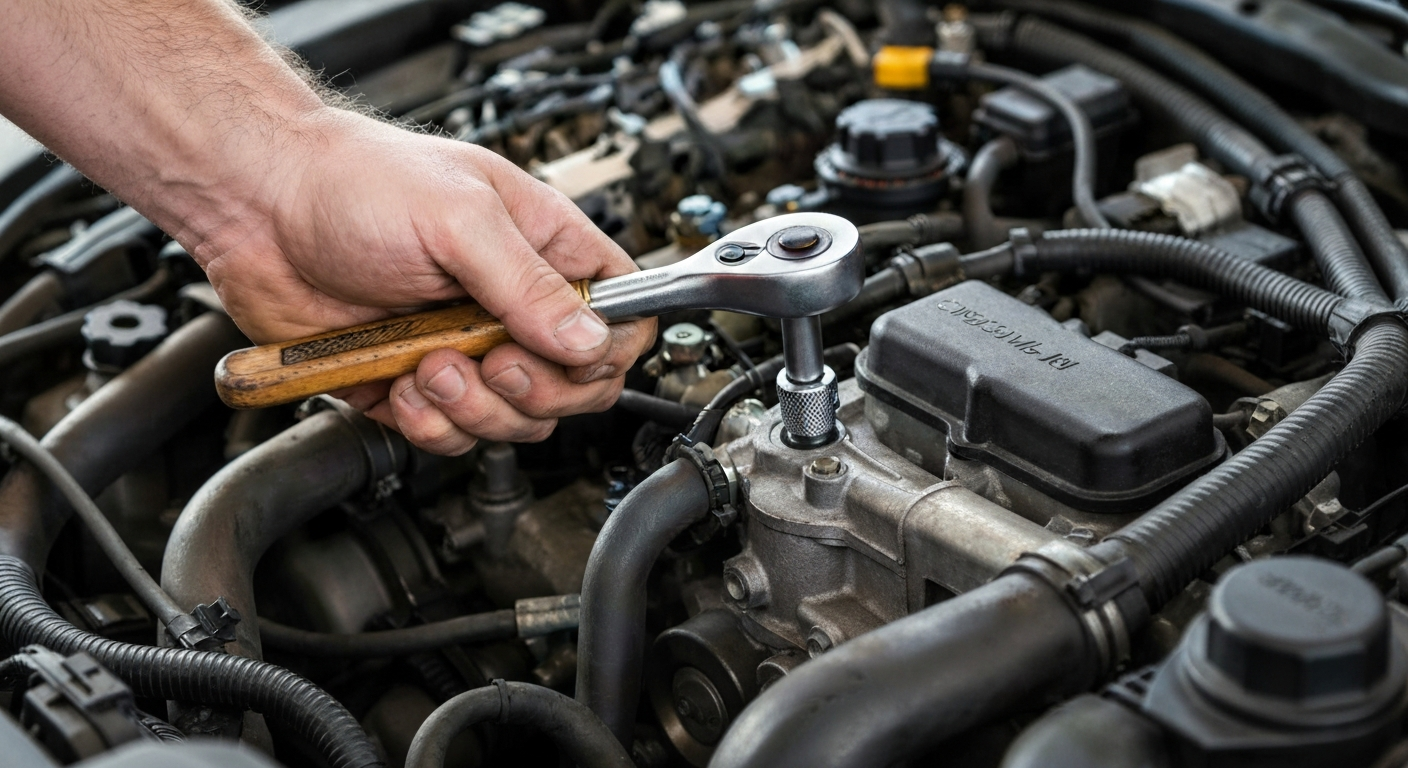
A ratchet wrench combines two functions. The wrench head has a fixed opening size like a box-end wrench. However, a ratchet is integrated into the handle or directly into the head. This allows you to block the turning motion in one direction while allowing it to move freely in the other.
You change the direction of rotation using a lever. This lets you tighten or loosen a nut without removing the wrench. Simply swing it back and start the next stroke. This saves a great deal of time and effort.
The components in detail
Every ratchet wrench consists of three main components. The head holds the nut or bolt. The ratchet and its gearing are located either in the head or in the handle. The lever for changing the direction of rotation should operate smoothly and clearly.
The quality of the tool is evident in how these components are made. High-quality ratchets have a high tooth count for a small swing angle. The levers are robust and comfortable to hold.
The most important buying criteria in our test
We tested the models using clear criteria. You should also check these points before buying.
Opening size and drive size
The opening size must match your bolts and nuts. Common sizes start at 8 mm and go up to 24 mm. For larger threads, you need special models. Also pay attention to the drive size. A 1/2" drive is the standard for heavy-duty work. For more delicate tasks, 1/4" or 3/8" drives are better suited.
Sets with reversible drives are more versatile. They adapt flexibly to the task at hand. One example is the
. It offers clockwise and counterclockwise operation in a single tool.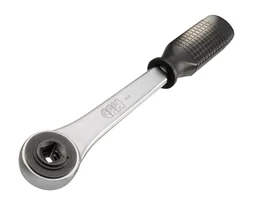
Tip: Buy a set with the most common sizes. This prepares you for most jobs around the house and on vehicles. Individual tools are only worthwhile if you frequently need a specific size.
Tooth count and swing angle
The tooth count in the ratchet mechanism determines the swing angle. The more teeth there are, the smaller the angle required to engage the mechanism. 72 teeth or more are a sign of high-quality professional tools. They also work in extremely tight spaces.
For occasional use, 45 or 60 teeth are perfectly adequate. Feel free to test the swing angle in your hand. It should feel smooth and precise.
Material and workmanship
The material is crucial for service life. High-quality ratchet wrenches are made from chrome vanadium steel. This material is hard, tough and resistant to deformation. Chrome plating protects against rust and makes cleaning easier.
Inspect the surface. It should be smooth and free of burrs. The ratchet mechanism must be cleanly finished and operate without play. Cheap models made from soft steel quickly give way or break.
Warning: Never use a pipe extension or lever to apply more force to the ratchet wrench. This overloads the mechanism and can cause it to break suddenly. Risk of injury! For high torque, use an impact wrench instead.
Ergonomics and comfort
A good ratchet wrench feels comfortable in your hand. The handle should be ergonomically shaped and not too smooth. This prevents slipping even when your hands are sweaty. A longer handle provides more leverage and makes the work easier.
Some models have a two-component handle. This provides particularly good grip and reduces vibration. Check whether the direction-change lever is easy to reach and operate.
Ratchet Wrenches Compared Directly
We compared a selection of current models. The following table summarizes the most important features for you.
The highest-rated ratchet wrenches in our range compared directly:
| Model | Customer rating | Availability |
|---|---|---|
| 14-piece fixed ratchet wrench set 8 - 24 mm | – | Currently unavailable |
| Fritz Göbel wire tensioner with toothed locking mechanism for 13 mm wire/strap | – | Currently unavailable |
| Fritz Göbel tie-down strap, 2-piece, orange ratchet, 8 m, 4000 kg | – | Currently unavailable |
| Reversible ratchet, clockwise and counterclockwise, 1/2" | – | Currently unavailable |
| 5-piece ratcheting box-end wrench set | – | Currently unavailable |
Our versatility test winner is the
. The 26-piece set provides a complete system for almost any screwdriving task. The compact storage box keeps everything organized.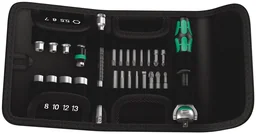
For occasional household use, the
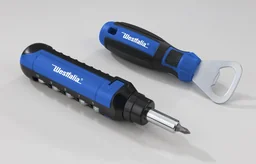
is a good choice. The 3-in-1 set covers the most important sizes and is easy to handle. The integrated bottle opener in the is especially practical. It makes this tool an all-rounder for the workshop and garden.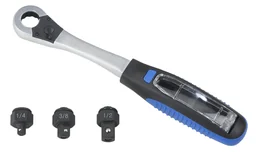
Specialty Tools Tested
In addition to classic ratchet wrenches, there are specialty tools. The
is a set of dedicated ratcheting box-end wrenches. They are slimmer than combination models and reach deep recesses even more easily.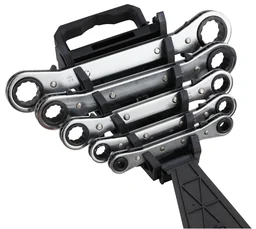
For transporting and securing loads, specialized ratchet tools such as tie-down straps are indispensable. However, these belong to the tools category for transport and logistics, not to classic hand tools.
Note: The availability of individual products may change. The models mentioned are examples of specific categories and features. Always check the latest specifications when buying.
Applications and Recommendations
Not every model is suitable for every task. We’ll help you find your way around.
For DIY Enthusiasts
As a DIY enthusiast, you need a versatile and durable set. It should cover the most common sizes from 8 mm to 19 mm. A reversible drive, for example from 1/4" to 1/2", is a major advantage. This allows you to work on furniture as well as bicycles and cars.
A set with a storage case helps keep everything organized. You can find suitable hand tool sets in our store.
For Professional Mechanics
Precision and durability are essential for professional use. Invest in individual tools or high-quality sets with finely graduated sizes. The ratchet should have at least 72 teeth and operate without play.
Ergonomic handles with soft components help prevent fatigue. Professionals often appreciate ratchet wrenches with an especially slim head for hard-to-reach areas.
For Travel and Emergency Kits
Space is limited in the trunk or emergency box. Compact sets or multitools are ideal here. A ratchet wrench with a few essential sizes and a reversible drive is perfect.
Compact versions such as the offer a good balance of performance and size. Make sure it comes with a sturdy storage pouch.
Care and Handling
With proper care, your ratchet wrench can last a lifetime.
Cleaning and Storage
Clean the tool after every use. A dry cloth removes loose dirt. For heavy soiling, use a mild cleaner. Then dry the wrench thoroughly.
Store your ratchet wrenches in a dry, protected place. A toolbox or wall-mounted tool board is ideal. This helps prevent moisture and keeps the tools from becoming dull.
Maintaining the Ratchet
The ratchet needs occasional maintenance. Add a little light machine oil to the mechanism. Operate the lever several times so the oil can spread. Wipe off any excess oil.
Regularly check that the ratchet operates without play and that the selector lever locks into place. Replace the tool if the gearing is worn or has play. A repaired ratchet often no longer has its original load capacity.
Conclusion
A good ratchet wrench is a worthwhile investment. It makes your work faster, more comfortable, and more precise. The key factors are the right size, a high-quality ratchet with many teeth, and solid workmanship.
For beginners, we recommend a compact set with the most important sizes. Professionals should choose individual tools with specialized features. Compare the models in our test and choose the ratchet wrench that best suits your tasks. The right tool makes every screwdriving job more enjoyable.
Frequently asked questions
- What is the advantage of a ratchet spanner over a standard ring spanner?
- The biggest advantage is the time saved. You do not need to remove and reposition the spanner, as the ratchet mechanism works within a limited angle. This is invaluable in tight spaces and is also easier on your wrists.
- What number of teeth is ideal for a ratchet?
- A high tooth count, such as 72 or more, is ideal. It allows for a very small swing angle, often less than 5 degrees. This is crucial in extremely confined spaces. For standard jobs, 45 or 60 teeth are also perfectly adequate.
- Can I use a 1/2" ratchet spanner to loosen smaller bolts?
- Not directly, as the socket drive size is fixed. You would need an adapter or, preferably, a set with a reversible drive. Many high-quality ratchet spanners are part of a system and can be used with bits or sockets in different drive sizes.
- What should I look for in the material?
- Look for a chrome vanadium alloy. This material offers the ideal balance between hardness and toughness. Cheap spanners made from ordinary steel can break or deform. The spanner should also be fully chrome-plated to prevent corrosion.
- Is a ratchet spanner set more useful than individual tools?
- For most users, a set is the better choice. You immediately get the most common sizes in a practical storage case. Individual tools are only worthwhile if you frequently need a specific size that is not included in a set or need to replace a single tool.