
In brief: The best replacement battery depends on its voltage, capacity and compatibility with your tool. For lighter tasks, 1,5-2,0 Ah is often enough; for longer runtimes, choose 4,0-6,0 Ah. A battery that fits your tool brand and model is essential. Our comparison will help you choose the right one.
Is your cordless drill refusing to work, is your string trimmer losing power, or does your cordless jigsaw keep running out of charge? It may be time for a new replacement battery. There are plenty of options, and battery technology keeps evolving. Our 2026 comparison and buying guide explains voltage, capacity and compatibility. Learn what matters and find the right battery for your tool.
Contents
- Voltage and capacity: Understanding the basics
- Compatibility is everything: How to find the right battery
- The best replacement batteries compared
- Optimizing runtime and performance
- Safety and storage: How to protect your battery
- Buying guide: Your checklist for the perfect battery
- Future trends in battery technology
Voltage and capacity: Understanding the basics
Before choosing a new battery, you need to know two key specifications: voltage (V = volts) and capacity (Ah = amp-hours).
The voltage, such as 12V or 18V, must match your tool's requirements. An 18V battery in a 12V tool can damage it. A 12V battery in an 18V tool won't provide enough power and may not work at all.
Capacity, measured in Ah, affects runtime. Under the same conditions, a 2,0 Ah battery will last longer than a 1,5 Ah battery. Lower capacity is usually enough for quick jobs, such as hanging a picture. For demanding tasks, such as cutting thick branches with a cordless chainsaw, you'll need a higher-capacity battery.
Finding the right balance
More capacity doesn't automatically mean better performance. Higher Ah ratings make a battery heavier and bulkier, which can make your tool harder to handle. Decide whether you'd rather rotate between two lightweight, lower-capacity batteries or use one heavier battery that lasts longer.
Tip
For DIY projects, two medium-capacity batteries (such as 2,0 Ah) are often more practical than one high-capacity battery. You can charge one while you keep working with the other.
Compatibility is everything: How to find the right battery
Even if the voltage matches, a battery may not work with your tool. Battery shape, contact layout and the communication protocol between the battery and tool vary by manufacturer and often by product line.
A cordless tool from Bosch Home and Garden needs a different battery from a professional Bosch Blue tool, even though both use 18V systems.
Check the label on your old battery or refer to your tool's owner's manual. It lists the exact model designation. Use it to search for a compatible replacement battery.
Warning
Never use an incompatible battery just because it seems to fit. Doing so can cause overheating, damage your tool, reduce performance and, in the worst case, create a safety hazard.
The best replacement batteries compared
We've taken a close look at several current models. The table below gives you a quick overview of their key features and makes it easy to compare them.
Here are the highest-rated replacement batteries in our range:
| Model | Customer rating | Availability |
|---|---|---|
| 18 Volt Li-Ion Battery 1,5 Ah 🏆 Test winner | ★ 4,8 (24) | In stock |
| 18V Li-Ion Battery 2,0 AH A2AH18 | – | In stock |
| 12 V Li-Ion Battery 1,3 Ah | – | Currently unavailable |
| 12V 2Ah Battery | – | Currently unavailable |
| 18 V BOSCH HOME AND GARDEN COMPATIBLE Battery B125 Li 6,0 Ah | – | Currently unavailable |
In the compact 18V battery category, the
stands out for its light weight. It's a great choice for light to medium-duty jobs with drills or small saws, especially when you need to hold the tool for a long time.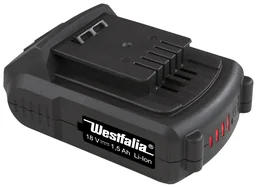
For more power and longer runtime, consider the
. With 2,0 Ah, it's a versatile all-around option that delivers enough runtime for most DIY projects without adding too much weight.
If you need a battery compatible with your Bosch Home and Garden system and want maximum runtime, the
is an excellent choice, thanks to its impressive capacity. It's ideal for demanding gardening tasks or extended use of high-performance tools.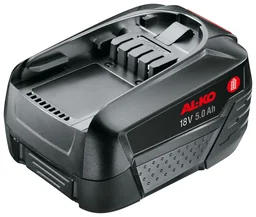
Optimizing runtime and performance
With proper care, you can extend your battery's service life and maintain its performance.
Avoid fully draining the battery. Recharge it when you notice a significant drop in performance. Modern lithium-ion batteries don't have a memory effect, so you can recharge them at any time without reducing their capacity.
Extreme temperatures are one of the biggest threats to any battery. Avoid working in extreme heat or cold, and store batteries at moderate temperatures.
Note
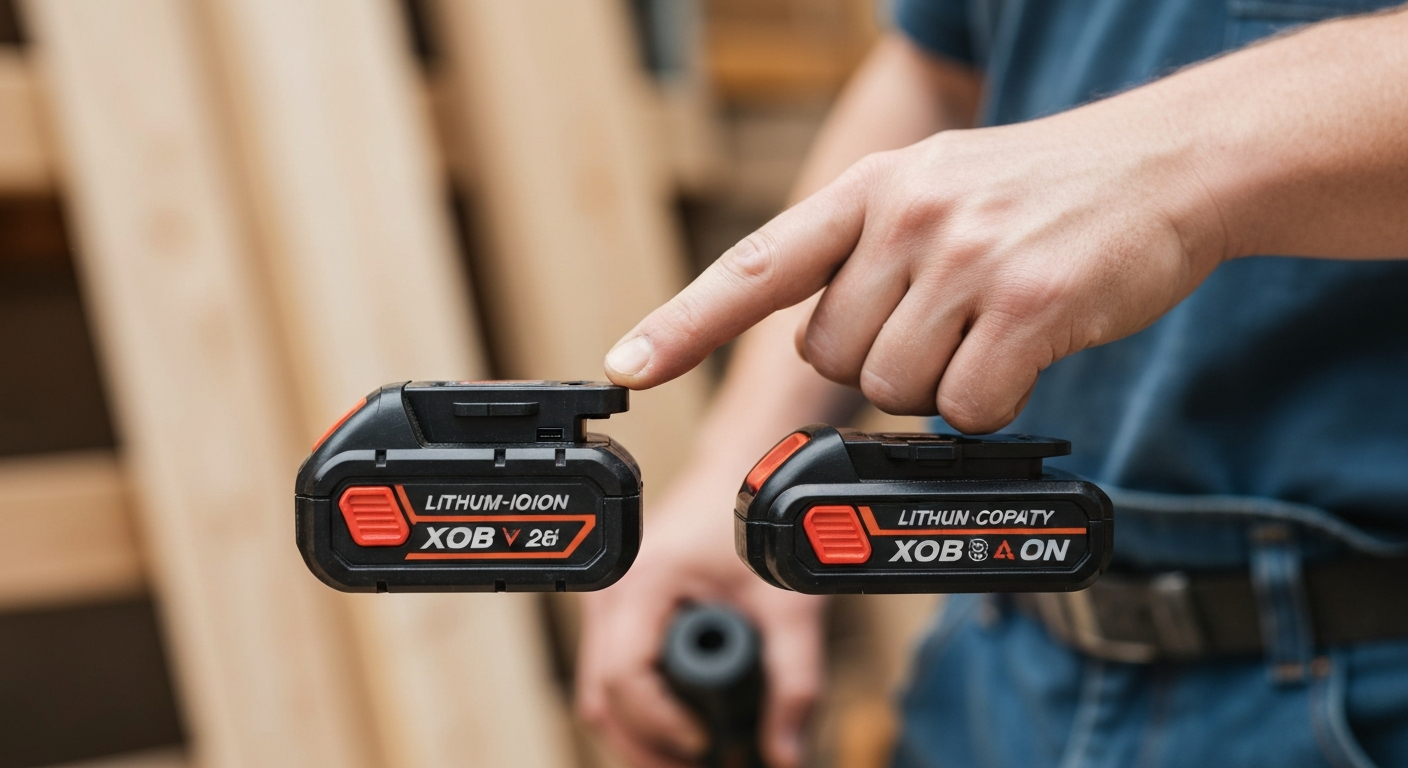
The stated capacity in Ah doesn't tell you exactly how long a battery will run. Actual runtime depends on the tool, its power setting and the ambient temperature. A battery lasts much longer in a drill driver during light work than in a chainsaw under full load.
The right charging strategy
Whenever possible, use the manufacturer's original charger. Fast chargers are convenient, but they put more stress on battery cells than standard chargers. For a longer battery life, slower charging is often the better choice.
Safety and Storage: How to Protect Your Battery
Proper handling of lithium-ion batteries is important for your safety.
- Store batteries separately from the tool, especially for extended periods.
- Protect them from moisture and dust.
- Transport batteries in a way that prevents the contacts from short-circuiting (e.g., in the original packaging or with the contacts covered).
- Never dispose of defective or swollen batteries with household trash. Take them to an e-waste collection site.
A well-organized tool area with safe battery storage helps extend the life of your investment.
Buying Guide: Your Checklist for the Perfect Battery
Answer these questions before you buy:
- What voltage does my device require? (Check the old battery or the manual.)
- What capacity (Ah) is right for me? For short jobs: 1.5-2.0 Ah. For longer runtimes: 4.0 Ah or more.
- Is the battery fully compatible? Check the exact model designation for your device.
- Do I need an original or compatible battery? For professionals: an original battery is often the best choice. For occasional users: a high-quality compatible battery.
- Does the battery physically fit my tool and charger? Compare the shape and contacts.
Future Trends in Battery Technology
Battery technology continues to advance. New cell chemistries, such as lithium polymer (Li-Po), and promising solid-state battery technology are nearing market availability. They promise higher energy density, shorter charging times, and a longer overall service life.
For DIY projects and gardening, the 18V system will remain the dominant standard for the time being. Connectivity between batteries and tools will increase, for example, through app-based condition monitoring.
A clear trend is the growing availability of high-quality compatible batteries from third-party manufacturers. They offer a cost-effective alternative with good performance. Pay particular attention to safety certifications.
With this knowledge, you are well equipped to choose the ideal replacement battery for your needs and maintain the performance of your cordless tools over the long term.
Frequently Asked Questions
- Can I use any replacement battery with the same voltage?
- No, voltage alone isn't enough. You must ensure the battery is compatible with your specific device and system. A battery for a Bosch Home and Garden device won't automatically fit a professional Bosch-Blue model, even if both have the same voltage. Always check the manufacturer's specifications.
- What does the Ah (amp-hour) rating mean on a battery?
- Ah stands for amp-hour and indicates the battery's capacity. A 2.0 Ah battery can theoretically deliver one amp of current for two hours. A higher Ah rating means a longer runtime per charge, but it also makes the battery heavier and often more expensive. Lower capacities are practical for short jobs.
- How should I store my replacement batteries?
- Store batteries at room temperature (approx. 15-20°C) in a dry place, protected from direct sunlight. A charge level of around 40-60% is ideal. Avoid letting batteries discharge completely or keeping them fully charged for weeks, as this shortens their service life. Use suitable storage boxes.
- How can I tell when my old battery needs replacing?
- Typical signs include noticeably shorter runtime after a full charge, performance dropping more quickly under load, or unusual heat. If the battery no longer charges or the charger switches off quickly, the battery is also likely defective. Replacing it is then worthwhile.
- Are compatible replacement batteries from third-party manufacturers a good choice?
- High-quality compatible batteries can be an affordable alternative if they have safety certifications such as CE. Look for positive customer reviews and a warranty. Cheap products without adequate protective circuits carry risks such as overheating. For continuous professional use, original batteries are often the safer choice.
You may also be interested in
- Cordless Tools Review & Comparison 2026
- Workshop Tools Review & Comparison 2026: The Best Tools Put to the Test
- Alkaline Batteries Review & Comparison 2026: The Best Batteries Tested
- Reciprocating Saw Review & Comparison 2026
- Memory Card Review & Comparison 2026
- Watch Review & Comparison 2026: A Look at the Best Models