
In brief: The ideal companion plants for rhododendrons also love acidic, humus-rich soil and partially shaded locations. They include other bog-garden plants such as azaleas and heather, shade-tolerant perennials such as hostas and ferns, as well as spring bulbs like daffodils. Larger woody plants such as pines or Japanese maple provide the necessary shade and create a suitable backdrop.
Rhododendrons are the undisputed kings of the shade garden. With their opulent blooms in spring, they transform any corner of the garden into a sea of colour. But a specimen plant can often look isolated. The right companion plants bring out the beauty of the rhododendron and create a harmonious overall look. The right combination provides a longer flowering season, interesting foliage textures and a healthy microclimate for your plants. Discover the best companions for your rhododendron and create a bed that makes a lasting impression.
Why does a rhododendron need companion plants at all?
A rhododendron is beautiful on its own, but in company it becomes the star. Companion plants are more than just decoration. They fulfil important functions in your garden’s ecosystem and actively contribute to the health of your plants.
Companion plants loosen the soil with their roots and improve aeration. Ground cover plants such as barrenwort or pachysandra shade the rhododendron’s shallow root zone, keeping it cool and moist while also suppressing weeds. This saves you time when weeding and watering.
Companion plants also add variety visually. They introduce different leaf shapes, heights and textures. Delicate grasses create an exciting contrast with the rhododendron’s large, leathery leaves. Perennials with silver or variegated foliage brighten shady areas. With a carefully chosen selection, you can also extend the flowering season in your Garden + Outdoor area from the first early bloomers to the late autumn asters.
What are the basic requirements for a successful partnership?
Not every plant works well with rhododendrons. The key to success lies in sharing the same site requirements. Rhododendrons are bog-garden plants with specific soil and light needs. Their companions must share these preferences.
The right soil: The be-all and end-all for your bog garden
The most important rule is this: all plants in the bed must thrive in acidic soil. Rhododendrons grow best at a pH value between 4.2 and 5.5. In this acidic environment, they can absorb nutrients such as iron efficiently. Lime-rich soil leads to yellow leaves (chlorosis) and poor growth. So choose only companions that are also acid-tolerant.
The soil should also be rich in humus, loose and evenly moist. The rhododendron’s fine roots do not tolerate waterlogging. Improve heavy clay soil with plenty of leaf compost, bark humus or specialist rhododendron soil.
The ideal soil for rhododendrons is loose, rich in humus, evenly moist and has an acidic pH value between 4.2 and 5.5.
Balancing light and shade perfectly
Most rhododendron species prefer dappled partial shade. They feel particularly at home beneath the protective canopy of tall, deep-rooted trees such as pines or oaks. These provide the necessary shade from the hot midday sun while allowing enough light through for abundant flowering. Avoid the dense shade of shallow-rooted trees such as birches or Norway maples, as they create too much competition for water and nutrients.
Which plants go best with rhododendrons?
There is a wide range of suitable companion plants. Arrange your bed by plant height and flowering times to create a dynamic display that looks appealing all year round. Combine shrubs, perennials, grasses and bulbs.
Bog garden classics: azaleas, heathers & Co.
Plants from the same family are often the safest choice. They have identical requirements and complement each other perfectly.
- Japanese azaleas: They are closely related to rhododendrons and often flower at the same time in vibrant colours. Their more compact growth makes them ideal plants for the front of the bed.
- Heathers (Erica and Calluna): Summer- or winter-flowering heathers provide colour when the rhododendron has finished flowering. They form dense carpets and enhance the character of a bog garden.
- Japanese pieris (Pieris japonica): This evergreen shrub impresses with bell-shaped flowers and often bright red new foliage in spring.
- Hydrangeas: Mophead and lacecap hydrangeas (Hydrangea macrophylla) also thrive in acidic soil. In these conditions, their flowers turn an intense blue.
Perennials for colourful underplanting
Perennials fill the gaps between shrubs and add variety in form and colour. Choose species that thrive in partial shade.
- Hostas (Hosta): The queens of the shade. Their range of foliage colours, from blue-green and yellow to white-variegated, is unrivalled.
- Ferns: With their delicate fronds, they bring lightness and a natural, primeval atmosphere to the bed. Shield ferns, maidenhair ferns and royal ferns are good companions.
- Coral bells (Heuchera): They are best known for their colourful foliage in shades of red, orange and lime, adding year-round interest.
- Barrenwort (Epimedium): A hardy and attractive ground cover with delicate flowers in spring and beautiful autumn colour.
- Siberian bugloss (Brunnera macrophylla): Varieties with silver foliage, such as 'Jack Frost', are particularly striking in the shade and adorn themselves with clouds of sky-blue flowers in spring.
Top tip
Always plant perennials and grasses in uneven groups of three, five or seven. This looks more natural and harmonious than a symmetrical arrangement. Vary the spacing slightly to avoid a rigid pattern.
Grasses and ferns for structure and lightness
Ornamental grasses soften the massive appearance of rhododendrons and add movement to the bed. Their fine stems sway in the wind and catch the light.
- Japanese sedge (Carex morrowii): Evergreen varieties such as 'Ice Dance', with white-edged leaves, brighten up dark corners.
- Japanese forest grass (Hakonechloa macra): The 'Aureola' variety in particular creates a beautiful contrast with its golden-yellow, arching growth.
- Tufted hair grass (Deschampsia): They form airy clouds of flowers and remain attractive well into winter.
Bulbs for spring colour
Before the rhododendron reaches its full splendour, bulbs can herald the start of the gardening season. Plant them in clumps among the perennials.
- Snowdrops (Galanthus) and spring snowflakes (Leucojum vernum) are the first heralds of spring.
- Daffodils (Narcissus) and wild tulips (Tulipa sylvestris) bring bold colours into the mix.
- Siberian squill (Scilla siberica) forms carpets of bright blue flowers.
A successful planting partnership thrives on contrasts in form and texture, while the colours either harmonise or create deliberate accents.
Trees and shrubs as a shady backdrop
Large woody plants create the framework for your rhododendron bed. They provide essential shade and create vertical structure. Choose deep-rooted species to avoid competition.
- Pines (Pinus): Their light canopy is ideal. The falling needles naturally acidify the soil.
- Japanese maple (Acer palmatum): With its picturesque growth and vibrant autumn colour, it is an elegant companion.
- Magnolias (Magnolia): Star or tulip magnolias often flower before or alongside rhododendrons and also prefer slightly acidic soil.
- Witch hazel (Hamamelis): It flowers in winter, bringing colour and fragrance to the garden early in the year.
How do I create a harmonious rhododendron bed?
Good planning is half the battle. With a well-thought-out approach, you can create a bed that not only looks attractive but is also easy to maintain and provides the plants with optimal conditions.
Step 1: Choose the location and prepare the soil
Choose a partially shaded, sheltered spot. Dig the planting hole at least twice as wide and deep as the root ball. Fill it with a mixture of rhododendron soil, leaf compost and the excavated soil. If the soil is very clay-rich or calcareous, it is worth creating a proper bog garden. To do this, dig out a larger area to a depth of around 50 cm and separate it from the rest of the garden soil with a robust garden and plant accessories lawn edging, such as the flexible bed edging
. This prevents lime from the surrounding area from entering.
Step 2: Create a planting plan
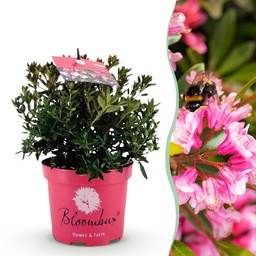
Draw a sketch of your bed. Place the tallest plants, such as the rhododendron itself, at the back. Plant medium-height perennials and shrubs in front of them. Create the front edge with low-growing ground cover and smaller plants such as the dwarf rhododendron
Additional advice
A layer of bark compost or leaves keeps the soil moist, suppresses weeds and slowly releases nutrients into the soil. Renew the layer every year in spring. This imitates natural woodland conditions and promotes healthy soil life.
Step 3: Plant and care for your plants
Water the plants thoroughly before planting. Do not plant the rhododendron any deeper than it was in the pot. Fill in the soil, firm it down lightly and water generously again. In spring, after flowering, apply a special fertiliser such as the
rhododendron fertiliser. It is specially formulated for the needs of acid-loving plants and is available in our fertiliser range. Water regularly during dry periods, ideally with rainwater.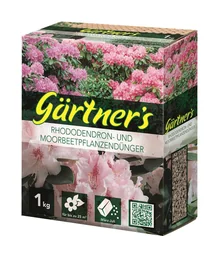
What mistakes should you avoid when planting?
Even the best planning can be undermined by small mistakes. Watch out for some common pitfalls to give your plants the best possible start and enjoy your bog garden for years to come.
Important note
Never plant rhododendrons too deeply! The top of the root ball must be level with the soil surface. Otherwise, the shallow, oxygen-loving roots may suffocate, causing the plant to die. It is better to plant slightly too high and mound up with soil or mulch.
Another common mistake is choosing companion plants with aggressive root growth. Shallow-rooted plants such as bamboo, many types of maple and birch trees are strong competitors for water and nutrients and would suppress the rhododendron. Instead, choose deep-rooted trees and perennials with less dominant root systems.
Also avoid mulching the bed with calcareous materials such as marble chippings or fertilising it with garden lime. This would raise the soil pH and harm the plants. Use only materials suitable for bog gardens, such as bark mulch, leaves or conifer needles.
With the right choice of companion plants and by taking their site requirements into account, you can create a rhododendron bed that is not only a highlight during flowering season. It will become an eye-catching feature all year round, enriching your garden with a variety of shapes, colours and textures while creating a harmonious natural setting.
Frequently Asked Questions
- Can I plant roses next to rhododendrons?
- No, this is not a good combination. Roses prefer loamy, nutrient-rich, lime-rich soil with a neutral to slightly alkaline pH. Rhododendrons, on the other hand, need acidic soil (a bog bed) to thrive. Their different soil requirements make them unsuitable neighbors.
- What type of soil does a rhododendron bed need?
- A rhododendron bed needs special soil for acid-loving plants. It has a low, acidic pH between 4.2 and 5.5. It should also be loose, rich in humus, and well-drained while still retaining moisture. Avoid lime-rich garden soil and tap water.
- How deep should I plant a rhododendron?
- Plant the rhododendron only as deep as it was previously planted in its container. The top of the root ball should be level with the surrounding soil. Planting too deeply can damage the roots and cause the plant to die, as its shallow roots need oxygen.
- Which perennials are suitable for planting under rhododendrons?
- Shade-tolerant and acid-tolerant perennials are ideal for planting under rhododendrons. Hostas with their attractive foliage, ferns for structure, Caucasian forget-me-nots (Brunnera), barrenwort (Epimedium), and foamflowers (Tiarella) are excellent choices that cover the soil and enhance the bed.
- Do rhododendrons need a lot of sun?
- No, most rhododendron varieties prefer dappled partial shade. Direct midday sun, especially in summer, can cause leaf scorch. A spot beneath open-canopied, deep-rooted trees such as pines or oaks is ideal, as it protects the plants from excessive sunlight.
You May Also Be Interested In
- Rhododendron Care: Location, Pruning & Winter Hardiness
- Planting Blueberries: These Companion Plants Are a No-Go
- Dahlia Combinations: The Best Companions for Your Flower Bed
- Plants for Partial Shade: Make the Most of Your Garden
- Large Flowering Shrubs as a Specimen Tree: Redesign Your Garden
- Front Yard Landscaping: Ideas for a Blooming Oasis