
In brief: Our 2026 test shows that sealants and adhesives are indispensable helpers. For durable joint sealing, fiber-reinforced sealants such as Aqua Dicht are the first choice. For flexible connections, sprays such as Allesdichter deliver excellent results. Door seals and heat-resistant adhesives round out the range. We show you which consumable is right for your task.
Consumables are the unsung foundation of every successful repair or installation. In 2026, powerful, user-friendly products are available that do more than simply bond or seal. They solve specific problems permanently. This test and comparison helps you find the right product for your task. We present the most important categories and assess them in practical use.
Table of contents
- Long-lasting sealing: When is a fiber-reinforced sealant worthwhile?
- Flexible sealing: The strengths of sealant sprays
- How to seal doors and windows effectively
- Heat-resistant bonding for demanding environments
- Color or clear: Which is the better choice?
- Application tips for perfect results
- Buying guide: How to find the right consumable
Long-lasting sealing: When is a fiber-reinforced sealant worthwhile?
For static, load-bearing joints, you need an especially robust solution. This is where fiber-reinforced sealants come into play. They are applied with a trowel or putty knife and form a thick, elastic layer.
One outstanding product in our test is , the clear Aqua Dicht sealing compound. Its strength lies in the combination of high elasticity and tensile strength provided by the fibers. It reliably bridges cracks and adheres permanently to concrete, masonry, wood and metal.
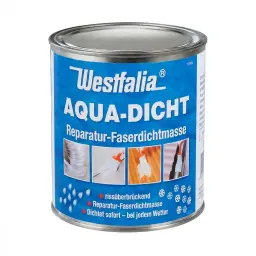
Use these compounds for:
- Sealing in bathrooms and sanitary areas (showers, bathtubs)
- Joints on balconies and patios
- Filling cracks outdoors
- Connection joints around window frames
Allow enough time for preparation. The surface must be completely stable, clean, dry and free of grease. Old, crumbling sealants must be removed completely.
Flexible sealing: The strengths of sealant sprays
For flexible connections, moving parts or hard-to-reach areas, sealant sprays are the first choice. They can be applied precisely, dry quickly and remain permanently elastic.
Our comparison highlights the , the Allesdichter 400 ml spray in gray. The practical spray can enables clean, drip-free application without additional tools. The material forms a rubber-like, water-repellent layer.
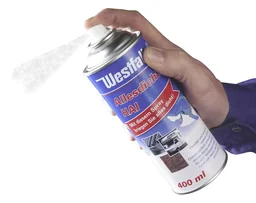
Its applications are varied:
- Sealing cable entry points
- Protecting screw connections against corrosion
- Preventing rattling noises in moving parts
- Sealing union nut connections
Spray options for every need
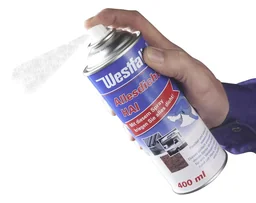
In addition to the gray version, Allesdichter is also available in black, white and as a clear version, the (Allesdicht-Hai). The clear version is ideal when you want to preserve the original appearance.
How to seal doors and windows effectively
Drafts and energy loss can be stopped easily. Self-adhesive door and window seals are the solution. They are quick to install and work immediately.
The (Türdichtung Automatic) shows how easy saving energy can be. The 1 m strip can be trimmed to size and adapts perfectly thanks to its profile. The strong adhesive layer bonds reliably to smooth surfaces.

How to seal correctly:
- Clean the frame thoroughly with alcohol.
- Measure the required length and cut it to size.
- Slowly remove the protective film and press the seal firmly into place.
- Avoid stretching the seal while applying it.
Before final installation, test the adhesion in an inconspicuous area. This ensures that the surface is suitable and clean enough.
Heat-resistant bonding for demanding environments
Not every adhesive can withstand heat. For repairs near engines, radiators or in the kitchen, you need a special, temperature-resistant adhesive.
The is the specialist for hot environments in our test. Its resistance up to 150 degrees makes it versatile. It cures quickly and creates a strong yet slightly flexible bond.
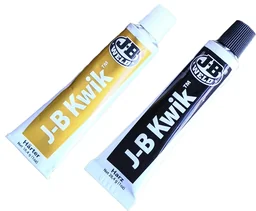
This adhesive is ideal for:
- Repairs to car bonnets or exhaust silencers
- Attaching mirrors or brackets to radiators
- Kitchen repairs near ovens
- Bonding heat-exposed housing components
Colour or transparency: which is the better choice?
The choice between coloured and transparent products is often an aesthetic one. Grey or white sealants and sprays are discreet on many surfaces. Transparent versions are virtually invisible.
The performance characteristics are identical for both types. Choose a colour if you want a uniform, opaque finish. Transparency is the right choice if the underlying surface should remain visible or if you are joining different materials.
Also consider future work when choosing a product. A transparent sealant can be painted over more easily later if you want to change the colour.
Application tips for perfect results
The quality of the result depends heavily on preparation and application. Keep these points in mind.
Prepare the surface
Degrease the surface with a special cleaner or isopropanol. Remove loose plaster, dust and old residue that is no longer adhering. The surface must be dry.
Apply the right amount correctly
For sprays: maintain the recommended spraying distance and work in thin layers. Several thin coats are better than one thick coat. For pasty compounds: fill the joint completely and smooth it with a tool or your finger.
Observe the curing time
Follow the specified times. Even if the surface appears firm, full load-bearing capacity may not be reached until days later. Avoid moisture and mechanical stress during this time.
Buying guide: How to find the ideal consumable
Before buying, ask yourself three simple questions. The answers will lead you to the right product.
1. Where will the material be used?
For permanent, static sealing (bathroom, balcony), choose a fibre-reinforced, paintable compound. A spray is ideal for flexible, moving joints or hard-to-reach areas.
2. What stresses will it be exposed to?
Will it face high temperatures, heavy moisture or chemical influences? Then choose a product designed specifically for this, such as the heat-resistant adhesive.
3. What visual result do you want to achieve?
Do you want the seal to be as discreet as possible or deliberately match a particular colour? Choose between transparent and coloured versions.
Discover our extensive range of consumables and find all the tools and accessories you need in our tools category.
Our highest-rated consumables compared at a glance:
| Model | Customer rating | Availability |
|---|---|---|
| Aqua Dicht - transparent sealant, fibre-reinforced, 1 L tin 🏆 Test winner | ★ 4,7 (64) | In stock |
| Automatic door seal, 1 m long, white, can be cut to size | ★ 4,9 (53) | In stock |
| Allesdichter 400 ml spray, grey | ★ 4,8 (31) | In stock |
| Allesdichter 400 ml spray, black | ★ 4,6 (30) | In stock |
| Allesdichter 400 ml spray, white | ★ 5,0 (14) | In stock |
With the right consumables, you can handle repairs and sealing jobs professionally. The products in our 2026 test are designed for high quality and easy handling. Whether you need to seal a permanent joint in the bathroom or create a heat-resistant bond around the home, our buying guide will help you find the right solution. Plan your project carefully, prepare the surface thoroughly and follow the application instructions. This will help you achieve a long-lasting result.
Frequently asked questions
- When should I use a paintable sealant and when should I use a spray?
- Paintable sealants are suitable for permanent, load-bearing seals in static joints, such as those in the bathroom. Sprays are ideal for flexible connections, moving parts or hard-to-reach areas because they can be applied more precisely and without tools.
- Can I stick a door seal to any material?
- Modern universal door seals adhere to most smooth, grease-free surfaces, such as plastic, metal or painted wood. Proper preparation is crucial: clean the surface thoroughly with alcohol and dry it before removing the protective film.
- What does “temperature-resistant up to 150 degrees” mean for an adhesive?
- This adhesive retains its strength and elasticity even when continuously exposed to temperatures of up to 150°C. It is therefore perfect for repairs near radiators, engines or in the kitchen, where high temperatures occur.
- Is a transparent sealant as durable as a coloured one?
- Yes, the colour has no effect on performance. Transparent compounds such as Aqua Dicht are fibre-reinforced and offer the same high elasticity and adhesion. They are a discreet choice when you want to preserve the original colour of the underlying surface.
- How long does it take for consumables to become fully load-bearing?
- The surface of most products cures within a few hours. However, full load-bearing capacity and chemical resistance are only achieved after complete curing, which can take several days depending on the product and layer thickness.