
In brief: A self-propelled lawn mower makes gardening much easier by moving forward under its own power. This saves effort and time, especially on large lawns, slopes or uneven ground. Choosing the right model depends on the size of your garden, the terrain and personal preferences such as front-, rear- or all-wheel drive.
Mowing the lawn can quickly turn from a meditative activity into a sweaty chore. Especially when your garden is large, has a slight slope or uneven ground, pushing a heavy lawn mower becomes a real challenge. The solution is simple and effective: a self-propelled lawn mower. It takes the hardest work off your hands and turns mowing into a walk in the park.
These smart Garden + Outdoor helpers are more than just an alternative to a robotic lawn mower. They combine the control of a walk-behind mower with the convenience of a self-propelled model. Discover how a self-propelled lawn mower can revolutionise the way you care for your garden.
A good self-propelled lawn mower can reduce perceived effort by up to 70%. This not only protects your back, but also makes gardening what it should be: a pleasure.
What exactly is a self-propelled lawn mower?
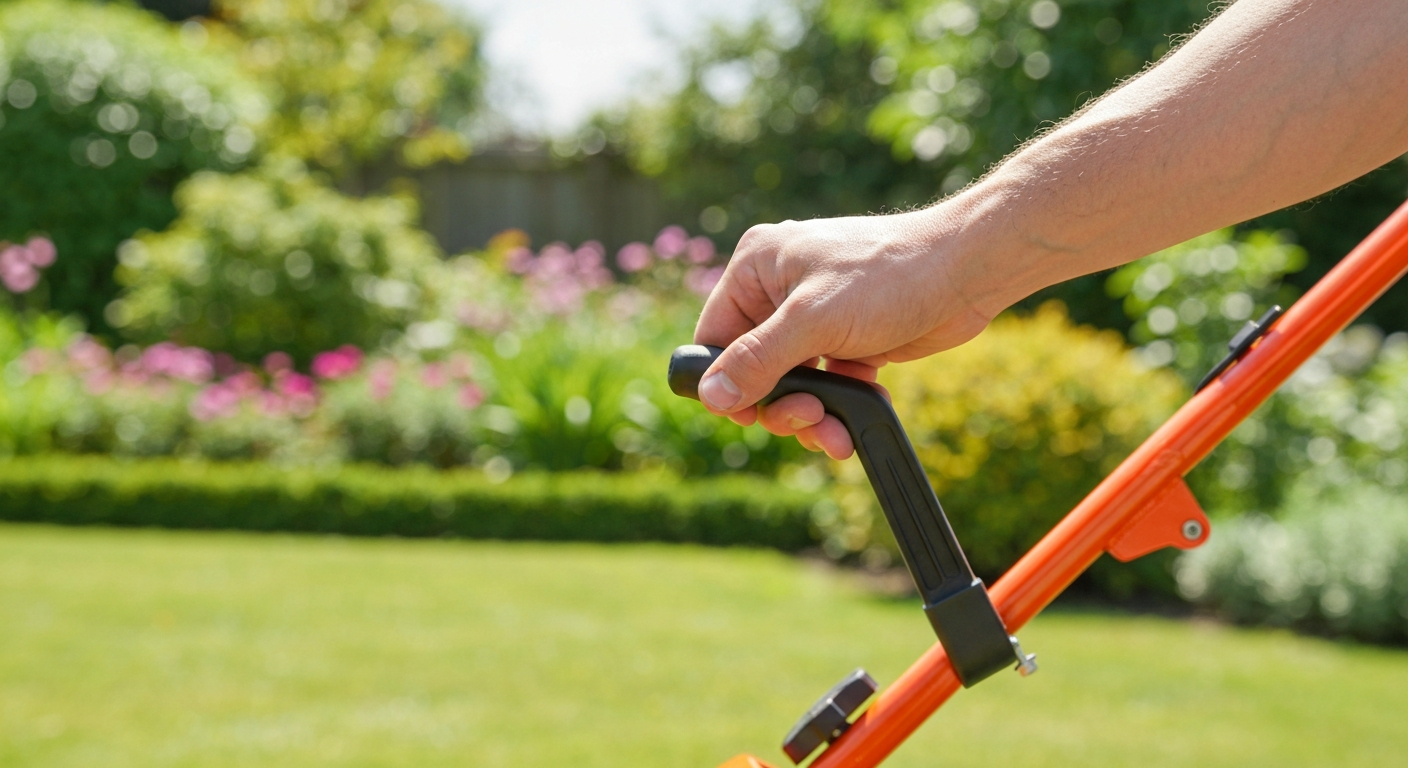
A self-propelled lawn mower uses part of the engine power to drive its wheels. Instead of pushing the mower across the lawn using sheer muscle power, you only need to steer it. A lever or bar on the handle activates the drive, and the mower starts moving. You choose the direction; the mower provides the forward motion.
Most models have a fixed speed that corresponds to a normal walking pace. Higher-quality machines offer variable speed control, allowing you to adjust the pace perfectly to your own walking speed or the conditions of the lawn. Mow dense, tall grass more slowly and cover short, open stretches more quickly.
Why is it worth investing in a self-propelled mower?
The benefits of a self-propelled lawn mower go far beyond convenience. You save effort and time, and often achieve better mowing results too. Once you have experienced the comfort of a self-propelled mower, you will not want to be without it.
Effortless mowing on slopes and inclines
This is the main reason many garden owners switch to a self-propelled model. Pushing a heavy petrol mower up a bank is hard work. The wheel drive pulls the machine steadily up the slope. You only need to secure and steer it. The result is not only less strain on your back, but also noticeably safer work on slopes.
Save time on large lawns
Self-propelled drive really comes into its own on large, open areas. You maintain a constant, brisk speed without becoming tired. Breaks that you would otherwise need to take due to exhaustion are no longer necessary. This lets you mow areas of over 500 square metres much faster and more efficiently. A powerful model such as the
can handle even large gardens with ease.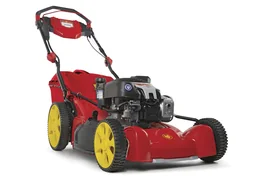
Less physical strain
Gardening should be relaxing, not exhausting. A self-propelled lawn mower drastically reduces physical effort. This is ideal for older people or anyone with back or joint problems. The work becomes easier, leaving you with more energy for other tasks in the garden.
A more even cut
An often-overlooked benefit is the improved finish. As the mower moves at a constant speed, the blades always operate within the optimum speed range. The grass is cut cleanly rather than torn. Uneven results caused by changing pushing speeds become a thing of the past. The result is a dense, healthy and even lawn.
Expert tip
Test the mower's manoeuvrability at a specialist retailer or on an open area. With a front-wheel-drive mower, you should be able to lift the front wheels easily to disengage the drive for a tight turn. With rear-wheel drive, being able to tilt the mower slightly and turn it on its rear wheels is crucial for manoeuvrability.
What types of wheel drive are available?
Not all drive systems are the same. The position of the driven wheels has a major impact on how the mower handles. The choice between front-, rear- or all-wheel drive depends on the nature of your garden.
Front-wheel drive: The agile choice for complex gardens
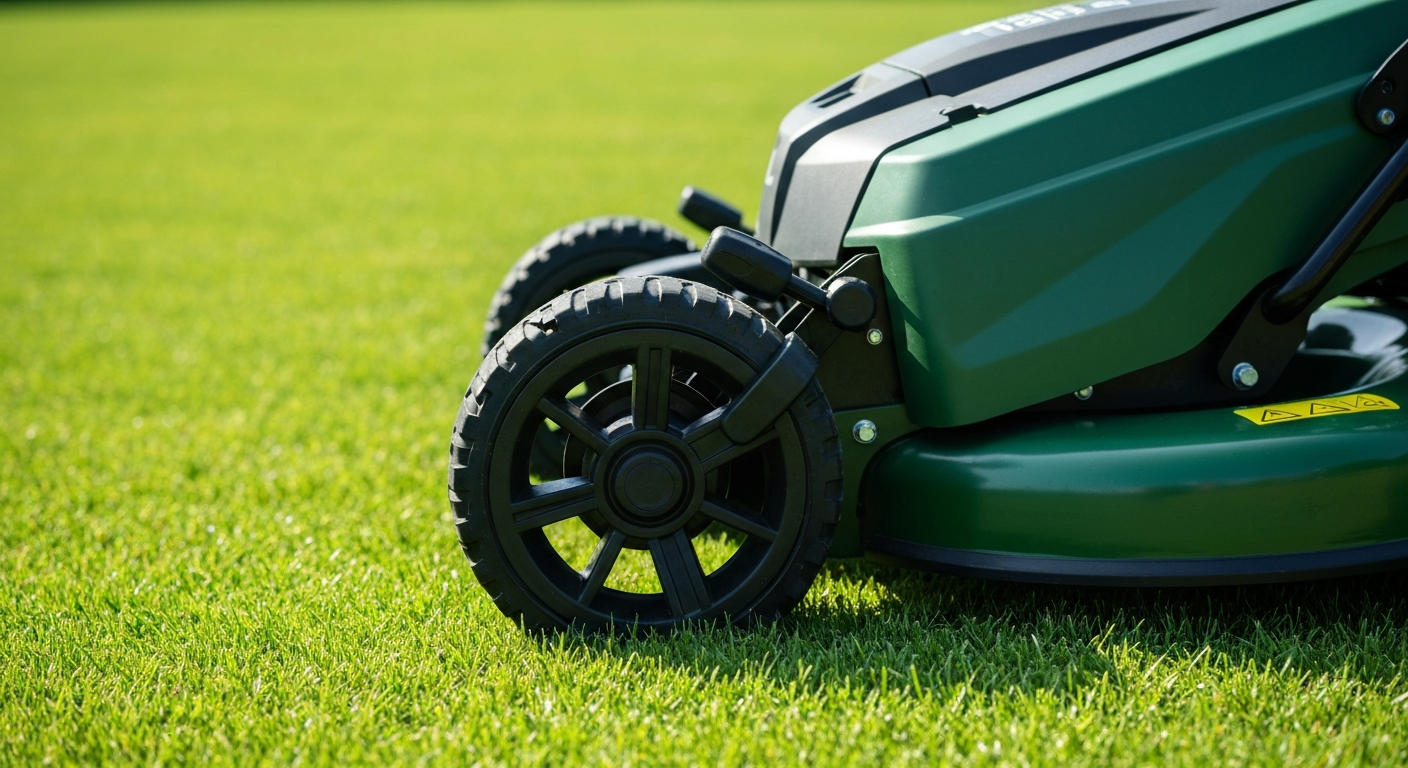
Front-wheel-drive mowers are extremely manoeuvrable. The drive is located on the front wheels. When you need to take a tight turn or manoeuvre around a flower bed, simply press down on the handlebar. The front wheels lift slightly off the ground, disengaging the drive, and you can freely turn the mower on its rear wheels. This is ideal for gardens with lots of trees, shrubs and flower beds.
Rear-wheel drive: The powerhouse for slopes and large areas
Rear-wheel drive is the most common and versatile type of drive. Power is transferred to the rear wheels. This provides excellent traction, especially when the grass catcher fills up and adds extra weight to the rear axle. On slopes and straight runs, rear-wheel drive is unbeatable. It reliably maintains its course and provides powerful forward motion. Models such as the
offer confident performance on almost any terrain thanks to their rear-wheel drive.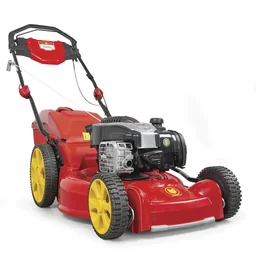
All-wheel drive: The premium solution for extreme terrain
For particularly demanding conditions, there are mowers with all-wheel drive (AWD). All four wheels are powered here. This provides maximum traction and control on very steep, uneven or slippery lawns. If your garden is more like a mountain slope, an all-wheel-drive mower is the safest and most effective choice.
What should you look for when buying? The ultimate checklist
Once you have decided on a self-propelled mower, it is time to look at the details. Various features determine how well the machine suits you and your garden.
Engine and performance
Most self-propelled lawn mowers are petrol models because the drive system requires additional power. Look for branded engines known for their durability and reliable starting. For medium-sized gardens, an engine with around 2 to 3 kW (approx. 2.7 to 4 HP) is more than sufficient. For larger areas or demanding terrain, you may want something more powerful.
Cutting width
The cutting width determines how quickly you can mow an area. The rule is simple:
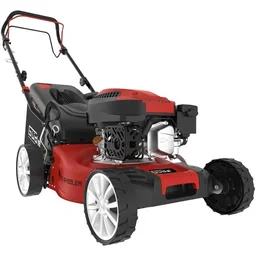
- Up to 500 m²: 40-46 cm cutting width (e.g. the manoeuvrable
- 500-1000 m²: 46-53 cm cutting width
- Over 1000 m²: 53 cm and more
Cutting height adjustment
A central cutting height adjustment system is the most convenient option. With just one lever, you can adjust the height of all four wheels at the same time. This is useful if you frequently change the cutting height, for example when mowing ornamental lawns or play areas. Individual wheel or axle adjustment is more cumbersome, but common on less expensive models.
Additional advice
Pay attention to the capacity of the grass catcher. A large catcher (60-70 litres) means fewer stops to empty it. A fill-level indicator is a useful extra that tells you when it is time to head to the compost heap. This saves unnecessary trips and time.
Additional features: mulching, side discharge & Co.
Modern mowers are often multifunctional machines:
- Collecting: The standard mode. The clippings are collected in the grass catcher.
- Mulching: A special blade chops the grass into very fine pieces and distributes them across the lawn as natural fertilizer. This saves you from emptying the catcher and supplies the lawn with nutrients.
- Side discharge: Useful for tall grass that is not meant to be collected in the grass catcher, for example in an orchard.
The right care for a long service life
A self-propelled lawn mower is an investment that will pay off for many years with proper care. Maintenance is straightforward.
After every mowing session, clean grass residue from the mower deck to prevent rust. Check the oil level and air filter regularly. Before storing the mower for winter, empty the tank or use a fuel stabilizer. An annual oil change and sharpening the blade ensure optimum performance.
Important note
Before carrying out any cleaning or maintenance work on the blade or mower deck, always disconnect the spark plug boot (on petrol models) or remove the battery. This is the only way to ensure that the engine cannot start accidentally.
Store your mower in a dry, sheltered place. Special protective covers protect it from dust and moisture and further extend its service life.
An even cut is the foundation of a healthy lawn. The consistent speed of a self-propelled mower prevents stress on the grass, encourages dense growth and reduces its susceptibility to moss and weeds.
A self-propelled lawn mower is a smart choice for anyone who values comfort, efficiency and a perfect mowing result. It minimizes effort and gives you more time to enjoy your well-maintained garden. Browse the selection and find the model that will transform the way you garden forever.
Frequently Asked Questions
- Who can benefit from a self-propelled lawn mower?
- A self-propelled lawn mower is worthwhile for anyone with a lawn area of around 300 square metres or more. It is particularly beneficial for gardens with slopes, uneven ground or for people who want to reduce the physical effort involved in mowing. It significantly improves comfort and efficiency.
- Which is better for a lawn mower: front-wheel drive or rear-wheel drive?
- Front-wheel drive is ideal for gardens with lots of obstacles, as lifting the front wheels makes the mower more manoeuvrable. Rear-wheel drive provides better traction on slopes and when mowing in straight lines, especially when the grass catcher is full. For most gardens, rear-wheel drive is the more versatile choice.
- How fast does a self-propelled lawn mower go?
- Speed varies depending on the model, but is typically between 3 and 5 km/h, which corresponds to a normal to brisk walking pace. Many models offer variable speed control, allowing you to adjust the pace to your walking speed and the grass conditions.
- Does a self-propelled lawn mower require more maintenance?
- The drive mechanism itself requires relatively little maintenance. General maintenance is barely different from that of a non-self-propelled mower. You should regularly check the oil, air filter and spark plug and clean the mower deck. With belt-driven systems, it may occasionally be useful to check the belt tension.
- Can the self-propelled drive be switched off?
- Yes, virtually all models allow you to engage the self-propelled drive using a separate lever or bar on the handle. When you release the lever, the drive stops and you can manoeuvre the mower freely, for example to push it precisely around corners or obstacles.
You might also be interested in
- Buy a lawn mower: The right type for every garden
- Robot lawn mower vs. lawn mower: Cost comparison & buying guide
- Lawn mowers: Important features to consider when buying
- Robot lawn mowers for large gardens: Selection and benefits
- Cordless lawn mowers: Benefits and buying tips
- Robot lawn mowers: The ultimate buying and installation guide