
In brief: Use your garden shed most effectively by creating clear zones: hang tools within easy reach on the wall, store rarely used items higher up, keep seating areas clear and protect sensitive materials from moisture. A solid floor, suitable shelving, labelled boxes and an annual organisation check can turn a storage room into a workshop, garden office or retreat.
Smart garden shed organisation and optimal use
A garden shed can do far more than store lawnmowers, compost and empty pots. With a well-planned layout, it becomes an organised tool shed, a quiet workspace or a flexible room for hobbies and relaxation. The key is to create clear areas, provide easily accessible storage and choose furniture that serves several purposes.
Do not start by buying shelving. Empty the room completely, measure the available space and decide how you really want to use the garden shed. This helps you avoid furniture that blocks the walkways and create storage that works well in everyday life.
How do you plan your garden shed layout?
Good planning starts with an honest inventory. Remove everything from the garden shed and sort it into four groups: used daily, used seasonally, rarely used and ready to discard. Broken equipment, empty packaging and duplicate tools take up space without providing any benefit.
Next, note the dimensions of the walls, door, windows and sloping roof sections. Also measure how far the door swings inwards. A shelf that fits on paper may block the entrance in practice if the door or a lawnmower needs additional space.
Organise the space according to frequency of use
Place everything you need daily or several times a week right beside the door. Secateurs, gloves, a watering can and small hand tools should be within reach without having to move boxes first. Heavy equipment such as lawnmowers, shredders or bags of compost belongs on the floor, preferably close to the exit.
Store rarely used items higher up or towards the back. These include Christmas decorations, empty planters, spare parts and seasonal seat cushions. Make sure you use a safe step when accessing high shelves. A wobbly chair is no substitute for a stable ladder.
Divide the garden shed into clearly defined zones
The best layout follows a simple principle: each activity gets its own dedicated area. A typical arrangement looks like this:
- Tool zone: Hooks, a pegboard and a tool rail on an easily accessible side wall.
- Storage zone: Shelving with boxes for seeds, fertiliser, pots and spare materials.
- Work zone: A sturdy worktop for repotting, repairs or small gardening tasks.
- Clear zone: An unobstructed path from the entrance to all important areas.
Plan at least one easy-to-use walkway. In a small garden shed, a central strip of around 70 to 80 cm is often enough. When needed, the open area can be used with a folding table or mobile workbench.
If you want to use the space as a garden office or sitting area, separate the clean area from the tools. Soil, oil, metal filings and damp garden equipment do not belong next to a desk. Even a low trim or narrow shelf can visibly separate these areas.
Expert tip
Use masking tape to mark the planned footprint of shelves and furniture on the floor. Then open the door, walk through the planned route and try placing a lawnmower or box inside. This helps you identify tight spots before installation.
How can you create more storage in your garden shed?
For more garden storage, it is not the largest floor area that matters but how you use the walls. Most garden sheds have several unused square metres above eye level. With sturdy shelves, hook rails and track systems, you can turn these areas into accessible storage.
Make use of the walls, doors and ceiling
A pegboard is ideal for pliers, scissors, gloves and small repair tools. Hang frequently used items at eye level. Install vertical holders for spades, rakes and brooms. The handles stay neatly against the wall and do not take up floor space.
The inside of the door also offers useful space. A slim hanging organiser can hold plant labels, string, cable ties and spare gloves. Do not hang heavy items on a lightweight door. Check its load capacity, hinges and fixings before adding extra weight.
You can store flat boxes for lightweight seasonal items under the roof. Do not keep heavy bags, liquids or fragile objects there. A falling box can injure people and damage equipment.
Choose shelving to suit its contents
Shelves around 30 to 40 cm deep are suitable for many boxes, pots and gardening supplies. Deeper shelves often waste space because items disappear at the back. Place heavy boxes at the bottom, medium-sized containers at hip and chest height and lightweight items at the top.
Transparent boxes make items easier to find. A consistent labelling system works even better. Do not simply write garden on a box; use labels such as tomato supplies, secateurs and tying materials or winter covers. This helps every family member find what they need and return it to the same place.
- Green boxes: Seeds, plant labels and propagation supplies.
- Blue boxes: Watering equipment, hoses and connectors.
- Grey boxes: Repair materials, screws and spare parts.
- Large open compartments: Watering cans, baskets and empty planters.
A storage bench combines furniture and organisation. It provides a seat for short breaks while also holding blankets, garden cushions or smaller baskets. For this dual function,
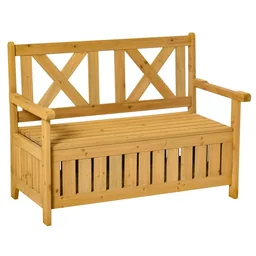
For more ideas for durable furniture and practical equipment, explore the garden equipment section. Sort tools by where they are used rather than by when they were purchased. You can find additional information and accessories in the garden tools section.
„Have nothing in your house that you do not know to be useful, or believe to be beautiful.“
How can you turn your garden shed into a garden office?
A garden office does not need luxurious furnishings. It needs natural daylight, a sturdy workspace, a dry structure and a safe power supply. Start by choosing the position of your desk. Side lighting prevents strong reflections on the screen and can be adjusted with a blind.
Plan your workspace and technology together
A desk around 120 centimetres wide provides space for a monitor, keyboard and documents. If the room is smaller, a folding worktop is a good option. Mount cable ducts underneath the worktop and do not run cables across the floor. A small mobile pedestal can store both office supplies and gardening documents.
Arrange the workspace so that you are not looking directly at untidy garden tools. A narrow shelf, curtain or half-height partition creates visual calm. The rest of the room can still be used for tools or a hobby.
Pay attention to the floor, light and air
The floor must be level and dry. For a weka garden shed 209 size 2,
, a suitable floor measuring 244 x 244 centimetres may provide a suitable base, provided the dimensions and model match. Always check the manufacturer's specifications before installation.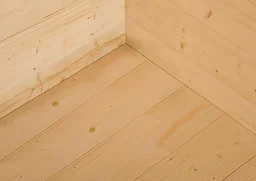
Use a glare-free LED light for the workspace and a separate light for the entrance. A window provides daylight, but it does not replace adequate ventilation. Open the window regularly for short periods, especially after damp days or when several people have been working in the room.
For a permanent garden office, you should also keep an eye on the temperature. An uninsulated garden shed cools down quickly in winter and becomes very hot in summer. Choose sensitive electronics, paper and textiles accordingly. Documents should be stored in closed, dry containers.
A practical basic setup for a garden office includes:
- a sturdy table or folding worktop,
- an ergonomic chair with sufficient back support,
- a glare-free desk lamp,
- a hygrometer to monitor humidity,
- closed boxes for paper and electronics.
For more ideas for functional rooms and furniture, browse the Garden + Outdoor category. If you are adding power, heating or permanent insulation, plan the work with a qualified contractor.
Important note
Store petrol, paints, solvents and other highly flammable substances only in approved containers and in accordance with applicable regulations. Keep them away from ignition sources. Electrical installations, heating systems and fixed wiring should be handled by a qualified contractor.
How can you use your garden shed all year round?
A garden shed remains versatile if you do not design its furnishings for just one season. In spring, it can serve as a propagation and planting station; in summer, as a shady retreat; in autumn, as a workshop; and in winter, as protected storage. Movable furniture makes it easier to switch between uses.
Create a flexible work surface
A folding tabletop can serve as a potting bench in spring and a repair surface in autumn. Keep the surface smooth and easy to clean. A washable mat protects the table when repotting without permanently turning the room into a workshop.
Stackable crates can be rearranged according to the season. In summer, cushions and games can be kept within easy reach; in autumn, harvest baskets and tools can be moved to the front. Label the outside so that the contents remain identifiable even when the boxes are stacked.
If you use the garden shed as a seating area, choose compact furniture with multiple functions. A bench can provide both seating and storage, while a folding stool can serve as a side table or additional seat. Keep access to the window, door and ventilation clear.
Protect the roof and its contents
Moisture often enters the room not through the floor but through damaged roofing felt, open joints or doors that do not close properly. Check the roof at least once a year. Repair minor damage in dry weather in accordance with the manufacturer's instructions.
, self-adhesive bitumen roofing felt for garden sheds with an anthracite sanded finish can be used for repairs on suitable roof surfaces. Check the substrate, dimensions and application instructions before use. A repair is not a substitute for complete renovation if the roof structure is already damp.
Additional protective measures can help protect sensitive items. Do not place cardboard boxes directly on the floor, use closed boxes and hang textiles so that air can circulate. Garden furniture cushions stay dry if they are stored clean and completely dry. If necessary, add a suitable tarpaulin and netting solution.
Additional advice
Take a photo of the organised space once each season. The image serves as a quick reminder when putting things away and shows whether certain areas regularly become overcrowded. If one box is always in the way, it needs a better location or fewer contents.
„The objective of cleaning is not just to clean, but to feel happiness living within that environment.“
How can you keep everything organised long term?
Good organisation does not depend on discipline alone. It lasts when every item has a fixed, easily accessible place. Putting things back must be quicker than leaving them on the floor. That is why you should organise your storage around your actual work routines.
Label by task instead of product type
A box labelled Miscellaneous soon becomes a collection point for everything that has no proper place. Instead, label boxes by task: repotting, repairing irrigation, preparing beds or protecting furniture. This way, you can immediately identify which box you need for a specific job.
Whenever you add a new item, check whether it replaces an existing function. A second spade or three nearly identical watering cans need a good reason. Repair faulty equipment promptly or get rid of it. The free space is more valuable than equipment you have not used for years.
Plan short inspection routines
A five-minute routine at the end of each gardening session prevents major clear-outs. Clean your tools, empty buckets, hang up equipment and return opened boxes to their places. Allow wet items to dry outside closed boxes.
At the start of each season, inspect the roof, floor, windows, door and shelves. Look for rust, mould, signs of pests and loose fixings. Also check that the walkway remains clear. A well-organised garden shed is safer, quicker to use and easier to clean.
- Clean tools and hang them back on their holders.
- Check consumables and remove expired or damaged products.
- Close boxes and return misplaced items to their proper places.
- Check for moisture on the floor, walls and roof connections.
- Keep the door, window and escape route completely clear.
If you store garden soil, planters and irrigation accessories together, it is worth taking a look at the Garden and Plant Accessories section. There you will find ideas for adding to your equipment to suit your own gardening tasks.
These rules allow you to use your garden shed cleverly without overfilling it. Divide the space into zones, store heavy items safely, make use of the walls and keep an eye on moisture and walkways. This way, the garden shed remains a practical part of your garden instead of becoming a forgotten storage room.
Frequently asked questions
- How can I organise a small garden shed to save space?
- A small garden shed gains space through vertical storage. Hang frequently used tools on a pegboard, place heavy boxes at the bottom and reserve the centre as a walkway. Folding furniture, stackable boxes and a labelled inside door keep the floor clear.
- Which shelves are suitable for organising a garden shed?
- Sturdy metal or treated-wood shelving with a depth of 30 to 40 centimetres is ideal for organising a garden shed. Add hooks and tool rails as well. Store heavy equipment at the bottom and keep small parts in transparent boxes. Label each box according to its contents and season.
- What does a garden office in a garden shed need?
- A garden office needs daylight, a dry, level surface and a reliable power supply. Place the desk at the side of the window so you can work without glare. Plan for cable ducts, an LED light and regular airing. Have electrical work carried out by a qualified professional.
- How can I prevent damp in my garden shed?
- In spring, inspect the roof, joints, floor and ventilation. Air the shed thoroughly for a short time on dry days, do not store textiles directly on the floor and allow wet equipment to dry first. A small hygrometer shows whether the humidity remains too high over time.
- How often should I tidy my garden shed?
- Check the organisation at least at the beginning and end of the gardening season. Remove faulty equipment, clean your tools and replenish consumables. If you use the garden shed daily as an office or hobby room, a five-minute monthly check of the floor, shelves and escape route is sufficient.
You might also be interested in
- Building a garden shed: The ultimate step-by-step guide
- Running a business from a garden shed: Regulations and tips
- Build or buy a garden storage cabinet?
- Renovating a garden shed: Give your garden retreat a fresh look
- Build your own garden shed: Make your dream retreat a reality
- Painting a garden shed: How to keep it looking beautiful & protected