
In brief: A smart home door lock replaces your mechanical key with digital access methods such as codes, fingerprints or smartphone control. It provides greater security through activity logs and alarm functions and adds convenience through remote access and temporary guest codes. Integration into your smart home also enables automated routines when you enter or leave the house.
Smart Home Door Lock: Comfort & Security for Your Home
Your front door key is stuck, your hands are full and it is raining. A familiar nuisance. Modern digital locks solve these problems elegantly. They replace the physical key with technology and make your home safer and more accessible. This article explains how smart locks work, what they can do and what you need to consider.
How does a smart home door lock work?
A digital lock consists of an electronic locking mechanism and a control unit. You open it not with a key, but with an authorised signal. This can be a numerical code entered on an integrated keypad, your fingerprint on a scanner, the near-field communication (NFC) function of a smartwatch or a command from your smartphone app.
The motor inside moves the bolt. The smart system controls who gets access and when. Many models log every opening attempt. In the app, you can see whether the children have arrived home safely from school or whether a delivery driver has left a parcel.
The most important unlocking methods compared
- PIN code: Easy to assign, including for guests. You enter numbers on a physical or virtual keypad.
- Fingerprint sensor: Biometric, personal and fast. A stored pattern of your fingerprint activates the lock.
- Smartphone app: Open with the press of a button, often with geolocation functionality (geofencing). The lock opens automatically when you approach.
- NFC/cards: Hold a programmed chip or your smartphone up to the reader. Practical for everyone in the household.
- Voice control: Integration with Alexa or Google Assistant. "Alexa, open the front door" – after your identity has been confirmed.
The key concept with smart locks is not just technology, but control. You decide exactly who is allowed to enter and when, and gain a complete overview of all activity at your door.
Why does a smart lock improve home security?
A conventional lock cylinder system has weaknesses. Keys can be lost, copied or defeated with lock-picking tools. A digital lock addresses these issues directly.
You manage access digitally. A lost key does not mean replacing the entire cylinder. You simply delete that person's access code in the app. If someone attempts a break-in by tampering with the lock or entering incorrect codes, many models trigger an integrated alarm or send a push notification to your phone.
The activity history is a powerful tool. Every opening attempt is saved with a timestamp and the method used. This creates transparency and can provide evidence in an emergency.
Important note
The security of your smart lock depends heavily on the security of your home network. Poorly secured Wi-Fi can provide an entry point. Always use strong, unique passwords for your Wi-Fi and lock account, and enable two-factor authentication if available.
Integration into a comprehensive security system
A smart lock is more effective as part of a system. Combine it with security equipment such as security cameras, smart door viewers or window sensors. In a smart home scene, you can arm all devices at the same time when you leave the house.
How does it make everyday life more convenient?
Imagine coming back from the garden or a big shopping trip with your hands full. You no longer need to rummage around for your keys. One finger is enough, or the lock detects your smartphone and opens automatically.
Remote control is a game-changer. You can grant access to tradespeople, cleaners or guests while you are away. Create temporary codes with precisely defined validity periods. After the visit, these codes become invalid automatically. Delivery drivers can leave a parcel in the hallway, you can check it on the camera and lock the door again remotely afterwards.
For families, the greatest convenience is the relief it brings to everyday life. No more misplacing keys and no more arguments about who was home and when. The door manages access intelligently, and everyone has their own secure means of entry.
How much does switching to a digital door lock cost?
The investment starts at around 150 Euro for simple retrofit models with a keypad. High-quality models with a fingerprint scanner and broad smart home integration can cost 300 to 600 Euro. You may also have to pay for a professional installer if you do not want to fit it yourself.
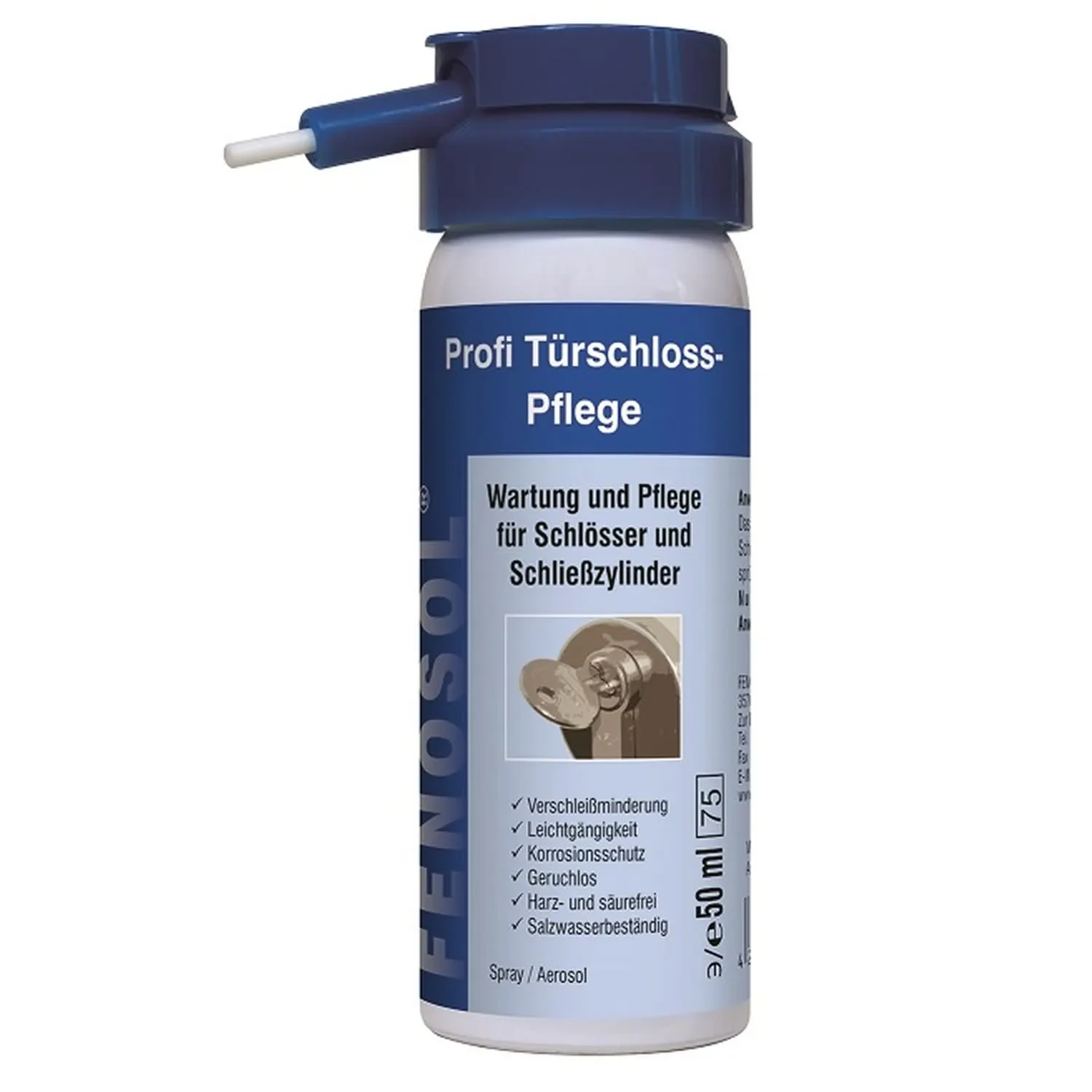
Remember the ongoing costs: batteries for operation and occasional care products for the mechanical parts. A special lubricating and care oil for door locks such as
or a PROFESSIONAL door lock care product such as keeps the bolt moving smoothly and protects against corrosion.
Pro tip
Ideally, buy your smart lock from a local specialist retailer or a specialist shop where you can get advice. Have them confirm compatibility with your door and ask for the installation instructions. Installation is often possible with standard tools from the power tools range.
Check installation and compatibility
Most smart locks are designed for standard door thicknesses of 35-55 mm. Measure your door. The so-called cylinder profile (oval or round) and the length of the existing cylinder are crucial. Before ordering, take photos of your door from the inside and outside, as well as the current lock.
How do you choose the right model?
Ask yourself some clear questions before buying. Do you mainly need fingerprint access, or is a code enough? Should the lock communicate with your existing smart home system, such as Apple HomeKit or Google Home? Do you need a physical emergency key as a backup? How long do the batteries last, and how will you be notified when they are running low?
Read independent reviews. Pay attention to ratings for app stability and customer service. A good smart lock receives software updates for years, adding new features and closing security vulnerabilities.
Additional advice
Start with a model that meets your most important requirements without being overloaded with features. An overly complex system can be frustrating. The convenience it provides should be the priority. You can often add more smart home components later.
Smart Living: The Door Lock as the Hub
Your smart door can trigger entire routines. When you leave the house, the door locks automatically. At the same time, the lights turn off, the heating is turned down and the alarm system is activated. When you return, the hallway light comes on and the heating is turned up as soon as you open the door.
These scenarios require integration with a smart home platform. Look for compatibility labels. The new Matter protocol is intended to ensure seamless compatibility between manufacturers in the future.
Future Prospects and Developments
The technology is developing rapidly. Facial recognition is becoming more reliable and affordable. Integrating cameras directly into the door handle is another growing trend. Researchers are also exploring power supplies based on small solar panels or kinetic energy recovery (generated by the movement of opening the door).
The future belongs to seamless, secure and context-aware access control. Your home recognizes you, grants you access and immediately adapts to your needs.
A smart home door lock is more than a tech gadget. It is an investment in security, an everyday convenience and a first step toward a connected, intelligent home. It puts you back in control – digitally, precisely and conveniently.
Frequently Asked Questions
- Are smart home door locks safe from hackers?
- Modern smart locks use strong encryption such as AES-128 or AES-256, comparable to online banking. The biggest vulnerability is often the user's own behavior, such as weak PINs or unsecured Wi-Fi networks. Look for certifications and regular software updates from the manufacturer.
- What happens to a digital door lock during a power outage?
- Most smart locks have battery backup, so they continue to work during a power failure. Many models also offer a physical emergency key or a USB-C port for an external power bank. Check these backup options before buying.
- Can I install a smart lock on an existing door?
- Yes, many digital locks are designed as retrofit solutions and use the existing door cylinder bore. Compatibility with your door thickness and cylinder profile is important. Measure carefully in advance or consult a professional.
- Which smart home systems support digital door locks?
- Leading systems include Amazon Alexa, Google Home, Apple HomeKit (with the Matter protocol) and dedicated manufacturer apps. Look for compatibility information such as "Works with Alexa" or the HomeKit code. The Matter protocol will make cross-brand integration easier in the future.
- How do you maintain and care for a digital door lock?
- Replace the batteries regularly, before they run out. Lubricate mechanical parts such as the bolt with a special lubricant (e.g. PRODUCT_104025), not universal spray. Clean fingerprint sensors and keypads with a dry, soft cloth.
You may also be interested in
- Smart Home Security: How to Protect Your Home Intelligently
- Understanding Smart Homes: A Guide to a Connected Home
- Smart Home Review & Comparison 2026
- Smart Home Heating & Lighting: Efficient & Comfortable
- Installing a Smart Home Light Switch: Guide & Benefits
- How to Replace a Door Lock: Step-by-Step Guide for Greater Security