
In brief: Solar thermal collectors convert sunlight directly into heat. This heat warms domestic water or supports your heating system. The technology significantly reduces your energy costs and lowers CO2 emissions. For the best results, combine the collectors with a suitably sized storage tank and an efficient control system.
Solar Thermal Collectors: Efficient Heat for Your Home
The sun provides immense amounts of energy. Solar thermal collectors capture this energy and convert it directly into usable heat. This heat warms your domestic water or supports your home heating system. The technology is well established, reliable and reduces your dependence on fossil fuels.
With such a system, you can permanently reduce your energy costs. At the same time, you contribute to climate protection. Integrating solar thermal systems into existing heating systems is now standard practice. We show you how solar thermal technology works and what you need to consider.
How exactly does solar thermal technology work?
The principle is simple. A solar thermal collector absorbs incoming sunlight. An absorber inside, usually made of coated copper or aluminium, heats up. A heat-transfer fluid circulates through the absorber and absorbs the energy.
A pump transports the heated fluid to the storage tank. There, it transfers the heat through a heat exchanger to the domestic water or heating water. The cooled fluid flows back to the collector. This circuit is controlled by an intelligent control system.
“The efficiency of a solar thermal system depends largely on the quality of the absorber and the insulation. Highly selective coatings can convert up to 95% of incoming radiation into heat.”
There are two main types: flat-plate collectors and evacuated tube collectors. Flat-plate collectors are more robust and less expensive. Evacuated tube collectors achieve a higher efficiency because the vacuum provides insulation, particularly at low outdoor temperatures.
The components in detail
Every system consists of four core components. The collectors on the roof gather solar energy. The solar storage tank stores the heat until it is needed. The circulation pump and pipes form the closed circuit. The controller manages the entire process.
The storage tank is crucial to the system's performance. It separates heat generation from heat consumption. Modern stratified storage tanks make efficient use of the water's temperature layers. This means hot water is available even when the sun is not shining.
Expert tip
Do not plan a storage tank that is too small. A large buffer tank significantly increases the solar contribution. As a rule of thumb for hot water production alone, allow 50-70 litres of storage capacity per square metre of collector area. With heating support, this figure almost doubles.
Solar hot water or heating as well?
The simplest application is solar water heating. It covers a large proportion of the demand for showers, baths and washing up. For a household of 4, you need approximately 4-6 m² of collector area and a 300-400 litre storage tank.
Solar heating support is more demanding. It also uses the heat for your underfloor heating or radiators. This requires a larger collector area of 10-15 m² and a combination storage tank. The system works particularly efficiently with low-temperature heating systems.
The right choice depends on your building. A well-insulated new-build home is ideal for the combined solution. In an unrenovated older property, a hot-water-only system is often more economical. An on-site consultation with a specialist will clarify the best option.
For occasional heating applications in the Garden + Outdoor area, there are special solutions. A
effectively heats the water in your pool or paddling pool. This extends the swimming season without high electricity costs.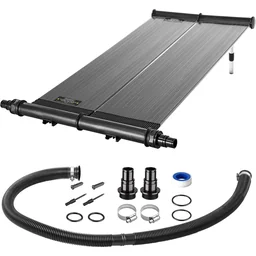
Assessing the cost-effectiveness
The investment costs pay for themselves through the fuel costs you save. For a hot-water-only system, expect to pay 4.000 to 6.000 euros. A combined system for heating support costs 8.000 to 12.000 euros including installation.
The Federal Support for Efficient Buildings (BEG) supports the installation. You can receive up to 30% of eligible costs as a grant. The exact amount depends on the efficiency standard of the overall system. Always apply for the funding before work begins.
Important note
Have the system installed only by certified specialist contractors. Incorrectly connected collectors can cause overheating, loss of performance or even damage to the roof. The operating pressure in the solar circuit must be correct. Only qualified professionals can ensure proper balancing and provide the required warranties.
Which type of collector is right for me?
Flat-plate collectors are the standard solution. They consist of a thermally insulated housing with an absorber and a solar-glass cover. Their value for money is very good. They are suitable for most roof shapes and pitches.
Evacuated tube collectors have a higher efficiency. The vacuum in the glass tubes minimises heat loss. These collectors also deliver more energy in overcast conditions and during winter. They are more expensive to purchase and more sensitive to mechanical stress.
Your choice affects the area required. For the same output, evacuated tubes need approximately 30% less space than flat-plate collectors. This can be decisive when roof space is limited. Compare the specific yields per square metre.
“In practice, the roof layout and budget are often decisive. For a south-facing roof with a good pitch, flat-plate collectors are usually more than adequate. On east-west roofs or roofs with a shallower pitch, evacuated tubes can show their strengths.”
Planning and installation: What you need to consider
The orientation of the collectors is crucial. A south-facing orientation with an inclination of 30° to 50° is ideal. Deviations towards the southeast or southwest only slightly reduce the yield. East- or west-facing roofs can also be used, but they require more surface area.
Avoid shading wherever possible. Shade from trees, chimneys or neighbouring buildings can drastically reduce the yield. Check the sun's path throughout all seasons. A digital shading analysis provides added certainty.
Integration into the existing system must be carefully planned. Your heating engineer will check compatibility with your boiler and hydraulic system. An additional heat exchanger or a new storage tank is often required. The control system must coordinate both heat generators intelligently.
For the installation itself, you can find practical accessories in workshop supplies and among the power tools. Also remember to insulate your heating pipes. Uninsulated solar pipes in the loft or outdoors can lead to considerable energy losses.
Additional advice
Combine solar thermal energy with other renewable technologies. A photovoltaic system can supply electricity for the circulation pump. A wood-burning stove with a water heat exchanger or a heat pump can complement the system perfectly during peak winter demand. This allows you to achieve maximum energy independence.
Practical applications in the garden
Solar thermal energy is not limited to the home. It offers a wide range of uses in the garden. A pool solar panel such as the is an affordable way to heat pool water. Installation is simple and operation is free.
You can also plan a solar hot water station for your garden connection. This ensures that you always have warm water for your outdoor shower or garden hose. It greatly improves convenience when watering the garden and caring for plants.
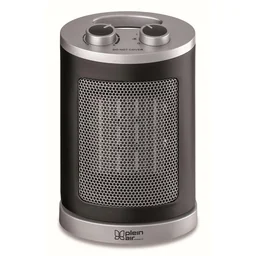
An independent heat source provides cosy warmth on the patio in the evening. A compact heater such as the
Maintenance and operation: How to keep the system efficient
Solar thermal systems require little maintenance. Regularly check the system pressure on the pressure gauge. A drop in pressure indicates a loss of heat transfer fluid. Also visually inspect the collector surface for dirt such as bird droppings or leaves.
You can remove heavy soiling with soft water and a sponge. Do not use harsh cleaning agents or hard brushes. They can damage the absorber's selective coating. Cleaning is rarely necessary, as rain washes away most dirt.
Have the system inspected by a specialist company every 3-5 years. They will check the antifreeze, pump, safety valves and control settings. This type of check helps ensure a long service life and optimum returns on your investment.
Monitor the system's performance. Modern control systems display the solar yield. A sudden drop may indicate a faulty pump, air in the system or a problem with the heat exchanger. Investigate such warning signs promptly.
Solar thermal energy is a smart, future-proof technology. It uses a free energy source and makes you more independent. With careful planning and professional installation, you can enjoy reliable heat from the sun for decades.
Frequently Asked Questions
- How much hot water can a solar thermal system produce?
- A correctly sized system can cover 60-100% of a household's hot water requirements in summer. Across the year, 50-65% is realistic. The exact amount depends on the collector area, storage tank size, orientation and your consumption. For a 4-person household, allow for 4-6 m² of collector area and a 300-400 litre storage tank.
- Does solar thermal energy work in winter?
- Yes, solar thermal energy works all year round. The collectors generate heat even with diffuse radiation and at low temperatures. In winter, the energy is usually not enough to cover the entire heating demand, but it can effectively reduce the load on conventional heating. The system requires antifreeze in the circuit.
- How much does a solar thermal system for hot water cost?
- The investment for a hot-water-only system is between 4,000 and 6,000 euros, including installation. Adding heating support increases the cost to 8,000 to 12,000 euros. Government grants such as BEG can cover up to 30% of the costs. The typical payback period is 10 to 15 years.
- Do I need planning permission for solar collectors?
- In most cases, no. On single- and two-family homes, solar thermal systems are usually exempt from planning procedures as long as they do not extend beyond the roof area. Planning permission may be required in listed areas or where special local design regulations apply. Always check with your local authority first.
- What maintenance does a solar thermal system require?
- Maintenance requirements are low. You should regularly check the pressure in the sealed circuit. Every 3-5 years, a visual inspection by a specialist company is recommended to check the antifreeze, pump and control system. Only clean the collector surface with soft water if it is heavily soiled.
You may also be interested in
- How to use a solar thermal system efficiently for hot water
- Solar technology for your home: Efficient and sustainable
- Heat pumps and solar systems: Your solution for energy efficiency
- Solar air collector: Heating your home with solar energy
- Saving energy in a solar home: Making efficient use of the sun
- Solar energy for your own home: Benefits and installation