
In brief: To get rid of spiders in your RV, use YACHTICON Anti-Spider Spray. It provides long-lasting protection on surfaces and helps prevent new webs from forming. Pair it with preventive steps such as sealing cracks, covering vents with mesh and cleaning regularly.
You open your RV after storing it for the winter and spot fine spiderwebs in the corners. A camping trip should be relaxing, not a chance to meet your eight-legged stowaways. Spiders in your RV are unsightly, and their droppings can damage paint and other surfaces. Fortunately, you can protect your home on wheels.
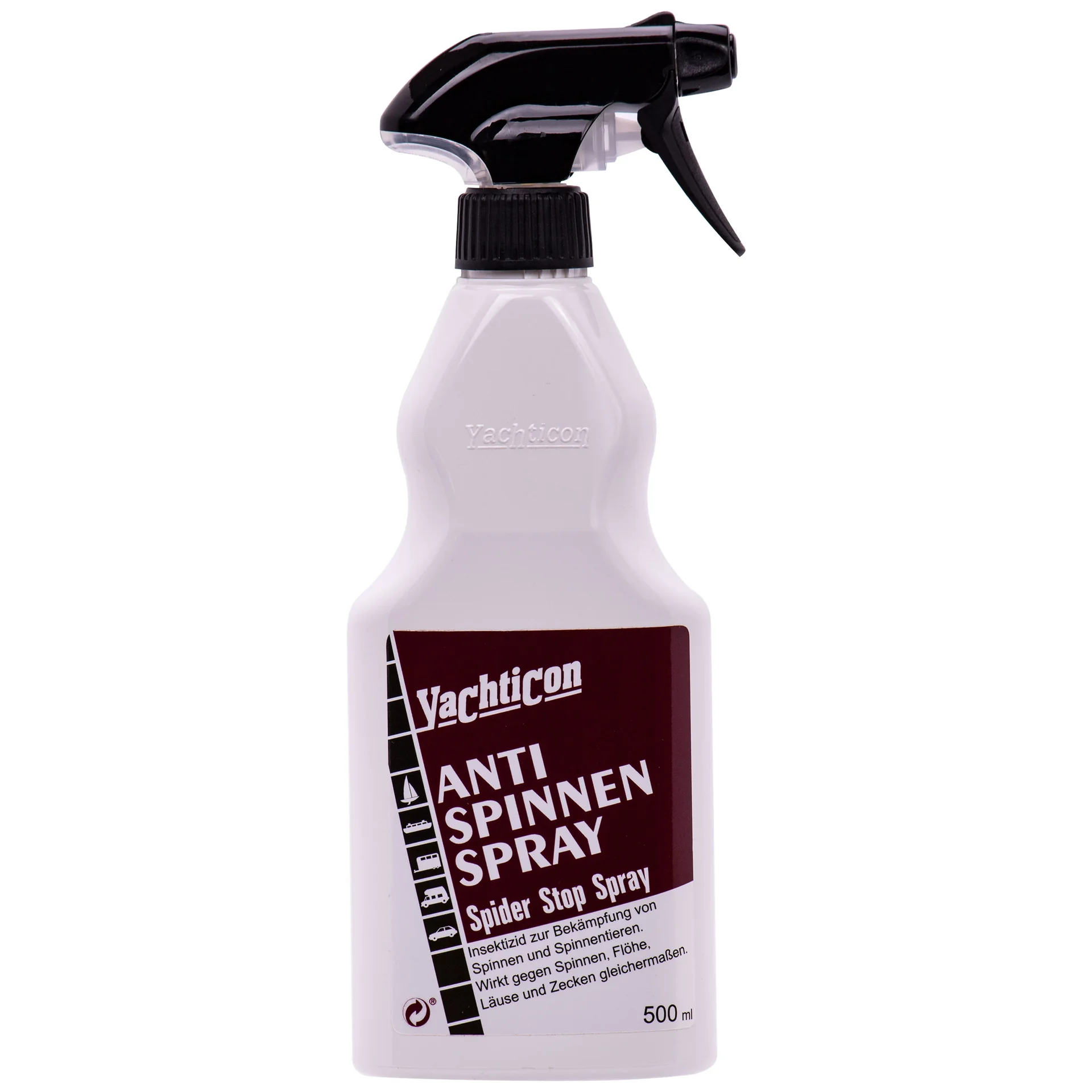
The most effective way to get rid of spiders in your RV and help prevent them from coming back is to use a specialized spider repellent. works quickly and reliably, with long-lasting results. It leaves a fine, invisible protective film that helps keep spiders away and prevents new webs from forming. Enjoy every trip without unwanted guests.
Why do spiders nest in RVs?
RVs offer spiders ideal conditions. They provide shelter from the weather and predators, and often have plenty of food nearby. Understanding why spiders are drawn to your RV makes it easier to take steps to keep them out.
Shelter is one of the main reasons. Your vehicle has countless cracks, cavities and protected corners. Outside mirror housings, wheel wells, storage compartments and the underside of the vehicle are especially popular spots. Inside, spiders tend to hide in ceiling corners, under-seat storage areas and behind curtains.
Food is another factor. Spiders are likely to show up wherever other insects, such as mosquitoes, flies or ants, gather. Food scraps, open trash cans and windows or doors that don't seal well can attract insects, which in turn attract spiders. During long periods in storage, such as over the winter, your RV can become a quiet, undisturbed hunting ground.
After more than 20 years of camping, I know that a thorough cleaning and treating the RV with a good spider repellent before winter storage saves a lot of work and hassle in the spring. Spiders are more likely to find somewhere else to stay.
The season matters, too. In the fall, many spider species look for a warm, dry place to spend the winter. An RV that's not in use is an ideal spot. Spiders may overwinter there, leaving you with an unwelcome surprise in the spring when they become active and reproduce.
How can you tell if your RV has a spider infestation?
A spider infestation is usually easy to spot. Look for these signs to gauge its extent and take targeted action.
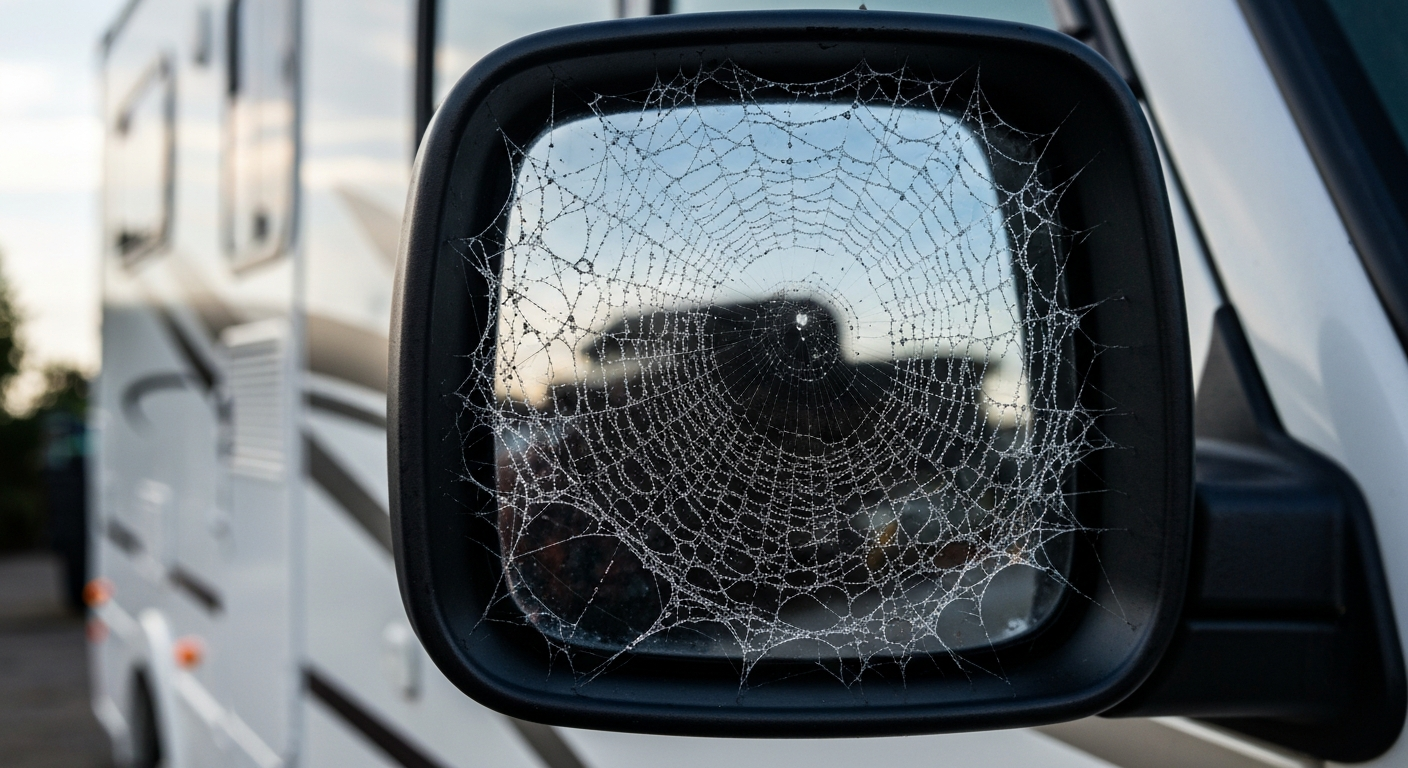
- Spiderwebs: The clearest sign. Check visible corners inside the RV as well as hard-to-reach areas. Outside, look for webs on mirrors, antennas, beneath the chassis and in the wheel wells.
- Spider droppings: Small black or dark brown spots, often below webs on walls, ceilings or floors, are a clear sign. These droppings can damage paint and plastic.
- Egg sacs: Many spider species wrap their eggs in small, silky sacs. Often whitish or cream-colored, these sacs may be attached to sheltered, undisturbed spots such as storage compartments or the trailer tongue.
- Live spiders: Seeing spiders is also a clear sign of an infestation. Note where they tend to hide so you can treat those areas specifically.
A thorough inspection before each camping season and after long periods in storage can help you catch an infestation early. Use a flashlight to check dark cavities and recesses.
Important information
Use biocidal products carefully. Always read the label and product information before use. If applying the product indoors, ensure adequate ventilation and keep children and pets away during the exposure time.
How do you apply YACHTICON Anti-Spider Spray?
Applying the correctly is key to getting good results. In just a few steps, you can create a long-lasting protective barrier around your RV.
Step 1: Prepare the surfaces
Before applying the spray, make sure the surfaces are clean and dry. Thoroughly remove existing webs, egg sacs and other dirt with a brush or vacuum cleaner. The protective film adheres best to a clean surface.
Step 2: Apply the spray
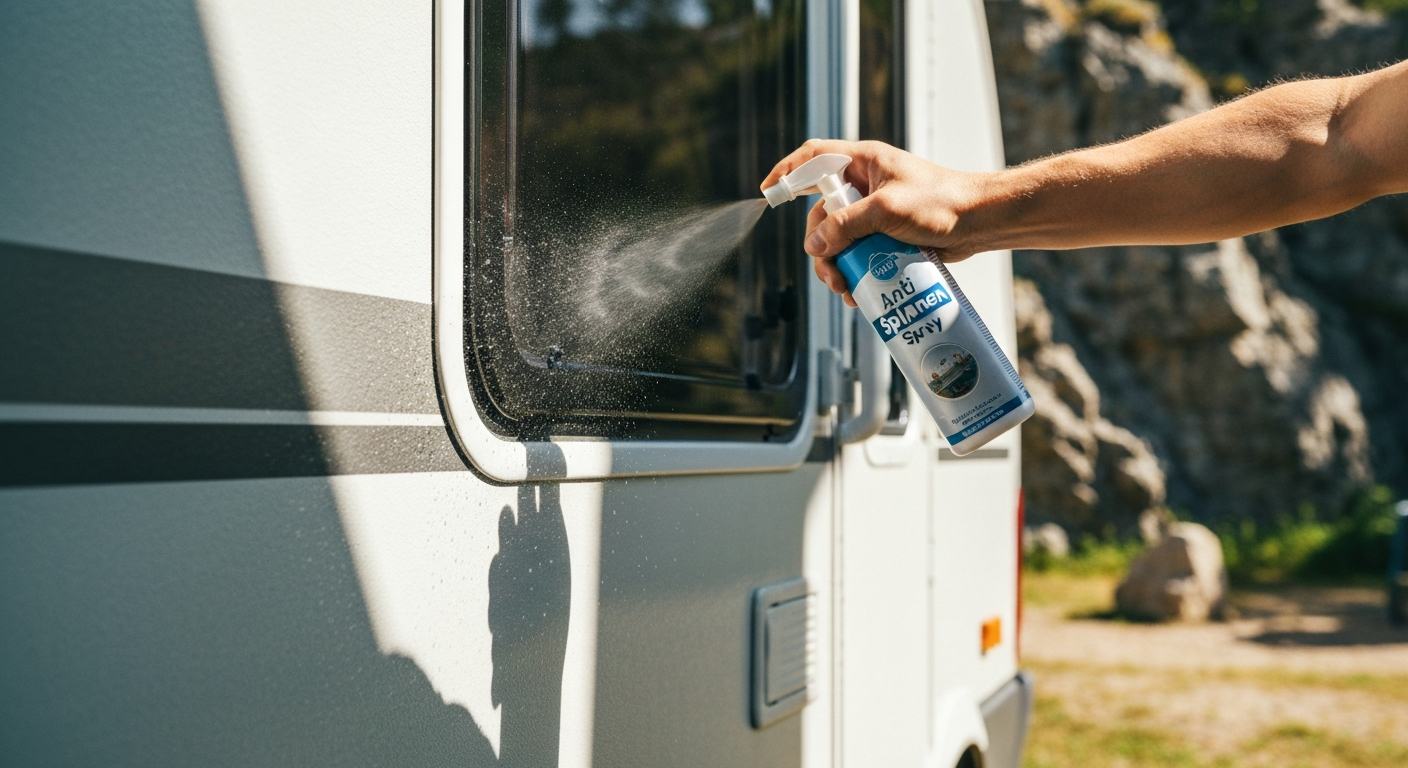
Shake the bottle well before use. Spray the product evenly onto the areas you want to treat from a distance of approximately 20-30 cm. Focus on spiders' favorite hiding places, including:
- Window and door frames
- Vent grilles and permanent vents
- Interior and exterior corners and edges
- Wheel wells and underbody areas
- Mirror housings, antennas and bike racks
- Inside propane compartments and storage compartments
The spray is clear and leaves no stains once dry. It forms a barrier that spiders cannot cross.
Step 3: Let it dry and reapply
Let the spray dry completely. It starts working right away. For lasting protection, especially before winter storage, reapply after a few months. The product goes a long way, and one bottle is enough for several applications on a standard-sized RV.
How can you keep spiders out of your RV?
Alongside specialist products, a few simple habits and physical barriers can significantly reduce the risk of a spider infestation. An effective strategy in the Pest + Plant Protection category combines several approaches.
Creating physical barriers
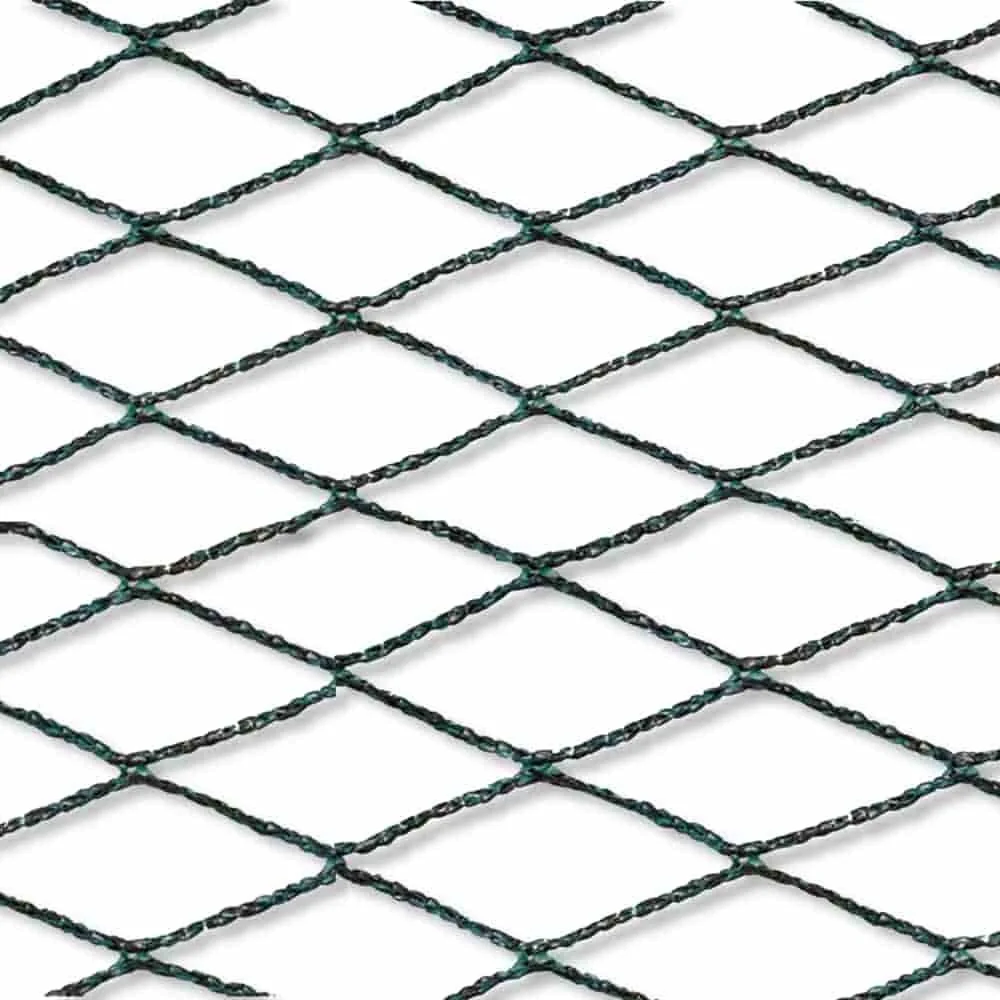
The best way to keep spiders out is to stop them from getting in. Check the seals around windows, doors, and roof vents. Seal any cracks or gaps with a suitable sealant. Fine-mesh netting is another effective solution. Fit it over all forced-air vents, refrigerator vents, and other potential entry points. A durable can be cut to size and secured with tape or small screws. These protective nets are a one-time investment that can provide lasting protection.
Expert tip
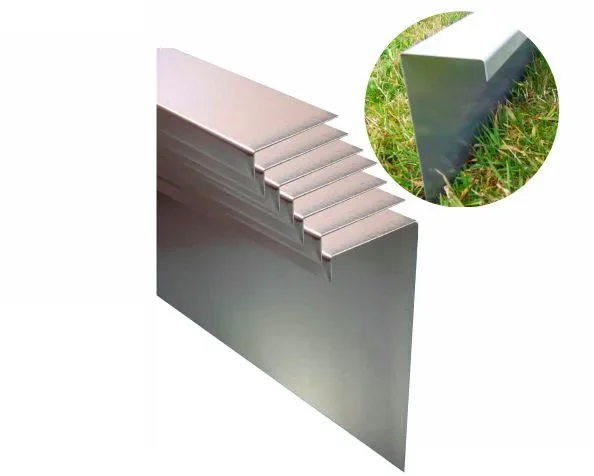
If you’ll be parking your RV for an extended period, you can create a barrier on the ground. A continuous strip of diatomaceous earth or a around the tires and supports can stop crawling creatures from climbing onto the vehicle. This also reduces the food available to spiders.
Keeping your RV clean and tidy
A clean RV is less attractive to pests of all kinds. Vacuum the interior regularly, especially corners and gaps in upholstery. Wipe down surfaces and don’t leave food scraps out. Store food in airtight containers and empty the trash can daily. The fewer food sources there are, the fewer insects and spiders you’ll attract.
Choosing the right place to park
Where you park matters, too. If possible, avoid parking directly under trees, in tall grass, or next to dense bushes. These areas are natural habitats for spiders and insects. An open, sunny, dry parking spot is always a better choice, whether you’re at a campground or storing your RV for winter.
Additional advice
Natural remedies such as lavender sachets, peppermint oil, or vinegar diluted in water may help. However, their effectiveness is limited and their scent fades quickly. They can be a useful addition, but don’t replace specialist long-lasting protection such as YACHTICON spray.
Protecting your RV during winter storage
Winter storage is the most critical period. Before putting your RV away, give it a thorough cleaning inside and out. Treat all vulnerable areas with Anti-Spider Spray. A high-quality protective cover shields your vehicle from the elements and adds another physical barrier against pests.
What should you do if you find spiders in your tent?
Spiders in tents are a familiar problem for traditional campers, too. The same principles of prevention and control apply. Keep your tent zippers closed, and shake out sleeping bags and clothing before use.
To deter spiders, you can treat the lower edges of the tent, the tent stakes, and the guy lines with YACHTICON spray. Never spray the product directly onto the tent fabric; apply it to hard surfaces and the ground around the tent instead. Don’t store food or open drinks in the tent, as they may attract insects. Keeping your campsite tidy and clearing away leaves and tall grass near the tent further reduces the risk.
A spider-free RV means pure relaxation to me. It’s wonderful to return to a clean, welcoming retreat after a long day outdoors, without any unpleasant surprises.
A relaxing vacation and the pleasure of spending time in your own Garden + Outdoor begin with a clean, well-maintained vehicle. Spiders don’t have to be part of the adventure. With the right preparation, effective products, and a little care, you can keep your RV, travel trailer, or tent free of these eight-legged visitors and enjoy your time away to the fullest.
Frequently Asked Questions
- How long does YACHTICON spider repellent spray last?
- The spray forms an invisible protective film that can remain effective for several months, depending on the weather and how often the treated surface is used. Regular application is recommended, especially before winter storage.
- Can spider repellent spray be used indoors?
- Yes, you can apply the spray indoors to specific areas. Spray it in corners, behind panels, and around window frames. Ensure good ventilation during and after application.
- Does the spray work on spider nests and eggs?
- The spray primarily works as a contact insecticide and repellent against spiders, and helps prevent them from building webs. Before treatment, remove existing nests and egg sacs with a vacuum cleaner or brush.
- How can I keep spiders out of my awning?
- Treat the tent poles, guy lines, and lower tent edges with YACHTICON spray. Keep the awning clean, store food in sealed containers, and use lidded storage bins.
- Are there natural ways to keep spiders away while camping?
- Plants such as lavender or mint, as well as scented oils, may deter spiders. However, they’re often less reliable and don’t last as long as specialist spray, especially outdoors or in areas with many spiders.
You might also be interested in
- Say goodbye to spider infestations: when YACHTICON spray is the solution
- Spider season? How to protect your boat & home from spider webs
- Buy spider repellent spray: your guide to a spider-free home
- Cellar spiders at home: helpful creatures, not pests
- Insects and spiders: the best helpers in your garden
- RV cleaner review & comparison 2026