
In brief: The 2026 test & comparison shows that step ladders with a stable 3-rail construction and a wide, non-slip step are particularly safe and practical for everyday use. Compact models with 4 or 5 steps are ideal for indoor work or rooms with low ceilings. For outdoor work or higher objects, choose ladders with 6 or 7 steps. Choosing the right height and features is crucial for safety and comfort.
A stable and safe step ladder is an indispensable helper in the home, garden and workshop. Whether you are changing light bulbs, picking fruit or carrying out painting work, every task is easier with the right ladder. Our 2026 test & comparison takes a close look at the most important models and helps you find the ideal ladder for your needs.
Contents
Which criteria are important in the test?
Safety and stability are the top priorities when assessing a step ladder. We check how firmly the ladder stands on different surfaces. The width and slip resistance of the steps are crucial for a secure footing.
Another important factor is the quality of the workmanship. Sharp edges or wobbly connections are unacceptable. We look for stable hinges and robust materials. Weight is also important if you need to transport the ladder frequently.
Ease of use is tested too. This includes opening and closing the ladder. Does it move smoothly or stick? Does the model offer practical extras such as an integrated tray or a tool basket?
Tip: Always test the ladder's stability on the surface where you intend to use it later. Carpet can provide a different level of stability than a hard tiled floor.
Step ladders compared directly
You will find a wide range of step ladders on the market. They mainly differ in height, construction and features. Our comparison presents typical models for different applications.
Compact models are suitable for light indoor work. They are lightweight and can be stored in a space-saving way. The Aluminium Step Ladder, 4 Steps (
) is a typical example in this category. It provides a solid working height for standard ceilings.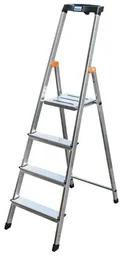
For slightly greater reach, the Aluminium Step Ladder, IIIII Steps (
) is an excellent choice. The extra step gives you more reach without making the ladder unwieldy. It is a good all-rounder for the home and garden.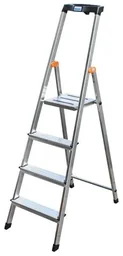
If you regularly work at greater heights, you need a model with more steps. The Aluminium Step Ladder, 6 Steps (
) provides this additional working height. It has a stable construction and is also suitable for DIY work.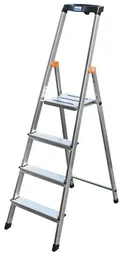
For professional outdoor use, such as working on trees or house façades, particularly tall models are required. The Niwaki 3-Rail Garden Ladder, 300 cm (
) offers maximum stability on uneven ground thanks to its 3-rail construction. Discover our selection of step ladders for every application.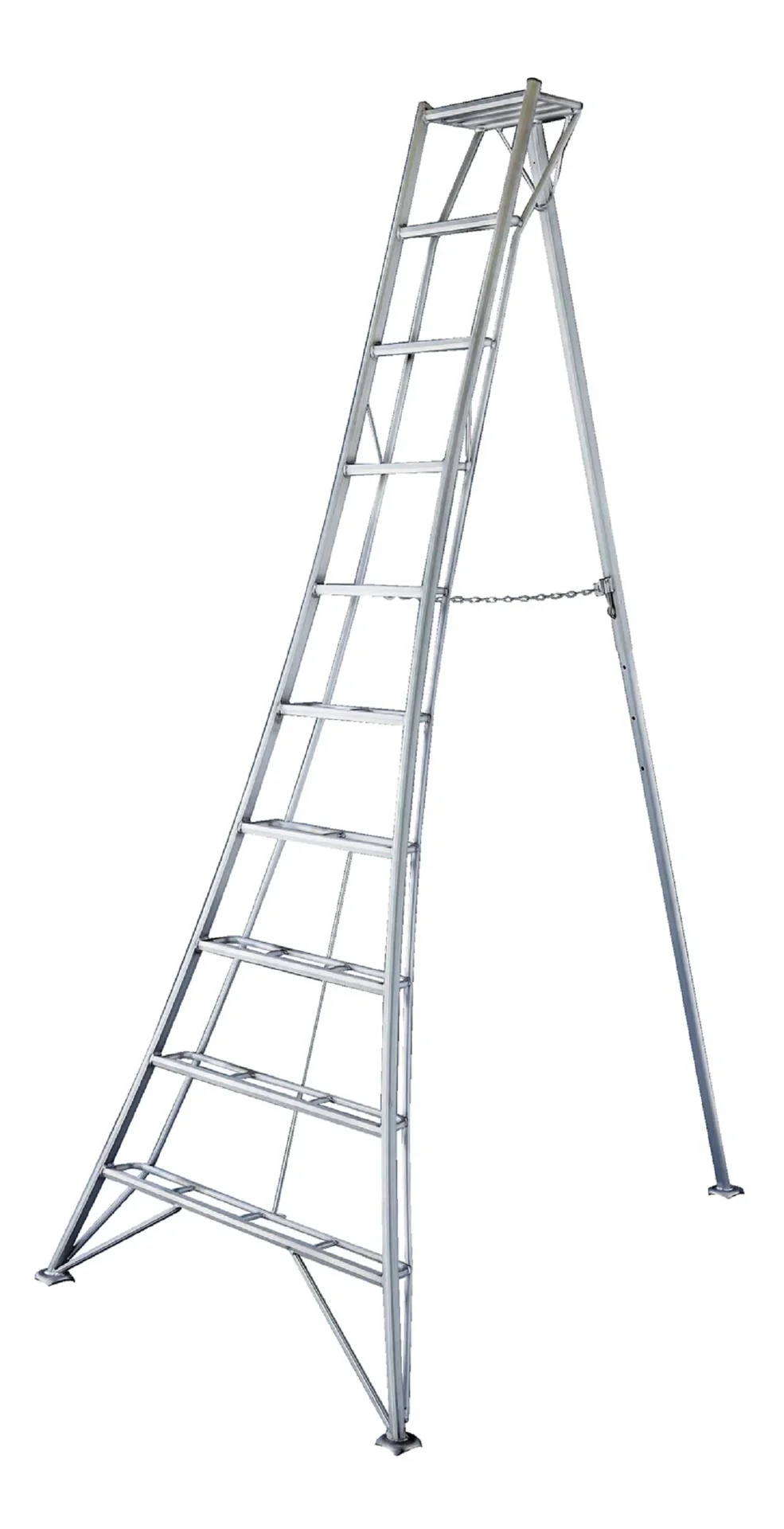
The highest-rated step ladders in our range compared directly:
| Model | Customer rating | Availability |
|---|---|---|
| "SEPURO PLUSLINE" 2-STEP LADDER | – | Currently unavailable |
| Niwaki 3-Rail Garden Ladder, 180 cm | – | Currently unavailable |
| Niwaki 3-Rail Garden Ladder, 240 cm | – | Currently unavailable |
| Niwaki 3-Rail Garden Ladder, 300 cm | – | Currently unavailable |
| Aluminium Step Ladder, 4 Steps | – | Currently unavailable |
Warning: Never use the top step or the very top of the ladder as a standing surface. They are not designed for standing on, and a fall is highly likely. Always hold on with one hand.
What height is right for you?
Choosing the right working height is crucial. A ladder that is too low forces you into an uncomfortable position. A ladder that is too high is impractical and may not be possible to fully extend indoors.
First, measure the maximum height you need to reach in your intended area of use. Remember that, while standing on the ladder, you can still extend your arms upwards. Your reach height is therefore your standing height plus your arm length.
For standard tasks in homes with ceiling heights of up to 2.50 metres, ladders with 4 or 5 steps are perfectly adequate. They allow you to reach light fittings, wall cabinets and the top of windows with ease.
In detached houses with higher ceilings, or for gardening work on trees or hedges, 6-step ladders are the better choice. They offer greater flexibility and safety, as you do not have to balance on the penultimate step.
The large 7-step models or special garden ladders with a height of 300 cm are intended for professional use. They are suitable for pruning fruit trees or working on gable walls. You can also browse our Ladders and Scaffolding category for more accessories.
Practical example: Changing a light in the hallway
You want to replace the ceiling light in your hallway. The room height is 2.40 metres. A 4-step ladder gives you a standing height of around 1.70 metres. Add your arm length of approximately 0.8 metres and you can comfortably reach a height of 2.50 metres. The ladder is therefore perfectly sized.
Safety check: What you need to consider
Safety is the top priority. Before using a ladder, always carry out a quick check. Inspect the steps for damage or deformation. Check that the joints and locking mechanisms are secure.
The location is crucial. Always place the ladder on a firm, level surface. Any wobbling is a clear warning sign. If the ground is soft, such as soil, use a firm base if necessary.
Stability is significantly affected by the spread angle. The ladder should be opened fully and evenly until the safety bars or spreader straps are taut. An angle that is too steep or too shallow can compromise stability.
Always wear sturdy, closed-toe footwear when working on a ladder. Non-slip soles provide additional grip. Avoid loose clothing that could get caught on the ladder.
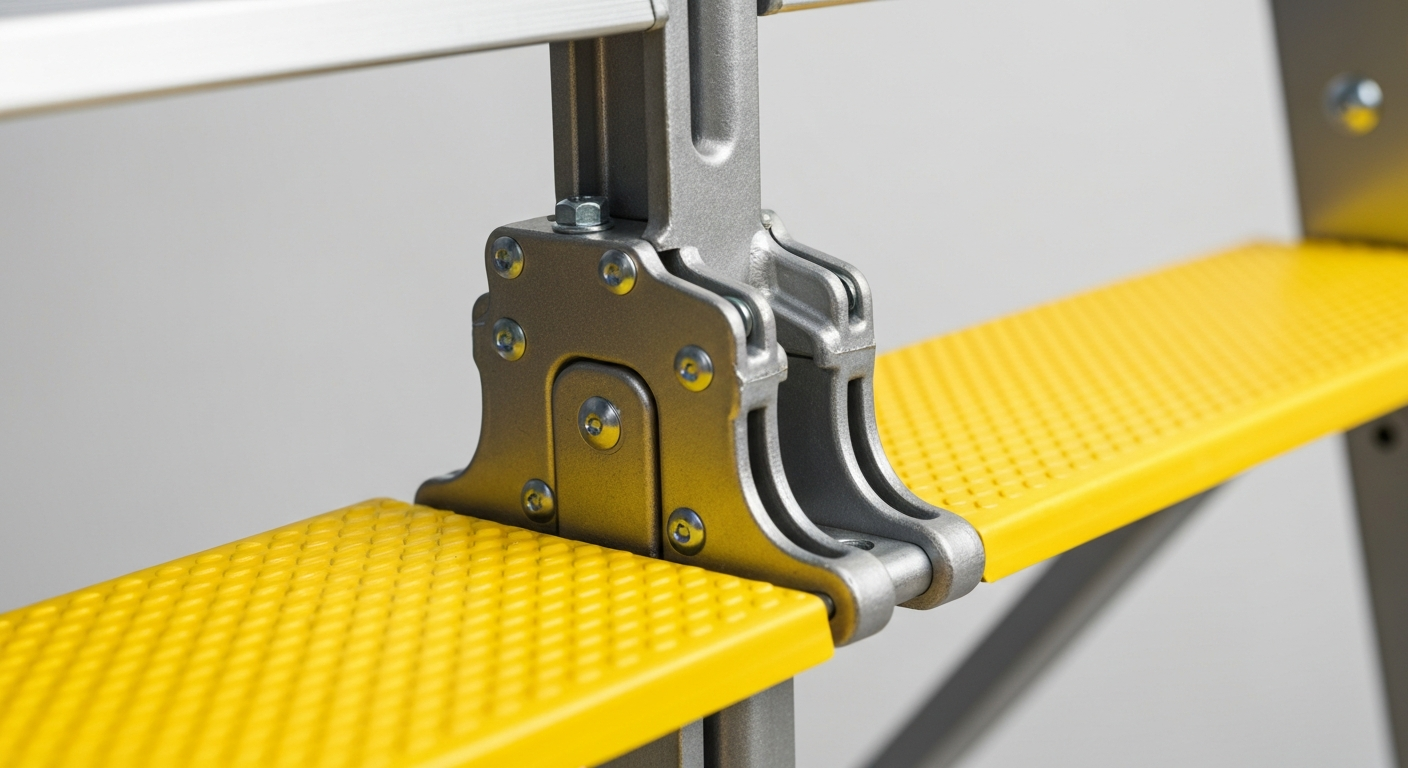
Note: Even the best ladder is of little use if it is stored incorrectly. Store your aluminium ladder in a dry place protected from direct sunlight. Extreme temperatures can weaken the material over time. It is best to secure it against a wall.
Care and proper storage
Looking after an aluminium stepladder is very easy. After working in the garden, remove any coarse dirt. For heavier soiling, warm water with a little mild washing-up liquid is sufficient.
Dry the ladder thoroughly after cleaning, especially around the joints. This prevents premature corrosion and moving parts from becoming stuck.
The ladder should be stored safely and in a space-saving way. Many models can be folded flat. Hang the ladder on a hook or store it upright in a corner. Secure it to prevent it from accidentally falling over.
Check regularly whether any screws or rivets have come loose. After many years of intensive use, even a high-quality ladder can show signs of material fatigue. Safety comes first.
Buying guide: How to find the right ladder
Before buying, ask yourself three simple questions: Where will the ladder mainly be used? What maximum height do I need to reach? How often and by whom will it be used?
For occasional household use, a simple, lightweight ladder with 4 or 5 steps is sufficient. Look for comfortable handling. For the garden, choose a sturdier model that also stands securely on soft ground.
If several people will use the ladder or it will be used frequently, invest in a high-quality model with good safety features. A wider base and non-slip steps make it more comfortable and safer to use.
Do not forget the accessories. An integrated tool tray or a paint bucket holder is extremely practical. Some ladders can also be used as a platform or scaffold.
Finally, it is worth browsing our extensive Tools range. There you will find not only the right ladder, but also the accessories you need for your project. With the right preparation and equipment, nothing stands in the way of your work around the home and garden.
Frequently Asked Questions
- What is the difference between a stepladder and a leaning ladder?
- A stepladder is a self-supporting ladder that can be set up without a wall or tree. It usually has a triangular or rectangular base. A leaning ladder always requires stable support against a wall or similar object. Stepladders are more flexible to use, but require more floor space.
- Which stepladder is best for household use?
- For typical household tasks such as painting, replacing lights or reaching high cupboards, a compact aluminium stepladder with 4 or 5 steps is ideal. Look for a low weight for easy carrying and a safe, wide base. An integrated holder for tools or a paint bucket is very practical.
- How many steps do I need for my ceiling height?
- As a general rule, the maximum reach height (standing height plus arm reach) is approximately 2 metres plus the ladder height. For a standard ceiling height of 2.50 metres, a 4- or 5-step ladder is usually sufficient. For higher work on gables or in halls, models with 6 or 7 steps are required.
- Is aluminium or wood the better material?
- Aluminium is the standard today. It is lightweight, weather-resistant and rust-proof, which is particularly important for use in the garden. Wooden ladders are heavier, can become slippery when wet and require more maintenance. However, their stability is also very good when they are well made.
- What safety points should I pay attention to?
- Before every use, check the stability of the joints and the condition of the steps. Always place the ladder on a firm, level surface. Keep your weight centred on the ladder and never use the top two steps as standing surfaces. A safety bar provides additional support.