
In brief: For thyme cough syrup, harvest fresh or dried thyme leaves. Pour boiling water over them to make an infusion, then strain it after 10 minutes. Mix the cooled infusion with honey in a 1:1 ratio. Store the syrup in the refrigerator and take up to three tablespoons a day as needed.
How to Make Thyme Cough Syrup: Natural Cold Relief
A cough can keep you awake at night. Pharmacies are closed. Help is already waiting in your kitchen and garden. Thyme is one of the most effective medicinal plants for colds. Its essential oil, thymol, fights germs and loosens stubborn mucus.
Homemade cough syrup combines this power with the soothing effect of honey. You control every ingredient. The recipe is simple. The results are impressive.
This article takes you from growing the plant to filling the finished bottle of syrup. You will learn about the background of herbal medicine and get a tried-and-tested recipe.
Why Does Thyme Help with Coughs?
Thyme works on several levels. Its essential oils, especially thymol and carvacrol, have powerful antibacterial and antiviral properties. They fight pathogens directly in the airways.
At the same time, thyme relaxes cramped bronchial muscles. This makes it easier to cough up mucus. The mucus loosens and can be cleared more effectively. Thyme also has an anti-inflammatory effect on irritated mucous membranes.
Thyme is a classic in phytotherapy for infectious respiratory conditions. Its expectorant and bronchodilating effects are well documented.
This combination makes the plant so valuable. It does not just relieve the symptom of coughing. It also targets one of the causes: the infection. Modern research confirms what folk medicine has known for centuries.
Which Thyme Plant Is Best?
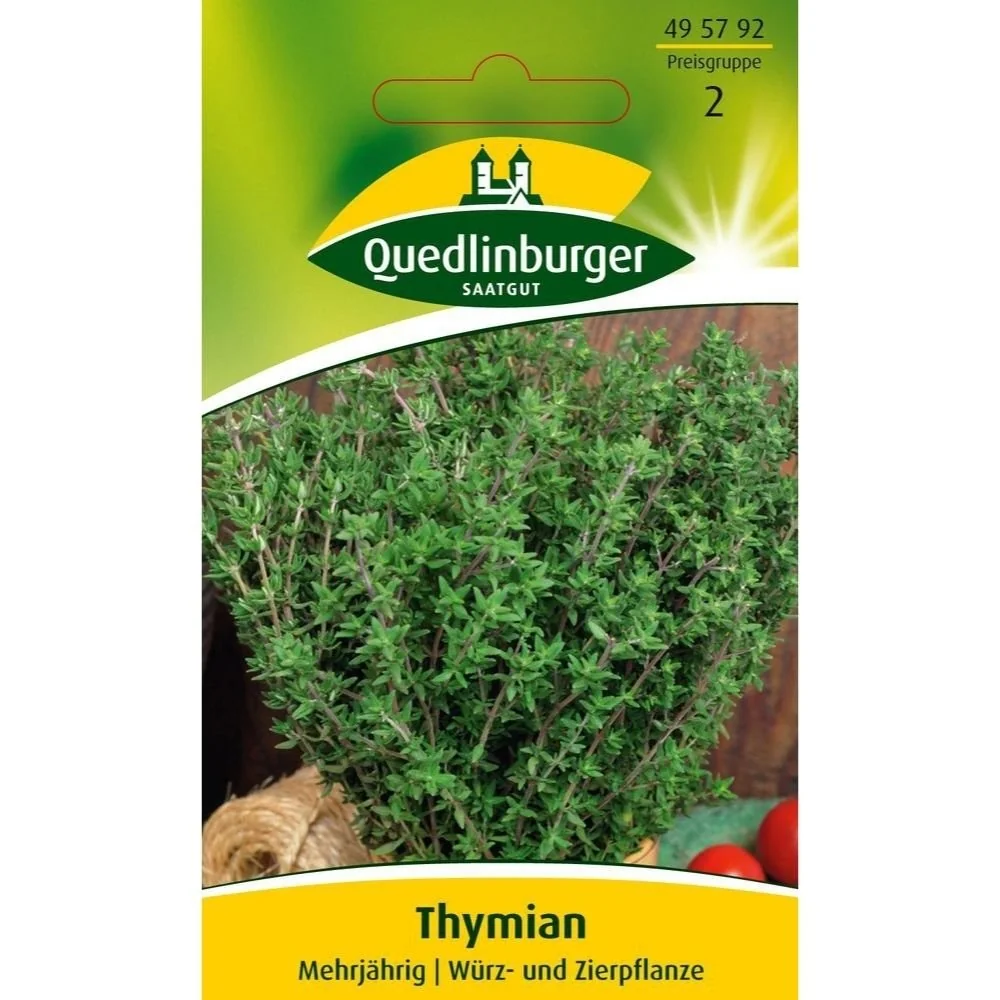
Not all thyme is the same. For medicinal use, you need common thyme (Thymus vulgaris) or the closely related wild thyme, also known as quendel. Both contain high concentrations of the active oils.
Lemon thyme is also suitable, but it has a noticeably fruitier taste. Its effect is somewhat milder. Choose a variety from organic cultivation to avoid pesticide residues in your remedy.
Expert tip
Harvest thyme for medicinal purposes around midday on a sunny day. This is when its essential oil content is highest. Cut off the entire stems with a sharp knife or pair of scissors.
You can find suitable plants in our range of seeds and seed stock. Look for strong, healthy specimens. Thyme is perennial and hardy. One plant can provide a harvest for years.
Should You Use Fresh or Dried Thyme?
Fresh thyme sprigs are ideal. They contain the full aromatic power of the plant. If you do not have fresh thyme available, dried thyme is a very good alternative. The important essential oils are largely preserved when the herb is dried gently.
When using dried thyme, use about one-third of the amount. One heaped tablespoon of dried leaves replaces a handful of fresh sprigs. Store dried herbs in a dark, cool and airtight place.
How Do You Make Thyme Cough Syrup?
The basic recipe requires just two ingredients: thyme and honey. Honey is naturally antibacterial, soothes the urge to cough and preserves the syrup. Use a high-quality local honey.
You do not need any special equipment. A saucepan, sieve, knife and clean screw-top jar are enough. The entire preparation takes around twenty minutes, plus cooling time.
Ingredients and Equipment
- 2 large handfuls of fresh thyme sprigs (or 4 tbsp dried thyme leaves)
- 500 ml water
- 500 g honey (e.g. forest honey or rapeseed honey)
- Optional: juice of half an organic lemon for vitamin C and freshness
- A saucepan
- A fine sieve or muslin cloth
- A clean screw-top jar rinsed with hot water (approx. 1 liter capacity)
- A funnel makes filling easier
Step-by-Step Instructions
1. Prepare the thyme: Briefly rinse the fresh thyme sprigs and shake off the water. Roughly strip the leaves from the woody stems. The stems can be cooked as well, as they also contain active compounds.
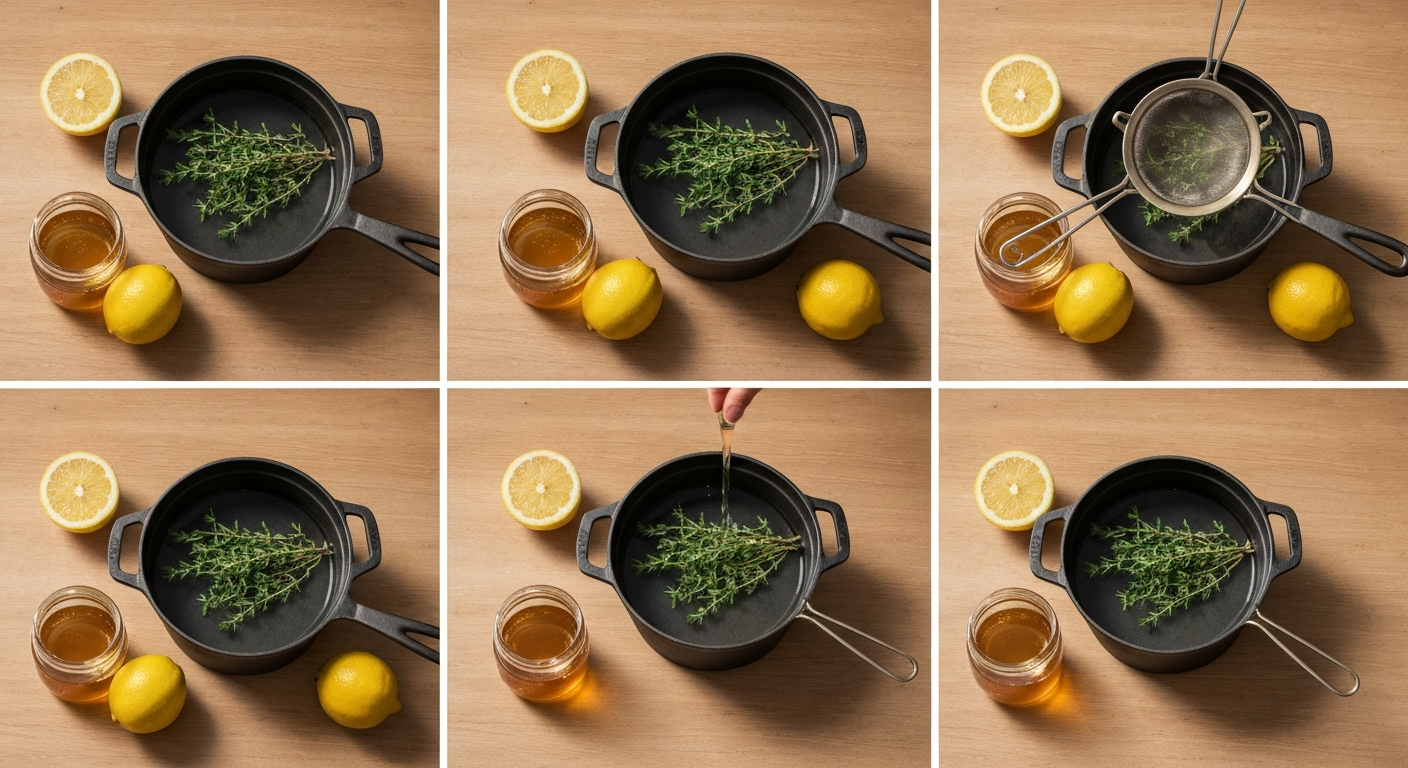
2. Make the infusion: Put the thyme in a saucepan. Pour 500 ml of cold water over it. Slowly bring the water to a boil. As soon as it boils, turn off the heat.
3. Leave to steep: Cover the saucepan and let the infusion steep for ten to fifteen minutes. This allows the active compounds to pass optimally into the water. The infusion will turn dark and develop an intense aroma.
Important note
Do not boil the thyme vigorously for a long time. This destroys the heat-sensitive essential oils. Bringing it briefly to the boil and then allowing it to steep is completely sufficient.
4. Strain: Pour the infusion through a fine sieve or muslin cloth into a heatproof bowl. Gently press the thyme remnants to extract the remaining liquid. You should obtain around 400-450 ml of infusion.
5. Mix with honey: Allow the infusion to cool to lukewarm. It must no longer be hot, otherwise it will destroy the valuable enzymes in the honey. Then stir in the honey until it has completely dissolved.
6. Bottle and store: Use a funnel to pour the finished cough syrup into the clean screw-top jar. Seal it tightly. Label the jar with the date. Store the syrup in the refrigerator.

How Should I Dose and Take the Syrup?
Thyme cough syrup is a remedy, not a beverage. Follow the recommended dosage. For adults and children aged twelve and over: take one tablespoon up to three times a day for an acute cough.
Let the syrup dissolve slowly in your mouth or take it neat by the spoonful. You can also add it to some lukewarm tea. Do not take it immediately before going to bed, as the loosened mucus needs to be coughed up.
Thyme honey is most effective when taken regularly throughout the day. This keeps the active compound level in the mucous membranes consistent.
Do not use it for longer than one week. If your symptoms do not improve or get worse, see a doctor. The syrup can complement medical treatment, but it does not replace it in the case of serious infections.
Additional advice
For children between one and twelve years old, halve the dose (max. 3x daily ½ tbsp). Never give the syrup with a metal spoon, as honey can react with metal. Use a plastic or wooden spoon.
How do I grow my own thyme?
Thyme is easy to grow and thrives with very little care. It needs a sunny, warm spot in the garden or on a balcony. The soil should drain well and be relatively low in nutrients. Thyme does not tolerate waterlogged soil.
You can grow thyme from seed or plant young plants. Sow seeds on a windowsill from March or directly outdoors from May. Thyme germinates slowly and unevenly, so be patient.
Starting with sturdy young plants is easier. Plant them in the soil with enough space between them (20-30 cm). Water sparingly. Thyme handles dry conditions better than excess moisture.
Our Garden + Outdoor range has everything you need to get started. Healthy soil is the foundation. Our
improves soil structure and supports healthy plant growth.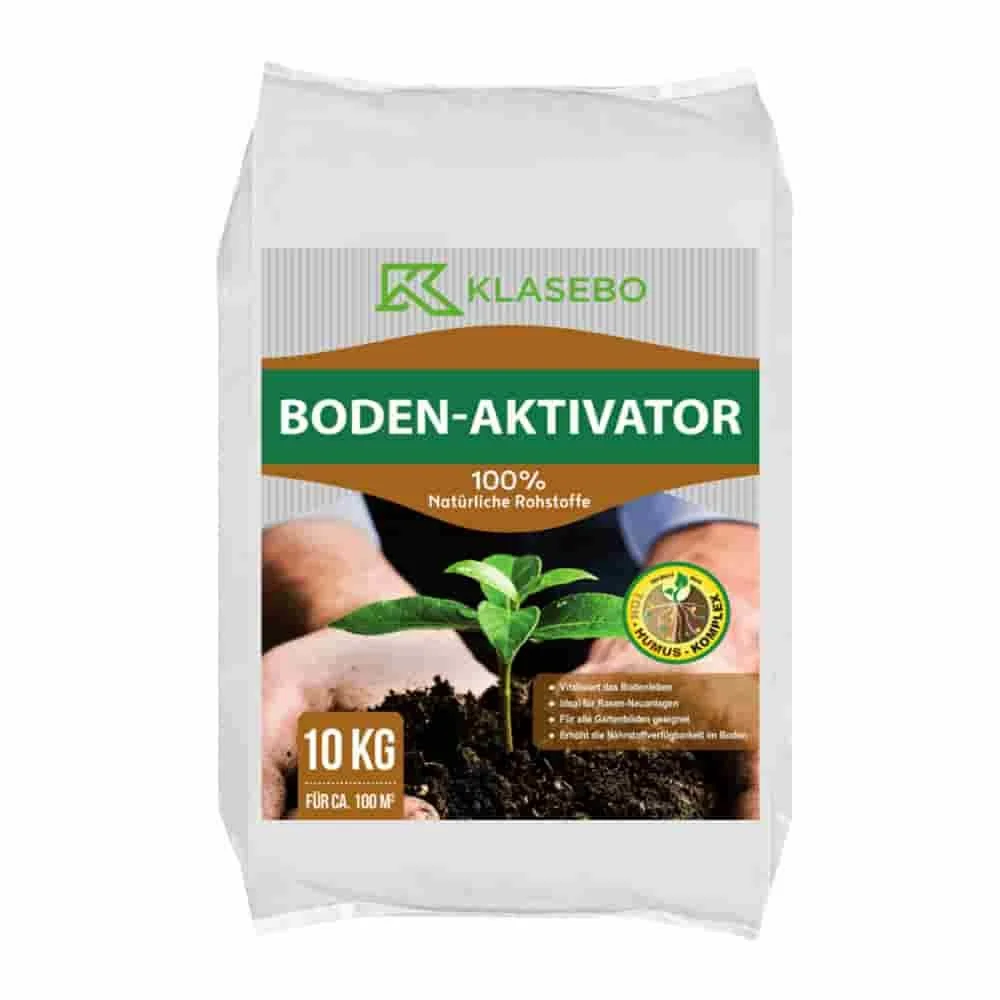
Care and harvesting
Thyme needs very little fertilizer. Too many nutrients can cause lush growth and reduce its essential oil content. Once a year in spring, you can add a little compost or a special herb fertilizer.
Prune the plants after they flower in summer. This helps prevent them from becoming woody and encourages bushier growth. Thyme is hardy. In very cold locations, a light winter covering of brushwood can protect it.
Harvest thyme as needed. If you plan to dry a large harvest or make syrup, pick it just before or during flowering, when its active ingredient levels are highest.
What variations of the recipe are there?
You can adapt the basic recipe in many ways by combining thyme with other beneficial herbs. Each herb adds its own properties.
- Thyme + ribwort plantain: Ribwort plantain forms a soothing film over irritated mucous membranes. It may help relieve a dry, tickly cough.
- Thyme + sage: Sage has antibacterial and astringent properties. It is a good choice for sore or inflamed throats.
- Thyme + marshmallow root: Marshmallow root is a traditional source of mucilage. It can make the syrup even more soothing for a cough.
For a blend, use half the amount of thyme and replace it with the other herb. Keep the total amount of herbs the same.
Alternatives to honey
Honey is not suitable for everyone. Vegans and people with diabetes may need an alternative. Agave syrup or sugar beet syrup can be used instead. They sweeten and preserve the syrup, but do not have honey's antibacterial properties.
Without sugar, the syrup will keep for only a few days, so you will need to freeze it. Pour it into ice cube trays and thaw one cube as needed.
What are the limitations of this home remedy?
Thyme cough syrup can help with an ordinary cold and cough, but it is not suitable for every situation. If you suspect a bacterial infection, especially if you have yellow-green phlegm and a fever, you may need an antibiotic.
A cough that lasts for weeks, bloody phlegm, shortness of breath, or chest pain are warning signs. Seek medical attention right away if you have any of these symptoms. The syrup is also unsuitable for anyone with a known allergy to plants in the mint family, including thyme, or to honey.
Pregnant or breastfeeding women should speak with their doctor before using it. The essential oils it contains can have a strong effect.
The benefits of growing medicinal plants in your own garden are impressive. It gives you greater independence and control. With
or you can start building your own home herbal remedy garden today.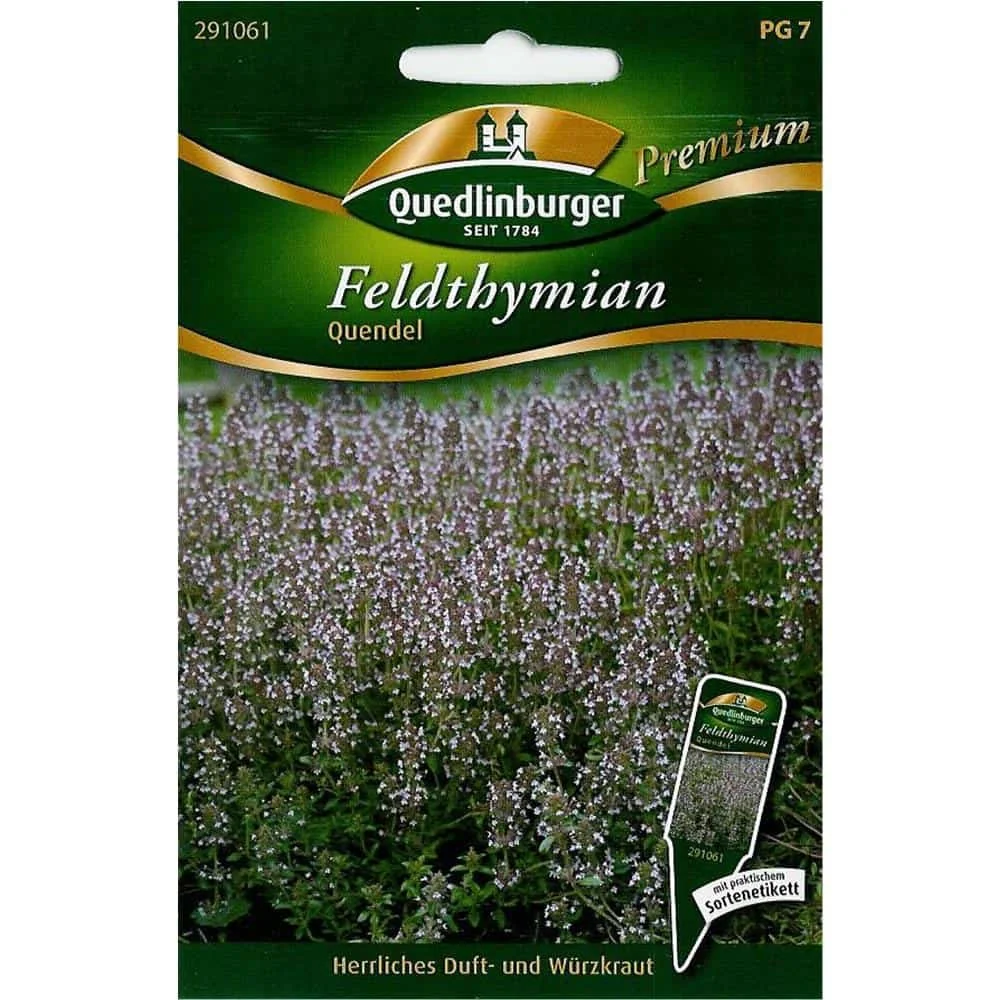
Conclusion: Simple, effective, and homemade
Making thyme cough syrup is simple. From growing the plant to preparing the syrup, the process is straightforward. You get a natural remedy made with ingredients you know.
The syrup can soothe a cough, help fight germs, and give you more confidence in taking care of yourself. Combining gardening with herbal remedies makes the whole process especially rewarding.
Start with one plant on a windowsill or in a garden bed. Try the recipe and find your own favorite blend. Your throat will thank you.
Frequently Asked Questions
- How long does homemade thyme cough syrup last?
- Thyme cough syrup keeps for about two to three weeks in the refrigerator. Its shelf life depends on the freshness of the ingredients and how hygienically it was prepared. Use clean, sterilized jars. Honey acts as a preservative. It’s best to make small batches.
- At what age can children have thyme cough syrup?
- Thyme cough syrup made with honey is suitable for children age one and older. Honey can contain botulism spores that are dangerous for infants. Reduce the dose for children under twelve. Always consult a pediatrician before use.
- Can I make thyme cough syrup with dried thyme?
- Yes, dried thyme works well. Its essential oils remain intact. Use about one third as much dried thyme as fresh, since dried herbs are more concentrated. One heaped tablespoon of dried leaves is equivalent to a handful of fresh sprigs.
- Which variety of thyme is best for cough syrup?
- Common thyme (Thymus vulgaris) and wild thyme (field thyme) are ideal. They contain plenty of thymol, the main active ingredient. Lemon thyme is also suitable, but has a fruitier flavor. When buying thyme, look for good quality, ideally from your own garden or a trusted source.
- Does thyme cough syrup help with a dry, irritating cough?
- Yes, thyme has antispasmodic properties and soothes irritated mucous membranes. It can ease the urge to cough while also helping to loosen phlegm from a productive cough. For a dry cough, you can take the syrup undiluted. Steam inhalation with thyme can provide additional relief for a severe cough.
You may also be interested in
- Cold and cough teas from the garden
- How to Make Elderflower Syrup: Easy DIY Recipe
- How to Make Herbal Tea: Fresh Teas from the Garden
- How to Make Rosehip Tea: Benefits & Preparation
- How to Make Homemade Mosquito Spray: Natural Protection for Garden and Home
- Your Own Home Herbal Apothecary: Medicinal Plants for the Home