
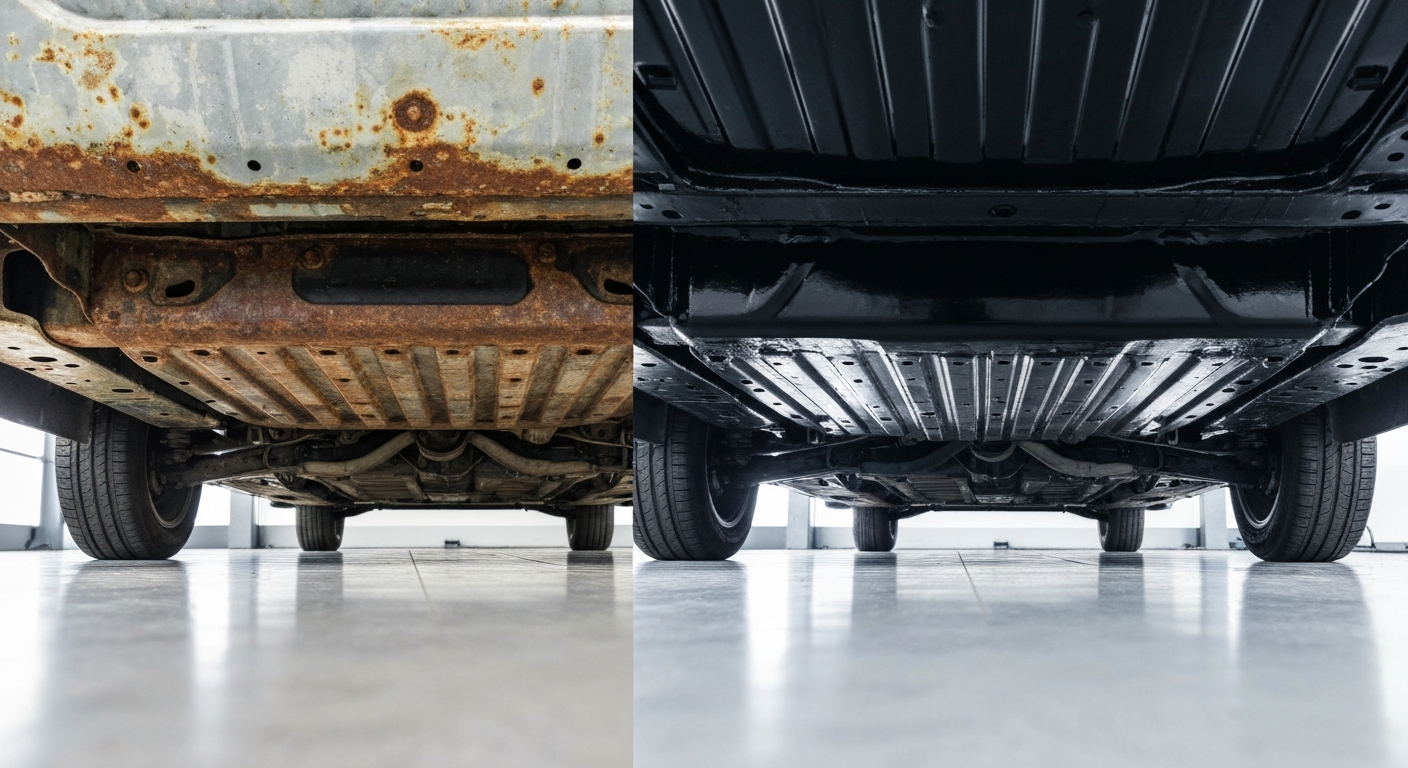
In brief: Effective undercoating creates a flexible, long-lasting barrier against moisture, road salt and stone chips. In our 2026 test, wax-based sprays and thick-film coatings stand out. The key factors are consistency, drying time and durability. Our comparison helps you find the right product for your vehicle.
Rust is one of the biggest threats to a vehicle's lifespan. A quality undercoating protects the valuable components beneath your car from corrosion caused by road salt, moisture and physical damage. Our 2026 test and comparison shows which products and application methods deliver results.
Contents
What types of undercoating are available?
Undercoating products vary in their formula and application. The right type depends on your vehicle, how you use it and the level of protection you need.
Thin-film wax (transparent)
These products penetrate deep into existing micropores and dry to a soft finish. They are ideal for new vehicles or as an annual touch-up. They leave a flexible, non-sticky protective layer.
Thick-film bitumen or synthetic coating
These classic products create a thicker, often tar-like layer. They offer excellent mechanical protection against stone chips. Modern synthetic formulas are more flexible than pure bitumen products.
Wax sprays for targeted application
These handy aerosol sprays are ideal for treating specific areas such as weld seams and cavities, or for general vehicle care. They are easy to use.
Tip: For daily drivers in areas where roads are frequently salted in winter, combining two types of protection works well: apply a thick coating to highly exposed areas such as wheel arches, then use a thin-film wax across the entire underbody.
How do our test criteria compare?
We tested the products under realistic conditions and assessed the following key properties.
- Adhesion: Does the coating stay in place after exposure to water, dirt and temperature changes?
- Flexibility: Does the coating move with the metal, or crack under vibration?
- Consistency and application: Can the product be applied evenly without dripping?
- Drying time: How long should the vehicle remain parked after treatment?
- Long-term durability: How does the protection hold up after simulated aging?
The best products compared in 2026
Our comparison focuses on practical, effective solutions for DIYers and semi-professional use.
Here are the top-rated undercoating products in our range, compared side by side:
| Model | Customer rating | Availability |
|---|---|---|
| Eutra Milking Grease 500ml - Care for teats and udders | – | Currently unavailable |
| Fritz Göbel Hoof Bandage 7.5 cm x 450 cm - Self-adhesive for animal wounds | – | Currently unavailable |
| Fritz Göbel Green Hoof Ointment 5000 ml - Professional hoof care for animals | – | Currently unavailable |
| Underbody Protection Gun | – | Currently unavailable |
| Göbel Suction Guard with Overrun Stop - Orange - Piglet Care Device | – | Currently unavailable |
Featured products in detail
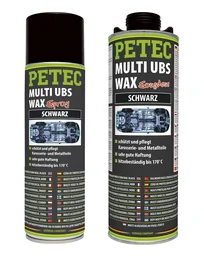
The is a versatile all-around option. The black wax spray forms a durable, flexible barrier and works for both undercoating and cavity sealing. The spray can allows for precise application.
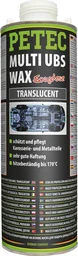
For larger areas and long-lasting underbody protection, the is a great choice. The transparent suction canister contains a wax formula that resists splashes and dries without an odor. It is ideal for regular undercoating maintenance.
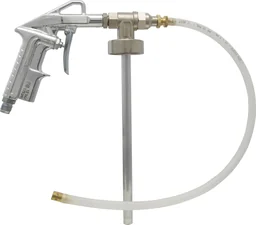
Proper application is half the job. A dedicated helps apply products from containers evenly and without drips. It is an essential tool for professional results.
Important: Always work outdoors or in a well-ventilated area. Wear protective gloves and a respirator, especially when using spray products. Shield the brakes and other components from overspray.
How do you apply undercoating correctly?
Even the best formula will not work well if you apply it incorrectly. Follow these steps.
- Clean thoroughly: The vehicle's underside must be free of dust, grease and rust. Pressure-wash it with a degreaser.
- Let it dry completely: Leave the underbody to dry in a dry place for at least 24 hours.
- Mask off areas: Cover any parts you do not want to treat, such as the exhaust, brakes, hoses and drive shafts.
- Apply the coating: Apply the undercoating evenly in thin layers. Work methodically from one side to the other.
- Let it dry: Follow the specified drying time. Do not move the vehicle during this period.
Care and maintenance after application
Undercoating isn’t a one-time investment that protects your vehicle for its entire lifespan.
Check the protective coating after every thorough cleaning and before winter. Look for cracks, peeling, or discoloration. You can touch up minor damage with a suitable undercoating spray.
Avoid cleaning the underbody with harsh cleaners or a pressure washer. Gentle rinsing with water is enough.
Note: Modern wax-based undercoating products are generally non-sticky. This means less road grime clings to them, making them easier to clean and inspect later.
Buying guide: How to choose the right product
Answer these questions to find the right product.
- Vehicle condition: Is it a new vehicle, which is a good candidate for a thin-film wax, or an older vehicle that may already have underbody protection, which can be combined with a thick-film coating?
- Climate and use: Do you drive often in winter, when roads are treated with salt? Then you need durable, chemical-resistant protection.
- DIY or professional application: For DIY application, sprays and simple application systems are more suitable than large, expensive containers designed for professionals.
- What you want to achieve: Do you just want to preserve the existing condition, or also stop rust that has already started to form? For the latter, you need a rust converter or rust-inhibiting primer.
Choose quality products from established brands. Cheap, generic products can bleed oil, adhere poorly, or develop unpleasant odors. Investing in a good product and applying it carefully can save you costly repairs in the long run.
Frequently Asked Questions
- How often should undercoating be reapplied?
- Check the undercoating at least once a year, ideally before winter. Depending on how the vehicle is used and which products are applied, a full reapplication is recommended every two to three years. Repair any damage or peeling right away.
- Can I apply undercoating myself?
- Yes, with the right preparation. The vehicle’s underbody must be thoroughly cleaned and completely dry. Work in a well-ventilated area and wear protective gear. For the best results, you’ll almost certainly need a lift or inspection pit.
- What’s the difference between wax and bitumen undercoating?
- Wax-based undercoating is more flexible, adheres better to modern body materials, and dries to a soft finish. Traditional bitumen products cure harder and can become brittle in cold temperatures. Wax often provides better long-term protection.
- Does undercoating protect against rock chips?
- Yes. Properly applied undercoating, especially thick-film coatings, absorbs the impact of stones and protects the paint and metal. It helps keep small stones from penetrating the protective layer and creating spots where rust can form.
- Do I need to remove the old coating before reapplying?
- Not necessarily. If the old undercoating is intact, firmly bonded, and not oily, you can often apply the new product directly over it. However, cracked, crumbly, or peeling layers must be completely removed so the new coating can adhere properly.
You may also be interested in
- Engine Oil Test & Comparison 2026: The Best Oils Reviewed
- Car Test & Comparison 2026: The Best Cars Reviewed
- Sun Protection Test & Comparison 2026: The Best Solutions Reviewed
- Car Shampoo Test & Comparison 2026: The Best Products Reviewed
- Floor Mop Test & Comparison 2026
- Wheel Cleaner Test & Comparison 2026