
In brief: The best vegetable fertilizer depends on what you are growing. Organic complete fertilizers are the first choice for organic gardeners. Liquid fertilizers work quickly, while slow-release fertilizers provide reliable nourishment. Pay attention to the nutrient ratio (NPK) and whether the fertilizer is suitable for your type of vegetable. Our comparison highlights the key differences.
A plentiful vegetable harvest starts with giving your plants the right nutrients. In our vegetable fertilizer test and comparison 2026, we show which nutrient formula suits your garden. You will learn what matters when choosing a fertilizer and which types are available. Our goal is to provide clear buying advice tailored to your needs.
What types of fertilizer are available?
Choosing the right type of fertilizer affects plant growth, soil and harvest.
Organic fertilizers
These fertilizers are made from natural materials such as horn, compost or animal manure. They work slowly because microorganisms in the soil must break them down first. This supports soil life and builds up humus. Organic fertilizers are the foundation of an organic garden.
Mineral fertilizers
Mineral fertilizers provide nutrients in a form that plants can use immediately. They work very quickly and can be precisely dosed. If used incorrectly, they can burn plants or put stress on the soil. They are suitable for targeted correction of nutrient deficiencies.
Liquid fertilizers and fertilizer spikes
Liquid fertilizers are mixed with water for watering. The nutrients reach the roots directly. This form is ideal for container plants or for providing quick support. Fertilizer spikes are pushed into the soil. They release their nutrients continuously over several weeks and are very convenient.
What should you look for when buying?
Not every fertilizer is suitable for every vegetable. These criteria are crucial.
The NPK ratio: These three numbers are the key. A balanced complete fertilizer (e.g. 7-3-6) is suitable for many crops. Tomatoes and cucumbers need more potassium (e.g. 4-6-12). Leafy vegetables such as spinach need more nitrogen.
Form: Choose between granules, powder or liquid. Granules are spread over the soil, while liquid fertilizer is mixed with water for watering. Powder often needs to be mixed first.
Duration of action: Do you want to fertilize once at the start of the season or apply more regularly? Slow-release fertilizers work for months, while fast-acting fertilizers take effect immediately.
Tip: For beginners, an organic universal vegetable fertilizer with slow-release action is the safest choice. You avoid the risk of overfertilizing while doing something good for your soil.
Comparison of the best vegetable fertilizers
Our vegetable fertilizer test 2026 compares different approaches. The following table helps you compare them directly.
The highest-rated vegetable fertilizers from our range in direct comparison:
| Model | Customer rating | Availability |
|---|---|---|
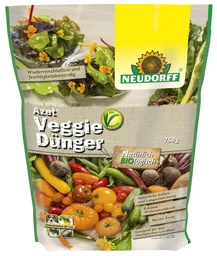
| Azet Veggie Fertilizer 750 g | – | Currently unavailable |
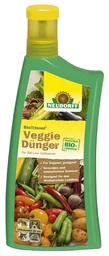
| BioTrissol Veggie Fertilizer 1 Liter | – | Currently unavailable |
One product in our range is the . This organic fertilizer is based on plant and animal raw materials. It is particularly suitable for all types of vegetables in garden beds.
Another interesting option is the . This liquid organic fertilizer is applied through watering and provides a rapid supply of nutrients, especially for container plants.

Warning: Never exceed the recommended dosage on the packaging. More fertilizer does not mean a higher yield. On the contrary, overfertilizing can damage roots, inhibit plant growth and cause fruit to accumulate nitrate.
How do you fertilize correctly?
The best fertilizer is of no use if you apply it incorrectly.
The right time: Fertilize at the start of the growing season, once the plants have rooted well. With slow-release fertilizers, one application at the start of the season is often sufficient. Additional feeding is useful for heavy feeders when they begin producing fruit.
The right amount: Follow the manufacturer's instructions precisely. Use a measuring cup or scale. If in doubt, use slightly less rather than too much.
The right method: Work granular fertilizer into the surface of the soil. Water afterwards. Always mix liquid fertilizer thoroughly and apply it to moist soil to prevent root damage.
Which fertilizer is suitable for which vegetable?
Adjust the nutrient composition to suit your crop.
- Tomatoes, peppers and eggplants: Use a specialist fertilizer with a high potassium content. Potassium promotes fruit quality and firmness.
- Root vegetables such as carrots and beetroot: Phosphorus is more important here for root development. A balanced fertilizer is a good choice.
- Leafy vegetables such as lettuce and spinach: These crops need more nitrogen for lush, healthy leaf growth.
- Cabbage: As heavy feeders, cabbage varieties need nutrient-rich soil. Before planting, work mature compost and organic complete fertilizer into the soil.
Note: Light feeders such as beans and peas need little additional nitrogen because they bind it themselves from the air. A basic supply of compost is often sufficient here.
Can household remedies be used as an alternative?
Some household remedies can supplement fertilizer, but they cannot replace it completely.
Stinging nettle fertilizer: This is a nitrogen-rich liquid fertilizer and plant tonic. However, the smell is intense.
Compost: The best basic soil amendment. Compost supplies nutrients and sustainably improves soil structure.
Coffee grounds: They contain some nitrogen and phosphorus and loosen the soil. Use them only when dry and in moderation.
These remedies are a useful supplement, especially in organic vegetable growing. On their own, they are generally not enough to provide complete nutrition for heavy feeders.
Conclusion
Our vegetable fertilizer test & comparison 2026 shows that the ideal choice depends on your gardening style. Organic gardeners choose organic slow-release fertilizers for healthy soil and a steady supply of nutrients. If you need quick results or grow vegetables in pots, liquid fertilizers are the best choice. The key factor is choosing an NPK ratio that suits your vegetables.
Start with a moderate dose and observe your plants. Healthy, vigorous growth and a plentiful harvest are the best proof that you have chosen the right fertilizer. With our comparison, you are sure to find the right fertilizer for your garden.
Frequently Asked Questions
- How often should you fertilize vegetables?
- Fertilize at the beginning of the growing season and, for fruiting vegetables such as tomatoes, again while the fruit is developing. Apply liquid fertilizer every 1-2 weeks, while slow-release fertilizers often only need to be applied once per season. Follow the dosage instructions.
- What is the difference between organic and mineral fertilizer?
- Organic fertilizers such as horn shavings work more slowly, improve the soil and are ideal for organic gardening. Mineral fertilizers supply nutrients immediately, but can damage plants if overapplied. They act quickly in cases of acute nutrient deficiency.
- Do tomatoes need a special fertilizer?
- Yes. Tomatoes are heavy feeders and need plenty of potassium for fruit production. A special tomato fertilizer has an optimum nutrient ratio, with more potassium and less nitrogen, to prevent excessive leaf growth.
- Can you fertilize with compost alone?
- Compost is a good basic fertilizer and improves the soil. For heavy-feeding vegetables such as cabbage or squash, it is often not enough on its own. For the best results, combine compost with a complete organic fertilizer.
- What does the NPK label on the packaging mean?
- NPK stands for the main nutrients: nitrogen (N) for leaf growth, phosphorus (P) for roots and flowers, and potassium (K) for fruit and overall plant health. The numbers indicate the ratio. For example, a fertilizer with 4-6-8 contains 4% N, 6% P and 8% K.