
In brief: Find the best wall-mounted range hood for your kitchen by comparing airflow, noise levels and controls. High-quality models, such as the Slimline range hood with 480 m³/h or models with tempered glass, offer powerful, quiet ventilation. Key factors include choosing the right width for your cooktop, deciding between ducted and ductless operation, and finding a hood that's easy to clean. Our comparison shows you what to look for.
A good wall-mounted range hood is the quiet workhorse of any kitchen. It keeps the air fresh, protects cabinets from grease buildup and makes cooking more enjoyable. With so many models available, finding the right one can be a challenge. Our 2026 test and comparison helps you find the best hood for your needs. We compare airflow, noise levels, ease of use and design.
Contents
What makes a good wall-mounted range hood?
A high-quality wall-mounted range hood is defined by more than its airflow. Several factors work together to make a hood effective. Airflow, measured in cubic meters per hour (m³/h), should suit the size of your kitchen and your cooking habits. Noise levels matter, too. Nobody wants a loud hum while cooking, so check the sound rating in decibels (dB).
The controls are just as important. Are the switches easy to reach and use? Does the model offer useful settings or a sensor-controlled automatic mode? The energy efficiency rating gives you an idea of power consumption. Finally, the filter type and maintenance requirements affect how much upkeep your hood needs.
Why airflow matters
Airflow is one of the most frequently advertised specifications. For a typical apartment kitchen, 300 to 450 m³/h is often enough. If you frequently cook at high heat or prepare meals for a crowd, a hood with airflow above 500 m³/h may be a better choice. Keep in mind that higher airflow often means more noise.
The most important buying criteria at a glance
Before choosing a model, consider the following:
- Venting type: Do you want a ducted or ductless range hood? Your choice depends on your kitchen's setup. Ducted models require a connection to an exterior vent.
- Width and depth: Measure the space above your cooktop carefully. The hood should cover the cooktop and ideally extend beyond it. Common widths are 60, 80 and 90 cm.
- Controls: Choose from classic push buttons, sensor buttons or a modern touch display. Consider what's easiest to use every day, even with damp or greasy fingers.
- Lighting: Good lighting over the cooking area is essential. LED lights are energy-efficient and long-lasting. Some models also offer colored or dimmable lighting.
Test results: Our top picks
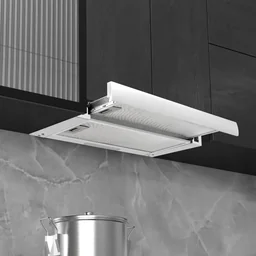
In our 2026 comparison, the standout models combine strong performance, quiet operation and useful features. The (Slimline range hood) stands out with its high airflow of 480 m³/h and relatively low noise level. Its slim design blends easily into any kitchen.
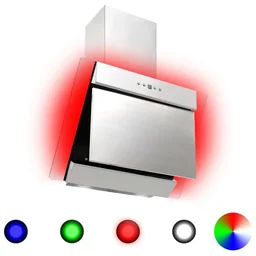
If modern design and extra features are priorities, the (60 cm RGB LED range hood) is a great option. The stainless steel and tempered glass are easy to clean, while the built-in RGB lighting lets you add a personal touch.
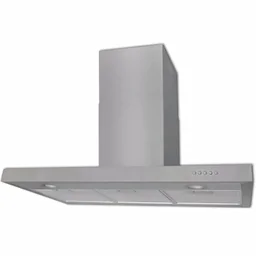
If you have a particularly large cooktop or a range with multiple burners, choose a 90 cm hood. The (900 mm flat range hood) offers a large capture area and an elegant all-stainless-steel design.
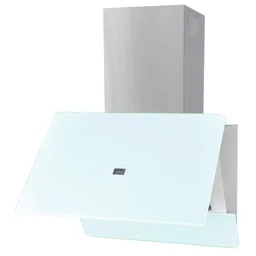
For a bright, inviting kitchen, consider the (600 mm white tempered-glass range hood). Its durable white tempered-glass surface gives the kitchen a light, airy feel.
Our recommendation for most households
For most households with a 60-cm cooktop, a powerful, quiet wall-mounted range hood in the same width is a great fit. Look for good value and a filter that's easy to replace.
Design and materials: a wall-mount range hood as a style statement
A wall-mount range hood is more than a functional appliance; it’s also a design feature. Stainless steel remains a classic, with brushed and mirror-polished finishes available. It’s durable, easy to clean, and suits many kitchen styles. Modern alternatives include tempered glass in black or white. It has a premium look and is easy to clean, too.
Color-coated models let you match the hood to your kitchen cabinets. Designs range from ultra-flat slimline models to statement hoods with distinctive shapes. Choose a style that complements your kitchen. You’ll find a wide selection in our wall-mount range hoods category.
Plan your kitchen around the range hood
Include the wall-mount range hood in your kitchen plans early. Confirm the required width, ventilation type, and power connection. You can often turn modern hoods on with a kitchen appliance switch, too.
Installation and cleaning: a practical guide
Installing a wall-mount range hood is manageable for a capable DIYer. You’ll need the right tools, though, and should plan each step carefully. Securing the hood firmly to the wall is especially important because it can be quite heavy. For a ducted system, you’ll need to drill a precise hole through the wall.
Regular cleaning helps extend the hood’s service life. Metal grease filters can usually be cleaned in the dishwasher. Wipe the housing regularly with a mild cleaner and a soft cloth. Avoid abrasive cleaners, especially on glass surfaces.
- Weekly: Wipe down the exterior.
- Monthly: Clean the metal grease filter (dishwasher).
- Every 3-6 months (recirculating): Replace the activated carbon filter.
- Annually: Check the vent duct for blockages (ducted systems).
New technology in wall-mount range hoods
Range hood technology is advancing, too. More and more models feature an automatic mode. A built-in sensor measures air quality above the cooktop and adjusts the hood’s power accordingly. It’s convenient and energy-efficient.
Another innovation is connected range hoods, which you can control through an app and integrate with smart home systems. You can turn on the hood on your way home or check the filter status. Lighting is becoming more advanced, too, with dimmable and color-changing LEDs.
Manufacturers are developing quieter motors that deliver the same or greater performance. Explore other practical home appliances that can make cooking more enjoyable.
Comparison table
The table below gives you a quick overview of the key features of the top models we selected for this test.
Compare the highest-rated wall-mount range hoods in our selection:
| Model | Customer rating | Availability |
|---|---|---|
| 600 mm stainless steel range hood | – | Currently unavailable |
| 600 mm stainless steel range hood | – | Currently unavailable |
| 600 mm white tempered glass range hood | – | Currently unavailable |
| RGB LED 60 cm stainless steel and tempered glass range hood | – | Currently unavailable |
| Slimline 480 m³/h aluminum and stainless steel range hood | – | Currently unavailable |
With this buying guide and detailed comparison, you’re well equipped to find the ideal wall-mount range hood for your kitchen. Consider the right width, your preferred ventilation type, and how much maintenance you’re willing to do. That way, you can enjoy your new kitchen helper for years to come.
Frequently asked questions
- How wide should my wall-mount range hood be?
- Your wall-mount range hood should be at least as wide as your cooktop, and ideally a little wider. Common widths are 60 cm and 90 cm. A hood that’s too narrow won’t capture steam and odors effectively.
- Which is better: a recirculating or ducted range hood?
- Ducted range hoods are more effective because they vent air and odors outside, but they require a hole through the wall. Recirculating hoods filter the air through activated carbon filters and return it to the room. They’re easier to install, but less effective against strong odors.
- How often should I clean or replace the filters in a wall-mount range hood?
- Clean metal grease filters in the dishwasher about every four weeks. Replace activated carbon filters in recirculating hoods every three to six months, depending on use. They can’t be regenerated.
- Is a higher airflow rate always better?
- Not necessarily. Too much power can make the hood unnecessarily noisy and use more energy. For most households, 300-450 m³/h is usually sufficient. Look for a good balance between performance and noise level.
- Can I install a wall-mount range hood above a stove?
- Yes, this is a typical installation. However, check the minimum distance between the cooktop and the bottom of the hood. It varies depending on the type of cooktop (induction/gas). Follow the manufacturer’s specifications to prevent overheating.