
In brief: An angle grinder cutting stand is worthwhile as soon as you regularly need straight or angled cuts in metal profiles, pipes or bars. It significantly improves precision, increases workplace safety by securely clamping the material and enables repeatable cuts that are almost impossible to achieve by hand.
The angle grinder, often simply called a grinder, is a powerhouse. It cuts through steel, grinds down welds and removes rust at impressive speed. But for all its power, it often lacks finesse. Freehand cuts in metal profiles are rarely perfectly straight. The work is tiring and involves risks. This is exactly where a cutting stand comes in: a small investment that transforms your angle grinder into a precise, stationary cutting machine.
Imagine being able to cut metal pipes and square steel tubing as precisely and consistently as wood on a chop saw. The Angle grinder cutting stand for one-handed angle grinders makes exactly that possible. It holds your existing 115-mm or 125-mm angle grinder and guides it safely through the material. The result is clean, straight cuts and significantly improved workplace safety. For anyone who does more than occasional rough cutting, this accessory is a decisive upgrade for the workshop.
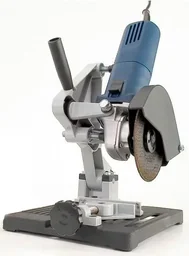
The move from freehand cutting to working with a cutting stand is like stepping from the Stone Age into the modern era. Suddenly, miters fit perfectly and every cut is exactly repeatable.
Why should you consider an angle grinder cutting stand?
A cutting stand is more than just a holder. It is a system that expands your angle grinder's capabilities and compensates for the basic weaknesses of freehand work. The benefits lie in precision, safety and efficiency.
Precision that is impossible by hand
Try cutting through square tubing exactly at a 90-degree angle by hand. It is a challenge. Even with a steady hand and careful marking, the cutting disc tends to wander slightly. The result is a cut that is not perfectly square, which creates unsightly gaps in frame constructions. A cutting stand guides the disc along a fixed path. The pivoting arm ensures a clean, vertical cut every time.
Significantly increased safety while working
The enormous power of an angle grinder can be dangerous. If the disc binds in the material, it can cause a violent kickback. The workpiece itself can slip and injure you. A cutting stand drastically minimizes these risks. The workpiece is firmly clamped in the integrated vise. The angle grinder is securely fixed in the holder. You guide the machine in a controlled manner using a lever arm, keeping your distance from the rotating disc. That is what safe cutting looks like.
Repeatability for batch work
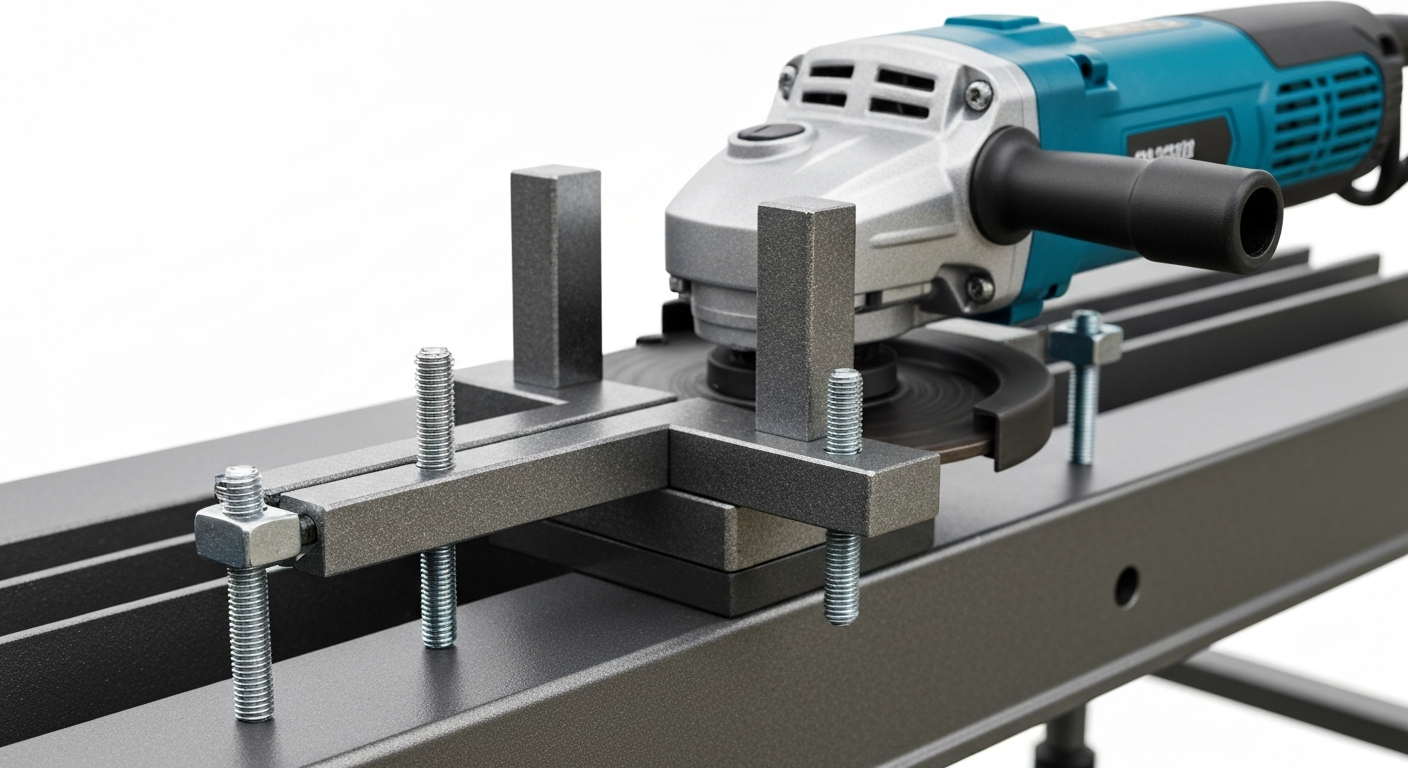
Are you building a metal shelf and need twenty braces that are exactly the same length? Doing this by hand is tedious. With a cutting stand and a simple length stop, you can cut multiple identical parts quickly and with minimal variation. Clamp the material, slide it against the stop and cut it. This benefit makes a cutting stand appealing to anyone planning projects with repeated dimensions.
Less fatigue and greater comfort
Guiding a running angle grinder precisely for an extended period is tiring. The weight of the machine and the vibrations take their toll. A cutting stand takes this strain off you. You only operate the lever arm, which requires significantly less effort and allows you to work with greater concentration for longer periods. This protects your joints and improves the quality of your work.
How can you tell whether a cutting stand is the right investment for you?
Consider which tasks you carry out regularly or plan to take on in the future. A cutting stand is not the right tool for everyone, but for many ambitious DIYers and hobbyists it is a decisive step forward. If you recognize yourself in the following points, buying one is very likely worthwhile:
- Frequent metalworking: You regularly cut steel profiles, iron bars, copper or aluminum pipes.
- Need for precise angles: You are planning projects such as table frames, railings, gates or frames that require exact 90-degree or 45-degree miter cuts.
- High safety standards: You feel uncomfortable cutting freehand or have already experienced close calls. Safety in the workshop is your top priority.
- Planned batch production: You often need to cut several identical parts, for example for fence panels or shelving systems.
- Expanding your workshop: You want to add stationary machines to your workshop without immediately investing in an expensive metal chop saw. A cutting stand is an affordable first step toward professional industrial supplies.
Additional advice
Plan your project in advance. If you know that you need precise miter cuts for a garden gate, a cutting stand will save you not only time but also a great deal of frustration and wasted material. It encourages a more structured way of working that always pays off in the end.
How does a cutting stand work and how do you set it up?
Setting up a cutting stand is straightforward and takes just a few minutes. The basic steps are the same for most models.
Step 1: Choose the right stand
Most DIY enthusiasts use single-hand angle grinders with discs measuring 115 mm or 125 mm in diameter. The is designed specifically for these common sizes. For larger jobs involving thicker materials that require an angle grinder with a 230 mm disc, specialised models such as the cutting stand for 180/230 mm angle grinders. Make sure the stand is compatible with the size of your machine.
Step 2: Mount the angle grinder
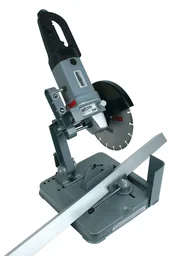
Remove the side handle from your angle grinder. The machine is attached to the cutting stand using these threaded holes. Most stands offer several mounting points to accommodate different models. Screw the angle grinder securely to the bracket on the pivoting arm. Make sure it is firmly seated and has no play.
Step 3: Secure the workpiece
The base of the cutting stand has an integrated vice. Place your workpiece, such as a steel tube, on the support and clamp it securely with the spindle. For mitre cuts, the clamping jaw can usually be adjusted continuously up to 45 degrees. A scale helps you set the angle precisely.
Expert tip
After the initial assembly, check the 90-degree angle with a try square. Place the square against the cutting disc and the support surface. If necessary, adjust the stand's stop screws to ensure a perfect right angle. This one-time calibration guarantees precision for all future cuts.
Step 4: Adjust the cutting depth and guard
Some models have an adjustable depth stop. This is useful when cutting slots or when you do not want to cut all the way through the material. Position the angle grinder's guard so that sparks are directed away from you and, ideally, into a non-combustible area. The stand's additional guard provides further protection.
Which materials can you work on with a stationary angle grinder?
With the right cutting disc, an angle grinder converted into a stationary machine becomes a versatile cutting tool, especially for metal.
Metals: steel, stainless steel and aluminium
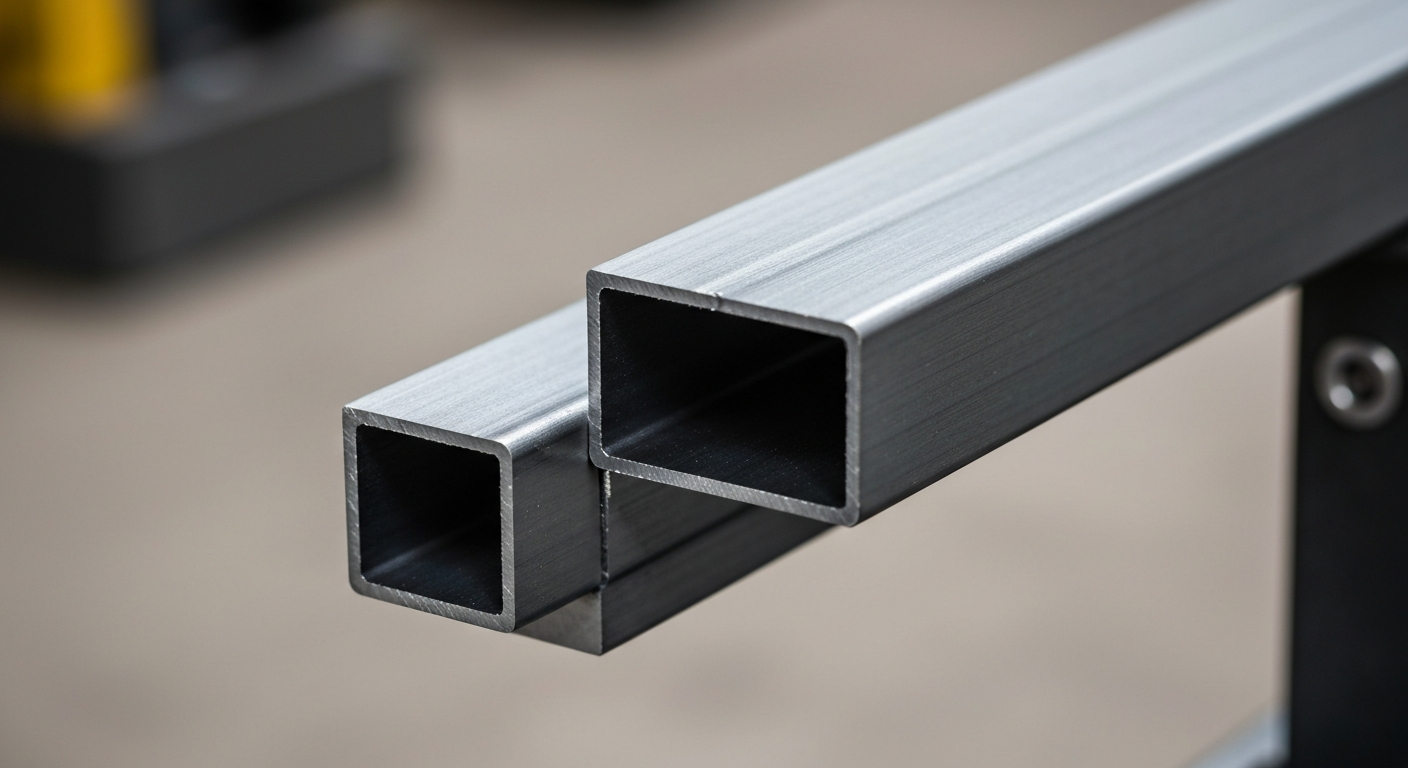
This is where a cutting stand really comes into its own. Box sections for furniture, round tubes for railings, flat bar for brackets and threaded rods can all be cut effortlessly and precisely. The combination is particularly useful for projects in Garden + Outdoor, such as building trellises or repairing fences. Choose a cutting disc suitable for the specific metal.
Pipes and lines
Cutting work often comes up in Plumbing + Irrigation. Whether you need to cut old steel heating pipes or new copper or stainless steel lines to length, a cutting stand guarantees a straight cut. This is important for making clean connections with fittings or welding sockets.
Important note
Although diamond cutting discs are available for angle grinders, cutting stone, tiles or concrete in a cutting stand is problematic. The huge amount of dust produced is hazardous to health and can damage the stand's and machine's mechanisms. For this type of work, dedicated tile cutters or stone-cutting machines with water feed are the better and safer choice.
How can you improve your results and extend the life of your tools?
A good tool is half the job. The other half is using it correctly. With a few simple rules, you can get the most out of your cutting stand and ensure a long service life for your entire setup.
Choose the right cutting disc
Do not use a steel disc for stainless steel (INOX). Particles from a standard disc can become embedded in stainless steel and cause rust. Thin cutting discs (approx. 1.0 mm) cut faster and produce less burring, but are more delicate. Thicker discs (up to 2.5 mm) are more robust and durable, but generate more heat. Choose a disc to suit the material and the job.
The best machine is no use with the wrong disc. A high-quality, thin INOX cutting disc for stainless steel is an investment that quickly pays for itself through clean cuts and less finishing work.
Cutting speed and pressure
Let the machine do the work. Apply only light, even pressure to the lever arm. Excessive pressure slows the disc, increases heat and wear, and can result in untidy cuts or even disc breakage. A high-pitched whirring sound often indicates the optimum cutting speed.
Accessories that make a difference
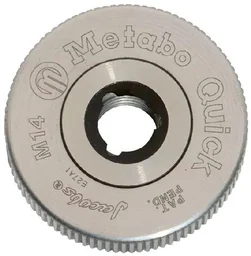
Changing cutting discs frequently can be tedious. A small but highly effective accessory is the "Quick" quick-release nut for angle grinders. It replaces the standard nut and allows you to change discs without tools in just a few seconds. This saves time and hassle, especially when switching between different materials.
Regular maintenance and care
A cutting stand is a mechanical device. Clean it of metal shavings and dust after use. A drop of oil on the pivoting arm joints and the vice spindle keeps everything moving smoothly for a long time. Regularly check that all screw connections are tight. This keeps your setup safe and precise. You can also discover more useful power tools to complete your workshop.
Conclusion: a small upgrade with a big impact
A cutting stand is the logical upgrade for anyone who uses their angle grinder for more than rough grinding work. The investment is small, while the benefits in precision, safety and working comfort are substantial. It transforms a portable powerhouse into a reliable, stationary precision tool for metalworking. If you need clean, repeatable cuts, a cutting stand is not optional but essential for your workshop.
Frequently Asked Questions
- Will any angle grinder fit into any cutting stand?
- No, compatibility is crucial. Check the specified angle grinder size (e.g. 115/125 mm or 180/230 mm). Most stands have universal mounts, but check the thread size of the side handle (usually M8, M10, M12) for attachment.
- Can I also make mitre cuts with a cutting stand?
- Yes, that is one of the main advantages. Most cutting stands have an adjustable clamping device that allows you to secure the workpiece at an angle (usually up to 45 degrees) to create precise mitre cuts for frames or joints.
- Is working with a cutting stand really safer?
- Yes, significantly. The stand secures both the tool and the workpiece. This prevents the material from slipping and considerably reduces the risk of angle grinder kickback, which is one of the most common causes of accidents when working freehand.
- Which materials can I not cut with it?
- A cutting stand is primarily designed for metal. Cutting wood is strongly discouraged because the angle grinder's speed is far too high and there is a risk of fire. Cutting stone and concrete creates extreme dust that is harmful to your health and damaging to the machine without dust extraction.
- How thick can the material I want to cut be?
- The maximum cutting depth depends on the size of your angle grinder and the cutting disc. A 125-mm angle grinder typically achieves a cutting depth of approx. 30-40 mm in a stand. For thicker materials, you need a larger tool and a suitable stand.