
In brief: The best time to plant grass seed is fall (August to October). The soil is warm, moisture levels are consistent and weed pressure is low. Alternatively, spring (April to May) after the last frost is suitable, but it requires more watering and weed control.
- Why is the timing so important when planting grass seed?
- Planting grass seed in spring: What are the pros and cons?
- Planting grass seed in fall: Why experts often prefer this time
- How do you properly prepare the soil for planting grass seed?
- Instructions: How to plant grass seed like a pro
- What happens after planting? Essential care for new grass
A dense, rich green lawn is a dream for many homeowners. But getting there starts with one crucial question: When is the best time to plant grass seed? Whether you are creating a completely new lawn or repairing bare patches, success depends largely on choosing the right time to seed. The choice between spring and fall affects germination, root growth and the battle against weeds.
Choosing the right seed mix is just as important as choosing the right time. A high-quality mix such as Grass Seed "Wunder Rasen" () provides the foundation for a tough, long-lasting lawn. It germinates quickly, is extremely hard-wearing and produces dense greenery that can withstand demanding conditions.

Why is the timing so important when planting grass seed?
Grass seeds are not undemanding little grains. They need specific conditions to germinate successfully and become established. This ideal "germination window" is determined by three main factors: soil temperature, moisture and competition from weeds. Both seasons, spring and fall, offer periods when these conditions are favorable, but they bring different challenges.
Soil temperature is the starting signal for germination. Most grass varieties need a consistent soil temperature of at least 10 °C. If the temperature is lower, the seeds remain dormant in the soil and are vulnerable to rot or hungry birds. If it is significantly higher, the soil dries out too quickly.
Moisture is the lifeblood of young seedlings. From the moment the seed is planted until a stable root system has developed, the soil must never dry out completely. Consistent, gentle watering or regular rainfall is essential. A dried-out seedling will inevitably die.
Weed pressure also plays a major role. Weeds compete with young grass for light, water and nutrients. Depending on the season, certain weed species are at their peak and can quickly overtake delicate grass shoots before they have a chance to become established.
Planting grass seed in spring: What are the pros and cons?
Spring, typically from April to the end of May, is the classic time for gardening. Nature wakes up and motivation is high to get the garden back in shape. It is also a popular option for planting grass seed.
The advantages of spring seeding
As temperatures rise, the soil warms quickly and reaches the 10 °C needed for germination. The days get longer, giving young grass plenty of light for photosynthesis. Grass planted in spring has the entire summer growing season ahead of it to become dense and resilient. This means you can already enjoy and use an attractive green lawn by midsummer.
To give seedlings the best possible start, a special lawn starter fertilizer is recommended. It provides the nutrients needed for rapid root formation and vigorous growth during the initial phase. It supports the development of a strong foundation for your future lawn.
The disadvantages and challenges of spring
The biggest challenge in spring is competition. The lawn is not the only thing that wants to grow—weed seeds also awaken from winter dormancy and often sprout faster and more aggressively than grass. This requires intensive weed control during the first few weeks.
Late frosts can pose another danger. Young, delicate seedlings are highly sensitive to frost and may die during an unexpectedly cold night. Spring is also followed by summer. The often hot and dry periods in July and August put considerable stress on a young lawn that has not yet developed deep roots. During this time, you need to provide very consistent and sufficient watering.
Additional advice
Watering is crucial when planting grass seed in spring. Plan to keep the area consistently moist for the first 3-4 weeks. A sprinkler with a timer can be a great help, especially when the first warm summer days arrive.

Sowing Grass Seed in Fall: Why Experts Often Prefer This Time
Many gardening professionals swear by fall as the ideal time to establish a new lawn or overseed an existing one. The period from late August to mid-October often offers perfect conditions for healthy growth.
The Unbeatable Benefits of Fall Seeding
The soil is still pleasantly warm from summer, promoting rapid germination. At the same time, temperatures slowly fall, reducing stress on the young plants. Morning dew and more frequent rainfall provide natural, consistent moisture, significantly reducing the need for watering.
One major advantage is the greatly reduced weed pressure. Most annual weeds have completed their growth cycle and offer little competition to the young grass. The lawn can devote all its energy to developing a deep, strong root system. These strong roots are the best insurance against the dry conditions of the following summer and make the lawn more resilient overall.
Fall gives your lawn a crucial head start. It becomes established without heat stress or weed competition and gets off to a strong start as soon as spring arrives.
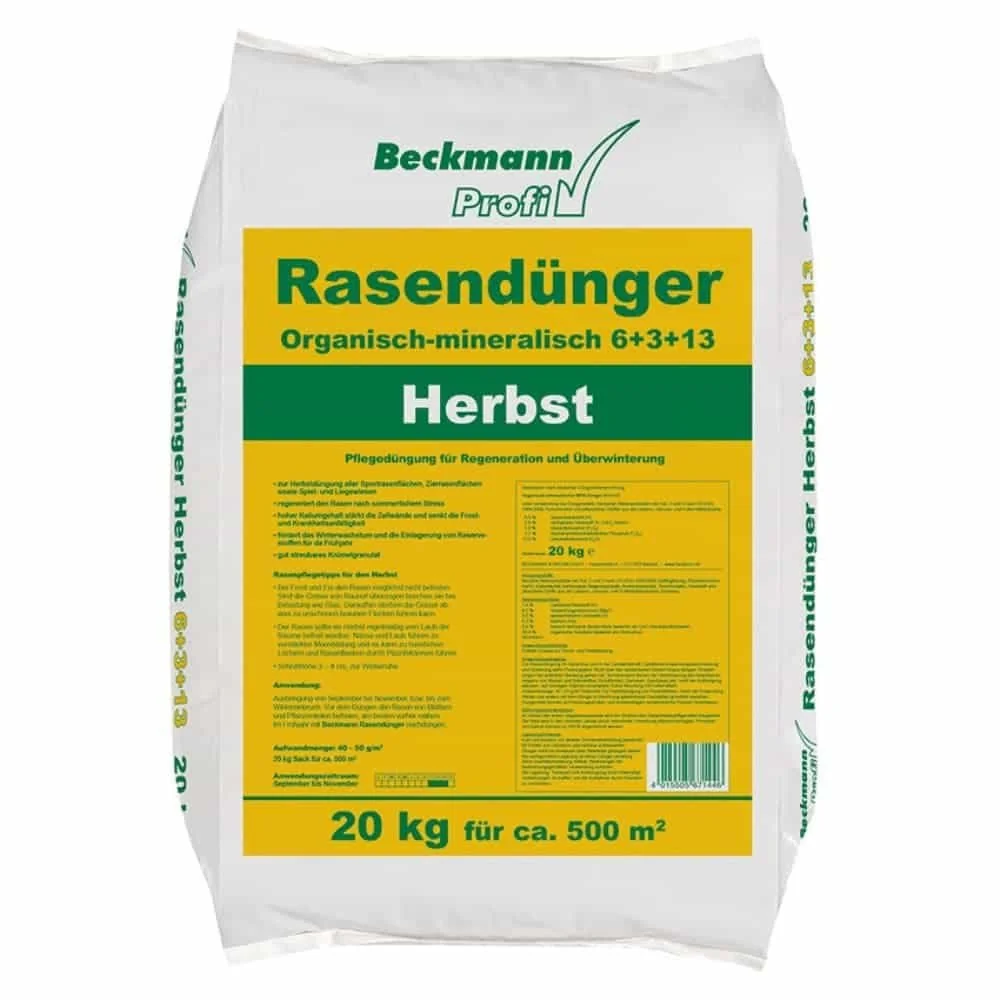
Support your new lawn for the season with a potassium-rich fall lawn fertilizer. A product such as the Beckmann fall lawn fertilizer () strengthens the grass cell structure and makes it frost-resistant and ready for winter.
Potential Risks of Sowing in Fall
The window of opportunity in fall is shorter than in spring. You need to sow in good time before the first hard frost. The grass should reach a height of at least 5 cm and be mowed once before winter arrives. Falling leaves from surrounding trees can also become a problem. A thick layer of leaves must be removed regularly and carefully, as it could smother the young blades and block out light.
How Do You Prepare the Soil Properly for Sowing Grass Seed?
Careful soil preparation is half the battle. Whether you choose spring or fall, the following steps are essential for a successful start.
Step 1: Clear and Loosen the Area
Start by clearing the entire area of old grass, moss, weeds and stones. A spade is sufficient for smaller areas, while a tiller makes the work much easier on larger projects. Dig over the soil to spade depth (approx. 20-30 cm) and loosen it thoroughly. This provides good aeration and makes it easier for the roots to grow later.
Step 2: Level and Improve the Soil
After digging, break up all large clods of soil with a rake. Now is the ideal time to improve the soil quality. Work coarse sand into heavy, clay soils to improve drainage. Improve sandy soils with mature compost or high-quality potting soil to increase their ability to store water and nutrients. Then use a rake or wooden board to make the area smooth and level.
Pro Tip
Let the prepared soil rest for one to two weeks before sowing. This allows the soil to settle. Remove any newly germinated weeds thoroughly once more just before sowing. This gives your grass seed a clean start.
Step 3: Firm and Fertilize the Area
Walk over the area or use a lawn roller to lightly firm the soil. It should be firm enough that you only sink in slightly when walking on it. This prevents the area from settling unevenly later. Rake the top layer (approx. 1 cm) lightly again immediately before sowing. You can now apply a general lawn fertilizer or a special starter fertilizer to provide the seed with nutrients from the outset.
Guide: How to Sow Grass Seed Like a Pro
The groundwork is done and the soil is perfectly prepared. Now comes the crucial step: sowing. With the right technique, you can ensure even distribution and the best possible germination conditions.
Determine the Right Amount of Grass Seed
Do not use too much or too little seed. Follow the manufacturer's dosage instructions on the packaging precisely. For the "Wunder Rasen" mix (), this is generally around 20-25 grams per square meter. Weigh out the exact amount needed for your area. For smaller areas or overseeding, the smaller pack of "Wunder Rasen" grass seed, 1 kg () is ideal.
Even Sowing – By Hand or with a Broadcast Spreader
You will get the best results on a windless day. A broadcast spreader ensures particularly even distribution. Divide the seed into two halves. Apply the first half in lengthwise rows and the second half crosswise. This cross-seeding method prevents unsightly gaps and stripes. When sowing by hand, it takes some practice to distribute the seed evenly with a flick of the wrist.
Important Note
Grass seed is a delicacy for birds. Lightly work the seed into the soil immediately after spreading and roll it down. Setting up scarecrows or stringing up reflective tape can also help protect the seed during the first few days.
Work in and Press Down the Seed
After spreading, use a rake to work the seed very lightly into the top layer of soil. It should not be covered with more than 1 cm of soil, as grass seed needs light to germinate. Then roll the entire area with a lawn roller. Alternatively, lay boards on the ground and walk over them. Good soil contact is extremely important so the seed can draw moisture from the soil.
Patience is the most important ingredient after sowing. Do not check every hour to see whether anything is growing. Trust the process, keep the soil moist and nature will do its work.

What happens after sowing? Essential care for a new lawn
The work does not end with sowing. The first few weeks are crucial for developing a dense, resilient turf. Proper care makes the difference between a patchy attempt and a dream lawn.
Watering: essential for germination
Your most important task now is watering. During the first three to four weeks, the top layer of soil must never be allowed to dry out. Depending on the weather, water the area once or several times a day using a fine spray. A strong jet of water could wash the seeds away. The aim is to keep the soil consistently moist, but not waterlogged.
The first cut: when and how?
Wait until the grass blades have reached a height of around 8 to 10 cm before mowing for the first time. Cutting too early will weaken the young plants. Set your lawn mower to its highest cutting height and do not cut the lawn shorter than 5-6 cm. Make sure the blades are sharp so that the delicate grass is cut cleanly rather than torn out. Collect the clippings so they do not smother the young grass.
Fertilising and weed control for a new lawn
About six to eight weeks after germination, it is time for the first follow-up fertilisation to encourage further growth. Avoid chemical weedkillers completely during the first three to four months, as they could also damage the young lawn. It is best to pull out individual weeds by hand. If bare patches do appear, you can quickly and easily fill them with special grass seed for overseeding, such as the grass seed for robotic lawn mowers and overseeding ().

In summary, both spring and autumn have their merits when it comes to sowing a lawn. However, autumn often offers more favourable, lower-maintenance conditions for strong root growth. Regardless of the time of year, thorough soil preparation and consistent care after sowing are the keys to a dense, green lawn that you will enjoy for a long time.
Frequently asked questions
- How deep should grass seed be sown?
- Grass seed should not be worked more than 1 cm into the soil. After scattering the seed, gently rake it into the top layer of soil and then roll the area to ensure good soil contact.
- How long does grass seed take to germinate?
- Germination time depends on the grass seed mixture, soil temperature and moisture. Under ideal conditions (over 10 °C), you should see the first grass blades after about 7 to 20 days. Be patient and keep the soil consistently moist.
- Can you sow grass seed when it is raining?
- Do not sow during heavy rain, as the seeds may be washed away. Light drizzle after sowing is ideal, as it helps water the seed in. The soil should be moist when sowing, but not waterlogged or muddy.
- Which is better: sowing grass seed in spring or autumn?
- Autumn is often the better choice. The soil is still warm, rainfall is more regular and there are fewer weeds. This gives the lawn time to develop strong roots before winter arrives. Spring is a good alternative, but requires more care.
- How often should you water a new lawn?
- After sowing, water the area daily during the first 3-4 weeks, possibly even several times a day. The soil must never dry out. Use a fine spray so you do not wash the seeds away. The top layer of soil should always remain moist.
You might also be interested in
- Sowing grass seed: step-by-step guide to a dense lawn
- Lawn care: how to keep your lawn green, dense and healthy
- When to apply lawn lime: the ideal time for a healthy lawn
- Top-dressing a lawn with sand: when and how to improve your lawn
- Sowing grass seed: sown too much? Tips for the perfect lawn
- Seeded lawn or turf? The definitive guide to making the right choice