
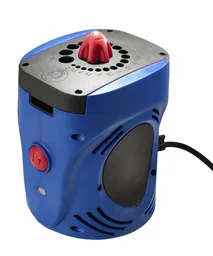
In brief: The BSG110 electric twist drill sharpener is designed specifically for sharpening HSS (High-Speed Steel) twist drill bits with diameters from 3 to 13 mm. It restores the standard 118° point angle with precision. This sharpener is not suitable for masonry bits with carbide tips or wood bits with their more complex cutting geometry.
A blunt drill bit is more than an annoyance. It slows you down, creates untidy holes and can even be dangerous if it slips across the material or overheats. Before you throw away another blunt bit and buy a replacement, consider sharpening it. Keep in mind, though, that not every sharpener works with every type of drill bit. Here’s why the BSG110 electric twist drill sharpener is ideal for some bits, and where its limits are.
For common workshop jobs, such as drilling into metal and plastic, a sharp HSS drill bit is essential. That’s where the comes in. It quickly and precisely restores the sharpness of HSS twist drill bits from 3 to 13 mm in diameter. The BSG110 restores the correct 118° point angle and creates symmetrical cutting edges, so your drill bit can perform like new.
How can you tell when a drill bit is blunt?
Drill bits rarely become unusable overnight. They wear down gradually. Look for these signs so you know when it’s time to sharpen yours.
Sounds and visible signs
A sharp drill bit makes a steady, hissing sound as it cuts and clears chips. A blunt bit, on the other hand, squeaks or screeches. You have to apply much more pressure to remove material, and you may see fine dust instead of chips. When drilling metal, the bit may even produce smoke—a clear sign of excessive friction and heat.
Signs in the finished hole
The hole itself can tell you the condition of your drill bit. A blunt bit leaves untidy, ragged edges, especially in wood. In metal, it often leaves a pronounced burr. The hole may also be out of round or wider than the drill bit because the bit wanders in the material. If you notice these signs, it’s time to sharpen your bit.
A properly sharpened drill bit isn’t a luxury; it’s the foundation of clean work and a long service life for your drill. Using less pressure also reduces wear.
Why the BSG110 excels with HSS drill bits
HSS stands for “High-Speed Steel”. This material is known for its hardness, wear resistance and heat resistance. It is the standard material for drill bits used on metal, as well as many plastics and hardwoods.
What makes HSS drill bits special?
An HSS twist drill bit has precisely defined geometry. It has two cutting edges that meet at the tip at a specific angle. The most common point angle is 118°. This angle is a good fit for drilling most common materials, including mild steel, aluminium and brass. The BSG110 is designed to restore this angle precisely.
How does the BSG110 work?
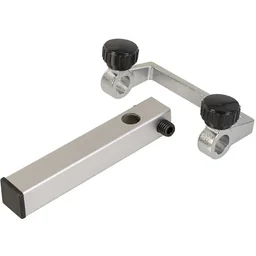
It’s easy to use. Set the diameter of your drill bit on the device. Then clamp the bit into the guide and move it toward the rotating grinding wheel. The device sharpens one cutting edge. Turn the guide 180 degrees and repeat the process for the second edge. The precise stops ensure both cutting edges are ground to the same length and at the correct angle—precision that is difficult to achieve by hand.
Extra tip
The point angle matters. While 118° is standard for softer metals, 135° (split point) is better suited to hard materials such as stainless steel. The BSG110 restores the standard 118° angle.
Why are masonry bits sharpened differently?
A masonry bit may look similar to an HSS bit at first glance, but the two are fundamentally different. That’s why sharpening a masonry bit with the BSG110 won’t work and could even damage it.
The anatomy of a masonry bit
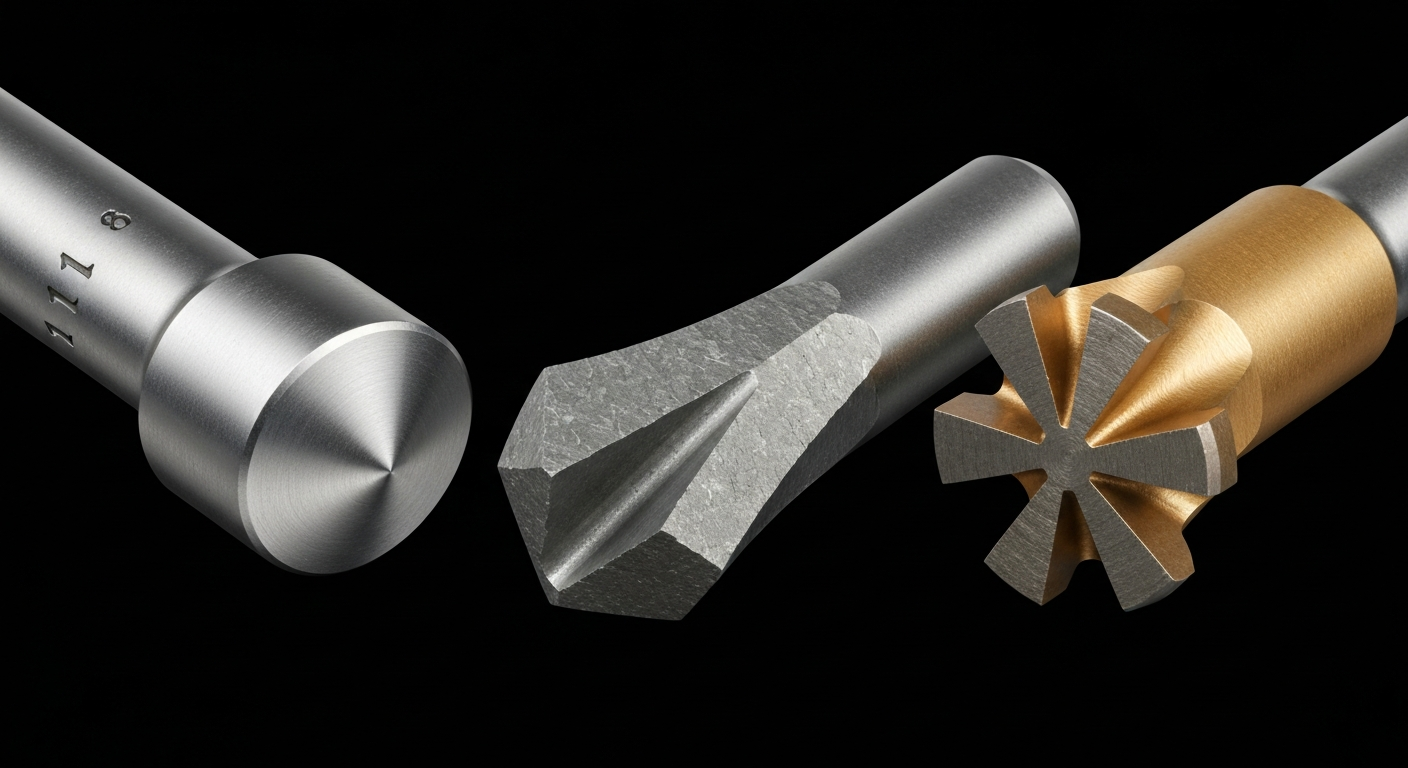
A masonry bit has a brazed carbide plate at the tip rather than an HSS cutting edge. This material is extremely hard and brittle. The tip doesn’t cut in the traditional sense; it breaks up and chisels away the material. That’s why masonry bits are usually used with a drill’s hammer action. Their cutting edges are often ground with a negative or neutral angle to withstand the heavy loads.
Using the wrong tool can ruin the bit
The corundum grinding wheel in the BSG110 is designed for grinding steel. Trying to sharpen a carbide tip with it would ruin the grinding wheel. The carbide plate could also overheat and chip. Masonry bits require special diamond or silicon carbide abrasives. Experienced users sometimes use a with the appropriate wheel, but sharpening this way takes considerable practice.
Important
Never clamp masonry or wood bits into a sharpener designed for HSS drill bits. You could damage the bit and the device’s grinding wheel, and uncontrolled grinding could cause injury.
Complex geometry: Why wood drill bits need special treatment
Wood drill bits have a unique design that’s perfectly suited to the properties of wood fibers. An automated tool such as the BSG110 can’t sharpen this complex geometry.
Center point, spurs and main cutting edges
A typical wood drill bit has three different cutting areas. A long, sharp center point sits in the middle. It helps the bit start exactly where you want it and keeps it from wandering. Two spurs sit on the outer edges. They cleanly cut through the wood fibers around the edge of the hole before the two main cutting edges remove material from the center. Together, these features produce extremely clean, precise holes without tear-out.
The limitations of automatic sharpening
The BSG110 is designed to form a conical point with two cutting edges. It can’t sharpen the center point, spurs and main cutting edges separately. Sharpening a wood drill bit is a manual job that requires fine files or abrasive points to carefully sharpen each cutting edge individually. For larger woodworking projects in the garden, it’s important to protect your materials as well as keep your tools sharp, for example with a durable wood tarp.
Pro tip
After sharpening, mark one of the drill bit’s flats with a permanent marker. This will show you exactly how to position the bit next time and help you get more consistent results.
Become a sharpening pro: How to identify drill bits
To choose the right sharpening method, you first need to identify your drill bits. With a little practice, you’ll be able to recognize the different types at a glance.
- HSS drill bits: The tip tapers to a conical point with an angle of 118° or 135°. The entire bit is made from a single material (silver, gold or black). It has two continuous cutting edges along the spiral flutes.
- Masonry drill bits: The tip is wider than the drill shaft and has a brazed-in, usually gray carbide plate. Compared with an HSS drill bit, the cutting edge looks relatively blunt and sturdy.
- Wood drill bits: The clearest distinguishing feature is the sharp center point that projects from the middle of the main cutting edges.
You probably have a variety of drilling tools in your workshop. A good selection of drill bits for different materials is the foundation of every successful project.
Sharpening is good, maintenance is better: What to do next
A freshly sharpened drill bit needs proper care to keep its cutting edge sharp for as long as possible. A few simple steps can significantly extend its lifespan.
Cleaning and protecting your drill bits
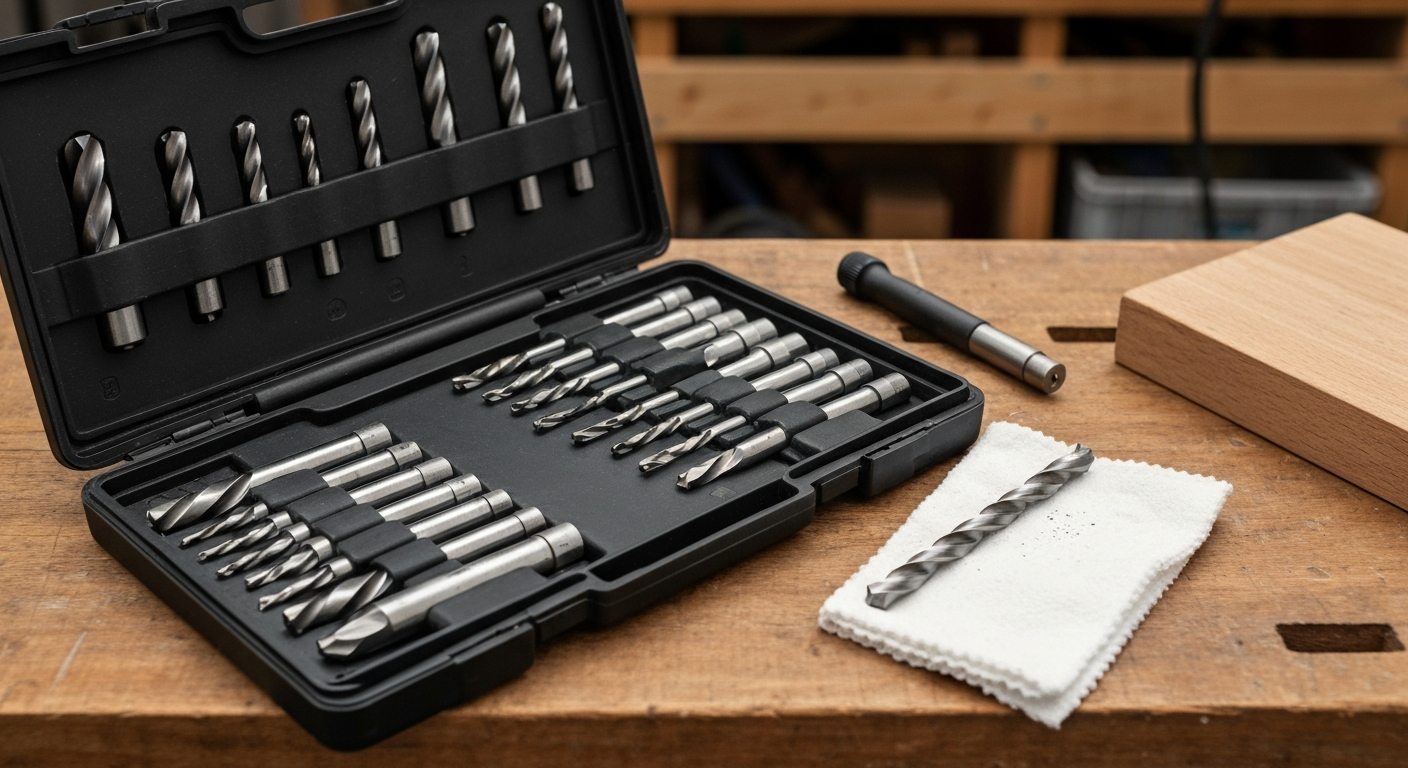
After sharpening and after every use, remove chips and abrasive dust from the drill bit. A brush or compressed air works well for this. To prevent rust, wipe the bit with a lightly oiled cloth. This is especially important if you work in a damp workshop or garage.
Proper storage
Don’t toss sharp drill bits loose into a drawer. Their delicate cutting edges can knock against one another and other tools, quickly becoming dull again. Store them in their original packaging or in dedicated drill bit cases. Good organization, such as with a , not only protects your tools but also saves time when you’re looking for them.
Good organization goes a long way toward extending a tool’s lifespan. Leave a sharpened drill bit loose in a box, and it’ll become dull again before you know it.
Economical and eco-friendly: The benefits of sharpening your own tools
Investing in a sharpening tool such as the BSG110 quickly pays off. You’ll save money by avoiding the constant need to buy new HSS drill bits. You’ll also work more sustainably by extending the lifespan of your tools and reducing waste.
You’ll also gain independence. You won’t have to stop working because your last sharp drill bit has become dull. It’ll be ready to use again in just a few minutes. That reliability is invaluable, whether you’re drilling a hole for a wall anchor in a brick wall that may also contain insulation such as rock wool pipe insulation, or making precise holes for a piece of furniture.
In summary: Know your tools. The BSG110 electric drill bit sharpener is an unbeatable way to keep your HSS twist drill bits sharp, precise and ready to use. For specialty masonry and wood drill bits, you’ll need other methods. Give each bit the right treatment to work more efficiently, safely and economically.
Frequently asked questions
- Can I sharpen drill bits smaller than 3 mm with the BSG110?
- No. The BSG110 is designed for twist drill bits with diameters from 3 mm to 13 mm. Smaller bits can’t be held securely in the guide, which can lead to inaccurate and potentially dangerous sharpening.
- What does the 118° angle mean for HSS drill bits?
- The 118° point angle is standard for general-purpose HSS drill bits. It offers a good balance between accurate centering and stability when drilling common materials such as steel, aluminum or plastic. The BSG110 is optimized for this angle.
- How often should I sharpen my drill bits?
- Sharpen your drill bits as soon as you notice a drop in performance. Signs include needing to apply more pressure, squeaking or untidy holes. Sharpening regularly at the first signs of wear is better than waiting until the bits are completely dull.
- Is the grinding wheel in the BSG110 replaceable?
- Yes. The grinding wheel is a wear part and can be replaced when needed. This helps maintain consistently good sharpening results throughout the device’s lifespan. Suitable replacement parts are available from Westfalia.
- Can the device sharpen left-hand drill bits?
- No. The BSG110 is designed exclusively for sharpening standard right-hand twist drill bits. Its guides and grinding wheel direction are designed for the geometry of these widely used bit types.
You may also be interested in
- How to sharpen twist drill bits with the BSG110: Step-by-step guide
- Buying a drill bit sharpener: What should you look for?
- Manual vs. electric drill bit sharpeners: A comparison
- 5 common drill bit sharpening mistakes and how to avoid them
- Which tools can you sharpen with the WNS45? The ultimate guide
- How to drill correctly: Choosing the right drill bit for every material