
In brief: For most gardens, a digital XXL LED garden thermometer is the best choice. It offers excellent readability day and night, high accuracy, and often useful additional features. Analog thermometers offer classic charm and do not require batteries, but they are harder to read from a distance.
A quick glance out of the window is all it takes to see what’s going on. Is it time to put on the frost protection covers? Can the potted plants go outside yet? The right temperature is essential for successful gardening. A reliable outdoor thermometer is therefore not a luxury but an essential part of your garden equipment. But there are plenty to choose from. The key question is often: classic analog or modern digital with an LED display?
Both options have their merits. Your decision depends on your needs: do you value precise readings and easy visibility in the dark, or do you prefer a low-maintenance classic? This guide covers the key differences and helps you find the perfect thermometer for your outdoor space.
Our tip for easy-to-read temperatures: The XXL LED garden thermometer
When it comes to clear, instant readings, the sets a new standard. Its large, illuminated display lets you read the temperature from many meters away, even at dusk or during the night. Digital precision and an XXL display make it ideal for anyone who keeps a close eye on their garden and wants information at a glance. The built-in Min/Max function also provides useful readings on temperature extremes over the previous day.

What is the difference between analog and digital outdoor thermometers?
The main difference lies in the technology and how each thermometer displays the temperature. Choosing between these two types affects not only the appearance but also the features and how you use the device in your garden and outdoor space.
The classic choice: Analog thermometers
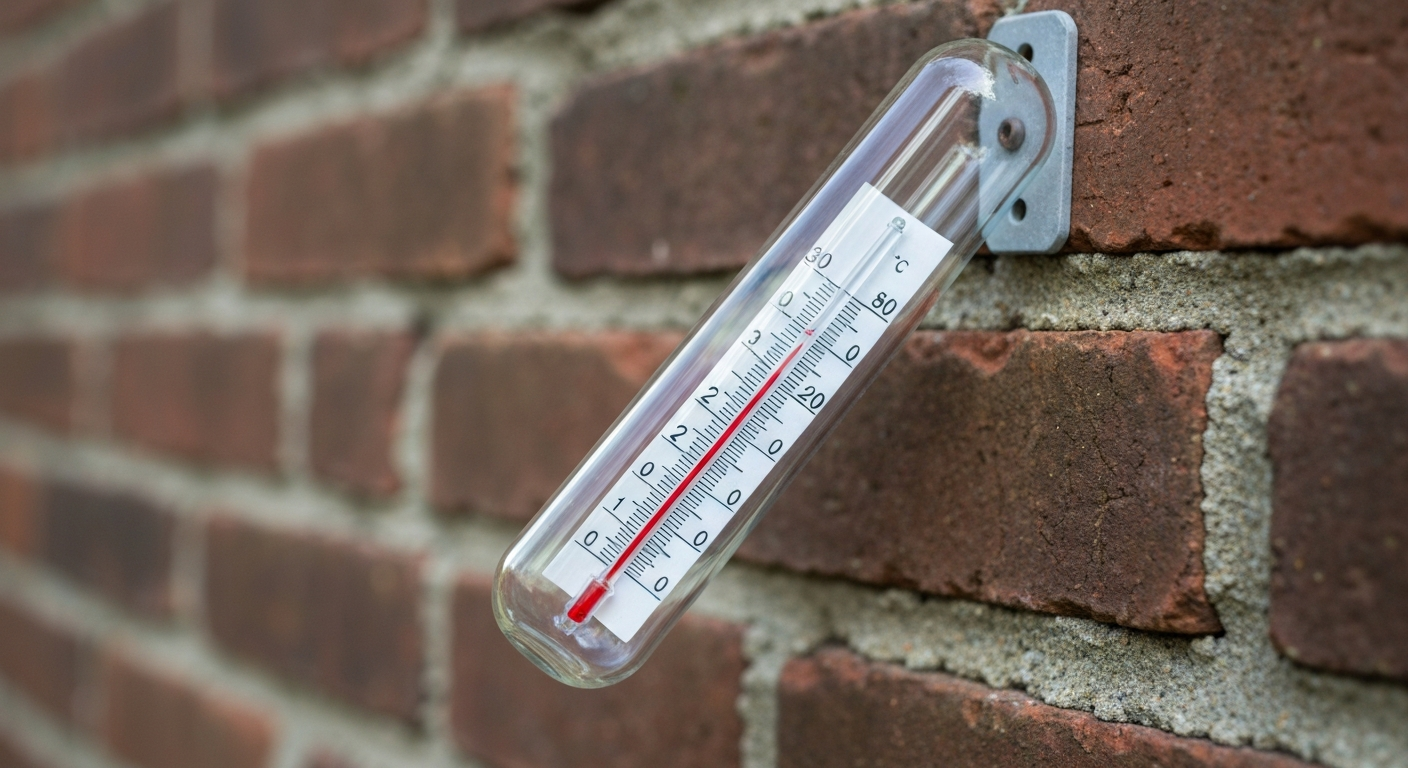
Analog thermometers are the traditional way to measure temperature. They work entirely mechanically and do not need a power source. The most common types are liquid thermometers and bimetal thermometers.
Liquid thermometers: These rely on the way liquids expand when warm and contract when cold. A colored liquid, usually alcohol and formerly mercury, rises or falls in a thin glass tube alongside a scale.
Bimetal thermometers: These are made from two metals with different expansion rates joined together. When the temperature changes, the metal strip bends and moves a pointer across a circular scale. They are often more durable than glass thermometers.
Their biggest advantage is their simplicity. They work without ever needing a battery change. Their design is often timeless and suits natural-looking gardens well. The downside is that the scales are often small and difficult to read from a distance or in poor light. Accuracy can decline over time.
The modern alternative: Digital thermometers
Digital thermometers use electronic sensors, usually thermistors or thermocouples. These sensors change their electrical resistance depending on the temperature. Small electronic circuits convert this signal into a digital reading and display it on an LCD.
Their advantages are easy to see: the large digits are very easy to read. Models with LED backlighting, such as the XXL model featured here, can be read at any time of day or night. They are generally more accurate than their analog counterparts and often offer additional features, such as a memory for minimum and maximum readings, a humidity display (hygrometer), or even a wireless connection to a base station inside the house.
Digital measurement technology has revolutionized precision at home. While analog devices depend on the quality of their mechanics, good digital sensors deliver consistently accurate readings that can be crucial for dedicated gardeners.
Why is an XXL format beneficial in the garden?
Size plays a crucial role in a garden thermometer. A small, discreet model may be unobtrusive, but you have to be close to read it. An XXL thermometer offers practical benefits that make everyday life easier.
Being able to read it from a distance is the biggest advantage. You do not have to go into the garden just to check the temperature. A glance from the kitchen window, the patio, or even an upper floor is enough. This saves time and is convenient, especially in poor weather.
A large thermometer can also be a striking design feature. It can enhance a bare wall or fence and add a modern touch. It shows your interest in the garden and nature. Combined with stylish planting, perhaps an artificial hedge such as the as a backdrop, the thermometer becomes a focal point.

What role does LED lighting play?
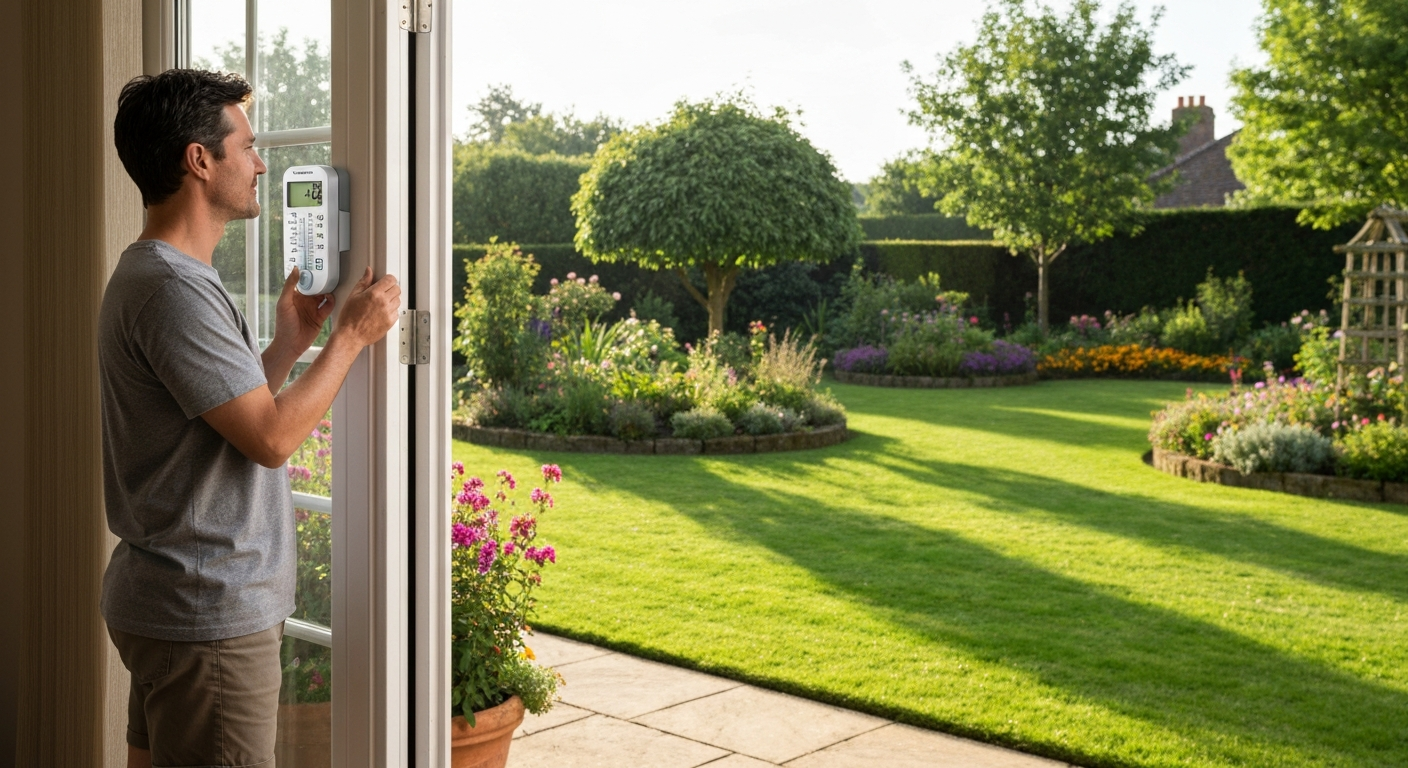
The temperature in the garden matters at night, too. For many plants, the most critical times are at night or early in the morning, when the risk of frost is greatest. That is when a thermometer with LED lighting comes into its own.
Pressing a button or using an integrated sensor turns on the display backlight. This lets you read the exact temperature even in complete darkness. It is essential when you need to decide at short notice whether delicate plants need to be covered. Modern LED technology is also highly energy-efficient, so the batteries last a long time.
Pro tip
Use the Min/Max function along with the LED display. Check the current temperature late in the evening. The next morning, check the stored minimum temperature to see how cold it got overnight. This information helps you assess your plants’ cold tolerance more accurately and plan ahead.
How Do You Find the Perfect Location for Your Garden Thermometer?
Even the best thermometer will give inaccurate readings if it is hung in the wrong place. Choosing the right location is crucial for accurately measuring the actual air temperature. Follow a few basic rules to avoid distorted results.
The most important rule is: avoid direct sunlight. If the thermometer is exposed to full sun, it measures the heat absorbed by the device's surface rather than the air temperature. The readings can be 10-15 °C too high.
Important Note
A south-facing wall is the worst possible location for an outdoor thermometer. The wall stores the sun's heat and continues to radiate it even after sunset. This leads to consistently inflated readings. Always choose a north-facing position instead.
Look for a location that is well ventilated but protected from strong winds and direct rain. A roof overhang on the north side of the house, a carport or a shady spot beneath a canopy are ideal. Mount the thermometer approximately 1.5 to 2 meters above the ground. If it is too close to the ground, heat radiated by the soil can affect the measurement.
More Than Just Temperature: Additional Features of Modern Outdoor Thermometers
Modern digital thermometers are often small weather stations. They provide useful additional information to help you assess conditions in your garden more accurately.
- Min/Max memory: As mentioned earlier, this is one of the most valuable features. It records the lowest and highest temperatures since the last reset. This lets you spot frosty nights and heat waves at a glance.
- Hygrometer: Measures relative humidity. High humidity can encourage fungal diseases in certain weather conditions, while very dry air can stress some plants.
- Time and date: A practical addition that turns the thermometer into a multifunctional display for your home's exterior wall.
For gardeners, it is not just the absolute temperature that matters, but also how it changes over time. The Min/Max function is a simple yet powerful tool for understanding and responding to the microclimate in your own garden.
Care and Maintenance: How to Keep Your Thermometer Accurate for Years
An outdoor thermometer is exposed to the elements. With a little care, you can ensure that it continues to work reliably for years.
Clean the casing regularly with a damp cloth to remove dirt, dust and cobwebs. For digital devices, keep the sensor ventilation slots clear. Do not use harsh cleaning products, as they could damage the plastic casing or seals.
For digital models, replacing the batteries is the most important maintenance task. A low battery is usually indicated on the display. Use high-quality alkaline batteries and make sure the battery compartment is closed securely and watertight again. Looking after your measuring instruments is just as important as caring for your garden tools. A sharp, clean tool such as the also works better—the same principle applies to your thermometer.
Additional Advice
It is best to replace the batteries in your digital thermometer once a year, preferably in the fall. Cold winter temperatures put more strain on batteries. Replacing them preventively ensures that the device continues to work reliably even in severe frost.
Conclusion: Digital and XXL for the Modern Garden
Choosing between a digital and an analog garden thermometer comes down to your priorities. Analog models appeal with their nostalgic charm and maintenance-free operation. They are a good choice for purists and locations where easy readability is not a particular requirement.
For most garden owners, however, an XXL digital LED thermometer offers more compelling advantages. Excellent readability in all lighting conditions, greater accuracy and useful features such as Min/Max memory make it an indispensable helper for everyday gardening. Models such as the combine all these strengths and are a worthwhile investment for anyone who loves and cares for their garden.
Frequently Asked Questions
- How accurate are digital garden thermometers?
- Very accurate. Modern digital thermometers often have an error margin of just ±1 °C. However, the correct location—protected from direct sunlight and heat sources—is even more important for accuracy.
- Does an LED garden thermometer use a lot of power?
- No, LED technology is very energy efficient. Models such as the XXL garden thermometer from Westfalia use batteries that last for months under normal use. Some models even have solar panels.
- Where is the best place for an outdoor thermometer?
- Mount it in a shady location, ideally on a north-facing wall, about 1.5 to 2 meters above the ground. Avoid direct sunlight, rain and areas near doors, windows or ventilation openings.
- Can I use an indoor thermometer outdoors?
- This is not recommended. Outdoor thermometers are specially designed to withstand weather conditions such as moisture, UV radiation and temperature fluctuations. An indoor device would quickly become damaged and provide inaccurate readings.
- What does the Min/Max function mean on digital thermometers?
- This function stores the highest (Max) and lowest (Min) temperature measured over a specific period, usually 24 hours. This makes it easy to track overnight frost or temperature spikes, even when you are not constantly checking the display.
You May Also Be Interested In
- XXL LED Garden Thermometer: How to Set Up, Read & Use It
- Solar vs. Wireless Weather Station: The Ultimate Comparison
- Garden Planning with a Weather Station: Data for Optimal Growing
- Tripod Impact Sprinkler: The Clear Winner for Large Gardens?
- Garden Weather Folklore: Putting Old Wisdom to Use
- Fever Thermometer Review & Comparison 2026