
In brief: Water your yucca plant moderately but thoroughly. Allow the top 5-7 cm of soil to dry out completely between waterings. In summer, this means about every 1-2 weeks; in winter, only every 3-4 weeks. The key is to avoid waterlogging at all costs, as it causes root rot.
Table of contents
- Why is watering a yucca plant correctly so important?
- How often should you water a yucca plant? The seasonal routine
- The right watering technique: What matters?
- Recognising and correcting signs of incorrect watering
- Location: How does it affect water requirements?
- Fertilising and watering: How are they connected?
The yucca plant, also known as the yucca palm, is a hardy, easy-care houseplant that brings a touch of desert flair into your home with its exotic appearance. Its undemanding nature makes it ideal for beginners. However, there is one thing it does not forgive: incorrect watering. Too much water is the most common reason why a yucca plant dies. This guide shows you how to provide your plant with the right amount of water so it stays strong and healthy for years to come.
If you are still looking for an impressive specimen, the flowering yucca plant - Yucca is an excellent choice for brightening up your home. It embodies the resilience we will discuss in detail below.
Why is watering a yucca plant correctly so important?
To understand a yucca plant's watering needs, you need to know where it comes from. It originates in the dry, desert-like regions of Central and North America. There, it has adapted perfectly to long periods without rain. Its thick trunk is not merely decorative; it serves as an efficient water reservoir. The plant can draw on these reserves when rainfall is scarce.
This adaptability also means that the plant is extremely sensitive to constant moisture. If the roots remain in water for too long, they are deprived of oxygen and begin to rot. This root rot is often fatal for the plant, as it spreads quickly and blocks nutrient uptake. When watering a yucca plant, less is definitely more.
The yucca plant is a survivor from dry regions. Its sturdy growth is no coincidence, but the result of an ingenious water reservoir. Once you understand this, you will water it less often, but properly.
How often should you water a yucca plant? The seasonal routine
There is no one-size-fits-all answer to how often you should water it. It depends on the time of year, the location and the size of the plant. The most important rule is: water according to need, not according to a fixed schedule.
Watering in spring and summer (growing season)
During the bright and warm months from around April to September, the yucca plant is in its active growing phase. It produces new leaves and needs more energy for this, and therefore more water as well. During this period, water your yucca about every one to two weeks. However, always check the soil before watering.
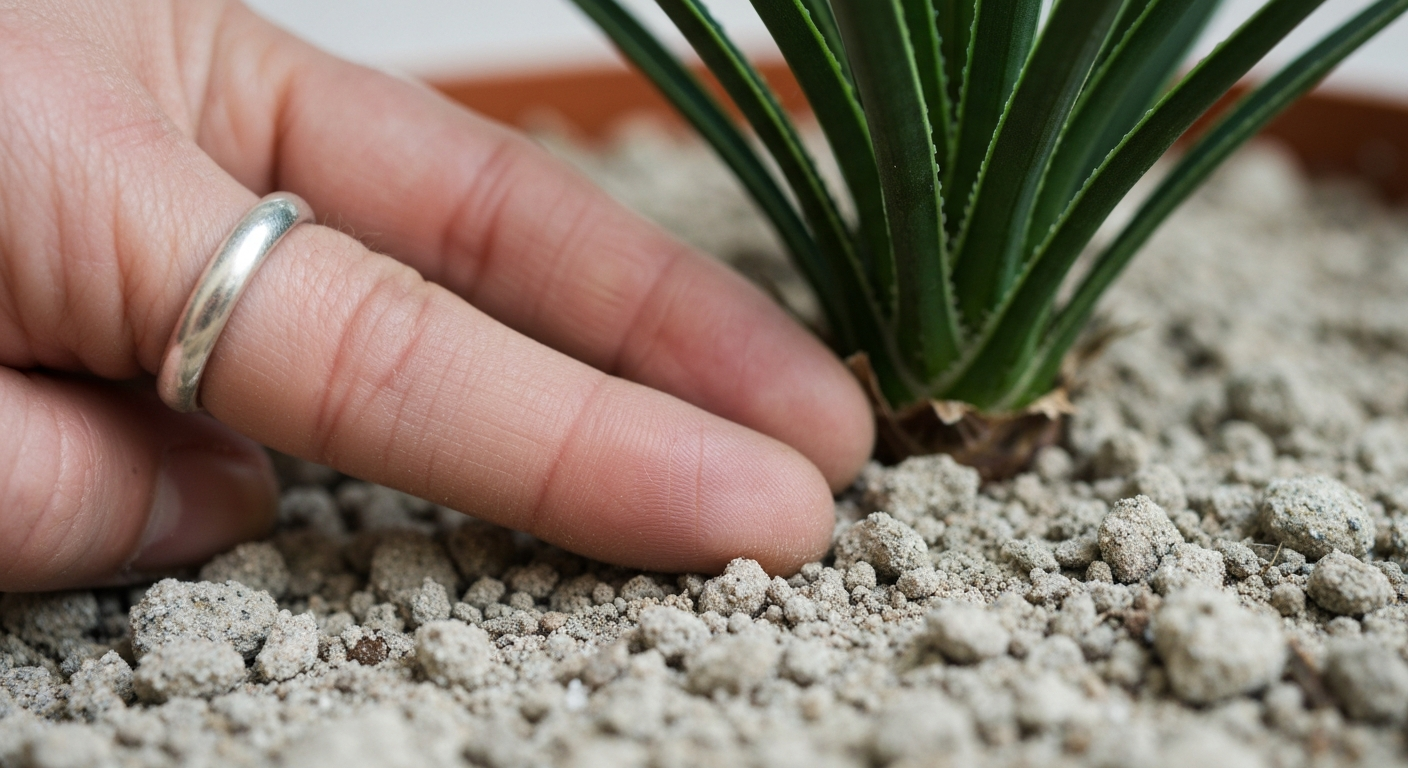
The top layer of soil, measuring 5-7 cm, should be completely dry before you reach for the watering can again. The plant prefers a cycle of thorough watering followed by a clearly defined dry period.
Watering in autumn and winter (dormant period)
As the days become shorter and cooler, the yucca plant enters dormancy. Its growth slows considerably, and its water requirements drop sharply. Extra care is needed now to avoid overwatering. Reduce the watering intervals significantly to every three to four weeks, or sometimes even less often.
Water evaporates very slowly, especially in cooler rooms. Allow the substrate to dry out almost completely between waterings. Dry central-heating air can slightly increase the plant's water requirements, but the risk of root rot from watering too frequently remains greatest in winter.
Important note
Waterlogging is your yucca plant's greatest enemy. Make sure you use a pot with a drainage hole and empty the saucer or cachepot no later than 30 minutes after watering. Permanently wet roots inevitably lead to root rot.
The right watering technique: What matters?
It is not just how often you water; the way you water also plays a decisive role in the health of your yucca plant. With the right technique, you can ensure that the water reaches the roots without damaging the plant.
The finger test: The best indicator of water requirements
Do not rely on fixed schedules or the appearance of the soil surface. The most reliable test is the finger test. Insert your finger about 5-7 cm deep into the substrate. If the soil feels dry and crumbly at this depth, it is time to water. If it still feels damp or cool, wait a few more days and test again.
Pro tip
For an even more accurate reading, you can use a moisture meter. These simple tools from the garden and plant supplies section show you precisely how moist the soil is around the roots, taking the guesswork out of watering.
Water thoroughly instead of giving frequent sips
When you water, do it properly. Add enough water for it to run out of the drainage holes in the bottom of the pot. This method ensures that the entire root ball is moistened evenly and that the lower roots also receive water. Small, frequent sips often moisten only the top layer of soil, while the lower part remains dry and the roots wither.
After watering thoroughly, allow the plant to drain well. As mentioned above, any excess water in the saucer must be removed.
Which water is best for a yucca plant?
Yuccas are fairly tolerant when it comes to water quality. They generally cope well with ordinary tap water. However, low-limescale water at room temperature is ideal. If possible, use rainwater. Alternatively, simply leave tap water in an open watering can for 24 hours. This allows some of the limescale to settle and brings the water to room temperature, preventing a cold shock to the roots.
Recognize and remedy signs of incorrect watering
Your yucca palm communicates with you. Its leaves and trunk reveal whether it is thriving. Learn to interpret these signals so you can react quickly.
Symptoms of overwatering (waterlogging)
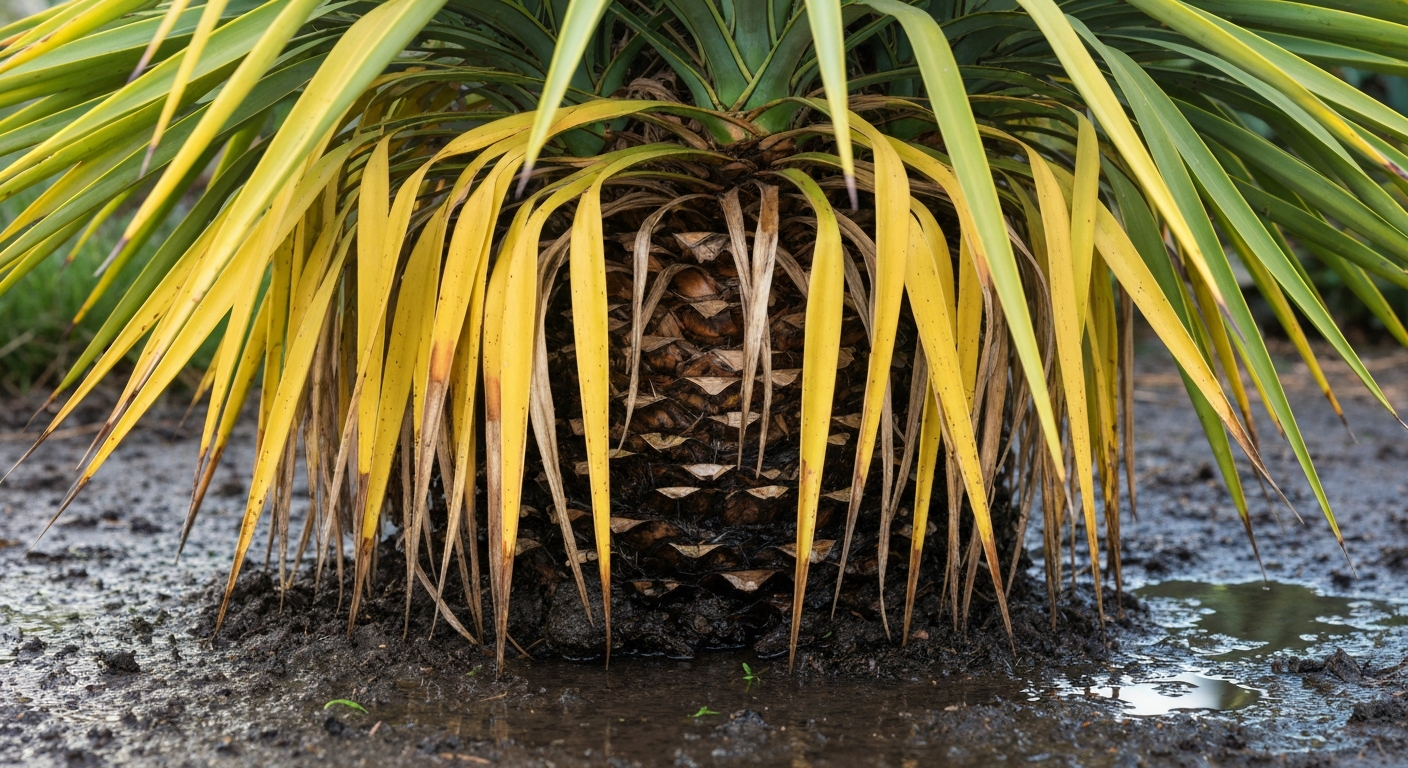
This is the most common problem. Look out for the following signs:
- Yellow, soft leaves: The lower leaves in particular become mushy and yellow and fall off easily.
- Soft trunk: The trunk feels soft and spongy at the base. This is an advanced sign of rot.
- The soil smells unpleasantly rotten.
- Mould on the soil surface.
What should you do? Act immediately. Stop watering altogether. If the symptoms are mild, it is often enough to let the soil dry out completely. If the trunk is already soft, remove the plant from its pot, cut away all rotten roots and repot it in completely fresh, dry palm potting soil.
Symptoms of underwatering
Although less common, too little water can also harm the plant:
- Brown, dry leaf tips: The tips of the leaves become brittle and brown.
- Floppy, drooping leaves: The leaves lose their firmness.
- Sunken, wrinkled trunk: The plant is beginning to use up its water reserves.
What should you do? The solution is simple: Water the plant thoroughly using the method described above. If it has dried out severely, you can also place the pot in a bucket of water for an hour (the immersion method) so the root ball can absorb water fully. Allow it to drain well afterwards.
Location: How does it affect water requirements?
Your yucca's water consumption depends directly on its location. A plant positioned in a sunny south-facing window uses significantly more water through increased evaporation and stronger photosynthetic activity than a plant in a darker corner.
Always adapt your watering routine to the light and temperature conditions. The brighter and warmer the location, the shorter the intervals between watering. The darker and cooler it is, the less often you need to water. This also explains the greatly reduced requirements in winter, when both light intensity and day length decrease.
Waterlogging is a sure death sentence for almost all desert plants. Good drainage and a pot with drainage holes are absolutely essential. The roots need to be able to breathe, otherwise they will rot.
Fertilising and watering: How are they connected?
Nutrient supply is closely linked to watering. Only fertilise during the growing season from spring to summer, approximately every four weeks. The order is important: Always water first with plain water and only then add the fertiliser solution.
Watering beforehand protects the sensitive roots from being scorched by the concentrated nutrient salts in the fertiliser. Use a specialist fertiliser such as Palm & Yucca Fertilizer Liquid, which is tailored to the needs of these plants. Stop fertilising completely in autumn and winter, as the plant cannot use the nutrients during its dormant period.
Would you like to grow two magnificent specimens at once? Then the set with two flowering yucca plants is a good option.
Additional tip
Regularly wipe dust from your yucca's leaves with a damp cloth. Clean leaves can absorb light more effectively and carry out photosynthesis more efficiently. This contributes to your plant's overall health and vitality and makes it look even more attractive.
By following these simple but crucial rules for watering your yucca palm, you are laying the foundations for a long and healthy plant life. Observe your plant, trust the finger test and always remember: Less water is almost always the better choice. This way, your hardy yucca will give you many years of enjoyment in your Garden + Outdoor area or living room.
Frequently Asked Questions
- How often should I water my yucca in winter?
- Very rarely. Drastically reduce watering in winter. Check the soil: if it is dry several centimetres below the surface as well, give the plant a little water. An interval of 3 to 6 weeks is often sufficient, depending on the room temperature and humidity.
- Why does my yucca palm have yellow leaves?
- Yellow leaves are the most common sign of overwatering. The root ball is permanently too wet, which leads to root rot. More rarely, it may also be caused by a nutrient deficiency. First check the moisture level of the soil and adjust your watering routine.
- Can I use tap water for my yucca palm?
- Yes, but it is best to use water that has been left to stand. Leave it in the watering can for 24 hours. This allows the chlorine to dissipate and brings the water to room temperature, which is better for the roots. Low-lime water or rainwater is ideal.
- What do brown leaf tips mean on a yucca?
- Brown, dry leaf tips usually indicate dry air or a lack of water. Although yuccas like dry conditions, they still need regular watering. Slightly increase the amount of water or occasionally mist the plant, especially in dry winter air caused by central heating.
- Do I need to empty the saucer after watering?
- Absolutely. Remove any water that collects in the saucer or cachepot after watering after approximately 15-30 minutes. If the roots remain in water, this inevitably leads to waterlogging and root rot, the yucca palm's greatest enemy.
You may also be interested in
- Watering correctly: How to keep your plants healthy
- Watering correctly: Avoid common mistakes when watering plants
- How to water plants correctly in summer
- How to water your lawn in hot weather and keep it green
- Poinsettia care: How to keep it looking beautiful for longer
- Dragon tree care: The thornless agave at a glance