
In brief: To adjust a window properly, first check the seal pressure with a sheet of paper. If the window rubs against the frame, adjust its height at the corner hinge and its side position at the stay hinge with an Allen wrench. To stop drafts, turn the locking cams on the window sash to increase pressure against the seal and save energy.
Feel a cold draft coming from your window even though it’s closed? Are your energy bills going up for no obvious reason? The cause may be simpler than you think: your windows might be out of alignment. Over time, hardware can loosen and frames can warp. The result is a draft that’s uncomfortable and drives up your energy bills. The good news is that you can often fix the problem yourself with a few simple adjustments.
This guide shows you how to adjust your windows, check the seals, and make your home more comfortable while lowering your energy costs. You don’t need expensive tools or prior experience—just a little time and the right adjustments.
Why is it important to adjust your windows?
Properly adjusted windows do more than make your home comfortable. They’re essential for energy efficiency and a healthy indoor environment. A well-adjusted window closes tightly and protects your home from the elements.
The most obvious benefit is energy savings. Gaps around windows let cold air in during winter and warm air escape. Your heating system has to work harder to make up for the heat loss, driving up your energy bills. In summer, the opposite happens: your air conditioner has to work harder to counter the heat coming in.
Another important benefit is protecting your home. Drafts can carry moisture into the window opening. There, it can condense and create ideal conditions for mold. Adjusting your windows promptly can help prevent this damage and the costly repairs that come with it. It also protects the window hardware: when the sash doesn’t rub or stick against the frame, the entire window can last longer.
Up to 15 percent of heating energy can be lost through leaky windows and doors. Adjusting them properly is one of the quickest and most affordable ways to reduce this loss.
How can I tell if my window needs adjusting?
Before you reach for your tools, identify the problem. A few simple checks can show you whether your window is letting in air or sticking—and where.
The paper test
This simple test checks how tightly the window seals. Open the window and place a regular sheet of paper between the sash and the frame. Close the window completely, then try to pull the paper out. If it slides out easily or without resistance, the seal pressure is too low and drafts can get through. Repeat the test at several points around the window.
The candle test
For this test, you’ll need a candle or lighter. Slowly move the lit flame along the closed window frame, keeping it at a safe distance. If the flame flickers at any point, it may indicate an air leak. Be especially careful during this test, particularly near curtains.
Visual and functional inspection
Open and close the window several times and listen for unusual sounds. Popping, squeaking, or rubbing can mean that the sash isn’t sitting properly in the frame. Also check the rubber seals for cracks, brittleness, or warping. A damaged seal can’t keep out drafts, even if the window is adjusted correctly.
Extra tip
A thorough cleaning is the first step in any maintenance routine. Remove dirt from the frame, seals, and hardware. This makes it easier to spot damage and helps the mechanism work smoothly. A clean work area also makes adjustments easier. A simple glass cleaner such as the
or, for larger areas, the powerful is ideal.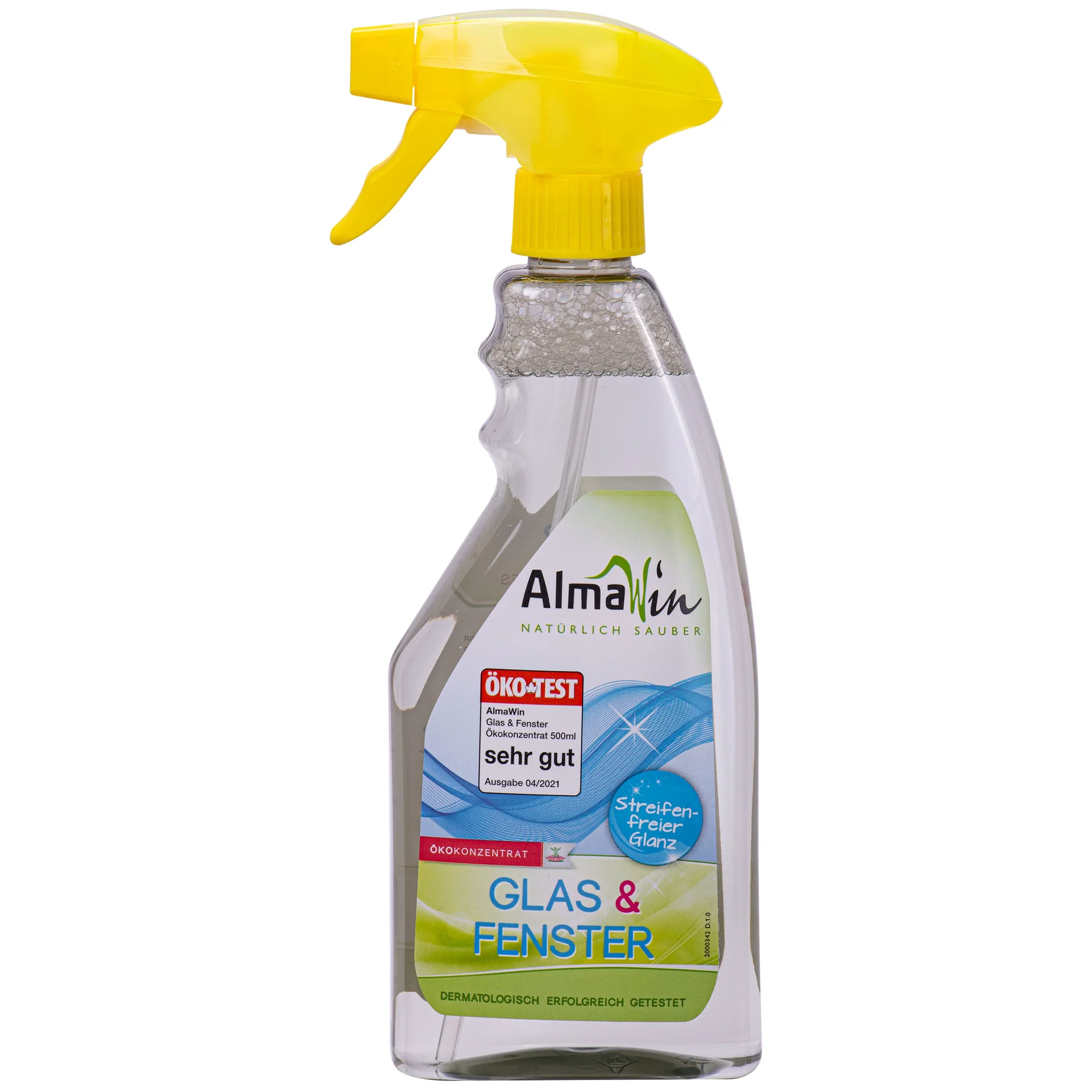

What tools do I need to adjust a window?
For most modern windows, you don’t need complicated equipment. You probably already have the most common tools at home.
- Allen wrench (usually 4 mm): This is the most important tool. Almost all adjustment screws on modern windows are designed for Allen wrenches.
- Flathead and Phillips screwdrivers: Some cover caps or older hardware are secured with screws.
- Flat-nose or combination pliers: You’ll rarely need these, but they can help turn stiff locking cams.
- Maintenance oil or silicone spray: Use these to lubricate the moving parts of the hardware after adjusting the window.
Lay out your tools before you begin to avoid unnecessary interruptions. Remember that seasonal home maintenance is just as important as maintaining your windows. Just as you might put on a patio furniture cover in the fall, you should also get your windows ready for the cold season.
Step-by-step guide: How to adjust your windows yourself
Modern tilt-and-turn windows generally have three adjustment options: height, side-to-side position, and compression. Work systematically and change only one setting at a time.
H3: Height adjustment: When the window rubs against the frame
If the window sash rubs against the bottom of the frame when opening or closing, you need to raise it.
- Open the window sash.
- Locate the corner hinge. This is the hinge at the lower corner on the side opposite the handle.
- Remove the plastic cover cap, if present. You will find an adjustment screw underneath.
- Turn the screw clockwise with an Allen wrench to raise the sash. Turning it counterclockwise lowers it.
- Close the window regularly to check the result. Gradually work your way toward the perfect height.
Pro tip
Before each turn, make a small pencil mark on the screw and the frame. This lets you return to the original position if you adjust it too far.
H3: Side-to-side adjustment: Correcting the side clearance
If the sash rubs against the frame at the side, either on the handle side or the hinge side, adjust its side-to-side position.
Make the adjustment at two points:
- At the lower corner hinge: There is another screw here that moves the bottom of the sash to the left or right.
- At the upper scissor hinge: This is the hinge at the top on the hinge side. Open the window to access the adjustment screw. This moves the upper part of the sash to the left or right.
Here too, turn the screw in small increments and check the result regularly. The aim is to achieve an even gap between the sash and frame on all sides.
H3: Adjusting the compression: The battle against drafts
This is the most important adjustment for eliminating drafts. Compression is regulated using the locking cams (also known as mushroom-head cams or eccentric locking cams). These are located on the side of the window sash.
- Open the window and locate the round or mushroom-shaped cams. There may be several, depending on the window size.
- These cams have a mark (a dot or notch) or an eccentric shape.
- Turn the cams with an Allen wrench or pliers. The rule is simple: Turn the cam toward the weatherstripping to increase compression (winter setting). Turn it away from the weatherstripping to reduce the pressure (summer setting).
- Make sure that all locking cams on the window have the same setting.
Excessive compression makes the window difficult to close and causes the weatherstripping to wear out more quickly. Find the point at which the window is airtight but can still be operated easily.
Important note
Never force the adjustment screws all the way to the stop. Excessive tension can damage the hardware. Small, gradual adjustments produce the best results and protect the material.
When is professional window repair necessary?
Adjusting your windows is an effective first-aid measure. However, there are limits. If you continue to have problems despite making all the adjustments, there may be a more serious defect. Professional window repair or even replacement may then be unavoidable.
Signs of serious problems:
- Severely damaged or worn weatherstripping: If the rubber weatherstripping is cracked or hard, even the highest compression will no longer help. Weatherstripping wears out and needs to be replaced after a few years.
- Warped frame: If the window frame itself has warped, the sash can no longer be fitted correctly. This is often the case with old wooden windows.
- Faulty mechanism: If the handle can no longer be turned properly or parts of the hardware are broken, the window needs to be repaired by a professional.
- Failed double-pane window: If condensation continually forms between the panes of glass, the insulated glass unit is no longer airtight and has lost its insulating performance.
When quick fixes such as a
are no longer enough to stop drafts, it is time for a closer look. Comprehensive home maintenance, including checking not only windows but also other sensitive areas such as connections in Plumbing + Irrigation, can save you a lot of money in the long term. You will find all the tools and materials you need in our Shop.
Modern window weatherstripping is high-performance, but it also wears out. When it becomes brittle or cracked, the entire window loses its airtight seal. Replacing it in time is often the most cost-effective solution.
Regularly maintaining and adjusting your windows is a small investment that quickly pays off. You save on heating costs, increase your comfort at home, and protect your home from moisture damage. Take the time for a quick check and enjoy a warm, draft-free home.
Frequently asked questions
- How often should I adjust my windows?
- Ideally, check your windows twice a year, in spring and fall. Adjust them only if you feel a draft, a window sticks, or it’s difficult to close. This ensures the window presses firmly against the seal in every season and the hardware continues to operate smoothly.
- What’s the difference between summer and winter settings on a window?
- The winter setting increases the pressure, so the window presses more firmly against the seal and keeps cold air out. The summer setting reduces the pressure, which protects the seals and allows slight air circulation. This significantly extends the seals’ service life.
- How much does it cost to have windows professionally adjusted?
- Having a window professionally adjusted by a contractor usually costs between €20 and €50 per window. The price varies depending on the work required, the region, and travel costs. Many businesses offer lower package prices for several windows.
- Can I adjust every modern window myself?
- Yes, you can adjust almost all modern vinyl, wood, and aluminum windows with tilt-and-turn hardware yourself. You usually only need an Allen wrench and a screwdriver. Very old windows or models with special hardware may be exceptions and may require a professional.
- My windows are still letting in drafts even though they’re adjusted correctly. What can I do?
- If the draft remains after adjustment, the seals are probably porous or damaged. Check the rubber seals for cracks and brittleness. Replacing the seals is often the next sensible, cost-effective step before you consider replacing the windows entirely.
You may also be interested in
- Replace your windows and save on heating costs: a path to energy efficiency
- Lower your heating bills: tips for saving energy at home
- Lower your heating bills: bleed your radiators and heat your home efficiently
- Replace your windows: find grants and lower energy costs
- Get your windows ready for winter: prevent and repair freeze damage
- Lower your heating bills: use blinds and curtains effectively