
In brief: The air change rate describes how many times the volume of air in a room is theoretically replaced each hour. For a healthy indoor climate, air your home briefly and thoroughly several times a day, and after showering and cooking. Check humidity with a hygrometer and adjust your routine to the weather, how you use the room and the room itself.
Fresh air reduces moisture and carries stale indoor air away. How quickly this happens depends on the air change rate, window ventilation and how the rooms are used. Ventilating at the right times improves indoor air quality while limiting heat loss. You don't need complicated calculations: keep an eye on humidity, odours and common sources of moisture around the home.
This guide explains what the air change rate tells you, how to ventilate properly and how to tell when you should adjust your routine. The advice is suitable for flats and houses with window ventilation. Buildings with a ventilation system also need to follow the instructions for that particular system.
What does the air change rate mean at home?
The air change rate describes how many times the volume of air in a room is theoretically replaced within an hour. It is measured per hour. For example, an air change rate of 0.5 per hour means that the equivalent of 50 percent of the room's air volume is replaced in one hour. This figure is a guide: it does not mean that every air particle is evenly replaced.
The amount of fresh air that actually enters a room depends on factors such as wind, the temperature difference, window size and how long the window is open. The position of windows opposite each other also matters. Cross ventilation often moves air through a home faster than opening just one window. Furniture, closed interior doors and awkward layouts can slow the airflow.
In everyday life, you usually don't need to calculate the air change rate yourself. What matters is whether you can reliably remove moisture and odours while keeping the room at a comfortable temperature. Pay particular attention to spikes in humidity after showering, cooking or drying laundry. In a well-sealed or renovated home, less outside air gets in through gaps than in an older, less airtight building. That makes a regular ventilation routine more important.
Visible signs can give you a first indication: condensation on windows, a musty smell or consistently high humidity suggest that you should check the air exchange. These signs don't identify the underlying cause. If moisture persists despite regular ventilation, there may be a structural issue.
In essence: Regularly opening windows wide and creating a through-draught removes damp, stale indoor air and brings in fresh air from outside.
How often should you ventilate?
Open the windows several times a day for a brief, thorough exchange of air. The exact amount of time depends on the weather: air usually changes faster when it's cold outside than on a mild, still day. In winter, a few minutes is often enough; in spring and autumn, it may take longer. Use these times as a practical guide and close the windows once the indoor air has clearly been refreshed.
If you can open windows on opposite sides of your home, cross ventilation creates a strong airflow. Open the interior doors too if you want to air several rooms at once. Ventilate individual rooms separately when you only need to remove moisture or odours from those rooms. Keep bedroom doors as suits your heating and ventilation setup.
- In the morning: Air bedrooms and living areas after getting up. People release moisture into the air while they sleep.
- After showering: Open the bathroom window or use the extractor fan. Don't let damp air drift into colder rooms.
- When cooking: Use the cooker hood if you have one, and ventilate as well if steam lingers.
- When drying laundry: Take moisture directly outside or ventilate the drying room specifically.
- In the evening: Refresh the air before bed, especially if several people have spent time in the room during the day.
A window left on the latch is no substitute for thorough ventilation. It usually changes the air more slowly and can cool the areas around the window and reveal in winter. This increases heating demand and, in unfavourable conditions, can contribute to moisture problems on cold surfaces. Open windows fully instead, then close them again once you've finished ventilating.
Pro tip
Set regular times to ventilate after getting up and after cooking. If you can open windows on opposite sides of your home, create a brief through-draught. This removes damp air quickly instead of leaving windows on the latch for a long time.
The layout and furnishings also affect airflow. Avoid placing large pieces of furniture right against external walls if this prevents air from circulating. Keep ventilation slots and extractor vents clear. Textiles and furniture can affect airflow in bedrooms and children's rooms, so choose curtains for children's rooms that leave windows and radiators accessible.
How can you tell if indoor air is too humid?
Relative humidity describes how much water vapor the air contains compared with the maximum it can hold at a given temperature. Warm air can hold more moisture than cold air. So the same amount of water vapor can result in higher relative humidity as the temperature drops. Pay particular attention to cold exterior walls and areas around windows during the heating season.
A relative humidity of around 40 to 60 percent is a useful guideline for many living spaces. The right level depends on the room and its temperature. Humidity can rise temporarily in kitchens and bathrooms. Ventilate after these spikes instead of relying on a single reading. A hygrometer shows whether humidity drops after ventilating and rises again later.
The digital indoor climate station and thermo-hygrometer measures temperature and relative humidity and displays trends as well as MIN/MAX values. This lets you compare readings throughout the day and see whether your ventilation routine is working. Don’t place the device right by a window, above a radiator or in direct sunlight. Readings in these spots may not accurately reflect the air in the room.
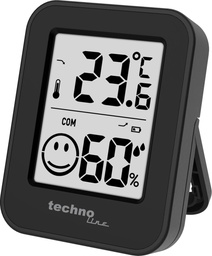
A consistently high reading may indicate insufficient air exchange, multiple sources of moisture or a cold surface. Check whether furniture is placed directly against exterior walls and whether you ventilate adequately after showering or cooking. If certain areas of a wall stay damp, water stains appear or visible mold grows, look for the cause. Ventilating alone won’t fix moisture damage to the building.
Important note
Simply ventilating more won’t permanently get rid of visible mold. If stains remain or return, have the source of moisture checked. Avoid dry-brushing affected areas, as this can spread spores into the air.
Your furnishings can also affect your daily routine. Heavy curtains or large pieces of furniture placed directly in front of an exterior wall can restrict airflow across the surface. Leave some space if the wall feels cold, and keep radiators clear. When setting up a new nursery, choose a layout that allows good airflow. For example, pick furniture from a complete nursery furniture set that suits the size of the room.
How can you save energy when ventilating?
Ventilating lets warm indoor air escape. You can’t avoid this entirely, because fresh outdoor air needs to be warmed again. Save energy by ventilating briefly with the windows wide open, then closing them. Leaving windows tilted open for long periods cools down surfaces and building components. The heating system then has to work longer to warm the room again.
Turn down the thermostat valves while ventilating if they respond directly to the cold air coming through an open window. Close the windows once the air has circulated, then set the room to your desired temperature again. Heat rooms evenly and avoid letting warm, humid air flow into much cooler rooms. This can cause condensation on cold surfaces.
You don’t need to cool down your whole home every time you ventilate. Open the windows in the rooms where you want to exchange the air, and close interior doors if you want to keep moisture or odors from spreading to other rooms. In summer, ventilate during the cool early morning hours or late in the evening. Closed windows and exterior shades can help keep the heat out during the day.
A mechanical ventilation system can provide regular air exchange. Run it according to the manufacturer’s instructions, and keep filters and maintenance intervals in mind. Don’t leave the system switched off just because opening the windows seems quicker. If you need to adjust the system’s air exchange rate, contact a qualified professional who can take the building and how it’s used into account.
In brief: In winter, opening the windows wide for a short time quickly exchanges the air; leaving them tilted open can cool walls and the areas around windows.
How can you improve your indoor climate day to day?
A healthy indoor climate comes from a few simple habits. Ventilate as needed, keep an eye on sources of moisture and make sure air can circulate through the room. These indoor air quality tips can help you find a routine that works:
- Deal with moisture at the source: Close the bathroom door while showering, then vent the steam outside through a window or exhaust fan.
- Clear cooking steam: Cover pots while cooking and use the range hood if it vents outdoors or has a suitable filter.
- Dry laundry with care: Dry laundry outside whenever possible, or ventilate the room where it’s drying.
- Track readings over time: Compare temperature and humidity at similar times of day. A recurring pattern tells you more than a single reading.
- Keep airflow paths clear: Don’t place furniture directly in front of exhaust vents or cover radiators with long fabrics.
Home textiles collect dust and moisture, but they aren’t automatically a problem. Wash or clean them according to the care label, and ventilate rooms where lots of textiles are drying. In a nursery with romantic-style decor and muslin textiles, the same rule applies: keep windows accessible and prevent air from stagnating behind closely placed furniture.
If you want to improve indoor air quality, pay attention to odors and potential sources of pollutants too. Ventilate after using strong-smelling cleaning products, and keep chemicals tightly closed. Air fresheners can mask odors, but they don’t remove moisture or its source. If odors persist, check drains, textiles and any areas that may be damp.
Another tip
For a week, record the temperature and humidity each morning and evening. Add readings after showering or cooking. This helps you see which rooms need more attention and whether shorter, targeted ventilation is enough.
Air exchange rate is a useful term, but it isn’t the only measure of your home’s air quality. What matters is maintaining reliable air exchange that suits the weather, room and how it’s used. Ventilate briefly with the windows wide open, remove moisture at its source and track humidity over several days. This routine can improve indoor air quality and help you save energy at home.
Frequently Asked Questions
- What does the air change rate in a home mean?
- The air change rate indicates how many times the volume of air in a room is theoretically replaced within one hour. A rate of 0.5 per hour means that half the room's air volume is theoretically replaced in one hour. On its own, however, it does not tell you whether every area is well ventilated or how much heat is lost in the process.
- How often should I ventilate my home?
- Air out your home several times a day by opening the windows wide for a short time. How often you need to do this depends on the number of occupants, how you use each room, and the humidity level. After showering, cooking, or drying laundry, let moist air outside promptly. In winter, airing out your home usually takes less time than in mild weather.
- What is a good humidity level for living spaces?
- As a general guide, relative humidity in many living spaces should be around 40 to 60 percent. The right level depends on the temperature, room, and time of year. If humidity stays high for an extended period, ventilate more often and check for possible sources of moisture. A hygrometer tracks humidity over time, but it cannot replace checking for damage.
- Is it a good idea to leave a window tilted open for ventilation?
- A tilted window usually exchanges air more slowly than a fully open window. In winter, leaving a window tilted for long periods can cool the window reveals and adjacent walls. Instead, open the window fully for a few minutes, then close it again. Cross-ventilation often exchanges the air more quickly.
- How can I save energy when ventilating my home?
- Open windows fully for a short time instead of leaving them tilted for long periods. Turn down the thermostatic radiator valves while the windows are open, then close the windows again. Ventilate after periods of high humidity and adjust the time according to the outdoor temperature. Operate and maintain a ventilation system according to the manufacturer's instructions.
You might also be interested in
- How to ventilate your bedroom for a healthier indoor climate
- Effective ventilation systems for healthy indoor air at home
- How to ventilate with a fan: Control humidity and prevent mold
- Air purifiers for better indoor air quality: What to look for
- Home ventilation with heat recovery: Energy efficiency for your home
- Healthy indoor air: Which plants can improve your home's air quality?