
In brief: Choosing the right air compressor depends on how you plan to use it. For occasional DIY tasks, smaller 12-volt models or complete sets are often sufficient. Demanding commercial applications require powerful stationary compressors. Key factors include pressure, air delivery, tank capacity and the right accessories. Our comparison shows you the best models for your needs.
Air compressors and pneumatic tools are indispensable helpers in the workshop and around the home. They provide the power needed for demanding tasks and make many jobs easier. Our 2026 test and comparison shows you which tools and sets really deliver.
What types of air compressors and pneumatic tools are available?
Air compressors and pneumatic tools differ fundamentally in their design and intended use. Choosing the right one saves time and money.
Stationary compressors
Stationary compressors deliver high performance for demanding tasks. They are ideal for workshops with a continuous need for compressed air. A large tank ensures a constant air supply.
Portable compressors
Portable compressors are lightweight and easy to transport. They fit in any car boot and are ideal for building sites or outdoor use. Look for a robust design and sufficient power.
12-volt air pumps
12-volt air pumps such as the
work independently. They are ideal for use on the go. You can run them anywhere with a battery or car cigarette lighter. These devices are particularly useful for roadside emergencies or camping.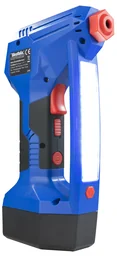
What should you look for when buying an air compressor?
Technical specifications determine practical performance. These factors are particularly important.
Pressure and air delivery
Working pressure is measured in bar. Look for at least 8 bar for most applications. Air delivery in litres per minute shows how quickly the tank refills. Higher values mean shorter waiting times.
Tank capacity
Tank capacity determines the available air reserve. Small tanks under 10 litres are suitable for short jobs. Large tanks over 50 litres are designed for continuous use. Choose according to how long you typically use the compressor.
Connections and compatibility
Standard connections ensure compatibility with accessories. Make sure your existing equipment fits. An air tool should always have compatible connections.
Tip: Invest in high-quality air hoses. Cheap hoses can burst and cause pressure losses. Quality hoses are safer and last longer.
The best compressed-air tool sets compared
Complete sets provide everything in one package. They are ideal for beginners and save you from choosing individual components.
Comprehensive professional sets
provides 71 pieces for professional applications. This set includes all the essential attachments and tools. The quality of the components is impressive in long-term testing. It has everything you need for a complete compressed-air workstation.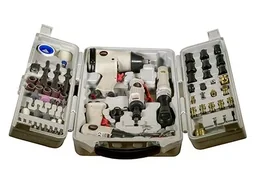
Practical starter sets
Compact sets are perfect for DIY users. They contain the essential basic components. They usually include an air blow gun, air hose and several attachments. These sets offer excellent value for money.
Essential compressed-air accessories
The right accessories greatly expand your options. Some components are indispensable.
Air manifolds and connections
A 4-way quick-connect air manifold such as the
is extremely practical. You can connect several devices at the same time. This saves time and avoids constantly switching connections. Look for a robust design and airtight connections.<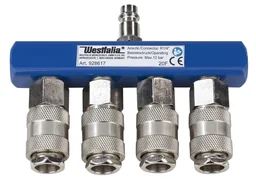
Cleaning tools
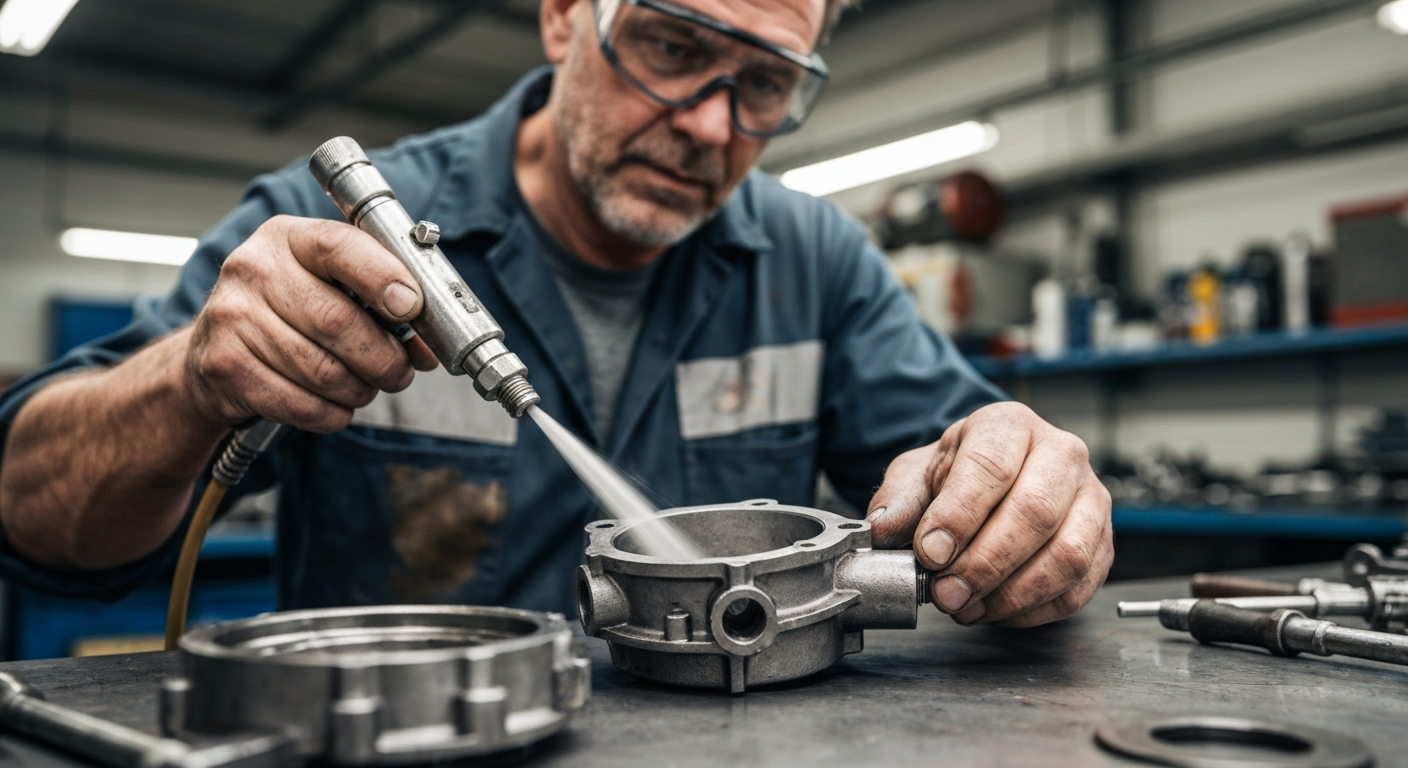
Blow guns remove dust and swarf from work surfaces. They are indispensable in every workshop. Combination tools combine several functions in a single device. This saves space and money.
Warning: Always wear safety goggles when working with compressed air. Flying particles can cause serious injuries. Never direct compressed air at yourself or other people.
How to maintain air compressors and pneumatic tools
Regular maintenance significantly extends service life. These measures are particularly important.
Drain the water
Condensation collects in the tank. Drain it regularly to prevent rust from forming. Ideally, do this after every use. A neglected tank corrodes quickly.
Replace the filters
Air filters protect the compressor from contamination. Replace them according to the manufacturer's instructions. Clogged filters reduce performance and increase wear.
Check the seals
Leaking connections waste energy and money. Regularly check all connections for leaks. Replace damaged seals immediately. This saves compressed air and protects the compressor.
Typical applications for compressed air
Pneumatic tools can be used in many ways. These are some of the most common applications.
Vehicle maintenance and tyre changes
Impact wrenches make changing wheels much easier. They can also loosen rusted-on bolts. Pneumatic screwdrivers work precisely and powerfully. You can find specialised compressed-air solutions for every tool application.
Surface finishing
Air-powered grinders and polishers work particularly efficiently. They are lighter than electric models. Spray guns enable professional painting work. The results feature an even application.
Cleaning and dust removal
Compressed air blows dust out of hard-to-reach corners. You can use it to clean workpieces before processing. Electronics can be gently freed from dust. The air pressure should be adjusted accordingly.
Note: Document your maintenance work. A maintenance log helps with warranty claims and increases resale value. Record the date and the work carried out.
Our recommendations for different users
Not every device is suitable for every user. These recommendations will help you choose.
For occasional DIYers
Compact sets with 3-10 pieces are more than sufficient. They cover the most important applications. A small compressor with a 10-20 litre tank is ideal. Look for quiet operation.
For ambitious hobbyists
Medium-sized compressors with 24-50 litre tanks offer more reserve capacity. Larger sets with 20-50 pieces are recommended. A water separator should be included. This protects your tools from moisture.
For professional users
Professionals need powerful stationary devices. Large tanks and high air delivery rates are essential. Invest in high-quality pneumatic tools and professional accessories. The quality pays off through long service life.
The highest-rated pneumatic tools in our range compared directly:
| Model | Customer rating | Availability |
|---|---|---|
| 12 V cordless air pump - with work and warning light - "Hybrid" | – | Currently unavailable |
| 2-way air distributor | – | Currently unavailable |
| 3-in-1 pneumatic multitool | – | Currently unavailable |
| 3-piece pneumatic tool set | – | Currently unavailable |
| 3-piece pneumatic tool set | – | Currently unavailable |
Conclusion: The best pneumatic tool for your needs
Choosing the right pneumatic tool depends on your specific requirements. 12 V pumps are ideal for mobile use. DIYers will find everything they need in compact sets. Professionals need powerful compressors with a wide range of accessories. Make sure the pressure is sufficient, the build quality is good and the connections are compatible. With our buying guide, you are sure to find the right model.
Frequently asked questions
- Which compressor is ideal for DIYers?
- Compressors with a tank capacity of 6-24 litres are recommended for DIYers. They provide enough power for working with air ratchets, impact wrenches or spray guns. Make sure they provide sufficient pressure of at least 8 bar.
- How noisy are pneumatic tools?
- Noise levels vary considerably. Oil-lubricated piston compressors are quieter than oil-free models. Modern devices achieve levels of around 70 dB(A). Particularly quiet compressor models are preferable for indoor use or if you are sensitive to noise.
- Do I need a pneumatic tool set or individual tools?
- Beginners benefit from complete sets containing all the basic components. Individual tools are worthwhile for specific applications. Sets usually offer the best value for money and guarantee compatible components.
- Which accessories are essential?
- Essential accessories include a water separator, pressure regulator and high-quality hoses. An air distributor allows you to operate several devices. Special spray guns and blow guns are indispensable for vehicle care.
- Can I also operate pneumatic tools in my car?
- Yes, with 12 V cordless air pumps. They are portable and suitable for use on the go. However, they have limited power and are primarily designed for tyres, air mattresses or small blowing jobs.