
In brief: In our articulating ladder reviews & comparison 2026, the models stand out for their versatility and safety. The best articulating ladders combine sturdy aluminum construction, lockable joints and a high maximum load capacity. Pay attention to the number of rungs for the required working height and accessories such as platform attachments. Our buying guide helps you find the right ladder for your projects.
Are you looking for a ladder that can adapt flexibly to different tasks? Then an articulating ladder is the ideal choice for you. Unlike rigid models, its folding joints offer several uses in one tool. In our articulating ladder reviews & comparison 2026, we present the best models and explain what to look for when buying one.
Table of Contents
- What are the advantages of articulating ladders?
- Buying guide: How to find the right articulating ladder
- Safety comes first
The highest-rated articulating ladders in our range compared directly:
Model Customer rating Availability Platform for CORDA articulating ladder 4x3 rungs (retrofit kit) – In stock Aluminum hinged double-sided ladder 2 X 6 rungs – Currently unavailable - Typical applications for articulating ladders
- Caring for and storing your ladder
- What alternatives are available?
What are the advantages of articulating ladders?
Articulating ladders stand out for their versatility. Folding joints transform one ladder into several useful tools. You save not only storage space but also money, since you do not need a special ladder for every task.
The main configurations at a glance:
- As a step ladder: The classic option for indoor work. The ladder stands independently and provides lateral stability.
- As a leaning ladder: Perfect for reaching higher points on walls or facades.
- As a stair ladder: The adjustable sections allow the ladder to adapt to uneven stairs.
- As a work platform: When unfolded and fitted with a platform, it becomes a small working platform.
This flexibility makes articulating ladders ideal partners for DIY enthusiasts, tradespeople and caretakers. They fit into any tool collection.
Buying guide: How to find the right articulating ladder
Before choosing a model, you should clearly define your requirements. The following criteria will help you make the right choice.
Material: Aluminum vs. Steel
Most articulating ladders are made of aluminum. The material is lightweight, corrosion-resistant and still sturdy. Steel ladders are more robust and have a higher load capacity, but are considerably heavier. For regular transportation, aluminum is usually the better choice.
Number of rungs and working height
The specification "2x6 rungs" means that each ladder section has 6 rungs. A
therefore gives you a different reach than a model with 2x8 rungs. Remember: You should never stand on the top three rungs. As a rule, calculate around 70-80% of the maximum height as the safe working height.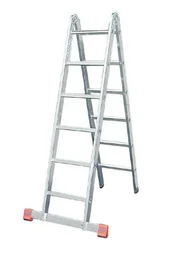
Load capacity and stability
Pay attention to the maximum load specified by the manufacturer. This refers to the total weight of the person, tools and materials. Quality ladders have wide feet with non-slip rubber caps for additional safety.
Tip: Consider accessories such as the
. A platform significantly improves comfort and safety, as it leaves both hands free and provides a secure footing.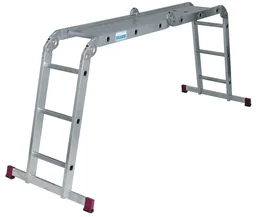
Safety comes first
A ladder is only as safe as its user. Always follow the basic safety rules to prevent accidents.
Set up the ladder only on firm, level ground. Before climbing, check that all joints are securely locked. The popular articulating ladders feature special safety locks that prevent accidental release.
Warning: Never exceed the ladder's maximum load capacity. The weight of the person, clothing, tools and materials must remain below the stated limit. Overloading can cause the structure to fail suddenly.
Always wear sturdy, closed-toe footwear when working on a ladder. Avoid sudden movements and make sure the ladder cannot slide sideways. For electrical work, use only specially insulated ladders.
Comparison of the best articulating ladders 2026
A direct comparison reveals the strengths and weaknesses of each model. Our overview helps you make the best choice for your needs.
{{COMPARISON_TABLE}}Typical applications for articulating ladders
Articulating ladders are the all-rounders among ladders. Their applications range from household tasks to professional construction sites.
- At home: Changing light bulbs, painting ceilings, cleaning windows and installing shelves.
- In the garden: Pruning trees, cleaning gutters and repairing roof eaves.
- When moving: Removing lights, decorating high walls and checking skylights.
- In the workshop: Reaching high storage shelves and maintaining ceiling installations.
Because they can be stored compactly, they are ideal for homes with limited storage space. When folded, they take up very little room in the garage or storage area.
Caring for and Storing Your Ladder
To keep your articulating ladder safe and functional for a long time, it needs some care. The following measures will significantly extend its service life.
Clean the ladder regularly to remove dirt, especially from the joints and rungs. Only use water and mild cleaning agents. Aggressive chemicals can damage the material. Dry the ladder thoroughly after cleaning, particularly around the joints.
Note: Store your ladder in a dry place protected from direct sunlight. Extreme temperatures can weaken the material over time. Ideally, hang the ladder on special storage hooks or lay it flat to prevent deformation.
Carry out a visual inspection before every use. Check that the joints are securely seated, inspect the rungs for cracks or deformation, and make sure all rubber feet are intact. Do not use the ladder if you notice any visible damage.
What alternatives are available?
Other types of ladders may be suitable for specific applications. You can find a wide selection in the Ladders and Scaffolding section.
Telescopic ladders
Telescopic ladders are extremely space-saving and are easy to transport in a car. However, they generally offer less stability than articulating ladders and are often more expensive to buy.
Folding ladders
Folding ladders are just as versatile as articulating ladders, but are often lighter and more compact. They are particularly suitable for lighter household tasks. For professional applications, articulating ladders are usually the more stable choice.
Leaning ladders
Classic leaning ladders are very simple to set up and ideal for work on façades. However, they require a stable surface to lean against and cannot be used as freestanding stepladders.
Platforms and scaffolding
For tasks where you need to spend a longer time on one level or move sideways, small platforms or compact scaffolding are a good alternative. They offer more standing space and freedom of movement.
Conclusion: A high-quality articulating ladder is a worthwhile investment for anyone who regularly works at height. Its versatility, safety and durability make it an indispensable helper. Choose a model that suits your typical working heights and loads, and always follow the safety instructions. This way, you can enjoy your versatile piece of equipment for a long time.
Frequently Asked Questions
- What is the biggest advantage of an articulating ladder?
- The biggest advantage is its extreme versatility. You can use an articulating ladder as a stepladder, leaning ladder, stair ladder or even as a work platform. Its adjustable joints allow it to adapt to different working environments, often replacing several specialised ladders.
- How many rungs do I need for my work?
- The number of rungs you need depends on your maximum working height. As a rule of thumb, a 2x6-rung articulating ladder gives you a working height of around 3.20 metres. For higher tasks, such as in homes with high ceilings, 2x8 or 2x10 rungs are more suitable. Always consider the safe standing angle.
- Are articulating ladders safe?
- Modern articulating ladders are very safe when used correctly. Lockable joints that prevent accidental folding, along with non-slip feet and rubber caps, are essential. Pay attention to the specified maximum load and never exceed it. Regular visual checks for damage are mandatory.
- Can I add accessories to my articulating ladder?
- Yes, practical accessories are available for many models. Platform attachments such as PRODUCT_73035 are particularly useful, providing a secure standing surface and storage space. Tool bags, transport wheels and special storage hooks are also available. Check compatibility with your ladder.
- What should I bear in mind when setting up and using the ladder?
- Always place the ladder on a firm, level surface. Make sure all joints are securely locked before climbing. Position leaning ladders at the correct angle using the 1:4 rule. Never stand on the top three rungs of a stepladder. Always wear sturdy footwear and keep your weight centred.