
In brief: Our 2026 garden tiller test reveals clear differences between drive types. Cordless garden tillers, including BOSCH HOME AND GARDEN models, are easy to handle and low maintenance, making them a good choice for small to medium-sized areas. Electric garden tillers provide consistent power but are limited by their cords. Gas-powered garden tillers remain a top choice for large areas and tough soil. The right model for you depends mainly on your garden size and soil conditions.
A well-prepared garden bed is the foundation for a bountiful harvest and beautiful flowers. A garden tiller saves you the hard work of digging by hand. In our 2026 garden tiller test and comparison, we help you find the right machine for your garden. Learn what to look for in cordless, electric and gas-powered models.
Table of Contents
What types of garden tillers are available?
Garden tillers generally come with one of three drive types. Each has specific advantages and disadvantages for different uses.
Cordless garden tillers: Flexible and quiet
Cordless garden tillers run on rechargeable lithium-ion batteries, so there are no cords or exhaust fumes. Models such as the
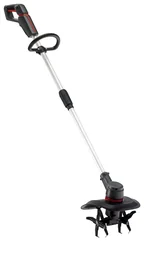
- Advantages: Cordless, quiet, low maintenance and ready to use at the push of a button
- Disadvantages: Limited runtime and less power for hard soil
- Best for: Small to medium-sized gardens with loose to moderately heavy soil
Electric garden tillers: Consistent power
Electric garden tillers plug into an outlet and deliver consistent power without the need to recharge. One example is the electric garden tiller MTE 460. It works reliably in medium-sized gardens.
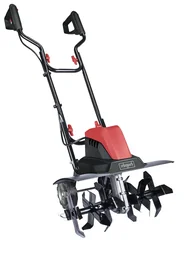
- Advantages: Continuous power, affordable to buy and quiet
- Disadvantages: Limited range due to the cord; requires a power outlet
- Best for: Gardens close to the house with access to an outlet
Gas-powered garden tillers: Maximum power
Gas-powered garden tillers are the workhorses among garden cultivators & tillers. Powered by a combustion engine, they can work anywhere. The gas-powered garden tiller MH 770 Comfort can handle large areas and heavy soil.
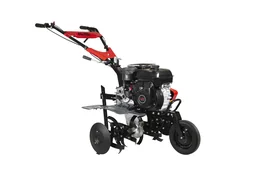
- Advantages: High power and digging force; works anywhere
- Disadvantages: Loud, produces exhaust fumes and requires regular maintenance
- Best for: Large gardens, new planting areas, and heavy clay or loamy soil
How should you compare the models?
A useful comparison looks at more than just the drive type. These criteria are key to choosing the right model.
Power and working width
Power determines which types of soil you can work. For cordless models, check the battery voltage and Ah rating. For electric and gas-powered models, look at the wattage or PS rating. Match the working width to the size of your beds. Narrow models are easier to maneuver, while wide models cover ground faster.
Choose a working width that fits your garden paths. Your garden tiller should pass through them without difficulty. Measure the narrowest point before you buy.
Handling and comfort
A lighter tiller is easier to transport and turn. Adjustable handles can reduce strain on your back. A reverse gear is especially useful on models in the medium power class and above. Check the vibration damping, particularly on gas-powered models.
Accessories and compatibility
Many cordless garden tillers are part of a garden equipment system. Already have compatible batteries? Using them can save you money. Some models offer optional garden equipment accessories, such as wheels for easier transport or different tilling blades.
Test verdict: cordless garden tillers
Modern cordless garden tillers have come a long way in performance. For many home gardeners, they are now the first choice.
Everyday practicality
In our test, cordless garden tillers impressed us with how easy they are to handle. They start at the push of a button, run quietly and produce no exhaust fumes. Their runtime is enough for most home gardens. However, lightweight models can struggle with very hard or compacted soil.
What battery capacity do I need?
Under moderate load, plan on around 10-15 minutes of runtime for every 2 Ah of battery capacity. For a garden with 200 m² of bed area, two batteries rated at 4-5 Ah each are a good starting point. That way, you can till with one battery while the other charges.
Always store batteries in a dry, frost-free place. Deep discharge can damage the cells. Before storing a battery for an extended period, charge it to around 60-70 percent.
Electric garden tillers in action
Electric garden tillers combine an affordable price with enough power for typical soil conditions.
Why the cord matters
The cord limits how far you can work. Always use a tested extension cord rated for outdoor use and with a suitable wire gauge. Keep it safely behind you to avoid tilling over it. These models work especially well in gardens with planned beds close to the house.
Power compared in the mid-range
Electric motors deliver consistent torque, making them a good fit for light to moderately heavy soil. Compared with gas-powered models, they do not offer the maximum torque needed for heavy loads, but this also helps protect the mechanics. They are an affordable entry point for powered soil cultivation.
Gas-Powered Tillers for Large Areas
For professional use or very large gardens, gas-powered tillers remain indispensable.
Engine Technology and Power Delivery
Four-stroke engines are standard today. They run cleaner and quieter than two-stroke engines and do not require a gas-oil mixture. Power is transferred to the tiller shaft via a mechanical gearbox or V-belt. Gearboxes are more robust, while V-belts provide overload protection.
Using a Tiller in Heavy Soil
In our test, gas-powered tillers reliably broke through compacted clay soil. Their weight and sharp, chisel-shaped tines break up the soil effectively. Till heavy soil in several passes, gradually increasing the depth. This protects both the machine and your body.
Always use unleaded gasoline with the specified octane rating. Do not leave fuel in the machine for longer than six weeks. Use a fuel stabilizer during the winter break.
Safety and Maintenance
Safe handling and regular maintenance help you enjoy your garden tiller for years to come.
Important Safety Rules
Always wear sturdy shoes, long pants and safety glasses. Keep children and pets at a safe distance while you work. Always switch off the machine and disconnect the power cord or battery before clearing blockages or changing the tines. Never pull the machine backward while working.
End-of-Season Maintenance
Thoroughly remove any caked-on soil from the garden tiller after every use. Check the tines for sharpness and damage. For gas-powered models, perform seasonal maintenance: change the oil, clean or replace the air filter and check the spark plug. Store the machine in a dry, frost-free place.
Our Buying Recommendation
There is no single best garden tiller for everyone. You can find the right one by weighing your own needs.
Choosing the Right Model for Your Garden
For a small urban garden or vegetable patch of up to 150 m², a lightweight cordless garden tiller is the ideal choice. It is easy to handle, requires little maintenance and runs quietly.
For a medium-sized family or townhouse garden of up to 400 m², choose between a powerful cordless garden tiller with a large battery or an electric garden tiller if an outlet is nearby.
For a large country property, new planting areas or heavy soil of 500 m² or more, a gas-powered garden tiller is the best choice. Only this type offers the runtime and power you need.
Comparison Table of the Best Models
Our side-by-side comparison makes it easy to see the differences. It shows the most important details for the drive types we tested.
Our top-rated garden tillers compared side by side:
| Model | Customer rating | Availability |
|---|---|---|
| 18 V BOSCH HOME AND GARDEN COMPATIBLE Cordless Garden Tiller TL 1820 (Battery and Charger Not Included) | – | Currently unavailable |
| 18 V BOSCH HOME AND GARDEN COMPATIBLE Cordless Garden Tiller TL 1820 incl. Battery and Charger | – | Currently unavailable |
| EL-TEX 2000 Electric Garden Tiller | – | Currently unavailable |
| MTE 460 Electric Garden Tiller | – | Currently unavailable |
| MH 770 Comfort Gas-Powered Garden Tiller | – | Currently unavailable |
Final Advice Before Buying
Visit our garden tillers category to browse the full selection. Think carefully about the area you want to cultivate and the type of soil. Consider accessories such as replacement tines or transport wheels. With the right garden tiller, even demanding gardening tasks become easier and more efficient.
Frequently Asked Questions
- Who should choose a cordless garden tiller?
- A cordless garden tiller is ideal for garden owners with small to medium-sized areas of up to around 300 m² and moderately heavy soil. You get the freedom of cordless operation, minimal maintenance and quiet performance. It is especially convenient if you already own batteries from a compatible system.
- What is the biggest advantage of a gas-powered garden tiller?
- The biggest advantage of a gas-powered garden tiller is its power and independence. It works without a cord or battery runtime limits and reliably breaks through even heavy, compacted or stony soil. For large gardens over 500 m² or new planting areas, it is often the best choice.
- How deep and wide does a garden tiller dig?
- Working widths typically range from 20 to 90 cm, while working depths range from 15 to 35 cm. Compact entry-level models till areas around 20-40 cm wide. Wider models are suited to large beds. On most machines, you can adjust the depth using the wheel or depth stake.
- Does a garden tiller need regular maintenance?
- Yes. Regular maintenance significantly extends its service life. With all models, clean soil and plant residue from the tines after every use. Gas-powered models also need oil changes, air-filter cleaning and spark-plug checks. Cordless and electric models require little maintenance beyond proper storage and occasional gearbox lubrication.
- Can I use a garden tiller to control weeds?
- Yes. Garden tillers effectively shred shallow-rooted weeds and mix them into the soil. For long-term weed control, till regularly at short intervals before weeds go to seed. However, this will not permanently control deep-rooted weeds such as ground elder; it can even cause them to spread further.
You May Also Be Interested In
- Garden Cultivator Test & Comparison 2026
- How to Use a Garden Tiller Safely: Everything You Need to Know
- Long-Reach Pruner Test & Comparison 2026: The Best Models Reviewed
- Get More from Your Garden Tiller: Tips and Tricks
- Winch Test & Comparison 2026: The Best Models in Practical Testing
- Wall-Mounted Range Hood Test & Comparison 2026