
In brief: Choosing the best hedge plant depends largely on your goals. For fast privacy, classic fast-growing plants such as cherry laurel are ideal. If you want low maintenance and dense screening, evergreen varieties such as thuja or yew offer excellent solutions. Native plants such as hornbeam or beech are ideal for wildlife-friendly gardens. Be sure to consider the location, desired height and the amount of maintenance you are prepared to undertake.
A hedge is more than just a boundary around your property. It provides privacy, protects against wind and noise, and creates a living habitat for birds and insects. But which hedge plant is right for your garden? Our 2026 comparison will help you decide. We present the best plants for different requirements and provide practical buying advice.
Contents
What types of hedge plants are available?
Hedge plants can broadly be divided into evergreen and deciduous varieties. Your choice has a major impact on the year-round appearance of your garden.
Evergreen hedge plants
Evergreen hedges provide privacy and a green backdrop all year round. They are particularly popular for boundaries alongside roads or neighbouring properties. Classic examples include thuja (Thuja), yew (Taxus) and various cherry laurel varieties (Prunus laurocerasus). They retain their leaves or needles even in winter.
Deciduous hedge plants
These hedges shed their leaves in autumn and produce new growth in spring. They look more natural and are often easier to maintain. Popular deciduous hedges include hornbeam (Carpinus betulus), beech (Fagus sylvatica) and field maple (Acer campestre). They provide full privacy in summer and an attractive, semi-transparent structure in winter.
Tip: Combine different hedge plants! Plant an evergreen foundation and add flowering shrubs in front of it. This creates variety and extends the flowering season in your garden.
What makes a good hedge plant?
Not every plant is equally suitable for a dense, attractive hedge. Good hedge plants have certain characteristics.
They should tolerate pruning well. This means the plant reliably produces dense new growth after being cut back. This is the only way to create a compact, privacy-enhancing hedge wall.
A good hedge plant is robust. It withstands common diseases and pests and survives normal winters without difficulty. Ask locally about varieties that are particularly winter-hardy.
The growth habit should naturally be fairly upright and bushy. Plants that hang heavily or grow loosely are less suitable for a formal hedge, but can be appealing in wildlife-friendly gardens.
Comparing Hedge Plants: The Best Varieties
Our comparison covers the most popular hedge plants and their pros and cons, giving you a quick overview of which variety best suits your needs.
Here are the top-rated hedge plants in our range, compared side by side:
| Model | Customer rating | Availability |
|---|---|---|
| Cherry laurel, Prunus lauroc. "Caucasica", for a 5 m hedge, 60-80 cm high, 7 liter pot, set of 10 | – | Currently unavailable |
| Cherry laurel, Prunus lauroc. "Green Torch", for a 5 m hedge, 60-80 cm high, 7 liter pot, set of 10 | – | Currently unavailable |
| Fritz Göbel garden rake with leveling edge, 16 tines for soil cultivation | – | Currently unavailable |
Cherry laurel 'Caucasica' ()
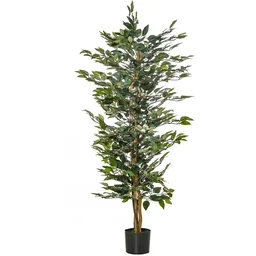
Cherry laurel 'Caucasica' is a classic choice for a tall, evergreen privacy hedge. It grows very quickly and forms a dense screen with its large, dark green leaves. Undemanding and adaptable, it tolerates root competition from trees and thrives in both sunny and shady locations.
For a dense hedge, plant around two to three plants per linear meter. Leave enough room, as 'Caucasica' can grow quite wide. Its vigorous growth makes regular trimming important.
Cherry laurel 'Green Torch' ()
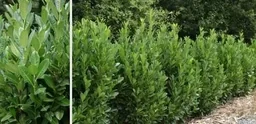
'Green Torch' is a slimmer alternative to classic cherry laurel. It grows in a narrow, upright column, making it ideal for narrow hedges and small gardens. Its leaves are glossy, and the plant is fully hardy.
'Green Torch' has a naturally narrow growth habit, so it needs less trimming to control its width. It is ideal as a room divider or for properties with limited space. This evergreen variety also responds well to pruning.
Important: Cherry laurel leaves and seeds are poisonous. Keep this in mind if small children or pets play in your garden. Nontoxic alternatives include yew and hornbeam.
Hornbeam (Carpinus betulus)
Hornbeam is one of the best native hedge plants. It is extremely hardy, responds well to pruning, and grows in almost any soil. Although deciduous, it often holds on to its withered brown leaves until new growth appears in spring, providing some privacy through winter.
It is an ideal hedge plant for naturalistic gardens, windy locations, and challenging sites. Birds value it as a nesting spot. Plant three to four specimens per meter for a dense hedge.
Yew (Taxus baccata)
Yew is a premium evergreen hedge plant. It grows slowly but forms a very dense hedge and can live for centuries. It tolerates even severe pruning into old wood and reliably produces new growth. Yew hedges are attractive, elegant, and exceptionally resilient.
Its main drawback is its slow growth. Be patient, or start with larger plants. All parts of the yew are highly poisonous except for the red flesh of the fruit.
Arborvitae (Thuja)
Arborvitae hedges, often called 'Smaragd', are common. They grow quickly, stay green year-round, and are relatively inexpensive. Their scale-like foliage forms a dense screen. Arborvitae prefers moist, well-drained soil and sunny to partially shaded locations.
One drawback is that arborvitae does not recover well when cut back to old wood. Never trim the hedge back to bare wood. Arborvitae is also more susceptible to spider mites and certain fungal diseases than other hedge plants.
Note: You can find the plants mentioned here in our hedge plants range. Browse our wide selection of other plants for your garden, too.
How to Find the Perfect Hedge for Your Garden
Answer these questions to find the right hedge plant for your garden. A little planning now can help your green screen thrive for years to come.
What do you want the hedge to do? Is it mainly for privacy, wind protection, noise reduction, or to define different areas of your yard? For maximum privacy, choose dense-growing, preferably evergreen plants.
How tall and wide should the hedge be? Measure the available space carefully, and remember to leave room to access the hedge for trimming. Narrow varieties such as 'Green Torch' save space.
What are the growing conditions? Is the spot sunny, partially shaded, or shady? Is the soil sandy, loamy, or moist? Choose a plant suited to these conditions. Hornbeam and yew are especially adaptable.
How much time do you want to spend on maintenance? Fast-growing hedges such as cherry laurel need trimming at least twice a year. Slow-growing yews may need just one trim. Be realistic about the time and effort involved.
Care and Trimming for a Perfect Hedge
Good care keeps your hedge healthy and looking its best. Start with the right routine as soon as you plant it.
When to Trim Your Hedge
Trim deciduous formal hedges for the first time at the end of June, after the main growth flush. You can give them a second, light trim in late winter, before new growth begins. Avoid trimming during frost or bright sunshine.
Trim evergreen conifers such as arborvitae and yew in late summer. Never cut back into old, bare wood, as many conifers will not grow back from it.
Watering and Fertilizing
Water newly planted hedges regularly and thoroughly during the first year, especially in dry weather. A layer of bark mulch helps the soil retain moisture.
Fertilize your hedge in spring with an organic slow-release fertilizer or compost. This supports healthy growth without encouraging excessive growth. Avoid nitrogen-rich fertilizers in late summer, as they can make new growth soft and more susceptible to frost.
Buying Guide: What to Look for When Buying
Quality plants can thrive for years, so it’s worth investing in healthy, vigorous specimens. Here are the most important things to look for.
Whenever possible, choose container-grown plants. They are grown in a root ball and can be planted year-round. They also establish much more reliably than bare-root plants.
Look for healthy, vigorous growth. Plants should be well branched, with no brown shoot tips or wilted leaves, and no visible pests.
Root quality is crucial. For container-grown plants, the roots should fill the pot without growing in circles. Buy from a trusted nursery or specialist retailer such as our shop.
For tools such as the Fritz Göbel garden rake (), the same principles apply: It should feel comfortable in your hand and be sturdy. A garden rake is essential for preparing the soil before planting and levelling the ground.

Conclusion: The Best Hedge Plant for Your Needs
There is no single perfect hedge plant. The right choice depends on your priorities and the characteristics of each plant.
Want year-round privacy and have plenty of space? 'Caucasica' cherry laurel or an arborvitae hedge are good choices. They grow quickly and form a dense screen.
Have limited space or want a narrow hedge? 'Green Torch' cherry laurel or a narrowly trimmed yew hedge are ideal. They provide privacy without taking up much space.
Prefer a natural, low-maintenance garden? Choose a native hornbeam hedge. It is hardy, bird-friendly and provides structure in winter.
Take your time when making your decision. A hedge can stay in place for many years, often decades. Choosing well from the outset can save you work and disappointment later. With the information in our 2026 test and comparison, you’re well prepared.
Frequently Asked Questions
- Which hedge plant grows fastest and provides privacy?
- For fast-growing, year-round privacy, choose vigorous evergreen plants. Cherry laurel (Prunus laurocerasus) grows very quickly. Arborvitae (Thuja) and red robin (Photinia) also grow quickly and form dense hedges. Keep in mind that fast growth means more maintenance, including regular trimming.
- When is the best time to plant a hedge?
- The best time to plant is in autumn, around October to November. The soil is still warm, giving plants time to establish roots before winter and get off to a strong start in spring. Container-grown plants can be planted almost year-round, except during frost or extreme heat. Spring is a good alternative, but plants need consistent watering.
- How do I plant a hedge correctly?
- First, dig a continuous planting trench twice as wide as the root ball. Loosen the soil thoroughly. Space the plants correctly along the trench. Backfill with soil, firm it down and water thoroughly. A layer of bark mulch helps retain moisture and suppress weeds.
- How often should I trim my hedge?
- How often you need to trim depends on the plant species. For a neat, formal look, trim deciduous hedges twice a year: at the end of June and, if needed, in late winter. Slow-growing conifers such as yew often need trimming only once a year. Vigorous species such as hornbeam or privet may need two to three trims to maintain their shape.
- Which hedge plants are suitable for shady locations?
- Choose hardy, shade-tolerant species for shady or partially shaded locations. Yew (Taxus) is an excellent choice because it adapts well to different conditions. Native hornbeam (Carpinus betulus) also tolerates shade. Evergreen options for light shade include cherry laurel varieties such as 'Caucasica' or 'Rotundifolia', as well as arborvitae (Thuja).
You might also be interested in
- How to Choose and Plant Hedge Plants: The Complete Guide
- Weed Killer Test & Comparison 2026: The Best Products Reviewed
- Electric Hedge Trimmer Test & Comparison 2026
- Columnar Fruit Trees Test & Comparison 2026: The Best Varieties at a Glance
- Shade Sail Test & Comparison 2026: The Best Models in Practice
- Raised Garden Beds Test & Comparison 2026